

Pothos vs Philodendron: How to Tell Them Apart (and Why Both Are Often Mislabeled)
These two beautiful houseplants often get confused. Here's how to tell them apart and tips to keep them thriving!
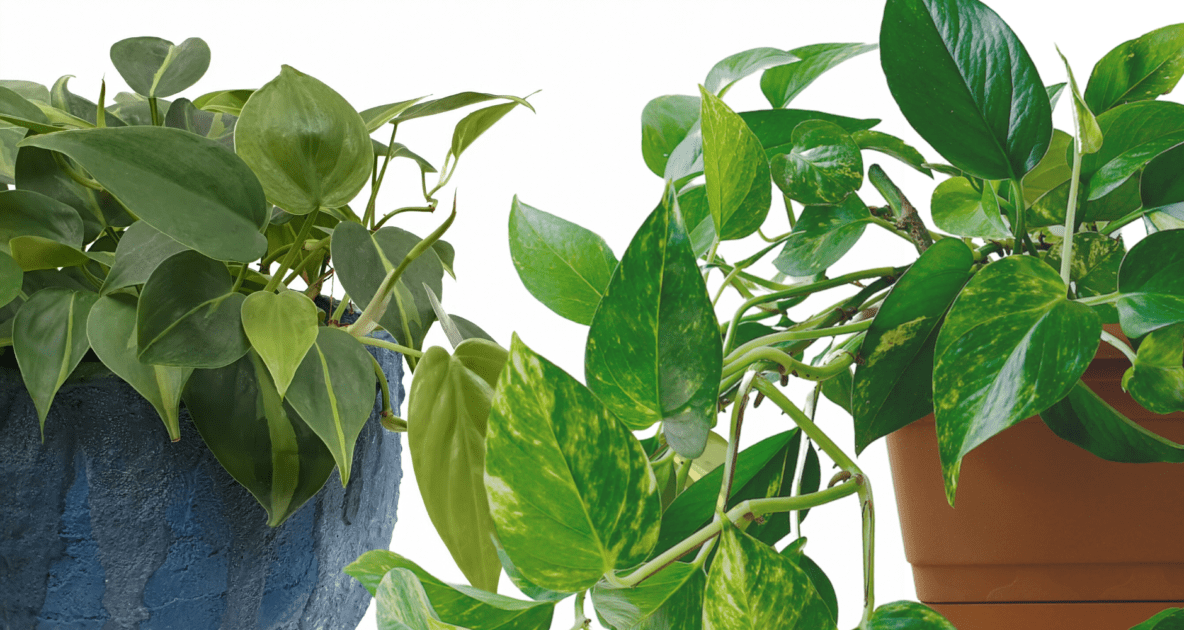
Quick Reference: Pothos vs Philodendron
- Pothos: Epipremnum aureum. Thicker waxy leaves with golden variegation. Often called Devil’s Ivy.
- Philodendron: Heart-leaf philodendron (P. hederaceum). Thinner, softer, more uniformly green leaves.
- Telling them apart: texture (pothos waxy, philodendron softer), aerial roots (philodendron more), growth point shape.
- Both toxic to cats and dogs. Mild oral irritation, drooling, vomiting if eaten.
- Care. Nearly identical: bright indirect light, water when top inch dry, very forgiving.
On this page
Related Almanac guides
Sources cited in this guide
Pothos (Epipremnum aureum) and heart-leaf philodendron (Philodendron hederaceum) are the two most-confused houseplants in the US. They share growth habit, leaf shape, and care requirements, but they belong to different genera in the Araceae family. Garden centers, plant tags, and even big-box retailers regularly mislabel one as the other. This guide is the four diagnostic differences that let you tell them apart at a glance, plus the care notes for each.
The 4 Diagnostic Differences
Per University of Florida IFAS indoor plants research.
- Leaf texture. Pothos: thicker, slightly waxy, almost plastic-feeling. Philodendron: thinner, softer, matte finish.
- Leaf shape. Pothos: slightly more rounded with asymmetric edges. Philodendron: more uniformly heart-shaped, longer pointed tip.
- New growth point. Pothos: emerges as a tightly furled leaf. Philodendron: emerges from a protective sheath that opens like a tube.
- Aerial roots. Both have them, but philodendron’s are typically more abundant and longer. Pothos aerial roots are short and stubby.
- Variegation pattern. Pothos cultivars often have golden, marble, or neon variegation. Philodendron cultivars rarely have golden tones; instead they trend toward pink or lime green variegation.
Care (Identical for Both)
Per University of Florida IFAS and standard houseplant practice.
- Light. Bright indirect best. Both tolerate low light (slower growth, less variegation).
- Water. Let top 1 inch of soil dry between waterings. Both forgive missed watering.
- Humidity. Tolerate average household humidity (30 to 50 percent).
- Soil. Standard potting mix with perlite. Avoid waterlogged soil.
- Fertilizer. Light feeding (1/4 strength) monthly in growing season. Neither is demanding.
- Propagation. Both root easily from stem cuttings in water in 2 to 4 weeks.
Pothos and Philodendron: Detail
Below are the original sections covering visual identification, the word of caution, and Devil’s Ivy origin.
Caring for Devil’s Ivy and Philodendron
To keep these plants happy and healthy there are a few things that you should do.
- Light: Both plants are used to warmth, humidity, and bright but dappled sunlight. As they grow in tropical forests, beneath the canopies of trees, they don’t fare well in an abundance of direct light. While pothos can tolerate low light conditions, too little light can cause the streaks in the foliage to fade. Philodendrons leaves often turn yellow in low light. Opt for middle ground and give them a spot with plenty of indirect light.
- Temperature: These plants cannot tolerate cold and do best with a sustained temperature of at least 65°F. If you live in a hardiness zone lower than 10, you can plant them in outdoor containers and baskets through the summer, then bring them inside to overwinter. If you choose to grow them outdoors, be sure to shelter them from windy exposures and intense heat and light.
- Soil: Offer both plants well-drained potting soil.
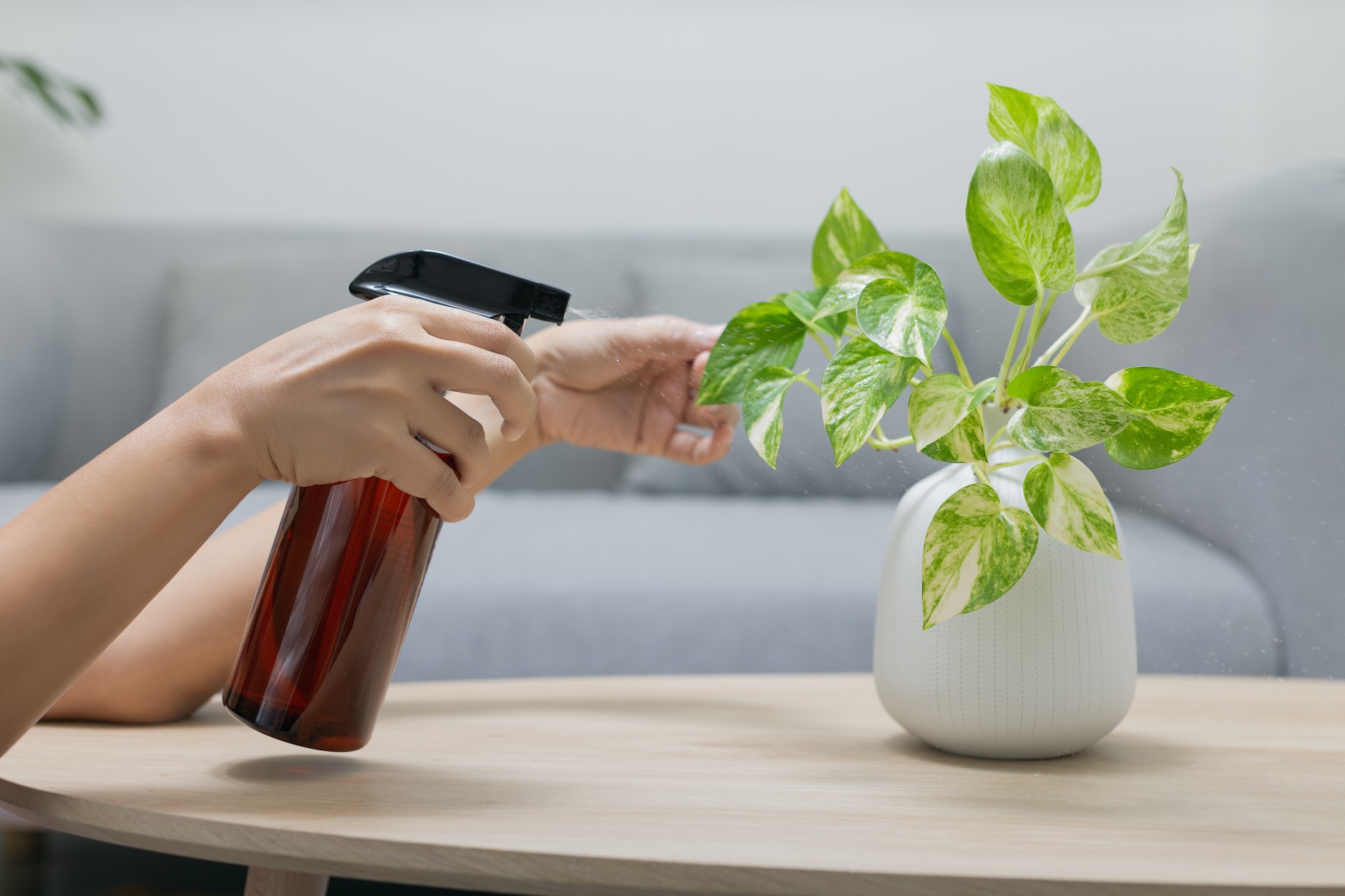
- Water: Don’t overwater, as these plants can rot easily. Let them dry out between waterings. If the leaves start to wilt, you’ll know it’s definitely time to haul out the watering can! Both pothos and philodendrons bask in the luxury of a regular misting of water on their foliage; once a week or so.
- Fertilize once every three months, with a balanced water-soluble houseplant fertilizer such as 20-20-20.
- Pruning: While pothos is strictly a trailing plant, some philodendrons trail and others grow upright (non-climbing). Trailing plants need support, as they can reach between 8 and 10 feet in length. Prune back the long stems of both plants to promote a more desirable bushy form. If the plants drop leaves or become leggy, move them into more light.
- Pest Control: As with many other houseplants, mealybugs can be an issue for both pothos and philodendron. You can treat these pests by removing them from stems and leaves with a cotton swab dipped in rubbing alcohol. Persistence pays off, so keep vigilant. Fungus gnats can also be a problem, especially if outside plants are brought indoors to overwinter. Use sticky tape traps to capture the adults. Ensure the soil is not consistently damp, as these insects love wet potting media.
- Transplanting: If the plants become large and root-bound in their pots, they can be easily replanted into bigger containers. Pothos and philodendrons are extremely easy to propagate with stem cuttings, which may be placed in a glass of water until roots form and they can be planted.
Be sure to check out our Gardening by the Moon planner for good days to transplant.


Pothos vs Philodendron FAQ
What is the difference between pothos and philodendron?
Same family (Araceae), different genera. Four diagnostic differences: leaf texture (pothos waxy, philodendron softer), leaf shape (pothos more rounded, philodendron more heart-shaped), new growth point (pothos tightly furled, philodendron sheathed), and aerial roots (philodendron has more).
Are pothos and philodendron toxic to pets?
Yes, both. Both contain calcium oxalate crystals causing oral irritation, drooling, and vomiting in cats and dogs if eaten. Symptoms are usually mild to moderate. Keep out of reach of chewing pets or choose a non-toxic alternative like spider plant or Boston fern.
Which is easier to grow?
Functionally identical. Both are among the easiest houseplants to grow. Forgive missed watering, tolerate low light, root easily from cuttings. Many beginners start with both interchangeably; the difference is aesthetic, not difficulty.
Why is pothos called Devil’s Ivy?
It earned the name because it is nearly impossible to kill. Survives almost any indoor condition, neglect, and improper care. The ‘devil’ nickname is affectionate; gardeners cannot get rid of it once established.
Can I grow pothos and philodendron together?
Yes. They have identical care requirements and look beautiful trailing from the same hanging basket. Combine for visual interest with different leaf textures.

Sheryl Normandeau
Sheryl Normandeau, BA, is a Master Gardener and writer from Calgary, Alberta, Canada. Her articles and short stories have appeared in several international publications. She is the co-author (with Janet Melrose) of the Guides for the Prairie Gardener series.
- Sheryl Normandeau

- Sheryl Normandeau
- Sheryl Normandeau
- Sheryl Normandeau


Thank you for this artical. In 2015, i went from being a lifelong renter to a homeowner. Rent in my area is just crazy-high. For a housewarming present, my mother gave me a small plant that she said was a philodendron. Turns out, based on your artical, it’s actually a Devil’s Ivy Pothos! The initial clippings were just three stems. I have since propagated it into two 10″pots with 8 stems each + plus about twenty 2-stem plants in 4″ pots that I have been giving away to neighbors and friends, not to mention all of the clippings that just got thrown out. The original plant that my clippings came from was given to my mother on the day of my sister’s birth; December 12th, 1955! Talk about robust!
Yikes! My mother called them phillies, whether or not she knew better, now I’m going to ‘confront’ her on this. And what a name Devil’s Ivy!?!?!?! Geez now I feel weird of having them in my house, and as you did I infiltrated my neighbors with ‘cute’ little cuttings. Nothing like a friend gifting you this thing that then you have to water. I’m speaking through my friend Laura who never had a plant, but she’s a hippie, and I kind of forced this cutting on her. Like, thinking back she literally leaned back as I gave her the cute little devil in a cup. I said you don’t have to do anything to it, see, set her up on your kitchen sill. It’s good for you and the area/air. She looked afraid of it! hahaha! Then after a few weeks or so, her eyes were so shiny and thankful that it didn’t die and was growing! YEP I have her Her 1st plant Chee:) Plus 2 for us! Peace and Love, C.
Awww – I love both of them! It’s so nice of you to “share.” My first Philodendron was a cutting from a friend. Enjoy!!!
THIS PLANT STARTED GROWING IN MY YARD I DON’T KNOW WHERE IT CAME FROM….I HAVE A DOG THAT PLAYS IN THE YARD….HOW UNSAFE ARE THES PLANTS FOR MY DOG????? THANKS
Hi Robert, you must live in a warm climate to have this growing outside? It is toxic to dogs, so you may want to be careful. Perhaps remove it from the dog’s area or remove it all together. Good luck.
ok – i’m pretty sure from the info above, i have devil’s ivy. i’ve been trying everything i can think of it to start new plants and none have worked. clippings whether in soil or water die after a couple of weeks. i HAVE however taken a long trail and put it in soil while it is still attached to the main plant and it has continued to grow. but i’m afraid to cut it as i’m not sure it will continue to live. can i get some help on how to start new clippings for both the philodendron and the devils ivy? thanks so much! — karen
Hi Karen, I’ve located step by step instructions for you here.
Thank you! Great information.
Glad you enjoyed it Sandra!