

How to Recycle Your Christmas Tree: 4 Smart Ways That Work
Although taking down the Christmas tree isn’t nearly as fun as putting it up, you can recycle or reuse the tree and its branches in a number of ways. Try these tips!
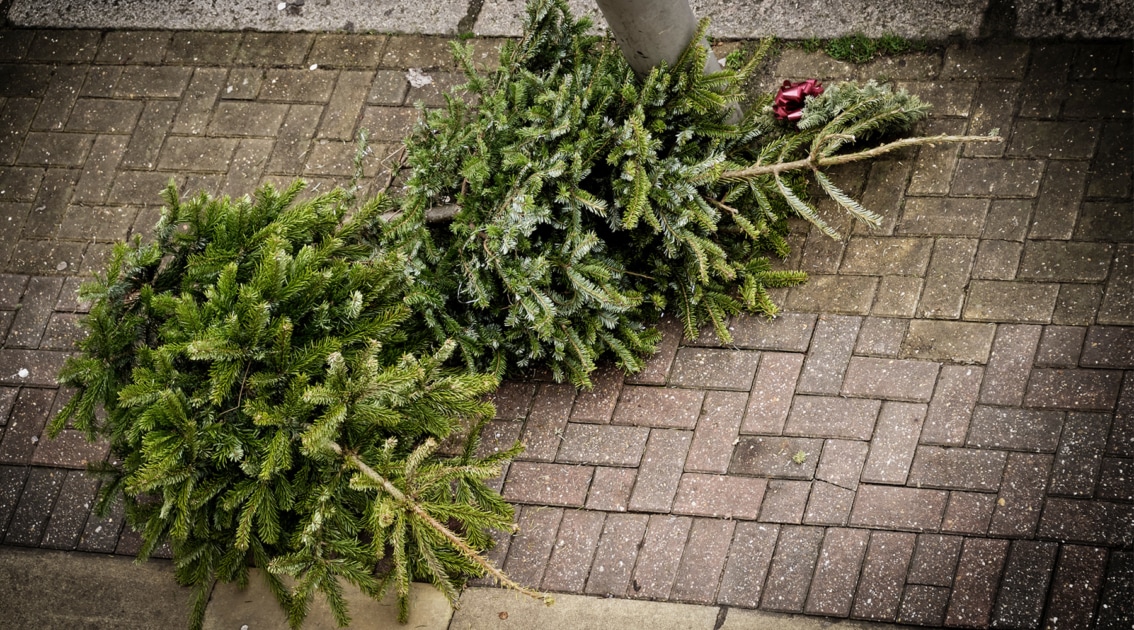
Quick Reference
- Best time to recycle: the first two weeks of January, before needles dry and drop indoors.
- 4 smart uses: backyard bird sanctuary, garden mulch, curbside recycling program, local goat farm.
- Do not burn: pines and firs are softwood, burn fast, and leave heavy creosote in the chimney.
- Prep first: pull every hook, garland strand, tinsel, and ornament before the tree leaves the house.
- Rooted tree option: buy a balled-and-burlapped or containerized tree, then plant it in the yard after Christmas.
- Municipal programs: curbside pickup and drop-off recycling operate in most US and Canadian cities in early January.
Although taking down the Christmas tree is not nearly as fun as putting it up, the tree and its branches can go on to another useful winter after you carry them out the door. About 25 to 30 million real Christmas trees are sold in the US every year, per the National Christmas Tree Association, and thousands of local programs are set up to keep those trees out of the landfill. Here are four smart ways to recycle your Christmas tree, plus what not to do with it, and how to plan next year’s tree so it becomes part of the yard.
Try These Repurposing Ideas
1. Wildlife Sanctuary
Place the tree in a corner of the garden or backyard and use it as a bird feeder and cold-weather shelter. Fresh orange slices or strung popcorn attract the birds, and the branches give them cover from wind and predators. Strip every ornament, hook, garland, and tinsel strand before the tree leaves the living room. To keep the trunk from rolling away in winter wind, secure it with wire or twine or drive a pair of stakes into the ground on either side.
2. Wood Chips and Mulch
A Christmas tree is fully biodegradable. Its branches can be removed, chipped, and used as mulch in the garden. Chop or grind smaller branches into wood chips for flower beds, tree rings, and shrub beds. Larger branches can be cut into small bundles and laid down as winter protective mulch around newly planted perennials and small shrubs. Pull those branches back in early spring, before the plants underneath start pushing new growth.
3. Locate a Municipal Recycling Facility
Most cities and towns run a January tree-recycling program. Curbside pickup runs in the first two weeks of the month in many places, and drop-off sites accept trees for a few weeks longer. The chipped mulch is used on hiking trails, along shorelines, in city landscaping, and in fish habitat. Check your municipality’s public works page for exact dates, and remember to pull the tree stand and every last strand of tinsel first.
4. Contact Your Local Goat Farm
Goats will happily eat a used Christmas tree. Goats enjoy the taste of pine needles, which carry a fair amount of vitamin C, and the needles work as a natural de-wormer as well. Call ahead before you deliver: some farms only accept spruce and fir, not pine, and no farm wants a tree that still has tinsel, hooks, or preservative dye on it. Once cleared, the farm may take the tree off your hands directly, or point you to a January collection day.

Major Uses for Recycled Trees
Municipal and state recycling programs put donated trees to work in more places than most people realize. Common uses:
- Chipping (chippings are used for mulch, playgrounds, and hiking trails)
- Beachfront erosion prevention
- Lake and river shoreline stabilization
- Fish habitat
- River delta sedimentation management
The United States Environmental Protection Agency (EPA) notes that yard trimmings, including used Christmas trees, are one of the largest recyclable waste streams in the country. Redirecting a tree from the landfill to a chipping program keeps that carbon locked in soil and shoreline projects rather than releasing it to the air.
Regional Recycling Programs at a Glance
Other Ideas
Next year, consider a rooted tree, ball-and-burlapped or containerized, and then plant it in the yard after Christmas. A live tree buys you a decade or more of shade, wildlife cover, and curbside charm, and it means no January cleanup at all.
Before planting, remove the burlap and any twine from the rootball. Nurseries often treat the burlap chemically to discourage root growth, so it will not break down cleanly in the soil.
It is also worth pre-digging the planting hole in late fall while the soil is still soft. Come January, that hole is ready and the tree drops in without a fight against frozen ground.
Important: Never burn your Christmas tree in a fireplace or woodstove. Pines and firs are softwoods that burn very quickly, so most of the heat is lost almost immediately. Burning them also contributes to creosote buildup in the chimney, which is a real fire hazard.
Common Christmas Tree Recycling Mistakes
- Leaving tinsel or flocking on the tree. Chippers cannot process it, goats cannot eat it, and it fouls mulch piles.
- Setting the tree at the curb early. Trees put out before the pickup window get soaked, freeze to the ground, and often get missed.
- Bagging the tree in plastic. Plastic bags contaminate the mulch stream and get flagged at the curb.
- Dragging a flocked tree into the yard for wildlife. Flocking (that white spray-on snow) contains chemicals birds and rabbits should not eat.
- Composting whole. Pine and fir needles are slow to break down and acidify the pile; chip first.

Christmas Tree Recycling FAQ
When should I recycle my Christmas tree?
The first two weeks of January is the standard window, before the needles fully dry and start dropping indoors. Most curbside and drop-off recycling programs run through the first two to three weeks of the month, then close for the season.
How do I find a Christmas tree recycling program near me?
Check your city or town’s public works page for curbside pickup dates and drop-off sites. State and provincial environmental agencies also list programs in early January. In the US, the Bring One for the Chipper program covers much of the Southeast, and Keep America Beautiful chapters run drop-offs elsewhere.
Can I burn my Christmas tree in the fireplace?
No. Pines and firs are softwoods that flare fast and cool quickly, so you lose most of the heat, and their resin builds creosote in the chimney. Creosote is the leading cause of chimney fires. Recycle the tree, do not burn it.
Do goats really eat Christmas trees?
Yes. Goats eat pine needles readily and get vitamin C and a mild natural de-worming benefit from them. Strip every ornament, hook, and tinsel strand first, and call the farm before you deliver: some accept only spruce and fir.
Can I compost my Christmas tree?
Chip it first. Whole pine and fir needles break down slowly and can acidify a compost pile. Chipped needles and small branches work well as a slow-release mulch around acid-loving shrubs like blueberries, azaleas, and rhododendrons.
What about flocked or artificial trees?
Flocked trees, sprayed with white “snow” coating, cannot go into standard chipping or mulch programs and should not be used as wildlife shelter. Bag and put them in regular trash. Artificial trees are not recyclable through Christmas tree programs at all; donate reusable ones instead.
Can I plant a used Christmas tree in my yard?
A cut tree, no. It has no root system and will not survive. If you want a living tree in the yard, buy a balled-and-burlapped or containerized tree at the start of the season, keep it indoors briefly (a week is safest), and plant it as soon as the ground thaws or into a pre-dug hole from late fall.


This article was published by the Staff at FarmersAlmanac.com. Any questions? Contact us at [email protected].
- Farmers' Almanac Staff

- Farmers' Almanac Staff

- Farmers' Almanac Staff

- Farmers' Almanac Staff



I have had great results using old christmas trees in hugelkulter beds. The strawberry plants left in this bed for over a year when i moved to a different property survived with hardly any water I expected to find them dead when I moved back this spring and was shocked to find them doing fine. The wood buried in the bed is broken down into small very porous damp chunks of rotted wood that breaks when you shovel the bed. I will be doing this to every other bed I have create on the farm as I have a lot of old wood to get rid of. It is a much better use than burning or hauling off
I don’t know what you are burning in your fireplace, wood stove. Here in Montana if you leave out fir and pine there won’t be much left. Folks have been keeping warm with both for centuries. Problem with burning your Christmas tree is it is too green. Merry Christmas!
“Injest” not “Invest”.
Please DO NOT use strung popcorn on outside trees. Birds and animals invest the string and it’s deadly.