

Harvest Moon 2026: September Full Moon Date, Folklore, and Viewing Guide
Quick Reference
- Harvest Moon 2026: Saturday, September 26, 2026
- Peak illumination: 12:49 p.m. Eastern Daylight Time (16:49 UTC)
- Why September: It is the full Moon closest to the autumnal equinox on Tuesday, September 22, 2026 (four days earlier)
- Best viewing: Saturday night, September 26, and Sunday night, September 27, 2026
- Why “Harvest”: Bright moonlight near the equinox extended the working day for farmers gathering corn, pumpkins, squash, and beans before the first frost
- Defining trick: Moonrise comes only about 25 to 30 minutes later each night for several nights in a row, instead of the usual 50 minutes
- Other names: Corn Moon, Barley Moon, Wine Moon, Singing Moon, Falling Leaves Moon, Nut Moon, Snow Goose Moon
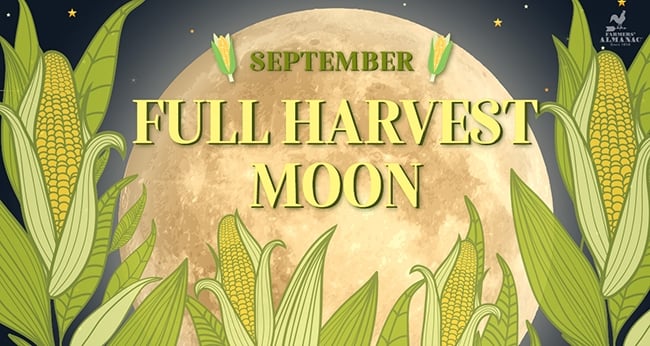
The Harvest Moon, the full Moon that closes summer and opens autumn, peaks on Saturday, September 26, 2026, at 12:49 p.m. Eastern Daylight Time. Corn stands tall across the Midwest, pumpkin patches glow orange in the Northeast, and the air after sundown has finally cooled. The autumnal equinox arrived four nights earlier on Tuesday, September 22, and that timing is exactly what gives this Moon its working name. Before electric light, the Harvest Moon was a tool: it gave farmers extra evening hours to bring the crop in. The question this week is whether the harvest is in.
When Is the Harvest Moon 2026?
Full Moon September 2026: Saturday, September 26
Peak Illumination: 12:49 p.m. Eastern Daylight Time
The Moon hits full phase at the same instant everywhere on Earth, so the clock simply shifts by time zone: 11:49 a.m. Central Daylight Time, 10:49 a.m. Mountain Daylight Time, 9:49 a.m. Pacific Daylight Time, and 16:49 UTC for readers across the Atlantic. Peak falls during daylight for all of North America, so the Moon will still be below the horizon at that exact minute. The good news is the Moon reads as full to the naked eye for about a day on either side of peak, which means Saturday night, September 26, and Sunday night, September 27, both deliver the full Harvest Moon view.
The exact phase time can be verified against the U.S. Naval Observatory phase calculator. According to NASA, the Moon appears full when it sits opposite the Sun in the sky and reflects its light back at us, which is why every full Moon rises near sunset and sets near sunrise.
For local moonrise and moonset times in your zip code, see our Full Moon Calendar.
What Makes the Harvest Moon Special
The Harvest Moon has a quiet trick no other full Moon plays the same way. On most nights of the year, the Moon rises about 50 minutes later than it did the night before. Around the autumnal equinox, that delay shrinks to roughly 25 to 30 minutes for several nights in a row at mid-northern latitudes. The Moon is not slowing down; the geometry of the Moon’s orbit and the shallow angle the ecliptic makes with the horizon at this time of year simply lines up in a friendly way. That shallow-ecliptic effect is the single defining fact of the Harvest Moon.
The result is plain English: a bright, almost-full Moon shows up not long after sunset on three or four consecutive evenings. A farmer plowing or picking in 1800 got an on-time Moon every night that week instead of having to wait an extra hour each night. That is the practical advantage that fixed the name. The same trick works the following month for the Hunter’s Moon, but the September version landed at the peak of the grain harvest, so the name stuck to September.
Why the Ecliptic Angle Matters
The Moon does not orbit Earth along the celestial equator; it tracks close to the ecliptic, the same path the Sun follows through the year. Near the September equinox in the Northern Hemisphere, the ecliptic intersects the eastern horizon at a shallow angle just after sunset. A shallow angle means each night’s moonrise point shifts only a short distance along the horizon, and the clock catches up only a short time later. The further north you stand, the more dramatic the effect: in southern Canada, the night-to-night delay can drop below 20 minutes for two or three evenings running.
Why It’s Called the Harvest Moon
The name is a working name, not a poetic one. Before electricity reached the farm, the only light after sunset came from a lantern, a candle, or the Moon. A full Moon close to the equinox rose near sundown for several evenings running, hung low over the eastern horizon for hours, and turned the cropland into something that could still be worked. Corn, pumpkins, squash, and beans were ready or close to it. Frost was on the way. Every extra hour of bright moonlight was a real one: another row picked, another wagon filled, another day’s harvest moved from field to barn.
Cornelius Mathew And The 1842 Reference
The earliest documented English-language use of the phrase “Harvest Moon” in print is credited to the American author and editor Cornelius Mathews, who used it in his 1842 collection of poems. The name itself almost certainly travelled across the Atlantic with English settlers well before that, but Mathews put it in fixed type at the right moment to lock it into the American almanac vocabulary. Old Farmer’s Almanac editions of the mid-19th century carried the name through to the rural reader, and by the close of the century the Harvest Moon was the standard label across both farm journals and Sunday papers.
The Crops Being Brought In
Late September is the heart of the harvest in much of North America. Field corn comes in by the wagonload across the Midwest. Sweet corn finishes up in the Northeast. Pumpkins ripen on the vine and turn the orange tone that gives the season its color. Winter squash, butternut and acorn and Hubbard, cures in the field before storage. Dry beans and pole beans finish drying on the plant. The first apples hit the press for cider. None of this work could wait. A hard frost, a heavy rain, or a windstorm could spoil a crop overnight. The Harvest Moon let a farmer keep moving after sundown without breaking stride.
Other September Full Moon Names
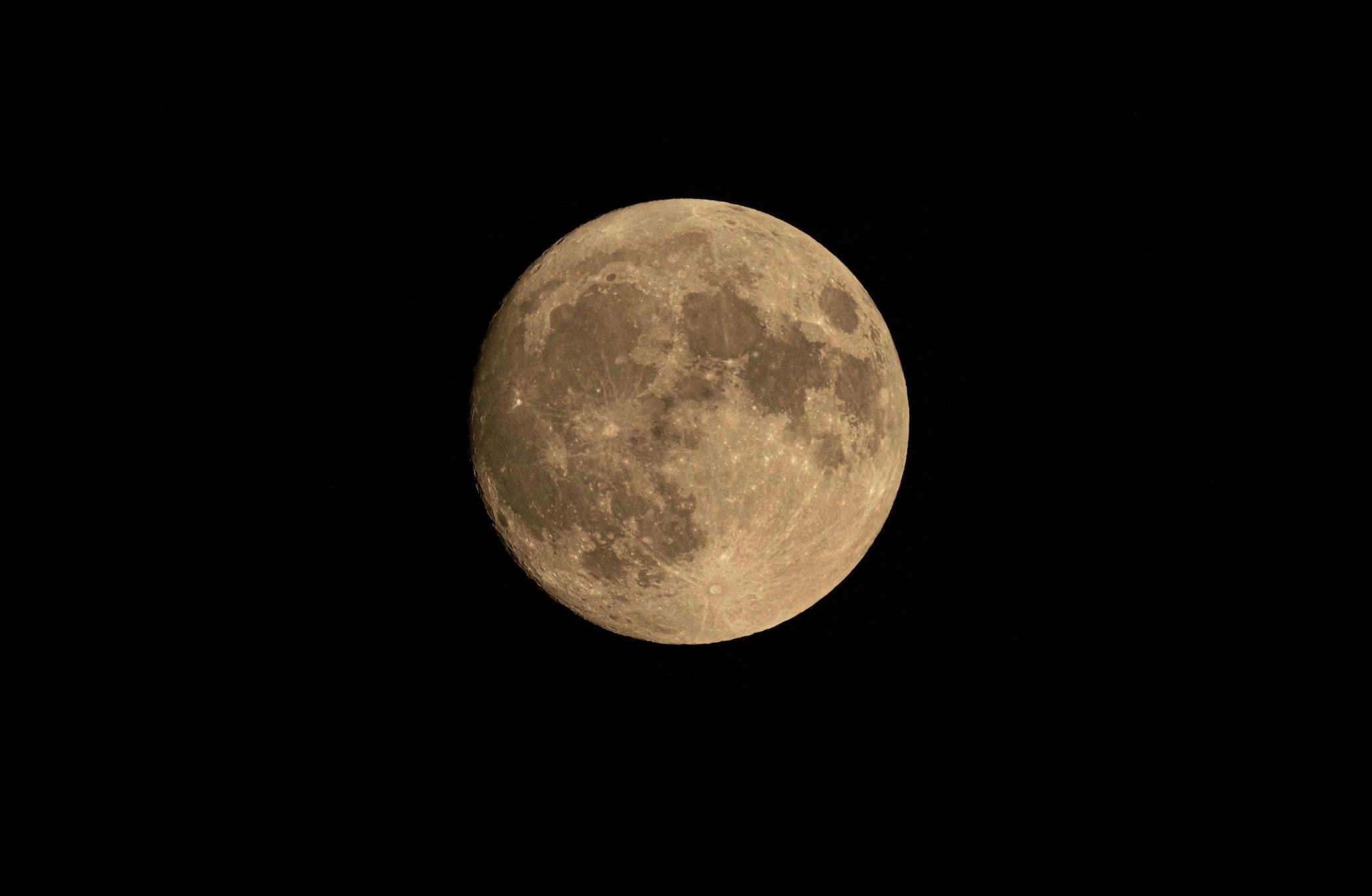
The Harvest Moon label belongs to whichever full Moon falls closest to the equinox. In a roughly one-in-four year the October full Moon wins that contest, and September shifts to its second name, the Corn Moon. In 2026, September keeps the Harvest Moon title, but the older, regional names are still in use across the continent and the Atlantic.
To the Algonquin of the Northeast it is the Corn Moon, the Moon under which the corn is gathered. To the Anishinaabe (Ojibwe, Chippewa) it is waatebagaa-giizis, the Falling Leaves Moon. To the Cherokee of the Southeast it is the Nut Moon, the month the hickory, walnut, and chestnut crop comes off the trees. To the Cree of the northern forest it is the Snow Goose Moon, named for the great southbound flocks crossing overhead. To the Haudenosaunee (Iroquois) of the Northeast it is the Corn Moon as well, a label shared across the eastern woodlands.
Indigenous Names by Nation
| Nation | Name | What it marks |
|---|---|---|
| Algonquin, Northeast | Corn Moon | The Moon under which the corn is gathered |
| Anishinaabe (Ojibwe, Chippewa) | waatebagaa-giizis, Falling Leaves Moon | The turn of the leaf |
| Cherokee, Southeast | Nut Moon | Hickory, walnut and chestnut coming off the trees |
| Cree, northern forest | Snow Goose Moon | The great southbound flocks overhead |
| Haudenosaunee (Iroquois), Northeast | Corn Moon | Shared across the eastern woodlands |
European and Celtic Names
European tradition kept its own labels for the same Moon. Old English farming sources call it the Barley Moon, the month barley was cut and shocked for malting and bread. In the wine-growing regions of France and Germany it was the Wine Moon, marking the start of the grape pressing season. Celtic tradition uses the Singing Moon, a reference to the harvest-home suppers and field songs that closed the working day. The Harvest Moon name itself, used in Old English well before its 1842 American printing, points at the same practical reason: bright Moon, ripe grain, work to finish.
The Harvest Moon and the Fall Equinox
The Harvest Moon is not locked to September. It is locked to the autumnal equinox. By tradition, the Harvest Moon is the full Moon that falls closest to the first day of fall, whether that lands in September or in October. In 2026, the autumnal equinox arrives on Tuesday, September 22. The September full Moon comes four days later on September 26. The October full Moon does not come until October 26, more than five weeks past the equinox. September wins by a wide margin, so it carries the Harvest Moon name this year.
For the chronology of the season itself, the shifting daylight balance, and the cross-quarter days that follow, see our guide to the first day of fall. Readers who follow the September sky for birthstone and birth-flower lore can also browse our September birthstone and September birth month symbols pages for the wider month.
Harvest Moon Around the World
The bright Moon that lights up the fields in North America lights up the same patch of sky over Asia and Europe at the same hour. Three of the world’s older Moon festivals fall on or near the Harvest Moon every year, and 2026 is no different.
The Mid-Autumn Festival In China
The Mid-Autumn Festival, or Zhongqiu Jie, is celebrated on the 15th day of the eighth month of the Chinese lunar calendar, which always coincides with a full Moon. In 2026 the festival falls on Friday, September 25, the day before the Harvest Moon peaks by the Gregorian calendar and on the same lunar full Moon by the Chinese reckoning. Families gather outside, share mooncakes, light paper lanterns, and tell the old story of Chang’e, the Moon goddess. The festival is a public holiday in China, Taiwan, Vietnam, and several other parts of East and Southeast Asia.
Mabon And The Modern Pagan Calendar
Modern Pagan and Wiccan traditions mark the autumnal equinox itself as Mabon, the second of three harvest festivals in the Wheel of the Year. Mabon falls on the equinox, September 22, 2026, four days before the Harvest Moon peaks. The celebration is built around gratitude for the gathered crop, the balance of day and night, and the slow turn toward winter. Apples, gourds, late grain, and the last of the warm-weather flowers are the traditional altar pieces.
Sukkot And Korean Chuseok
The Jewish festival of Sukkot, the Feast of Tabernacles, also tracks the autumn full Moon and begins on the 15th day of the Hebrew month of Tishrei. Korean Chuseok, the three-day harvest thanksgiving holiday, runs on the same lunar full Moon as the Mid-Autumn Festival. Across cultures and centuries, the bright Moon at the close of the growing season has been read as the same signal: the harvest is in, the people gather, the year turns.
September 2026 Sky Highlights
The Harvest Moon shares September 2026 with one of the year’s quieter sky stretches and a constellation lineup that begins to swing toward winter. The Moon is high and bright through the fourth week of September, which washes out the faintest stars, so deep-sky targets are easier earlier in the month under the dark of the August new Moon and again after the Harvest Moon wanes through the fourth week.
By mid-evening, Cygnus the Swan, Lyra, and Aquila form the Summer Triangle high overhead, and the broad band of the Milky Way arches from the southern horizon through the zenith. Look east after midnight and the winter shapes are coming up: the Pleiades star cluster clears the horizon by 11 p.m., and by early Sunday morning, September 27, Orion’s belt sits above the eastern treeline. The full Harvest Moon will wash out faint stars on the night of September 26, so plan meteor and deep-sky viewing for the dark nights earlier and later in the month. For the wider September almanac, our full Moon horoscopes page tracks the lunar and solar signs night by night.
Harvest Moon Folklore
Almanacs and farm journals from the 18th and 19th centuries treat the Harvest Moon as a working calendar marker, not a magical one. The folklore that grew up around it is mostly practical: plant root crops on the waning Moon, cut hay under a clear sky, finish the harvest before the Hunter’s Moon in October so the family had time to put up preserves. The honest caveat is that none of this is forecasting; it is record-keeping that helped a farmer organise the year. The Harvest Moon was reliable, and so the tasks tied to it were too.
“Shine On, Harvest Moon” And The Pop Culture Layer
The Harvest Moon picked up a second life in 1908, when Nora Bayes and her husband Jack Norworth published the popular song “Shine On, Harvest Moon” for the Ziegfeld Follies. The lyric is a love song with the Moon as its only set piece, and the tune was a runaway hit on Tin Pan Alley and the vaudeville circuit. The honest caveat for almanac readers is that “Shine On, Harvest Moon” is a pop standard, not an old folk song; it dates only to the early 20th century. It is, all the same, the reason most North Americans first heard the words “Harvest Moon” set to music. Neil Young’s 1992 album of the same name added a second generational layer.
Weather Lore Around The Harvest Moon
Old weather lore reads a halo around the Harvest Moon as a sign of rain within three days, a rule that lines up with the high cirrus clouds that often precede a passing low. A bright, sharp-edged disc was said to forecast a dry, cool spell. Heavy late-September dew on the grass was read as a sign of a settled week ahead. The U.S. forecast in our Long-Range Weather Forecast is the place to take a more measured look at what is coming for late September and October 2026.
Spiritual and Astrological Read of the Harvest Moon
The 2026 Harvest Moon is full in Pisces, opposite the Virgo sun. Pisces full moons are traditionally read as moons of completion, dream, and intuition: a sign to finish what was started in spring, and to listen for the quieter signals about what the next cycle should be.
Gardening And Best Days Around The Harvest Moon
September is a closing month in the warm-season garden across most of the country. By the Harvest Moon, the last tomatoes are ripening on the vine, winter squash is curing in the field, and the first cool-season greens are starting to size up. Use the week around full Moon to lift the last of the warm-weather crops, sow garlic cloves for next summer, mulch perennials for the cold, and clean tools before storage. The waning Moon after September 26 is traditionally a good window for below-ground tasks: dividing rhubarb, planting spring-flowering bulbs, and turning compost.
Almanac readers who plan by the Moon use the Best Days Calendar to time tasks like setting eggs, canning, killing weeds, and starting indoor seeds for an early spring transplant. The Gardening by the Moon Calendar is the companion tool for the season’s last sowings and the first cover-crop weeks of autumn.
How to See the Harvest Moon in 2026
The Harvest Moon is the easiest full Moon of the year to catch. It rises in the east near sunset on the night of full phase, holds low over the horizon for the first hour, and climbs into the southern sky as the night goes on. No telescope, no binoculars, no app needed. A clear horizon and a porch chair will do.
Best Viewing by Region
| Region | What to expect on the night of the Harvest Moon |
|---|---|
| Northeast and New England | Humid haze near the horizon, so the Moon reddens as it rises |
| Southeast and Gulf | Afternoon storms usually clear by late evening. Look after 10 p.m. |
| Midwest and Great Lakes | Often the cleanest horizons of the month. Move away from lake haze |
| Great Plains | Wide, low horizons and little light pollution. Among the best in the country |
| Desert Southwest | Dry air and sharp detail, though monsoon cloud is possible in late summer |
| Pacific Northwest | Coastal marine layer. Drive inland or uphill to get above it |
Practical Tips
- Step outside about 20 minutes before local sunset on Saturday, September 26, or Sunday, September 27, to catch the Moon rising low in the east.
- Watch three or four nights in a row to see the short-delay moonrise effect for yourself; each night’s Moon will be up not long after sunset.
- Let your eyes adjust for 5 to 10 minutes; the harvest-orange Moon paired with a turning treeline makes for striking contrast.
- For photography, a phone in night mode works for the wide scene; a DSLR at 1/125 second, f/8, ISO 200 holds detail on the disc.
- The Moon looks largest near the horizon, an optical illusion that has fooled human eyes for centuries. Catch it then for the most dramatic shot.
- Check local moonrise and moonset for your zip code in our Moon Phases Calendar before you head out.
Step outside on any of the three nights around peak, take a quiet minute under the Harvest Moon, and let the bright disc do its old job: a calendar marker, a working light, and a soft closing chapter on the growing season before autumn settles in.

Harvest Moon FAQ
When is the Harvest Moon in 2026?
The Harvest Moon peaks on Saturday, September 26, 2026, at 12:49 p.m. Eastern Daylight Time (16:49 UTC). Because peak falls during daylight in North America, the Moon will still be below the horizon at that moment. It reads as full to the naked eye for about a day on either side of peak, so Saturday night, September 26, and Sunday night, September 27, both offer the full view.
Why is the Harvest Moon in September this year and not October?
The Harvest Moon is defined as the full Moon closest to the autumnal equinox, whichever month it falls in. In 2026, the equinox is on Tuesday, September 22. The September full Moon comes four days later on September 26, while the October full Moon does not come until October 26, more than five weeks past the equinox. September wins by a wide margin, so it carries the Harvest Moon title this year.
What is the short-delay moonrise effect?
On most nights of the year, the Moon rises about 50 minutes later than it did the night before. Around the autumnal equinox, that delay shrinks to roughly 25 to 30 minutes for several nights in a row at mid-northern latitudes. The cause is the shallow angle the ecliptic makes with the eastern horizon at this time of year. The result is a bright, almost-full Moon up not long after sunset for three or four consecutive evenings, which is exactly what gave farmers their extended working day.
What are other names for the September full Moon?
When September carries the Harvest Moon title, October’s full Moon becomes the Hunter’s Moon. When September is not the Harvest Moon, it is most often called the Corn Moon or, in Old English farming sources, the Barley Moon. Indigenous names include the Anishinaabe Falling Leaves Moon, the Cherokee Nut Moon, the Cree Snow Goose Moon, and the Mohawk Time of Freshness. European tradition adds Wine Moon and the Celtic Singing Moon.
Is the 2026 Harvest Moon a supermoon?
No. The September 26, 2026 full Moon is not a supermoon. The first supermoon of the 2026 to 2027 cycle is the Beaver Moon on Tuesday, November 24, 2026. See our November Beaver Moon guide for the details.
Who first used the name “Harvest Moon” in print?
The earliest documented English-language printing of the phrase in an American source is credited to Cornelius Mathews in 1842. The name itself almost certainly travelled across the Atlantic with English settlers well before that date; Mathews simply put it in fixed type at the right moment to lock it into the American almanac vocabulary.
What about the song “Shine On, Harvest Moon”?
“Shine On, Harvest Moon” was published in 1908 by Nora Bayes and her husband Jack Norworth for the Ziegfeld Follies. It is a pop standard, not an old folk song, and it dates only to the early 20th century. Neil Young’s 1992 album of the same name added a second generational layer. The song is the reason most North Americans first heard the words “Harvest Moon” set to music.
When is the next full Moon after the Harvest Moon?
The Hunter’s Moon, the October 2026 full Moon, follows the Harvest Moon. It peaks on Monday, October 26, 2026, at 04:11 UTC (12:11 a.m. Eastern Daylight Time, the night of Sunday, October 25). The Hunter’s Moon uses the same short-delay moonrise trick as the Harvest Moon, one month later in the season.
Join the Discussion
What is your favorite name for the September full Moon?
How will you mark the 2026 Harvest Moon? A field walk, a porch chair, a road trip to a darker sky?
Related Articles
- November’s Beaver Moon and Alternative Names
- Full Moon Names and Times
- Moon Phases Calendar
- First Day of Fall and the Autumnal Equinox
- September Birthstone: Sapphire
- September Birth Month Symbols And Fun Facts
- Full Moon Horoscopes
- Subscribe to The Farmhouse, Our Members-only Community!
See also when the next full Moon rises and the Harvest Moon horoscope.


Daniel Higgins
Daniel Higgins is a lifestyle writer with two decades of experience who covers a wide variety of interests, from folklore to food and drink. Higgins writes for The New York Times, USA Today, and Yahoo News.
- Daniel Higgins

- Daniel Higgins
- Daniel Higgins
- Daniel Higgins

I have a new Farmers Almanac every year.I wouldn’t be without one.My mother always said try to learn at least one new thing a day and your Almanac makes it possible.
Thank You
thanks for letting everyone know we love the information
Love the farmers almanac it is so much information and tips on this page I enjoy looking at it in this crazy world it is one thing still that is very comforting!!!and makes you happy to look at it
very interesting and germaine for a sailor
Loved the background music. Found it very appropriate. Heard every word of the dialogue. Very informative.
We’re glad you enjoyed it, Jan!
Thank you! I loved the music, and I didn’t think it was in any way too loud. Perhaps it is the other people’s audio or settings?
Looking forward to another gorgeous Harvest moon,thanks for the reminder!
LOOSE THE MUSIC, TOO LOUD.
I agree with cleatus snow,
“Love the video, turn the back ground music down so the dialogue can be heard easily”
I am looking forward to the harvest moon hoping to look at it with my precious 6yr old granddaughter