September Birthstone: Sapphire Meaning, Color, and 5th/45th Anniversary Gem
Quick Reference: September Birthstone
- Birthstone: Sapphire (with lapis lazuli and aventurine as traditional alternates)
- Meaning: Wisdom, loyalty, royalty, and a long-running symbol of “blessings from heaven”
- Mineral: Corundum (aluminum oxide), Mohs 9; only diamond is harder
- Why it is blue: Trace iron and titanium in colorless corundum
- Top of the market: Kashmir “cornflower blue,” first found in 1881
- Zodiac: Virgo (Aug 23 to Sep 22) and Libra (Sep 23 to Oct 22)
- Anniversary: 5th and 45th wedding, plus the 65th “Sapphire Jubilee”
Sapphire is September’s birthstone, and it has carried symbolic weight for thousands of years. It was worn by clergy, set into the British Crown Jewels, and slipped onto Princess Diana’s finger in 1981 and Kate Middleton’s in 2010. This guide covers what sapphire actually is, where the best stones come from, the famous gems you can still go visit, and the folklore that has clung to it since the ancient world called every blue gem by its name.
What Is the September Birthstone?
The September birthstone is sapphire, the blue variety of the mineral corundum. Corundum is aluminum oxide, and in pure form it would be colorless. Trace amounts of iron and titanium tip a clear crystal toward the deep blue most people picture, while other impurities produce pale pink stones in Sri Lanka, velvety blue stones in Kashmir, or steely teal stones in Montana.
Sapphire is the traditional stone on most birthstone charts, with two alternates: lapis lazuli (the deep blue stone the ancients actually meant when they wrote “sappheiros”) and aventurine (a green quartz tied to the zodiac sign Virgo). Sapphires, rubies, and emeralds together generate more revenue than every other colored gem combined.
The History and Lore of Sapphire
Sapphire’s story is older than most countries. Biblical accounts said the Ten Commandments were carved on sapphire, and medieval European clergy wore sapphire rings as the “stone of heaven.” Ordinary people were not allowed to wear sapphires until after the 17th century. Greek and Roman rulers wore them as protection from jealousy and a magnet for wealth, peace, and harmony.
The royal track record reads like a tour of European history. The St. Edward’s Sapphire, worn by Edward the Confessor in the 11th century, sits in the cross atop the British Imperial State Crown. Helen of Troy, in legend, owned a blue-corundum amulet credited with her power over men. Catherine the Great built an extravagant sapphire collection in 18th-century Russia. Napoleon Bonaparte gave Josephine a sapphire-and-diamond engagement ring in 1796. In 1981 and again in 2010, the same 12-carat Ceylon sapphire engagement ring passed from Prince Charles to Princess Diana, then from Prince William to Catherine, Princess of Wales. Queen Elizabeth II celebrated her Sapphire Jubilee in 2017, the first in British history.
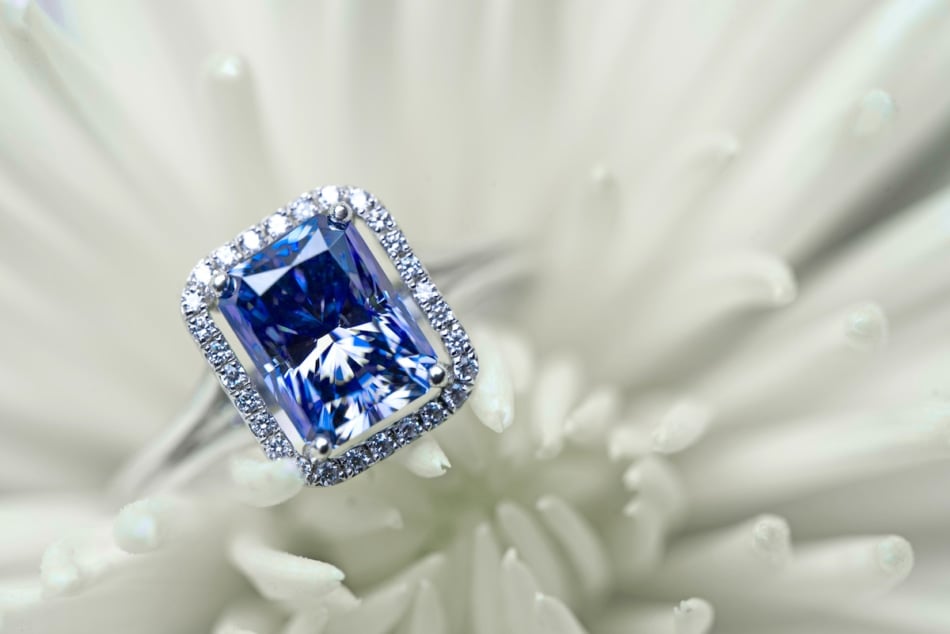
Sapphire = Corundum That Isn’t Red
Here is the line gemologists draw: sapphire and ruby are the same mineral. Both are corundum. Red corundum is ruby; every other color is sapphire. Blue is the famous one, but corundum also forms in violet, purple, green, pink, yellow, grey, black, brown, and on rare occasions colorless. Those non-blue, non-red stones are sold as “fancy color” sapphires.
Where the boundary sits between “pink sapphire” and “ruby” fills gemology journals. The Gemological Institute of America (GIA) defines ruby narrowly, so many pinkish-red stones fall on the sapphire side, while Thai and Sri Lankan merchants have been more generous with the ruby label because rubies sell for more per carat.
Sapphire is the second-hardest natural mineral at Mohs 9. Only diamond is harder. That toughness is why sapphires turn up in heirloom rings, watch crystals, and smartphone camera covers, and why sapphire cannot form where common silicon is present, keeping supply tight.
Geology and Sources: Where Sapphires Come From
Sapphires have been mined on every continent except Antarctica. Origin matters as much as color when you talk about value, and trade names from the old mining centers still anchor the high end.
- Kashmir, India: Discovered 1881 after a Himalayan landslide. The legendary “cornflower blue” stones, medium-to-deep blue with a velvety look. Mines were exhausted within decades; fine Kashmirs are now among the most expensive colored gems on Earth.
- Burma (Myanmar): Home of “royal blue” sapphires, more saturated than Kashmir. Still sets auction records.
- Sri Lanka (Ceylon): Widest variety of any source: pale blue, padparadscha pink-orange, yellow, pink, and star sapphires. Most royal jewelry sapphires (including the Diana/Kate ring) are Ceylon stones.
- Madagascar: Major modern source since the 1990s, producing a large share of the world’s commercial sapphires.
- Montana, United States: Yogo Gulch and the Rock Creek and Missouri River deposits produce small, vivid sapphires in cornflower blue and fancy colors. The only large American source.
- Australia: Queensland and New South Wales supply darker blue and yellow sapphires for the commercial market.
- Thailand: The cutting and treatment capital of the global trade. Stones from Sri Lanka, Madagascar, and East Africa pass through Thai workshops before retail.
- Tanzania and East Africa: Increasingly important since the 2000s. Most affordable commercial sapphires today come from South Africa (especially Tanzania and Madagascar) or southern Asia (Sri Lanka, India, Thailand, Cambodia).
Famous Sapphires You Can Actually Go See
If you find yourself in Washington, D.C., New York, or London, several of the most famous sapphires in the world sit in public collections.
- The Logan Sapphire: 423 carats, set in a diamond brooch at the Smithsonian National Museum of Natural History. One of the largest faceted blue sapphires anywhere.
- The Star of India: 563 carats, the largest blue star sapphire in the world, roughly golf-ball sized. Held at the American Museum of Natural History in New York. The six-rayed asterism comes from rutile needles inside the stone. It was one of the gems stolen in the 1964 heist by Jack Murphy and Allan Kuhn, and was recovered shortly after.
- The Star of Asia: 330 carats, also at the Smithsonian. Grayish-blue with strong asterism.
- The Stuart Sapphire: A 104-carat oval set in the back of the Imperial State Crown alongside the St. Edward’s Sapphire, part of the Crown Jewels at the Tower of London.
- The Bismarck Sapphire Necklace: A 98.6-carat Burmese sapphire in a diamond and platinum necklace at the Smithsonian, donated by Countess Mona Bismarck.
- The Star of Adam: The largest blue star sapphire ever found at 1,404.49 carats, almost 10 ounces. Pulled from a Sri Lankan mine in 2016 and held privately, valued from $100 million to more than $175 million.
- The Blue Belle of Asia: A 392.52-carat cushion-cut sapphire found in Sri Lanka in 1926, originally intended as a coronation gift for Queen Elizabeth II. It vanished into private collections for about 35 years and sold in 2014 for almost $17 million.
- The Diana/Kate engagement ring: A 12-carat oval Ceylon blue sapphire with 14 solitaire diamonds in 18-karat white gold. Given to Princess Diana in 1981 and now worn by Catherine, Princess of Wales, after Prince William proposed in 2010. The brooch that inspired it was given to Queen Victoria by Prince Albert, who wore it on her wedding day as her “something blue.”
Sapphire Treatments: What “Natural” Actually Means
Roughly 90% of sapphires on the world market have been heat-treated. Stones are heated above 1,500°C in a controlled atmosphere to deepen color and dissolve silk-like inclusions. The treatment is permanent, accepted by the trade, and disclosed on every reputable lab report. A “no-heat” sapphire is rarer and commands a premium, especially in Kashmir, Burma, and Ceylon stones.
Beryllium-diffusion treatment is more controversial. A trace of beryllium diffused during heating can shift color dramatically, including turning pale pinks into padparadscha-style oranges. The GIA and the American Gem Trade Association (AGTA) both require disclosure of beryllium diffusion. Any sapphire over a few hundred dollars should come with a current lab report listing treatment, origin, and weight.
Padparadscha Sapphires: The Lotus-Color Rarity
The rarest fancy color sapphire is the padparadscha, a pink-orange stone whose name comes from the Sinhalese word for “lotus flower.” The classic padparadscha is mined in Sri Lanka and has a delicate sunset color between salmon and pink-tinged orange. Gem labs are strict about the label, and Sri Lankan padparadschas are the market darling, with prices that can rival fine emeralds.
Star Sapphires and the Six-Rayed Asterism
A star sapphire looks like an ordinary cabochon until you tilt it under a single light source. Then a six-rayed star floats across the dome. The effect, called asterism, happens when needle-like rutile inclusions align inside the crystal. Star sapphires must be cut as cabochons (smooth domes, not faceted) so the inclusions can do their work. The three crossbars have been read as symbols of faith, hope, and destiny, and the Christian tradition has called this form the “stone of destiny.”
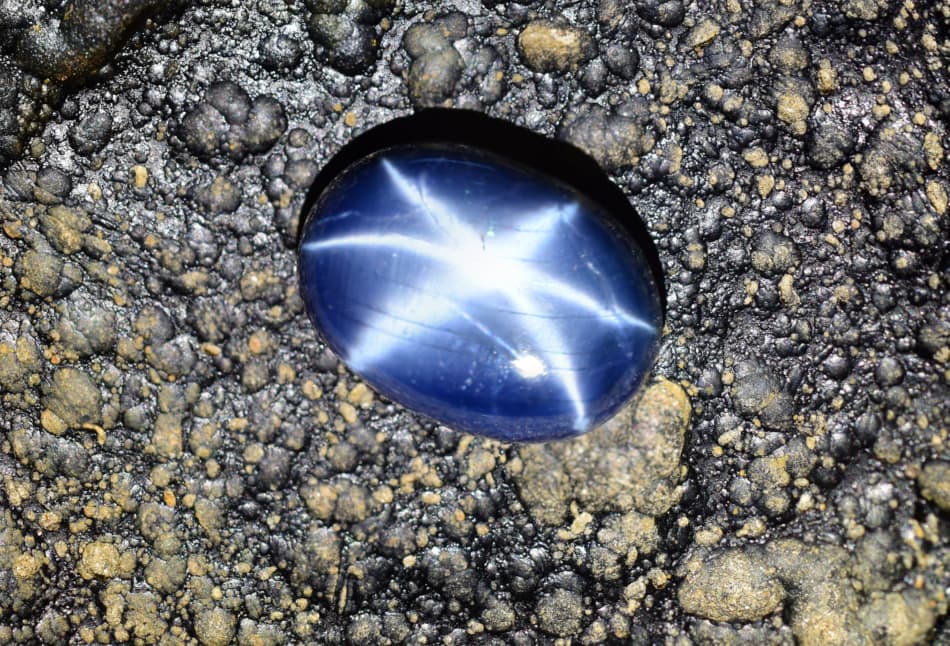
Star sapphires were long believed to ward off evil, illness, and bad omens, and to serve as a talisman for travelers. The most famous sit in museums (the Star of India, the Star of Asia), but a good Ceylon star can be had for a few hundred dollars at retail.
Sapphire Folklore and Healing Beliefs
Sapphire is one of the most folklore-heavy gems on the calendar. We share the old stories here as folklore, not as medical or spiritual advice. Wear what makes you happy.
- In biblical times, the Ten Commandments were said to be carved into stone using this durable gem.
- In the Middle Ages, blue sapphire symbolized heaven and brought blessings of heaven to the wearer.
- Sapphires were associated with chastity and seen as sanctified, which is part of why sapphire rings became popular with the clergy.
- In ancient cultures the gem was believed to connect to the spirit world and allow communication with the gods. Visitors to oracles wore a sapphire ring to draw a prophetic message.
- In Hindu mythology, the Kaplavriksha tree granted wishes, made of gemstones: sapphires for roots, diamonds for trunk, rubies for fruit. Hindus also connect sapphires to Saturn, a particularly spiritual planet.
- In ancient Persia, the Earth was believed to rest on a sapphire pedestal, and blue gems were broken pieces of it. The story also tried to explain why the sky is blue (here is the real reason).
- In Greek myth, sapphire was sacred to Apollo. Prometheus was chained to a giant blue stone for teaching humanity about fire, and the first sapphire was a chip left on his finger after Hercules freed him.
- Hindus believed sapphires built muscle and eased skeletal ailments like arthritis; folk medicine also credited it with easing pain and stress.
- Wearing this prized gem was thought to help people keep their promises.
- In the 15th century, a sapphire held near a spider was said to kill it, and a venomous snake placed inside a sapphire vessel was said to die.
- Dreaming of wearing this stone was a warning to be less impulsive.
- An old Italian superstition said sapphire protected against eye problems and depression; Egyptians considered all blue gemstones an antidote to poison and a remedy for eye ailments.
- Star sapphires were singled out as the best for tapping mystical powers and as a talisman for travelers.
Sapphire and the Zodiac
September spans two zodiac signs, so sapphire pulls double duty. Virgo runs Aug 23 to Sep 22, Libra runs Sep 23 to Oct 22, and sapphire is the traditional stone for both: wisdom and loyalty for Virgo’s analytical streak and Libra’s pull toward balance. Aventurine is also assigned to Virgo as a stone of abundance and creativity. For more, see our companion piece on September birth month symbols and fun facts.
How to Care for Sapphire Jewelry
Sapphire became the engagement-ring stone of choice for royals and everyday wearers because it stands up to daily wear. At Mohs 9 it resists scratches from almost everything except diamond and other corundum, and it is stable to most household chemicals and temperatures.
- Cleaning: Warm soapy water and a soft toothbrush. Rinse, dry with a lint-free cloth.
- Ultrasonic and steam: Safe for untreated and heat-only sapphires. Avoid for beryllium-diffused, fracture-filled, or heavily included stones.
- Storage: Sapphire scratches softer gems. Store separately in a pouch.
- Setting check: Even a hard stone can pop a loose prong. Check settings yearly.
Choosing a Sapphire: What to Look For
The four traditional Cs (color, clarity, cut, carat) all matter for sapphire, but color and origin do most of the work on the price tag.
- Color: Desirable blue sapphires sit in the medium-to-deep “cornflower” or “royal” blue range. Too dark reads as inky; too pale looks washed out.
- Origin: Kashmir, Burma, and Ceylon are premium. Madagascar and Montana offer excellent stones for less. Origin should be on a lab report, not just stated by the seller.
- Treatment disclosure: Reputable sellers will tell you the treatment status (none, heat only, or beryllium diffusion) without being pushed.
- Carat: Above two carats the price per carat rises sharply; below that, lovely stones are accessibly priced.
- Lab reports: For any sapphire over a few hundred dollars, ask for a current report from GIA, AGTA, or another major lab.
Sapphire Anniversary Significance
Sapphire is the traditional gift for the 5th and 45th wedding anniversaries and the stone for the 65th jubilee. A five-year stone tends to be smaller and delicate; a 45th-anniversary stone is usually a centerpiece. Jubilees are the coronation anniversaries of reigning British monarchs, and Queen Elizabeth II celebrated her Sapphire Jubilee in 2017, the first in British history.
Ancient Misidentification: When “Sapphire” Meant Something Else
The name sapphire comes from the Greek sappheiros and the Latin sapphirus, both of which simply meant “blue.” In ancient texts the word almost certainly referred to lapis lazuli, the dense blue stone flecked with golden pyrite mined in what is now Afghanistan. The corundum sapphire we know today only acquired the name later.
Alternative September Birthstones
Sapphires are not the only way to honor the month of September. Two alternates show up in older almanac charts and modern jewelry.
Lapis Lazuli
Lapis lazuli is the deep blue stone with golden pyrite specks that the ancient world called “sapphire.” It has been used for jewelry, pigment (the original ultramarine), and inlay work for at least 6,000 years. Its associations track sapphire’s: illumination, communication, and protection. If you want the original “blue stone of September,” lapis is it.
Aventurine
Aventurine is a green quartz tied to the zodiac sign Virgo, known in folklore as a stone of abundance, empathy, and creativity, and connected to the kingdom of the gods. It is much cheaper than sapphire and turns up in modern jewelry as cabochons, beads, and tumbled stones. Whichever stone speaks to you, all three are lovely ways to celebrate September.

Sapphire: The 5th and 45th Wedding Anniversary Gemstone
Sapphire is the traditional gift for a 5th wedding anniversary and again for the 45th. The reason for the double-up is its symbolism: sapphire stands for loyalty, sincerity, and fidelity, all qualities a couple has tested by year five and proved by year forty-five. For the 5th anniversary, a single small stone set into a pendant or a thin ring band is the classic choice. For the 45th, couples often go for a larger stone or a pair of matched earrings, sometimes pairing sapphire with white sapphire or diamond for contrast.
If you are buying for an anniversary, the deep cornflower-blue sapphire is the safest choice; it photographs well, suits all skin tones, and ages without going out of style. Look for a stone rated medium-to-deep blue with even saturation and minimal visible inclusions.
Sapphire Color Guide: Blue, Pink, Yellow, and Padparadscha
Sapphire is famous for blue but comes in nearly every colour except red (a red sapphire is technically a ruby). The shades you will most often encounter:
- Blue sapphire – the classic. Cornflower blue is the traditional September stone.
- Pink sapphire – bright rose to soft blush. Popular for engagement rings.
- Yellow sapphire – lemon to honey-gold. Often a more affordable alternative to yellow diamond.
- Padparadscha sapphire – the rarest, a pinkish-orange hue named for the lotus flower. A serious collector’s stone.
- White sapphire – colourless, used as a budget diamond alternative.
All sapphires are the mineral corundum; the colour varies with trace elements (iron and titanium for blue, chromium for pink). A 1-2 carat blue sapphire in a 14k or 18k gold setting is the typical 5th anniversary gift; couples celebrating the 45th often go up to 3+ carats or commission a custom setting.
If you were born in September, you have inherited one of the most storied gems in human history. The Almanac’s view is practical: sapphire is durable enough for daily wear, the lore is fun to know, and a small Ceylon or Montana stone is a respectable starting point if Kashmir is out of reach. Pick the color that catches your eye, ask for a lab report on anything substantial, and wear it as often as you like.

September Birthstone FAQ
What is the September birthstone?
The September birthstone is sapphire, the blue (and sometimes pink, yellow, green, or orange) variety of the mineral corundum. Traditional alternates are lapis lazuli and aventurine.
What does the sapphire birthstone symbolize?
Sapphire has been associated with wisdom, loyalty, royalty, and “blessings from heaven” for thousands of years. Medieval clergy called it the “stone of heaven.”
Are sapphire and ruby the same stone?
They are the same mineral, corundum. Red corundum is called ruby. Every other color of corundum (blue, pink, yellow, green, purple, orange, colorless) is called sapphire. The pink-orange “padparadscha” is the rarest fancy color sapphire.
Why are sapphires blue?
Pure corundum is colorless. The classic blue color comes from trace amounts of iron and titanium inside the crystal. Other trace elements push the color toward pink, yellow, green, or orange in fancy color sapphires.
Where do the best sapphires come from?
Kashmir (discovered 1881, nearly mined out) produces the “cornflower blue” stones at the top of the market. Burma is known for “royal blue.” Sri Lanka (Ceylon) produces the widest color range, including padparadscha. Madagascar is the major modern source; Montana is the only large American source.
Are most sapphires treated?
Yes. About 90% of sapphires have been heat-treated to deepen color and clear inclusions. Heat treatment is accepted by the trade but should be disclosed. Beryllium diffusion is more controversial and must also be disclosed on lab reports from GIA or AGTA.
What anniversary is sapphire for?
Sapphire is the traditional stone for the 5th and 45th wedding anniversaries, as well as the 65th “Sapphire Jubilee.” Queen Elizabeth II celebrated her Sapphire Jubilee in 2017, the first in British history.
Is sapphire durable enough for an engagement ring?
Yes. Sapphire sits at Mohs 9, second only to diamond. It holds up to daily wear, which is why royal engagement rings (including the Diana/Kate ring) have leaned on sapphire for centuries.
Join The Discussion!
Is September your birth month? Do you own a sapphire birthstone ring, or do you lean toward one of the alternates like lapis lazuli or aventurine?
What fact or piece of folklore about this beautiful gem interests you most? Tell us in the comments.


Tamra Albright-Johnson
Tamra Albright-Johnson specializes in the unique histories and folklore around rare stones. She owns and operates a custom jewelry shop with her daughter, Kennie, in Iowa.
- Tamra Albright-Johnson

- Tamra Albright-Johnson
- Tamra Albright-Johnson
- Tamra Albright-Johnson