

Beaver Moon 2026: November Full Moon Date, Folklore, And Sky Guide
Quick Reference
- Beaver Moon 2026: Tuesday, November 24, 2026
- Peak illumination: 9:53 a.m. Eastern Time (14:53 UTC)
- The rule: The Beaver Moon is the first full Moon of November every year
- Supermoon: Yes, the first of three consecutive supermoons in November, December, and January
- Best viewing: Monday night, November 23, and Tuesday night, November 24
- Why “Beaver”: Late autumn is when beavers finish their lodges and dams before the ground freezes; it was also the season for thick-pelt trapping in early America
- Other names: Frost Moon, Mourning Moon, Trading Moon (Cherokee), Snow Moon (Cherokee), Deer Rutting Moon, Freezing Moon, Moon Of Moving Inside For Winter, and more
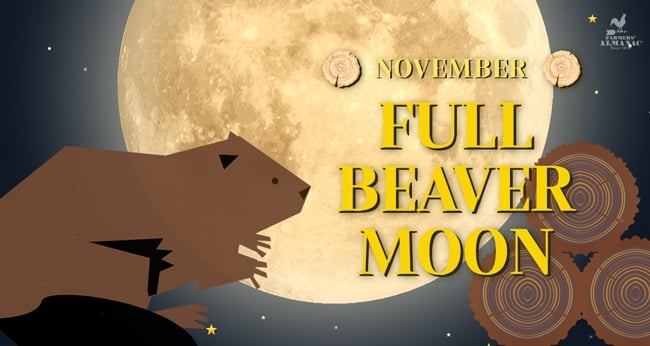
The Beaver Moon, the last full Moon of autumn in 2026, peaks on Tuesday, November 24, at 9:53 a.m. Eastern Time. The first snows of the season are already on the ground in parts of the northern United States and Canada, deciduous trees stand bare, and frost gathers on grass at dawn. Down at the water, beavers finish their lodges and dams before the ground freezes hard. Winter is coming, and November’s weather is asking the old question: are you ready?
When Is the Beaver Moon 2026?
Full Moon November 2026: Tuesday, November 24
Peak Illumination: 9:53 a.m. Eastern Time
The Beaver Moon follows a simple rule: it is the first full Moon of November every year. The Moon reaches full phase at the same moment everywhere on Earth, so the clock shifts by time zone: 8:53 a.m. Central, 7:53 a.m. Mountain, 6:53 a.m. Pacific, and 14:53 UTC for readers across the Atlantic. Peak falls during daylight for North America, so the Moon will be below the horizon at that exact minute. The good news is the Moon looks full to the naked eye for about a day on either side of peak, which means Monday night, November 23, and Tuesday night, November 24, both deliver a worthwhile view.
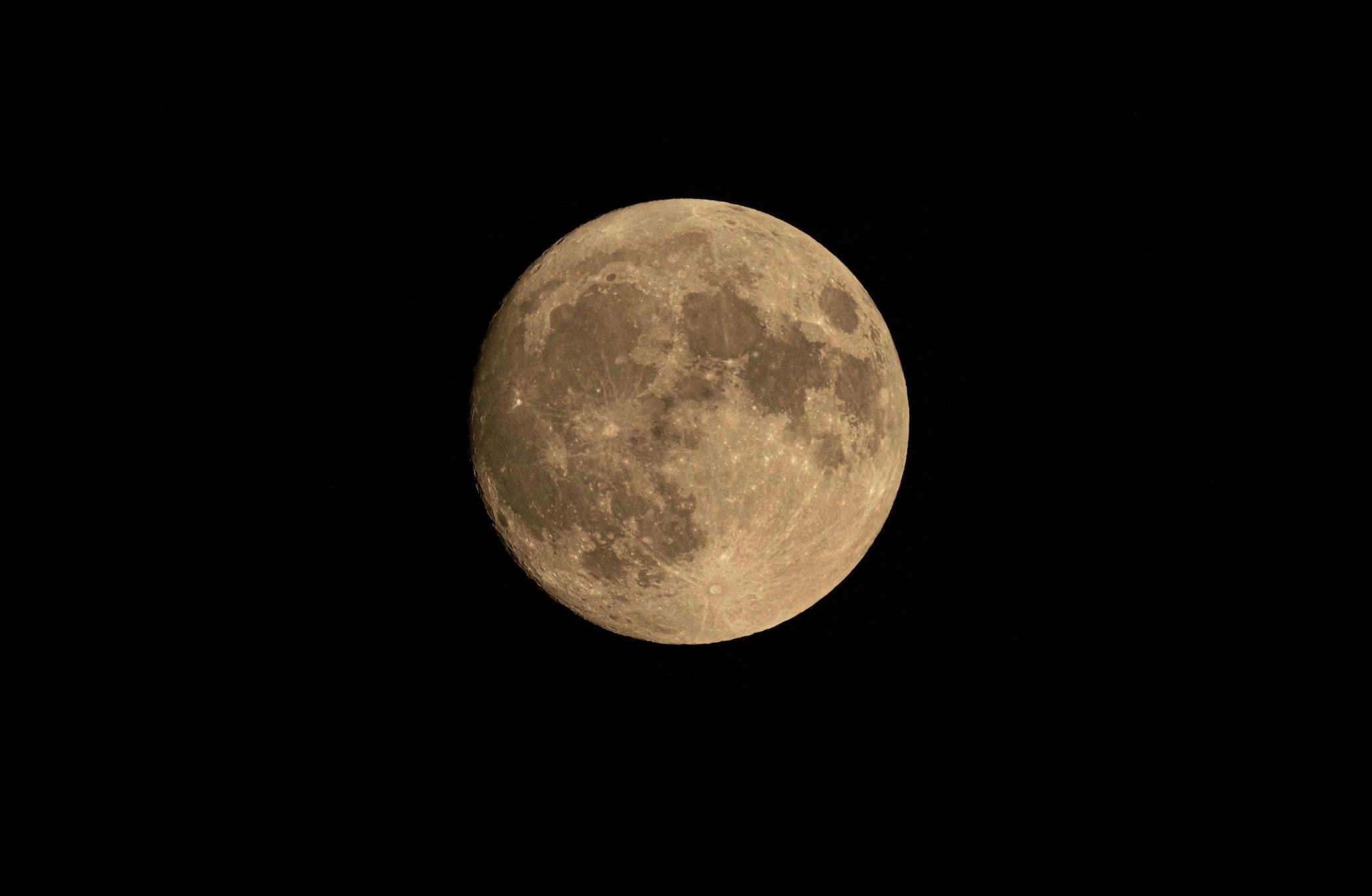
The 2026 Beaver Moon is also a supermoon, the first in a run of three (November, December, and the January 2027 Wolf Moon all qualify). At perigee, the Moon sits about 360,768 kilometers from Earth, which gives the November full Moon a noticeably larger, brighter disc than a typical month, an effect anyone can see without equipment. The exact phase time can be verified against the U.S. Naval Observatory phase calculator.
For local moonrise and moonset times, check our Full Moon Calendar.
Why It’s Called the Beaver Moon
America’s largest rodent knows that late autumn is the time to finish a home. Beavers spend October and November shoring up their lodges and dams, which is the most popular Algonquin and colonial explanation for how the November full Moon picked up its working name.
Beavers At Work In Late Autumn
Beavers measure up to four feet long from nose to the tip of the paddle-shaped tail and weigh between 35 and 65 pounds. They are widespread across the United States. Only the deserts of California and Nevada and parts of Arizona and Utah lack the wetlands beavers need for their lodges this time of year.
Four chisel-like teeth and powerful jaws let a beaver fell deciduous trees in a single night. The timber, with brush and a thick coating of mud and rock, builds the lodge and stocks the winter pantry. Aspen, willow, ash, birch, and other hardwoods feed the colony so the family can stay inside the lodge through most of the cold months.
A beaver lodge can reach six feet tall and span 39 feet across. The entrance sits underwater, hidden from predators and easy for the family to access under ice. Inside, the floor is often covered in wood shavings that act as bedding and pull moisture out of the air.
Beaver lodges and dams can frustrate landowners, but the animal is a stubborn engineer. According to a University of New Hampshire extension article: “Beaver pay particular attention to the process of maintaining the dam and a constant water level. In fact, most colonies will rebuild a dam faster than most people can attempt to destroy it.”
State wildlife agencies work alongside the USDA’s APHIS program to monitor beaver populations and control trapping and hunting so colonies stay healthy.
The Fur Trade Origin Story
There is a second, harder explanation for the name. Beavers were on the brink of extinction in New Hampshire by the late 19th century, and the decline followed the same pattern across the Northeast. Beaver pelts were in high demand during the early 1800s, when fur hats and coats were the fashion in European and American cities. According to the National Park Service, the North American fur trade drove some populations to near-collapse before regulation and reintroduction brought the animal back through the 20th century.
Pelts reached their thickest during the winter months, and trappers were paid by the weight of the pelt. November was the start of the trapping season: cold enough for full winter coats on the animals, not yet buried under the heavy snow that would slow a trapper down. It is plausible that this practical calendar, set by colonial trappers and the Indigenous nations they traded with, locked the November full Moon’s working name into the early American calendar.
Other November Full Moon Names
The beaver is not the only animal lending a name to November’s full Moon. To the Cheyenne of the Great Plains it is the “Deer Rutting Moon.” In the Southeast it is the “Panther Moon” among the Choctaw. Two birds get the honor too: “Fledgling Hawk Moon” to the Hopi of the Southwest, and “Turkey Moon” to the Potawatomi in the Great Lakes region.
The other unifying name for November’s full Moon focuses on cold weather, or the first signs of it. November’s full Moon is the “Frost Moon” in the language of the Assiniboine in the Northern Plains and a common name among the Creek and the Cherokee in the Southeast. The Algonquin call it the “Moon of Much White Frost On Grass.”
The Cherokee carry a second, less weather-bound name: the “Trading Moon,” a label that points at the busy late-autumn season when hunters and farmers met at trading sites with surplus skins, dried meat, and harvest goods before winter closed the easy routes. Some Cherokee sources also use “Snow Moon” for November when an early snow has already arrived. Anglo-Saxon and Old English tradition labels it the “Mourning Moon,” a nod to the closing of the agricultural year and the long, dark nights that followed.
Most of the continental United States and most of the Canadian provinces will see at least one frost before November 1, but frost becomes the rule rather than the exception as temperatures drop and the days get shorter.
For the Abenaki, Arapaho, and Cree this is the “Moon When The Rivers Begin To Freeze.” For the Anishinaabe (Chippewa, Ojibwe) and Passamaquoddy it is the “Freezing Moon.” Among the Comanche it is the “Heading To Winter Moon.”
Even in the Southwest it is a season of cold. The Pueblo name this Moon the “Moon When All Is Gathered In.” For readers living in northern climates, perhaps the most fitting label belongs to the Kalapuya in the Pacific Northwest, who call this the “Moon Of Moving Inside For Winter.” Readers interested in the wider November lore can also look at our notes on November’s birthstones, citrine and topaz.
Indigenous Names by Nation
| Name | Nation or region | What it marks |
|---|---|---|
| Frost Moon | Assiniboine of the Northern Plains, and common among the Creek and Cherokee in the Southeast | The first hard frosts settling in |
| Deer Rutting Moon | Cheyenne of the Great Plains | The rut, the loudest weeks in the deer calendar |
| Panther Moon | Choctaw of the Southeast | Big cats on the move |
| Fledgling Hawk Moon | Hopi of the Southwest | Young hawks taking to the wing |
| Turkey Moon | Potawatomi of the Great Lakes | Turkeys flocking up for winter |
| Snow Moon | Some Cherokee sources | Used for November when an early snow has already arrived |
European And Anglo-Saxon Names
European tradition added its own labels for the same Moon. Anglo-Saxon writers called it the “Mourning Moon,” a nod to the closing of the agricultural year and the long, dark nights that followed. Other Old English sources name it the “Snow Moon,” the “Oak Moon,” or simply the “Hunter’s Moon” carried one month forward. Each one points at the same idea the Algonquin and Assiniboine were also describing from the other side of the Atlantic: winter is no longer coming, it is here.
November Sky Highlights
The Beaver Moon shares November 2026 with one of the year’s most reliable meteor shows and a constellation lineup that starts to look like winter. According to NASA’s meteor program, the Leonid meteor shower peaks the night of November 17 into the early hours of November 18, 2026, about a week before full Moon. The Moon is in its waning crescent and rises late, which leaves the sky dark for the best viewing hours after midnight. Expect roughly 10 to 15 meteors an hour from a dark sky, with the radiant rising in Leo in the eastern sky. Our full guide to the Leonid meteor shower walks through viewing tips by time zone.
By the second half of the month, the winter sky is set. Taurus rides high after dark, carrying the Pleiades star cluster on its shoulder and the V-shaped Hyades around the red eye of Aldebaran. Orion clears the eastern horizon by mid-evening, and by midnight the hunter, the bull, and the dogs (Canis Major and Canis Minor) are all in view. The full Beaver Moon will wash out faint stars on the night of November 24, so plan deep-sky and meteor viewing for the dark nights earlier in the month.
Beaver Moon Folklore And Weather Lore
Old weather lore treats the Beaver Moon as a setter of the winter pattern. A halo around November’s full Moon, the saying goes, means snow or rain within three days, a folk rule that lines up with the high cirrus clouds that often precede a passing low. A bright, sharp-edged Beaver Moon was said to forecast a cold, dry stretch of weather ahead. Hunters and trappers watched the Moon for cues, but they also watched the animals: heavy beaver lodges and thick muskrat dens were read as a sign of a long winter, the same way persimmon seeds and woolly bear caterpillars were used elsewhere.
Hard science is more cautious. A single ring around the Moon is a real signal of approaching moisture, but the rest of the folklore is a mixed bag. We pass the rules along because readers have used them for generations and because they keep eyes on the sky. The U.S. forecast in our Long-Range Weather Forecast is the place to take a more measured look at what is coming in late November and December 2026.
The Beaver Moon And Thanksgiving 2026
The 2026 Beaver Moon falls on Tuesday, November 24, two nights before Thanksgiving Day on Thursday, November 26. That makes the supermoon a natural anchor for the long holiday weekend: the bright disc rises over the Tuesday-into-Wednesday travel night and again over the quiet hours after Thursday’s meal. Many years the November full Moon lands on Thanksgiving itself, but in 2026 the timing pairs the two without overlap.
The Beaver Moon is, in the older almanac sense, a harvest-end moon. By the time November’s full Moon arrives, root crops are pulled, corn is in the crib, hay is stacked, and the apple cider is barreled. For readers hosting Thanksgiving dinner, the Beaver Moon is a quiet reminder of the calendar’s old rhythm: the work of the warm months is done, the work of the cold months begins after the holiday.
Gardening And Best Days Around The Beaver Moon
November is a closing month in the garden across most of the country. By the Beaver Moon, the first hard freeze has hit zones 5 and 6, and the last warm beds are giving up the last of the Swiss chard, kale, and root crops. Use the week around full Moon to lift any remaining root vegetables, mulch perennials and garlic beds, drain hoses, and clean tools for storage. The waning Moon after November 24 is traditionally a good window for below-ground tasks: pruning dormant fruit trees, lifting and dividing rhubarb, and turning compost.
Almanac readers who plan by the Moon use the Best Days Calendar to time tasks like setting eggs, killing weeds, slaughtering for winter meat, and starting indoor seeds for an early spring transplant. The Gardening by the Moon Calendar is the companion tool for the season’s last sowings and the first quiet planning weeks of winter.
How to See the Beaver Moon in 2026
The Beaver Moon is easy to find. It rises in the east near sunset on the night of full phase, sits high in the southern sky around midnight, and sets in the west near sunrise. No telescope, no binoculars, no app required. A clear sky and a view of the horizon will do, and a warm coat helps.
Best Viewing by Region
| Region | What to expect in November | Tip |
|---|---|---|
| Northeast and New England | Humid haze near the horizon reddens the Moon as it rises | Wait an hour after moonrise to get above the worst haze |
| Southeast and Gulf | Afternoon storms usually clear by late evening | Look after 10 p.m. once the convection dies down |
| Midwest and Great Lakes | Often the cleanest horizons of the month | Lake-effect cloud can shut the show down with little warning |
| Great Plains | Wide, low horizons and very little light pollution | Among the best viewing anywhere in North America. Wind is the main nuisance |
| Mountain West and Southwest | Thin, dry air at altitude gives exceptional clarity | Get above any valley inversion for the cleanest view |
| Pacific Northwest | Coastal marine layer forms after dark | Drive inland or uphill to get above the cloud deck |
| California and the Southwest deserts | Reliably clear skies through most of the season | Coastal fog is the only common spoiler; a few miles inland fixes it |
| Southern Canada | Long twilight in summer delays true darkness | Northern latitudes see the Moon lower in summer and higher in winter than the US does |
Practical Tips
- Step outside about 20 minutes before sunset on Monday, November 23, or Tuesday, November 24, to catch moonrise low in the east.
- Let your eyes adjust for 5 to 10 minutes; the bright Moon paired with bare trees and frosted ground makes for striking contrast.
- For photography, a phone in night mode works for the wide scene; a DSLR at 1/125 second, f/8, ISO 200 will hold detail on the disc of a supermoon.
- The Moon looks largest near the horizon, an optical illusion that has fooled humans for centuries. Catch it then for the most dramatic photo.
- Check local moonrise and moonset for your zip code in our Moon Phases Calendar before heading out.
Step outside on either night, take a quiet minute under the Beaver Moon, and let the supermoon do its old job: a calendar marker, a forecast cue, and a closing chapter on the autumn before winter takes over the sky.

Beaver Moon FAQ
When is the Beaver Moon in 2026?
The Beaver Moon peaks on Tuesday, November 24, 2026, at 9:53 a.m. Eastern Time (14:53 UTC). Because peak falls during daylight in North America, the Moon will be below the horizon at that moment. It looks full to the naked eye for about a day on either side of peak, so Monday night, November 23, and Tuesday night, November 24, both offer good viewing.
Why is the November full Moon called the Beaver Moon?
There are two common explanations. The first ties the name to the animal itself: beavers spend October and November finishing their lodges and dams before the ground freezes, so their work peaks under November’s full Moon. The second ties the name to the fur trade. November was the start of the trapping season, when pelts had grown thick for winter but the heavy snow had not yet arrived, and trappers were paid by the weight of the pelt.
Is the Beaver Moon a supermoon in 2026?
Yes. The November 24, 2026 Beaver Moon is the first of three consecutive supermoons (November 2026, December 2026, and the January 2027 Wolf Moon). At perigee, the Moon sits about 360,768 kilometers from Earth, which gives the disc a slightly larger, brighter appearance than a typical full Moon.
What are other names for the November full Moon?
Many. The Algonquin call it the Moon of Much White Frost On Grass; the Assiniboine and Creek call it the Frost Moon; the Cherokee use Frost Moon, Trading Moon, and Snow Moon; the Cheyenne call it the Deer Rutting Moon; the Choctaw call it the Panther Moon; the Hopi call it the Fledgling Hawk Moon; the Potawatomi call it the Turkey Moon; the Abenaki, Arapaho, and Cree call it the Moon When The Rivers Begin To Freeze; the Anishinaabe and Passamaquoddy call it the Freezing Moon; the Comanche call it the Heading To Winter Moon; the Pueblo call it the Moon When All Is Gathered In; and the Kalapuya call it the Moon Of Moving Inside For Winter. European tradition added Mourning Moon, Snow Moon, and Oak Moon.
Does the Beaver Moon fall on Thanksgiving in 2026?
Not quite. The Beaver Moon peaks Tuesday, November 24, 2026, and Thanksgiving Day falls Thursday, November 26. The supermoon is bright for the entire stretch in between, so travelers and guests will see a near-full Moon on Wednesday night and again on Thanksgiving night.
When is the Leonid meteor shower in November 2026?
The Leonid meteor shower peaks the night of November 17 into the early morning of November 18, 2026, about a week before the Beaver Moon. A waning crescent Moon keeps the sky dark for the best viewing hours after midnight. Expect about 10 to 15 meteors an hour from a dark site.
Why are beavers so busy in November?
November is the last reliable window before lakes and ponds freeze and the ground hardens. Beavers spend the month finishing the lodge, reinforcing the dam, and floating in a winter food cache of aspen, willow, ash, and birch. Once the ice locks in, the colony stays inside the lodge for most of the cold months, leaving only by underwater entrances.
Do I need a telescope to see the Beaver Moon?
No. The full Moon is easily visible to the naked eye. Step outside near moonrise, about 20 minutes before local sunset, on Monday, November 23, or Tuesday, November 24, and look east. A clear sky and a low horizon are all you need. Because the 2026 Beaver Moon is a supermoon, the disc will look noticeably brighter than usual.
When is the next full Moon after the Beaver Moon?
The Cold Moon, the December 2026 full Moon, follows the Beaver Moon. It is the second of the three consecutive supermoons that close out 2026 and open 2027.
Join The Discussion
What is your favorite name for November’s full Moon?
If you could rename the Beaver Moon, what would you call it?
Related Articles
- December’s Cold Moon And Alternative Names
- Full Moon Names And Times
- Moon Phases Calendar
- When Is The Leonid Meteor Shower?
- When Is Thanksgiving Day?
- Subscribe To The Farmhouse, Our Members-only Community!


Daniel Higgins
Daniel Higgins is a lifestyle writer with two decades of experience who covers a wide variety of interests, from folklore to food and drink. Higgins writes for The New York Times, USA Today, and Yahoo News.
- Daniel Higgins

- Daniel Higgins
- Daniel Higgins
- Daniel Higgins




So glad I heard it on late night TV but the Full Beaver Moon is roughly a month after a waxing moon.
I am trying to decide what month the bitter Moon is.
Did you know: The spin-time of the Moon on its own axis is identical to the time it takes the Moon to revolve around Earth, which is why the Moon always keeps almost exactly the same face toward us.
Hi Mobile, Yes! We have an interesting article you might enjoy: https://www.farmersalmanac.com/exploring-the-dark-side-of-the-moon-21175
I have a small farm pond with Bream and Chanel Catfish and a few Bass. I feed fingerling feed every day but one clean up day. They eat two gallons in less than ten minutes, looks like piranas. This month nothing will eat of bite. I was told they would not bite untill after the next full moon. What happened?
I couldn’t sleep last night so got up early and decided to view the moon…..so glad I had insomnia! It was GORGEOUS!!!!
My first glimpse of tonight’s full moon (at 5:46 pm EST) elicited a gasp! Surely the name ought to be “Full Cheddar Moon;” I’ve never seen Luna so brilliantly hued as she was tonight.
Happy Thanksgiving with GRATITUDE for all the knowledge you provide others and me. “never let a day go by without learning something new.” At 73, I am as curious as ever. Thank you.
The moon was pretty last night. In Vinton, Virginia, I will be watching “when the moon comes over the mountain.” a lyric from PATTI PAGE song of the 1950s. There has been heavy “frost” here in southwest Virginia, so I can understand the name of the frost moon as well.
BLESSINGS.
So glad I looked for information. Thank you
Love the information you give. I always learn something new!
Before I went to bed last night and thought I left the front light on. I guess God did.