

Witch Hazel: 10 Uses for the Cheapest Bottle in Your Medicine Cabinet
It doesn't have anything to do with witches, but inexpensive witch hazel has amazing healing properties that feel like magic! See its many uses.
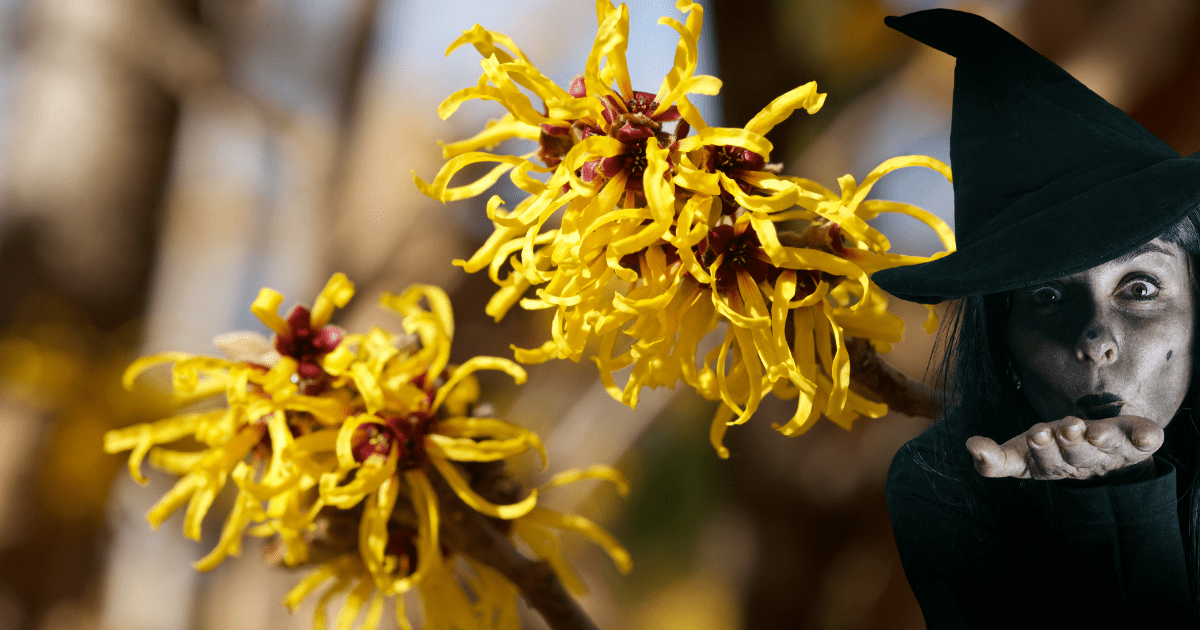
Witch Hazel at a Glance
- What it is: distilled extract of the leaves, bark, and twigs of Hamamelis virginiana, a deciduous shrub native to eastern North America.
- What’s in the drugstore bottle: witch hazel extract in 14% ethanol. Looks like water, smells faintly herbal.
- Best uses: astringent for oily skin and acne, after-shave, bug bites, bruises, sunburn, hemorrhoids, post-natal care.
- Cost: $4 to $8 for a 16-oz bottle, one of the cheapest active ingredients in the pharmacy.
- “Witch” is not what you think: from Old English wiche, meaning pliant or bendable, the same root as the willow withe.
Walk into your local drugstore some time and take a look around. On every shelf you’ll find chemical remedies for just about every imaginable ailment, all developed by pharmaceutical companies who invest hundreds of billions of dollars in the name of making massive profits. It may seem hard to believe, then, that one of the most effective remedies in the drugstore sells for only a few dollars. It’s called witch hazel. And it has nothing to do with witches.
According to the U.S. National Library of Medicine MedlinePlus, witch hazel is one of the few plant-derived topicals that the FDA recognizes as an active ingredient in over-the-counter skin protectants. It is, in other words, both folk remedy and pharmacy-shelf staple, and the bridge between the two is exactly what makes it interesting.
What Is Witch Hazel?
Witch hazel has existed in its commercial form for about 150 years, but has been in use for much longer. It looks unassuming in its clear plastic bottle, like it could be just plain water. Actually, though, it’s an extract produced from the leaves and bark of witch-hazel plants, Hamamelis virginiana, one of three species of deciduous flowering shrubs found in North America, both in the wild and as ornamental garden shrubs. The plant features shiny, green oval leaves ranging in length from just under two inches to just over six and arranged alternately along the branches. Yellow or orange flowers appear on the plant in the fall or winter, depending on the species. It occurs naturally throughout the eastern half of the United States and Canada.
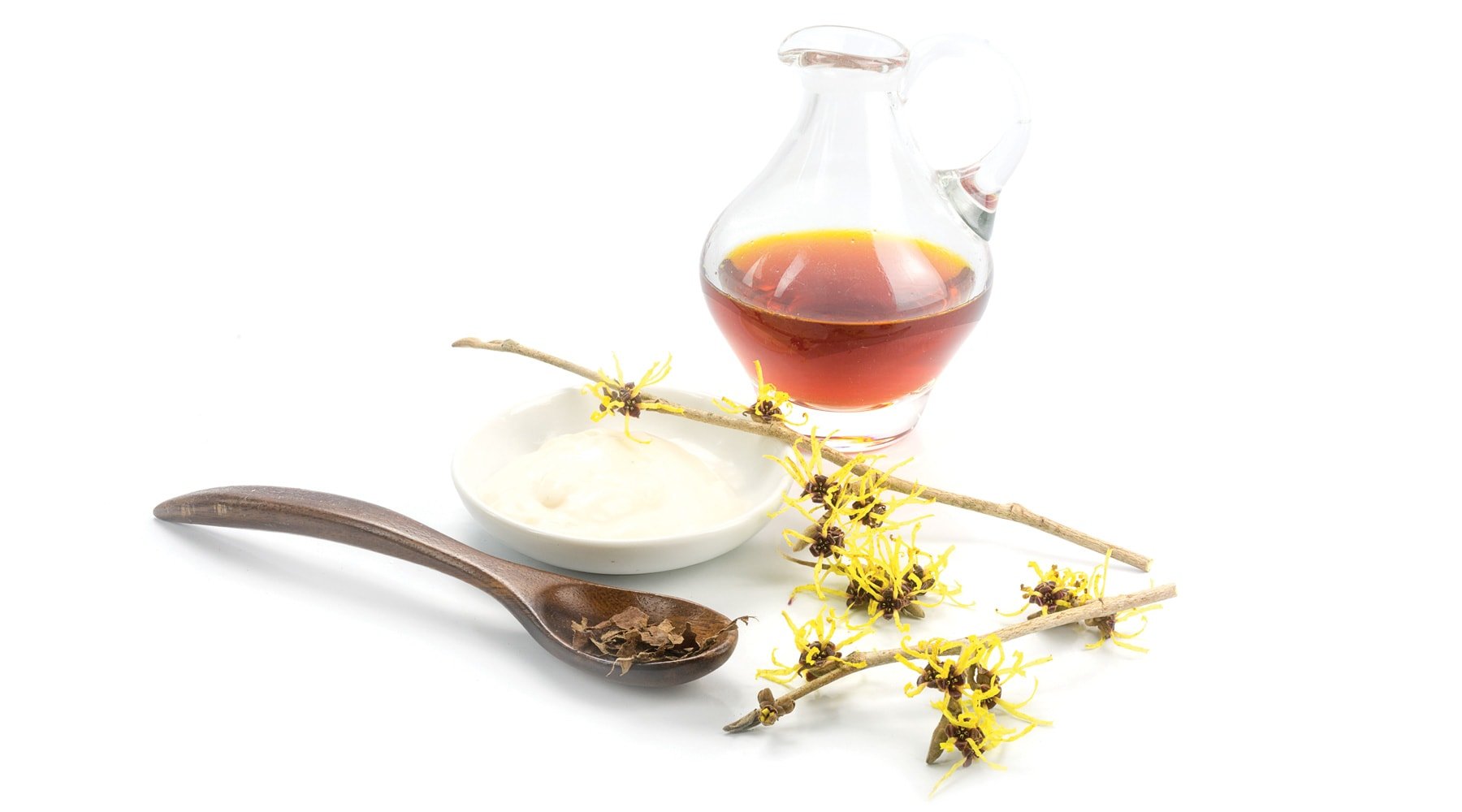
What’s In A Name?
Though witch hazel’s healing powers are pretty magical, the word “witch” in its name actually has nothing to do with witches. Rather, it comes from the Old English word wiche, which meant “pliant” or “bendable.” The term had been used in the names of several plant species in Europe for hundreds of years before it was applied to the genus Hamamelis in North America. Other popular names for witch hazel include “snapping hazel” and “winterbloom.”
The “snapping” name comes from the shrub’s seed pods, which split open with an audible pop in late autumn and fire their seeds up to 30 feet. The “winterbloom” name nods to the unusual late-season flowering: most witch-hazel species bloom in October or November when virtually every other shrub in the woods has gone dormant.
Medicinal Properties of Witch Hazel
Its medicinal properties were well known to Native Americans, who used it for a variety of purposes, including to treat swelling, inflammation, tumors, and other skin ailments. Puritan colonists got wind of the plant’s potential almost as soon as they arrived in North America, and began making their own extracts. By the mid-19th Century, companies had begun to produce extracts of the plant for commercial sale, the most famous of which is still bottled in Essex, Connecticut, by the American Distilling Company.
The astringent and anti-inflammatory effects come from two main groups of plant compounds: tannins (mostly hamamelitannin) and small amounts of essential oils. Tannins draw together the proteins in the surface layers of skin, which is what tightens pores, slows minor bleeding, and reduces the inflammatory itch of bug bites and sunburn.
By now you’re probably thinking, “All that is well and good, but what does witch hazel actually do?” Here is a list of 10 topical uses and why you should keep a bottle of witch hazel in your medicine cabinet:
Uses For Witch Hazel
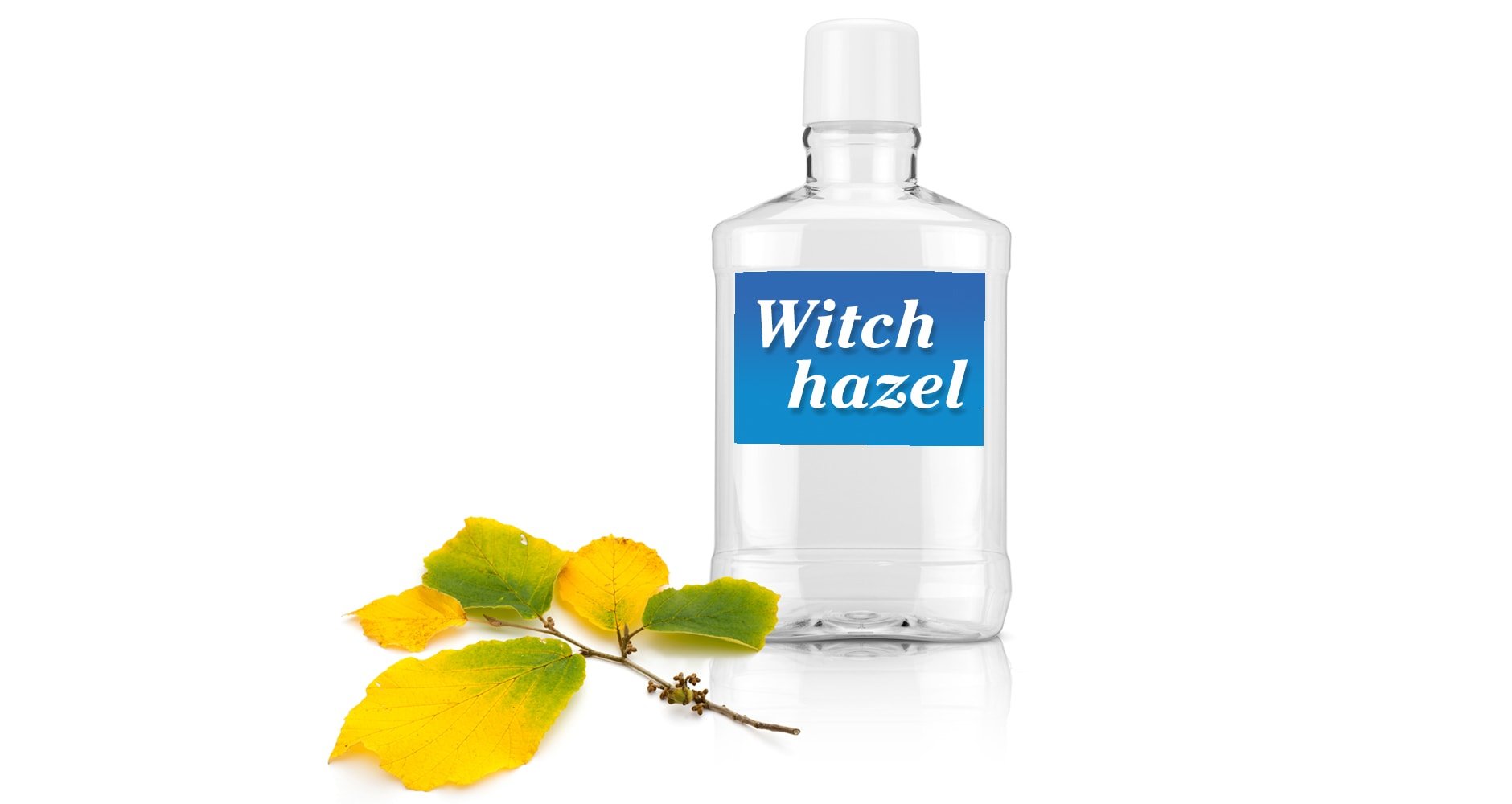
- Soothes razor burn. Because of its natural astringent properties, witch hazel is popularly used by both men and women as a soothing post-shave treatment. Just wet hands with witch hazel, rub together, and tap on affected skin like aftershave.
- Provides hemorrhoid relief. Witch hazel is effective at easing the itching, swelling, and pain of hemorrhoids. Just apply to affected areas with a cotton pad to get relief.
- Treats skin irritations. Because of its drying and anti-itch properties, witch hazel can be used to soothe irritated skin caused by poison ivy, poison oak, and poison sumac.
- Heals bruises. Witch hazel can help fade discoloration and speed up the healing process of bruises. Just apply to bruises with a cotton ball.
- Treats acne. Witch hazel’s astringent properties help remove impurities from pores and keep skin clear. Apply after cleansing.
- Soothes and heals eczema. Applying witch hazel to affected areas helps to treat the skin condition.
- Treats varicose veins. Soak a soft cloth in witch hazel and lay over varicose veins to temporarily reduce swelling and pain.
- Provides post-natal relief to new mothers. Dab affected areas with witch hazel to reduce swelling and fight bacteria.
- Cools sunburn and soothes windburn. Witch hazel combined with aloe can soothe painful sunburn. The anti-inflammatory powers aid in healing sunburned and windburned skin. Just apply to affected areas with a cotton ball in a gentle dabbing motion.
- Treats bug bites. Applying witch hazel with a cotton pad to insect bites helps reduce swelling, sting, and itch.
Which Witch Hazel Bottle Should You Buy?
| Product Type | Typical Composition | Best For | Watch Out |
|---|---|---|---|
| Standard witch hazel astringent (14% alcohol) | 86% water, 14% ethyl alcohol, hamamelis distillate | Insect bites, body skin, oily scalp, occasional face use on oily skin | Daily facial use can strip the skin barrier and cause dryness or rebound oiliness over time |
| Alcohol-free witch hazel distillate | Steam-distilled hamamelis water (hydrosol); no ethyl alcohol added | Daily face toning, sensitive skin, broken skin, sunburn, hemorrhoids, children | Shorter shelf life once open; check the expiry date. Less preservative power than alcohol versions |
| Witch hazel toner (cosmetic) | Witch hazel base plus additives (aloe, rosewater, glycerin, or hyaluronic acid) | Facial routine when you want both astringent and soothing action in one step | Read the label; some “toners” use alcohol-based witch hazel plus fragrance, which can be irritating for sensitive skin despite the softening additives |
| Witch hazel extract / tincture | Concentrated ethanol maceration; higher tannin load | Formulation ingredient (dilute before use); targeted spot application for varicose veins or hemorrhoids under medical guidance | Not for direct daily skin use at full concentration; always dilute per product directions |
Quick rule: if you are using it on your face every day or on sensitive or broken skin, choose the alcohol-free version. For insect bites, body skin, and intermittent use, the standard 14% alcohol version is fine.
A Few Honest Limits
- Topical only. Modern witch hazel is for skin, not for drinking. Older folk uses included internal preparations; current pharmacy guidance does not.
- Patch-test first. Tannins can dry sensitive skin. Try a dime-size patch on the inner forearm before regular use.
- Not for open wounds. For minor scrapes, soap and water first; witch hazel after closure, not before.
- Refrigerated witch hazel feels like a small miracle for sunburn, bug bites, or post-natal recovery. Keep one bottle cold from June to August.
Because of its healing properties, you’ll find witch hazel extract as an active ingredient in many over-the-counter applications, including acne preparations, hemorrhoid creams, aftershave lotions, treatments for poison ivy, and insect bites, and even eye drops.
Witch hazel extract can be easily made at home if you have access to the plant. You just have to boil about a pound of the twigs in two gallons of water. Because witch-hazel is so inexpensive and easy to get, though, most people don’t bother.
Freelancer Jamie McLeod contributed to research and information for this story.

Frequently Asked Questions About Witch Hazel
What is witch hazel made of?
Distilled extract of the leaves, bark, and dormant twigs of Hamamelis virginiana, usually combined with 14% ethanol as a preservative. Alcohol-free versions substitute vegetable glycerin. The active compounds are tannins (chiefly hamamelitannin) and small amounts of essential oils.
Does witch hazel have anything to do with witches?
No. The word comes from the Old English wiche, meaning pliant or bendable, the same root as the willow withe. Early dowsers used the springy branches as divining rods, which may have helped the witchy association stick, but the plant has nothing to do with witchcraft.
Can I use witch hazel on my face every day?
For oily and acne-prone skin, yes, the classic alcohol-based formula tends to work as a daily toner. For dry, sensitive, or mature skin, choose the alcohol-free formula and limit use to a few times a week. Always moisturize after; the tannins are drying by design.
Is witch hazel safe in pregnancy?
Topical witch hazel is widely used for post-natal perineal care and for pregnancy-related hemorrhoids. As with any product in pregnancy, check with your provider before adding it to your routine.
Can witch hazel relieve sunburn?
Yes, modestly. The astringent and anti-inflammatory effect helps reduce the heat and itch of a mild burn. Mix with aloe in a 1:1 ratio, refrigerate, and dab on with cotton. For serious burns, see a doctor.
Why does witch hazel bloom in autumn?
It’s a quirk of evolution: Hamamelis virginiana flowers in October-November after most pollinators have left and is largely self-fertile. The seeds mature over the following year and the woody pods then snap open with an audible pop, flinging seeds up to 30 feet, the “snapping hazel” trick.
How long does an opened bottle of witch hazel last?
About 12 months at room temperature, longer if refrigerated. If the liquid yellows or smells strongly fermented, replace it. The alcohol in the standard formula slows microbial growth; alcohol-free versions should be replaced sooner.
For more home-remedy and natural-skin-care reading, see our pieces on combating cold sores, olive-oil skin salve, and castor oil.



This article was published by the Staff at FarmersAlmanac.com. Any questions? Contact us at [email protected].
- Farmers' Almanac Staff

- Farmers' Almanac Staff

- Farmers' Almanac Staff

- Farmers' Almanac Staff




Witch Hazel is excellent for jellyfish stings, after 20 years on the Chesapeake, it was indispensable. Also took to beach just in case.
I use witch hazel every morning and every night before my moisturizers! Been using it for years….(70 yrs old). Great stuff.
Is anyone using the bottled kind? What I’ve seen at pharmacy/store is usually sold as an astringent and is a low percentage Witch Hazel and water, I think.
Our veterinarian recommended witch hazel as a simple and inexpensive cleaner, with cotton balls, for dog’s ears.
I buy the alcohol free witch hazel at the health food store. Although it is more expensive it doesn’t burn when applied to raw skin.
Can witch hazel help with toenail fungus? I don’t want to take prescription medications.
Hi Gerri, no, unfortunately. You could try tea tree oil, which has anti-fungal properties but you have to mix it with a carrier oil like coconut oil. We also found these natural remedies you could try, but please check with your doctor first: https://www.healthline.com/health/home-remedies-for-toenail-fungus#oregano-oil
have you tried soaking your feet in vinegar?
Vick’s vaper rub.
make sure to put on bandage,so it doesn’t run off.apply a couple days a week. Hope this works for you
Witch Hazel is wonderful natural product. My family are Vermonters and it grows readily
throughout the woods, I learned from my grandparents all the wonderful uses of witch hazel. 1.wash your face to help with acne, ( young or old) makes for a beautiful complection,( never had acne as a teen!),helps with heat rash,all rashes really , good on dogs hot spot, and now that I am I the south, works great on fire ant bites, try it folks, just cause it’s cheap and not a perscription doesn’t mean it won’t work! Go for it ! No side effects !
I got in fireants over the weekend, poured witch hazel on the bites and no more pain!
I use bleach or ammonia on fresh ant bites. Just stand in the yard or dap it on, it helps the itch and pretty much no pus marks from the ant bites.
Ester, those really aren’t safe to use on skin. Better to switch to the witch!
Splashed on your face ice-cold, it’s a great after-shave lotion. Just store the bottle in the refrigerator.
GREAT tip!
A First Class article, thank you.
As I shall be 88 in six weeks time… do you think if I stood in bowl of Witch Hazel, this pain in my left hip, might just ease for a while?
NEF
Try Magnesium oil. It feels weird and kind of dry at first, not greasy, but it works wonders for my knees!
Magnesium oil for arthritis in your knees?
my friend is having iron treatments with an IV medication and some lesions have been popping up on her scalp. her hair is already fragile. can she dab some of it on those to dry up the lesions?
Hi Renae Randall, it’s best if you check with her doctor first.