

Quick Reference: Yom Kippur 2026
- Begins: Sundown, Sunday, September 20, 2026
- Ends: Nightfall, Monday, September 21, 2026
- Hebrew date: 10 Tishrei, 5787
- Rule: 10 Tishrei on the Hebrew lunar calendar
- Significance: The Day of Atonement, the holiest day in the Jewish year
- Observance: A 25-hour fast, full day of synagogue prayer, white garments
- Closes: Ne’ilah service and the long tekiah gedolah shofar blast
Yom Kippur 2026 begins at sundown on Sunday, September 20, and ends at nightfall on Monday, September 21. Known as the Day of Atonement, it is the holiest day of the Jewish year and the close of the Ten Days of Awe that begin with Rosh Hashanah. The day is set aside for fasting, prayer, and the sealing of what tradition calls the Book of Life. Whether you observe the day yourself or simply want to honor a neighbor’s quiet sundown, this guide walks through the dates, the meaning, and the customs.
When Is Yom Kippur 2026?
Yom Kippur 2026 begins at sundown on Sunday, September 20, 2026, and concludes at nightfall on Monday, September 21, 2026. The full observance spans roughly 25 hours, from before the first stars on Sunday evening through three stars on Monday night. In Jewish reckoning, every holy day begins at sunset because the book of Genesis describes the days of creation as “evening and morning.”
The date corresponds to 10 Tishrei, 5787 on the Hebrew calendar. It falls nine days after Rosh Hashanah, the Jewish New Year, which in 2026 runs from sundown Friday, September 11 through nightfall Sunday, September 13. The stretch between the two holidays is known as the Ten Days of Awe, or Aseret Yemei Teshuvah, and Yom Kippur is the culmination.
Yom Kippur Dates for the Next Five Years
Because the Hebrew calendar is lunar with periodic adjustments, the Gregorian date of Yom Kippur shifts each year. Here are the eve-and-day dates for the next five observances:
| Hebrew Year | Erev Yom Kippur (Eve) | Yom Kippur (Day) |
|---|---|---|
| 5787 (2026) | Sunday, September 20 | Monday, September 21 |
| 5788 (2027) | Sunday, October 10 | Monday, October 11 |
| 5789 (2028) | Friday, September 29 | Saturday, September 30 |
| 5790 (2029) | Tuesday, September 18 | Wednesday, September 19 |
| 5791 (2030) | Sunday, October 6 | Monday, October 7 |
The earliest Yom Kippur can land on the Gregorian calendar is mid-September; the latest is mid-October. The drift is roughly 11 days back each year, with a “leap month” (Adar II) added every two or three years to keep the holidays anchored to their seasons. If you are planning travel, scheduling time off, or arranging family visits years in advance, those windows are the dates to circle.
What Is Yom Kippur?
Yom Kippur is the Day of Atonement, the holiest day in the Jewish calendar. Yom means “day” in Hebrew, and Kippur means “to atone.” It is the day Jewish tradition teaches that God renders final judgment on each person for the year ahead.
The day is the culmination of the Ten Days of Awe. Throughout those ten days, those practicing Judaism reflect on the past year, decide how to improve, seek forgiveness from people they have wronged, and show compassion to others. Tradition holds that on Rosh Hashanah, God opens the Book of Life and the Book of Death; on Yom Kippur, the books are sealed. The hope, prayed for in white garments, is to be inscribed and sealed for another year.
Yom Kippur is also a deeply communal day. Synagogues fill to capacity; family members travel home; even Jews who do not attend services the rest of the year often come for the prayers of Kol Nidre and Ne’ilah. My Jewish Learning describes it as “the most solemn and important of the Jewish holidays.”
The History of Yom Kippur
The day is commanded directly in the Hebrew Bible. Leviticus 23:27 instructs: “Now, the tenth day of this seventh month is the Day of Atonement. It shall be a sacred occasion for you: you shall practice self-denial.” Leviticus 16 describes the original ritual in detail. On this single day each year, the high priest entered the Holy of Holies, the inner sanctum of the Temple in Jerusalem that was off-limits the rest of the year, and performed atonement for the people.
Two goats were central to that ancient rite. One was offered as a sin offering. The other, the scapegoat, had the community’s transgressions symbolically laid upon its head and was sent into the wilderness. The English word “scapegoat” comes directly from this passage. Tradition also connects Yom Kippur to Moses descending from Mount Sinai with the second set of tablets, which marked God’s forgiveness of the Israelites for the sin of the golden calf.
After the destruction of the Second Temple in 70 CE, the high priest’s ritual could no longer be performed. The rabbis of the Mishnah and the Talmud reshaped the day around prayer, fasting, repentance, and acts of charity in place of Temple sacrifice. The order of service we know today, including Kol Nidre on the eve and Ne’ilah at the close, took shape over the centuries that followed in synagogues from Babylonia to medieval Europe.
Day of Atonement
Yom means “day” in Hebrew, and Kippur means to atone (Day of Atonement). The phrase appears in Leviticus and has been the Jewish name for the day for more than three thousand years.
Throughout the 10 Days of Awe (Repentance) leading up to Yom Kippur, those practicing Judaism have been reflecting on the personal aspects of the past year, deciding how to improve, seeking forgiveness, and showing compassion to others. Traditionally, the belief is that after judging a person by their deeds over the last year, God decides who will be sealed in the Book of Life (to live for another year) and who will not.
How the Date Is Set
Yom Kippur always falls on 10 Tishrei on the Hebrew calendar. Tishrei is the seventh month of the religious year and the first month of the civil year, and it begins with Rosh Hashanah on 1 Tishrei.
The Hebrew calendar is lunisolar. Each month begins with the new moon and runs roughly 29 or 30 days. Twelve lunar months come to about 354 days, eleven days short of the solar year. To keep Tishrei in early autumn and the spring holiday of Passover in early spring, a leap month called Adar II is added in seven out of every nineteen years. That correction is the reason Yom Kippur lands on a different Gregorian date each year while keeping the same place in the season.
Three rules also adjust the exact date so that Yom Kippur never falls on a Friday or a Sunday. If it did, observant Jews would face back-to-back days when work and cooking are forbidden, since Shabbat covers Friday night through Saturday night. The Hebrew calendar’s dehiyyot rules quietly shift the new year by a day when needed to prevent that conflict.
Yom Kippur Traditions
There are many traditions associated with Yom Kippur. Here are four of them:
1) Fasting (From Food And Work)
Feasts are replaced with fasting on this holiest of religious days. Two traditional meals are enjoyed the day before the fast begins at sundown. Both meals begin by dipping round challah bread into honey, as is customary on Rosh Hashanah. At sundown, the “soul is afflicted” by 25 hours of fasting, with no drinking or eating. Fasting enables followers to step back from their normal routine and refocus their attention on prayer and connecting spiritually with God.
Five prohibitions traditionally apply for the full 25 hours: no eating or drinking, no bathing or washing for pleasure, no anointing with lotions or oils, no wearing of leather shoes, and no marital relations. The prohibitions are observed by adults in good health. Children under bar or bat mitzvah age, pregnant women, the elderly, and anyone whose health would be endangered are excused; in Jewish law, preserving life always outweighs fasting.
2) Attending Synagogue Services
There are several synagogue services throughout Yom Kippur. Songs, religious customs, and prayers and readings from the Machzor, the special prayerbook for the High Holy Days, are recited. Portions of Deuteronomy are read in the morning service, and selections from Leviticus and Genesis are read in the afternoon. The readings encourage those in attendance to live holy lives and draw closer to God. They are also reminded to love others.
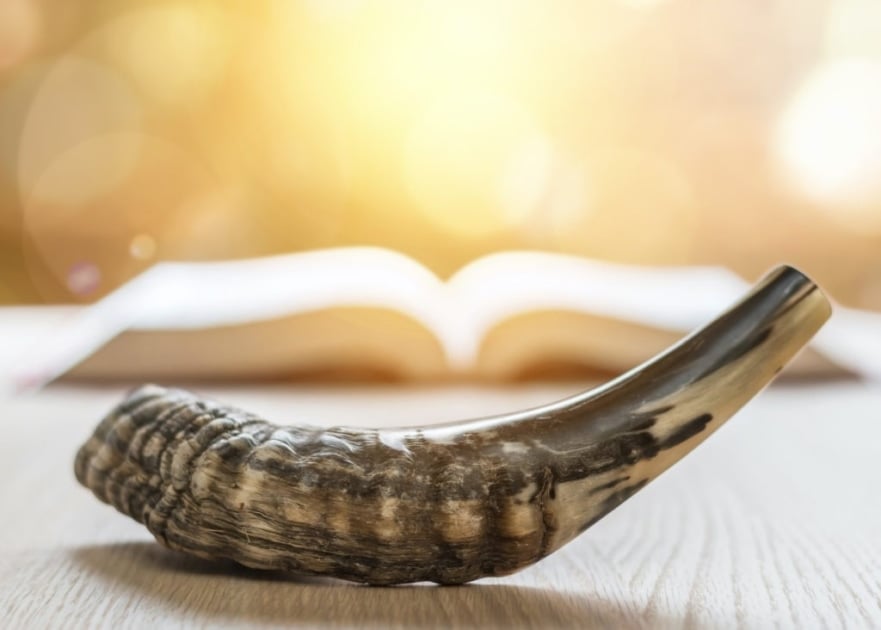
Five distinct services make up the day. Kol Nidre opens the eve of Yom Kippur with a haunting Aramaic declaration releasing the congregation from unfulfilled vows made to God in the year ahead. Shacharit is the morning service. Musaf adds the additional service and the Avodah, a poetic retelling of the high priest’s Temple ritual. Minchah is the afternoon service, in which the book of Jonah is read. Ne’ilah, the “closing of the gates,” is the final service as the sun goes down. The single, long blowing of the Shofar (ram’s horn) known as the tekiah gedolah ends the Holy Day service and fasting. Livestream Yom Kippur services and programs for those unable to attend are widely available.
3) Wearing White
It is tradition for everyone to wear white clothing on Yom Kippur. Men often wear a kittel, a simple white robe-like garment, on Yom Kippur. The kittel is said to resemble angels, the high priest’s garment, and a burial shroud all at once. White reminds those attending services that they are to be like the angels, praising God. It also symbolizes the forgiveness and spiritual cleansing they are praying for, and that life on earth is temporal.
White is worn with a humble awareness of one’s need to repent for sins and pray to God for forgiveness. Worshippers pray in hope, remembering how God forgave the children of Israel for their sin of idolatry during the days of Moses. Leather shoes are set aside in favor of cloth or canvas footwear for the same reason: comfort and luxury are gently put down for the day.
4) Breaking The Fast
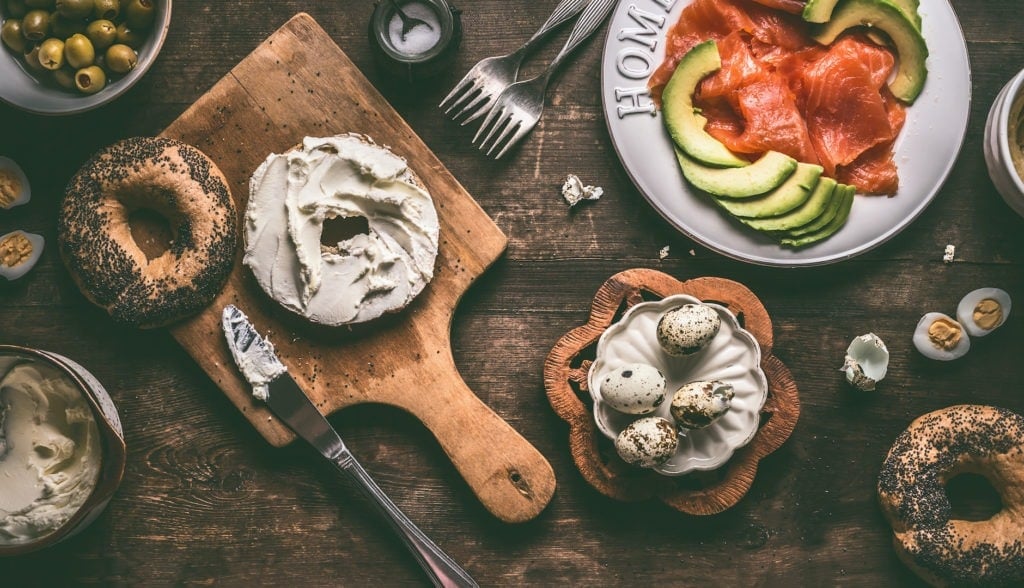
At the conclusion of the last Yom Kippur service, many enjoy a festive meal at home with family and friends. The foods that are traditionally eaten vary, but are often baked breakfast goods and light dairy dishes that are gentle on a stomach that has been empty for a day.
We asked friends to tell us what they traditionally eat to break the fast:
Typically we break [the fast] with a lighter meal—tuna fish, whitefish salad, blintzes, egg soufflé, or bagels with cream cheese and lox.
Dr. Eric Mintz of West Bloomfield Township, Michigan
We always break the fast with bagels and Nova (lox). Always! When the kids were younger we went to a friend’s home. They invited a ton of people and had the most amazing dairy spread. We’ve taken the tradition with us wherever we moved.
Robin Zorn, a native of New York, New York
How Yom Kippur Is Observed
For an observant household, the day follows a quiet, deliberate rhythm. On the eve of Yom Kippur, the pre-fast meal called the seudah hamafseket, or “meal of separation,” is eaten before sunset. Candles are lit just before the fast begins. Many families also light a yahrzeit candle in memory of relatives who have passed. From that moment until three stars are visible the following night, the household observes the five prohibitions described above.
The day itself is spent largely in synagogue. Worshippers stand for long stretches of prayer, recite the Vidui confession together, beat their chests softly with the recitation of each line, and read through the Machzor’s poetic confession known as the Al Chet. The Avinu Malkeinu (“Our Father, Our King”) is sung in many communities. The closing Ne’ilah service is the only one of the year recited with the ark holding the Torah scrolls open from start to finish, a symbol of the gates of heaven standing open for final prayers.
The Ten Days of Awe
Yom Kippur does not stand alone. It is the culmination of the Ten Days of Awe, the period from 1 Tishrei through 10 Tishrei that begins with Rosh Hashanah. In Jewish tradition, these are days of spiritual stock-taking, when each person reviews the year that has passed and prepares to be judged for the year ahead.
The rabbis taught that three practices have the power to “avert the severe decree” during this stretch:
- Teshuvah (repentance): returning to right relationship with God and with the people you have wronged. Tradition holds that Yom Kippur atones for sins between a person and God, but sins between people must be addressed person to person first.
- Tefillah (prayer): the long hours in synagogue, the silent Amidah, the chanted confessions.
- Tzedakah (charity): giving to those in need, often done in the days leading up to Yom Kippur as part of the preparation.
You will hear all three of those words in sermons and synagogue announcements during this stretch. They are the practical work of the season.
Preparing For Yom Kippur 2026
Just as Yom Kippur is a day of fasting, the day before Yom Kippur is set aside for eating and preparing for the holy day. There are many activities done before the fast, including eating a pre-fast meal known as the seudah ha-mafaseket (“meal of separation” or “concluding meal”), lighting of candles, donating to charity, and requesting and receiving honey cake, which is offered with the blessing for a sweet year.
If you are hosting a break-fast on Monday evening, September 21, plan a light dairy spread that can sit out and serve a crowd: bagels with cream cheese and lox, kugel, blintzes, whitefish salad, hard-boiled eggs, sliced fruit, and a sweet kugel or honey cake for dessert. Set everything out before the final service so the meal is ready when guests arrive hungry. Coffee, tea, and water at the door go a long way for anyone breaking a 25-hour fast.
What Is A Yom Kippur Greeting?
The Yom Kippur greeting is G’mar Hatima Tova, or the shorter G’mar Tov, meaning “May you be sealed (in the Book of Life) for good.” It is also customary to say “have a meaningful fast” or, in Hebrew, Tzom Kal (“easy fast”) before the holiday begins. After Yom Kippur ends, neighbors and family often greet one another with Shana Tova (“good year”), the same wish carried over from Rosh Hashanah.
Yom Kippur is a day to slow down, take stock, and lean on community. Whether you spend the day in synagogue or quietly at home, the rhythm is the same: fast, pray, mend what can be mended, and gather to break bread when the gates close. The Almanac has marked the High Holy Days on its calendar since the early 1800s, and we will mark them for many more.

Frequently Asked Questions
When is Yom Kippur 2026?
Yom Kippur 2026 begins at sundown on Sunday, September 20, 2026, and ends at nightfall on Monday, September 21, 2026. It always falls on 10 Tishrei on the Hebrew calendar.
Is Yom Kippur a national holiday in the United States?
No. Yom Kippur is not a federal holiday in the US, and most workplaces remain open. Many public schools in heavily Jewish areas close or excuse absences, and employers commonly accommodate the day off as a religious observance. In Israel, Yom Kippur is a full national holiday and almost all public activity stops for 25 hours.
How long is the Yom Kippur fast?
The fast lasts about 25 hours, from just before sundown on Erev Yom Kippur until three stars are visible the following night. No food or water is consumed during that time. Five additional prohibitions also apply: no bathing for pleasure, no anointing with lotions, no leather shoes, and no marital relations.
Who is excused from fasting on Yom Kippur?
Jewish law excuses anyone whose health would be endangered by fasting, including children under bar or bat mitzvah age, pregnant or nursing women in certain circumstances, the seriously ill, and the elderly when fasting would be dangerous. Preserving life always overrides the obligation to fast.
What is the proper greeting for Yom Kippur?
Before the holiday, G’mar Hatima Tova (“may you be sealed for good”) or its shorter form G’mar Tov is the traditional greeting. You can also say “have a meaningful fast” or, in Hebrew, Tzom Kal (“easy fast”). After the day ends, Shana Tova (“good year”) is appropriate.
How does Yom Kippur differ from Rosh Hashanah?
Rosh Hashanah, on 1 and 2 Tishrei, is the Jewish New Year and a joyful holiday with festive meals, apples dipped in honey, and the blowing of the shofar. Yom Kippur, nine days later on 10 Tishrei, is the solemn culmination of the High Holy Days, marked by fasting and prayer. See our guides to Rosh Hashanah, Hanukkah, and Passover for the rest of the Jewish year.
Can you drink water during the Yom Kippur fast?
No. Unlike some fasts in other traditions, the Yom Kippur fast prohibits both food and water for the full 25 hours. Anyone whose health requires fluids should consult a rabbi and a doctor in advance; preserving life always takes priority.
Join The Discussion
How will you and your family celebrate Yom Kippur 2026?
Share your experience with your community here in the comments below.
Related
Calendar Of Holidays & Observances
Learn about Rosh Hashanah
Make a traditional Jewish Apple Cake — Get the recipe

Deborah Tukua
Deborah Tukua is a natural living, healthy lifestyle writer and author of 7 non-fiction books, including Pearls of Garden Wisdom: Time-Saving Tips and Techniques from a Country Home, Pearls of Country Wisdom: Hints from a Small Town on Keeping Garden and Home, and Naturally Sweet Blender Treats. Tukua has been a writer for the Farmers' Almanac since 2004.
- Deborah Tukua

- Deborah Tukua
- Deborah Tukua
- Deborah Tukua




Today is November 2nd, and Yum Kippur was October 4th. How in heaven’s name do you write about this sacred Jewish holiday right now? Where were you October 3rd, so that this could have been read by many people to understand this holiday? You need to be ashamed of yourselves at Farmer’s Almanac for failing so far behind the meaning of this holiday. I think an explanation is in order that explains the tardiness of the edtors.
Hi Joan –
We always appreciate hearing from our readers, we especially appreciate them asking about something if they are confused and perhaps do not understand something.
We are well aware of when Yom Kippur is and this article was published long before that date so people could read it and enjoy it. We had many, many people read this article; as you can tell from other comments below that are dated at that time. We are happy to be able to provide something of value to our readers, especially those who appreciate it. It is always nice to be appreciated and to know that we are doing our little part to contribute to a kinder, nicer society that appreciates what we offer …. for free.
Thank you for taking the time to leave your comment, it speaks so loudly.
Have a lovely day.
I’d like to add that now, two years after this was posted, I stumbled upon the article and found it relevant and interesting to my search. Even if it was an untimely post (it wasn’t) I benefited from it. Today is Yom Kipper and I was curious. Thanks for sharing.
We really appreciate your feedback, Patricia. Thank you. 🙏
Apparently Joan fails to forgive
Which is exactly what Yom Kippur is about
Jay
May the Lord bless you and your loved ones on Yom Kippur and always. “Our Deliverer is coming.”
“A broken spirit, and a contrite heart I will not despise,” says the Lord. (God’s Word) Wishing you a memorable Yom Kippur. God loves you, and forgives you. May you be blessed.✡️✝️☮️ Shalom. Peace to you, and your family.
thanks for this information. i’m inspired to make some challah!
Hi Matthew! We love hearing that. Let us know how it turns out!