

How To Care for Mums: Fall Planting and Winter Tips
Check out these helpful tips on how to buy, care for, and keep mums growing beautifully year-round.
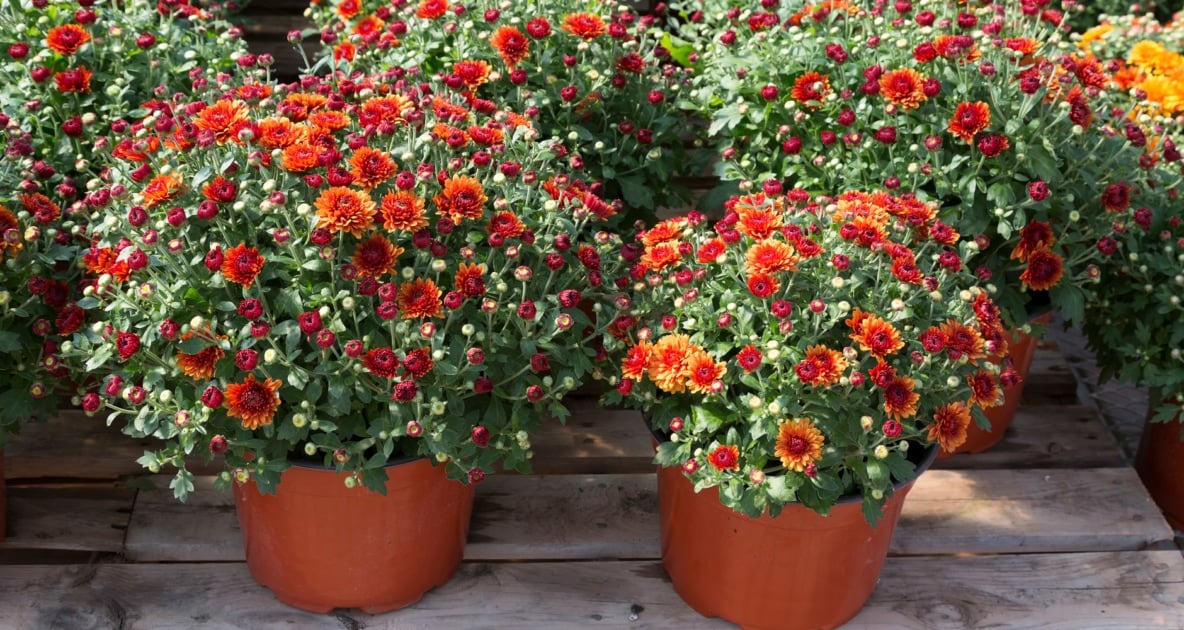
Quick Reference: How to Care for Mums
- Pick: hardy garden mums (look for a rosette of leaves at the base), not florist types, which cannot take a hard winter.
- Water potted mums: once a day, poured at the soil rather than through the flowers.
- Plant in beds: at least six hours of sun, holes 18 inches apart, set level with the ground.
- Winter: mulch heavily in fall, leave the dead foliage on in cold climates, and do not prune until early summer.
- Annual or perennial: sold as annuals in zones 1 to 4, but hardy cultivars can come back year after year.
Mums, or chrysanthemums, are the flower that says fall has arrived. A pot of them on the porch step carries a garden through the short days between the last summer bloom and the first hard frost. Whether you are buying a few for the front door or planting a bed to come back next year, a handful of simple rules will keep them full, colorful, and healthy. Here is how to pick, plant, water, and overwinter mums so they thrive.
How To Pick the Best Mums
When choosing mums, opt for the hardy varieties instead of the florist types, since florist mums cannot withstand harsh winters. Garden, or hardy, mums are far more resilient in cool outdoor temperatures than florist mums, which are usually grown as indoor plants.

There is an easy way to tell the two apart. Hardy mums develop a rosette of leaves at the base once they stop blooming. If that rosette is absent, it is best not to plant the mum in your garden. Look for plants with vibrant, healthy foliage, free from wilting leaves or blooms, and scan for any signs of insect damage or disease. Check that the soil in the pot is moist rather than dry.
For the varieties best suited to your growing region, consider buying locally-raised mums from a farm or nursery. That matters most if you plan to transplant the mum into a flower bed or keep it outdoors as a potted plant through the season.
What to Look For When Buying Potted Mums
- Choose buds, not blooms. A plant that is mostly in bud (rather than already fully open) will give you far more weeks of color. Fully open mums from a big-box lot are often already past their peak.
- Check the pot, not the display. Lift it. A lightweight pot means underwatering and root stress. A pot that feels heavy for its size means healthy, well-hydrated roots.
- Look at the foliage base. Mums with yellow, dropping, or sparse leaves at the bottom have been stressed (overwatering, underwatering, or root rot). Pass on them.
- Buy locally grown if you plan to overwinter. Garden-center mums grown in your local climate are hardier than those shipped from warmer growing regions. Ask whether the plant was grown locally or shipped in.
- Hardy vs. florist mums: Hardy mums (sometimes called garden mums) can survive winters outdoors down to USDA Zone 5 with mulching. Florist mums are bred for cut-flower vase life; they typically do not survive a hard winter outdoors and are best treated as annuals.
If you are picking potted mums for an event only a few days away, choose plants that are already loaded with colorful, open flowers.
For long-term enjoyment, choose a mum filled with tight, unopened flower buds rather than one in full bloom. Those buds open gradually over several weeks, giving you a continuous display instead of a quick show that fades.
To keep a garden full of flowering mums all season, pick a mix of varieties that bloom at different times, from late summer to mid-fall.
If you want something out of the ordinary, there are mums with different-shaped blooms beyond the traditional decorative overlapping petals. Exotic florist varieties come with pompon or single, daisy-like flowers, and they suit indoor use or a short-term autumn display outside. Remember, though, that these cultivars cannot stand up to cold weather.

Caring for Potted Mums
A potted mum asks for little, but the little it asks for matters. Water and drainage do most of the work, and a few minutes of attention keep the blooms coming.
- Once you have settled on the perfect spot to display your mum, place a tray beneath the flower pot to help keep the soil moist. The goal is to stop the plant from drying out or wilting between waterings.
- Unless the mum sits in a very sunny, hot location, watering it well once a day should be enough.
- When you water, do not pour through the dense flowers. Water the plant’s soil instead.
- Fertilizing is not necessary for container mums, but you may add a water-soluble plant food once a week when you water.
- Protect outdoor potted mums from the elements by moving them into sturdy outdoor containers, such as terracotta, concrete, or resin, with extra potting soil.
- You can also dig a hole in the ground and set the plant, nursery pot and all, into the soil to help it survive cool nights. Most garden mums can endure a light fall frost. Cover the plants at night when freeze warnings are in effect. See your city’s average first frost dates here.
- To keep the plant attractive and healthy, snip off any dead blossoms as soon as they wilt. In a cold climate, though, leaving the dead foliage on the plants has been found to help them survive colder temperatures better than pruned plants.
Any questions? Contact [email protected]

How to Care for Mums in the Flower Bed
Caring for mums, or chrysanthemums, is a rewarding and enjoyable job. These bright, colorful flowers are a favorite for fall and bring color to any garden or indoor space.
Whether you are a beginner or a seasoned gardener, here are the essentials for planting mums in the ground and keeping them happy there.
- When you choose a planting spot, remember that mums need at least six hours of direct sunlight every day.
- Dig holes slightly larger and deeper than the mums’ root balls. Space the holes about 18 inches apart so air can circulate.
- Set the mums in the holes so they sit level with the ground. Backfill with garden soil until the holes are filled to ground level.
- To encourage healthy growth, water the mums in with a flower and vegetable water-soluble plant food, following the label instructions.
- After planting, apply a 3-inch layer of mulch.
- Water the mums daily, or as needed, until they are established.
- In very cold regions, dig up the mums and replant them in containers for winter. Keep the potted mums in an unheated garage with a grow light, and let the soil stay barely moist. Move them back outdoors after the last spring frost.
Last, remember that mums do not thrive in waterlogged conditions. Plant them in containers or raised beds with good drainage. For the biggest color impact, plant mums in clusters of three to five of the same cultivar.

Pinch Mums for More Blooms
If you plant hardy mums in spring, a habit called pinching turns a leggy plant into a full, rounded mound covered in flowers. Starting when the new growth is about six inches tall, use your fingers to nip off the top inch of each stem. Repeat every two to three weeks through late spring and early summer, then stop by around the Fourth of July so the plant has time to set buds for fall.
Pinching forces each stem to branch, which means more stems and more blooms come autumn. It also keeps the plant compact so it does not flop open in the first heavy rain. Clemson University’s Home and Garden Information Center covers the same technique in its chrysanthemum growing guide, along with spacing and light notes for garden mums. A store-bought mum in September has already been pinched for you, so this step is for the ones you grow yourself from spring.
Are Mums Annuals or Perennials?
Most mums are sold at garden centers and nurseries as annuals, especially in growing zones 1 to 4. Some cultivars, though, can withstand below-zero temperatures and are considered perennials. Learn more about growing zones.
If you want chrysanthemums in your year-round landscape, read the plant label or ask your local nursery for hardy varieties suited to your climate. The same plant treated as a throwaway annual in one region may return faithfully in a milder one, so where you garden makes all the difference.
Overwintering Mums by Region
Whether a garden mum comes back next spring depends less on the plant and more on your winter. Frost dates and cold depth shift by region, so the plan for keeping mums alive shifts too. Use the table as a starting point, then check your own average first frost date to time the fall mulching.
| Region (rough zone) | Will garden mums return? | What to do in fall |
|---|---|---|
| Upper Midwest, northern New England, interior Canada (3 to 4) | Rarely. Treat as annuals | Compost them, or move pots into an unheated garage and keep barely moist |
| Great Lakes, northern Plains, interior Northeast (5) | Only hardy cultivars | Leave the foliage on, mulch 4 to 6 inches once the ground firms, uncover in spring |
| Ohio Valley, Mid-Atlantic (6) | Usually, with hardy varieties | Get them in the ground by early September so roots establish before frost, then mulch |
| Piedmont, Mid-South, coastal Northeast (7) | Yes, most years | Mulch lightly. Cut back only after growth resumes in spring |
| Deep South and Gulf Coast (8 to 9) | Yes, reliably | Little protection needed. Divide every second or third year to keep them vigorous |
| Coastal California, low desert, south Florida (10 and up) | Yes, though they may never go fully dormant | Treat as a short-lived perennial and refresh plantings regularly |
Planning ahead helps here. The Farmers’ Almanac long-range weather forecast gives you a read on how cold your winter may run, so you can mulch and move pots before the first deep freeze rather than after.
Helping Your Mums Survive Winter
For outdoor winter survival, only prune hardy bedding mums in early summer. Do not remove the dead mum blooms or prune in fall or winter. Instead, heavily mulch your planted mums in the fall, before freezing temperatures set in, so the roots stay insulated through the cold.
That leftover foliage is not just untidy growth. The dead stems and leaves trap snow and hold a pocket of still air around the crown of the plant, which is exactly the protection a mum needs to make it to spring. Clean everything up in April once new growth appears at the base.

Caring for Mums: Frequently Asked Questions
Are mums annuals or perennials?
Both, depending on the variety and your climate. Most mums are sold as annuals, especially in growing zones 1 to 4, but hardy cultivars can withstand below-zero temperatures and return as perennials. Look for a rosette of leaves at the base, which marks a hardy garden mum, and read the plant label for the cold range.
How often should I water potted mums?
Once a day is usually enough, unless the pot sits in a very sunny, hot spot, where it may need more. Water the soil rather than pouring through the dense flowers, and set a tray under the pot to keep the soil evenly moist. Mums wilt fast when they dry out, so do not let them go bone dry between waterings.
Should I deadhead or pinch my mums?
Deadhead potted mums by snipping off blooms as soon as they wilt to keep the plant tidy and flowering. Pinch hardy mums grown from spring by nipping the stem tips every two to three weeks until about the Fourth of July, which makes them bushier and heavier with fall blooms. In cold climates, though, leave the dead foliage on over winter rather than pruning it away.
Will my mums come back next year?
They can, if you plant a hardy garden variety, give it good drainage, and help it through winter. Mulch planted mums heavily in fall, leave the foliage on, and do not prune until early summer. In zones 1 to 4, where most mums behave as annuals, dig them up and overwinter them potted in an unheated garage with a grow light.
How far apart should I plant mums?
Space the planting holes about 18 inches apart so air circulates freely, which helps prevent disease. Set each mum level with the ground and backfill with garden soil. For the strongest color, plant in clusters of three to five of the same cultivar rather than scattering single plants.
Why should I not prune mums in fall?
The dead stems and leaves protect the plant over winter. They trap snow and hold a pocket of still air around the crown, which insulates the roots from the coldest temperatures. Prune hardy bedding mums only in early summer, and clean up the old growth in spring once new shoots appear at the base.
Join the Discussion
Do you have any tips for growing mums?
Please share your experience in the comments!


Deborah Tukua
Deborah Tukua is a natural living, healthy lifestyle writer and author of 7 non-fiction books, including Pearls of Garden Wisdom: Time-Saving Tips and Techniques from a Country Home, Pearls of Country Wisdom: Hints from a Small Town on Keeping Garden and Home, and Naturally Sweet Blender Treats. Tukua has been a writer for the Farmers' Almanac since 2004.
- Deborah Tukua

- Deborah Tukua
- Deborah Tukua
- Deborah Tukua





Can anyone help? My mother purchased tow potts with mums. Everyday she sees the plant or should I say the surroundings all dug up from skunks, squirrels, raccoons, even the cats. None of these critters belong to us. We live in NYC metro area. They also take out the bulbs from the Tulips and chew on it. She gets so mad and furious.
louis there is a product called critter ridder. it is sprayed around the area of flowers and vegetables that are being messed up. It is well worth the price (not expensive) we get in garden center of big box store. It works on ground hogs, possum, squirrels, moles and chipmunks. They dont come near it. It does not hurt the animal but makes the plants less desirable for them. good luck.
Some critter stuff is moth balls ground up. Here in FL, I have found that lots of people use sulfur granules. We put out Milorganite around our garden to keep the deer and animals, it worked.
In our area N. Oh, we haven’t seen hardy mums in over a decade. Most “Garden Mums” are zone 6 -8 and aren’t grown to be overwintered. They are hybridized to be an annual or at best a tender perennial. They generally don’t have rhizomes. Occassionally they have small offsets that given the optimal conditions they will return. Only if planted in good well drained organic loamy soil with not too much water, and moderate winter with snow cover and not to cold temperatures unless the plants have been shelterd by leaves, staw, or other material to protect them from cold.
I purchased mum’s last year. Put in ground. This year they are 3 times as big as when purchased & blooming profusely. I planted in plain old dirt. Nothing special & did nothing to over winter. ?♀️
Northeast ohio
I planted mums in the ground years ago I should have checked the wording
I planted my mums in the grown years ago and they come up every year here in southeast MI
I have two white flowering Mums on a plastic pots of about 14 inches top opening. I would like to save them for next season. I live in Oakville , Ontario, Canada. We have lots of snow from December to April.
What can I do to keep them alive for next season.?
I live in Buffalo New York and have a beautiful mum that has been growing indoors beautifly but I don’t know what to do for it now that some of the blooms are dying. I would love to see it bloom again in the spring. Do you cut it down or just dead head it or something altogether different?
In Newark California, how should I care for Mums planted in garden bed ? Especially through fall and winter?
We live in Eastern NC, I just learned that mums will stay good all winter. I usually don’t do well w/flowers but I love them. My youngest sister can touch something and it will thrive. I want to know do I need to fertilize on the winter or when should I. do it.
My mums are on the porch facing west – is watering once a day enough? Yes
Can I grow mums on the west coast of Florida?
I live in West Coast of Florida.Have some lovely Mums! So far so good , not too much sun ,and love! ???
I live in Springfield, MO and have overwintered mums in my garage. I kept them by a garage window and watered them a little about every other week. Just enough to not let the roots dry out but they were on the dryer side otherwise they will rot. The leaves will dry out during he winter in the garage so Once they dried out I would brush the leaves off in a bag. Come spring I’d wait to see if there was any green growth from the stem. If I was lucky enough to have growth I’d cut the stem back and little by little move the plant in and out of the garage on warmer days until I was very certain we would have consistently warmer days and nights. Then I would repot the plant in a size larger pot or plant it in the garden. You can also take cuttings from your mum once it’s taller and pot them or plant them in the ground for new plants. Google how to propagate mums….so easy!