When Should You Apply Your Last Lawn Fertilizer Before Winter? State-by-State Guide
Your lawn may need one final feeding before winter—but applying fertilizer too late can be a mistake. Find the best fall fertilizing window for your state and grass type.

Fall can be one of the best times to fertilize a lawn—but timing matters. Apply too early, and you may miss the benefits. Apply too late, especially to warm-season grass, and you could encourage tender growth just as freezing weather arrives. Here’s when to make your final lawn fertilizer application in every state.
As the nights grow colder and mowing season begins winding down, homeowners face another annual lawn-care question:
When should I fertilize my lawn for the last time before winter?
The answer depends largely on where you live and what kind of grass you have.
And this is where things get interesting.
For millions of homeowners with cool-season grass, fall is one of the most important fertilizing periods of the entire year.
But if you have a warm-season lawn, applying nitrogen too late can do more harm than good.
So that bag labeled “winterizer” sitting at the garden center?
It isn’t automatically right for every lawn—or every state.
Here’s how to tell when your grass needs its final feeding of the year, plus a state-by-state guide to when the fall fertilizer window typically closes.
Quick Answer: When Should You Apply Your Last Lawn Fertilizer?
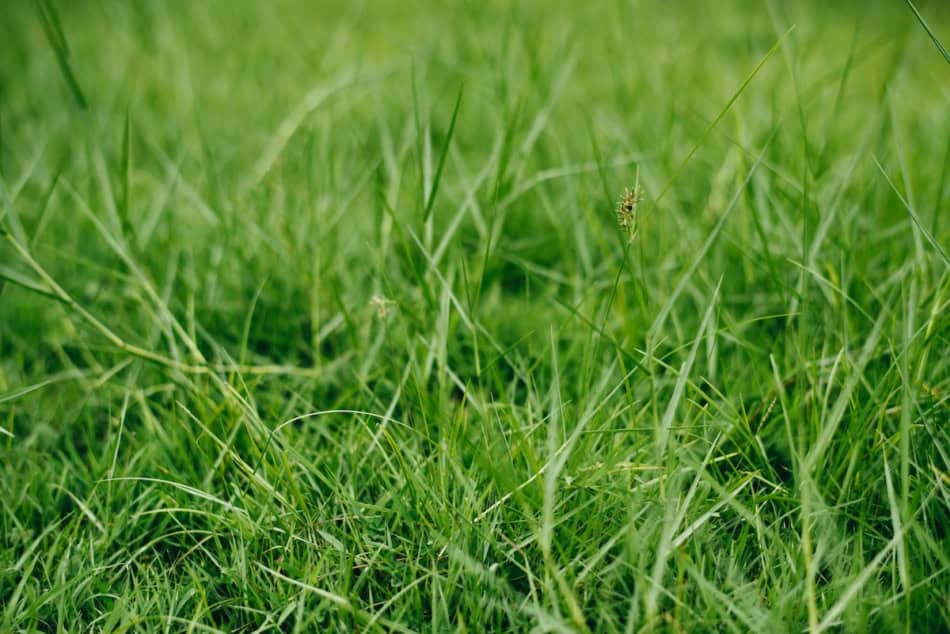
For cool-season grasses such as Kentucky bluegrass, tall fescue, perennial ryegrass, and fine fescue, the final fertilizer application typically falls sometime between September and early November, depending on your climate.
In some areas, particularly Pennsylvania and parts of the Mid-Atlantic, a late-fall feeding may occur into November, while the grass can still use nutrients and the soil remains unfrozen. Penn State Extension notes that late-fall fertilization of cool-season turf can take place after leaf growth has slowed but before the soil freezes.
Other northern states recommend finishing earlier. University of Minnesota Extension, for example, lists early August through mid-October as the primary fall fertilizing period for Minnesota lawns.
For warm-season grasses such as Bermudagrass, zoysia, centipedegrass, and St. Augustinegrass, the rule is almost the opposite.
Your final nitrogen application generally needs to happen well before the grass enters winter dormancy.
Texas A&M AgriLife Extension recommends fertilizing warm-season lawns only while they are actively growing, while its broader Texas guidance recommends making the final nitrogen application roughly four to six weeks before the historical first frost.
The simplest rule:
Cool-season lawn? Fall feeding may be especially important.
Warm-season lawn? Be careful not to fertilize with nitrogen too late.
Knowing which kind of grass you have is more important than the date on the calendar.
The Biggest Fall Fertilizer Mistake
One of the easiest mistakes homeowners make is assuming that every lawn needs a heavy dose of “winterizer” fertilizer just before winter.
That isn’t necessarily true.
The word winterizer is primarily a product description. What actually matters is the nutrients inside the bag—and whether your lawn needs them.
Many winterizer fertilizers contain nitrogen and potassium.
Nitrogen helps support turf growth, color, density, and recovery. Potassium supports stress tolerance, but adding extra potassium to soil that already contains enough may provide little benefit.
University of Minnesota Extension notes that potassium-containing winterizer fertilizer may offer little additional benefit if the lawn is not potassium-deficient.
That is why a soil test is much more useful than simply buying whatever fertilizer happens to have “Fall” or “Winterizer” printed on the bag.
Cool-Season vs. Warm-Season Grass: Know What You Have
Before reaching for the fertilizer spreader, identify your lawn type.
Cool-Season Grasses
These dominate much of the Northeast, Midwest, northern Plains, Pacific Northwest, and higher-elevation West.
Common cool-season grasses include:
- Kentucky bluegrass
- Tall fescue
- Fine fescues
- Perennial ryegrass
These grasses love the cooler temperatures of spring and fall.
That means autumn isn’t merely the end of lawn season.
It can be prime growing season.
Fall fertilizer can help turf recover from summer heat, increase density, support root growth, and store carbohydrates that help the grass survive winter and green up the following spring.
Iowa State University Extension recommends fall fertilization for cool-season Iowa lawns, including an application in late October or early November.
Warm-Season Grasses
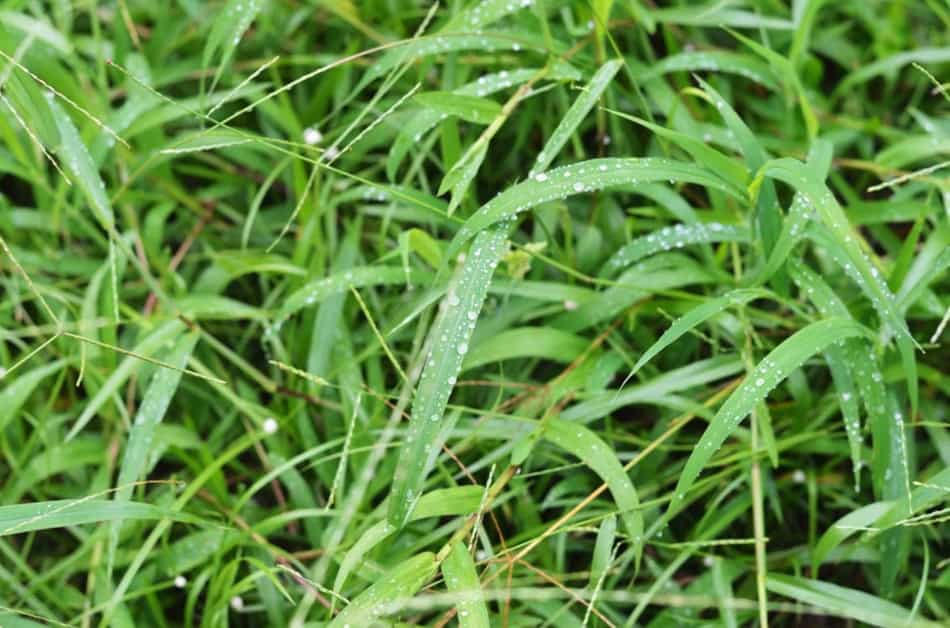
Warm-season grass dominates much of the Southeast, Gulf Coast, southern Plains, Southwest, and warmer portions of California.
Common varieties include:
- Bermudagrass
- Zoysiagrass
- Centipedegrass
- St. Augustinegrass
- Bahiagrass
These grasses thrive during summer heat.
As autumn temperatures decline, growth slows and the lawn eventually enters dormancy.
Adding substantial nitrogen as that process begins can encourage tender new growth at exactly the wrong time.
University of Georgia Extension advises homeowners with warm-season lawns to stop applying nitrogen as the growing season winds down because late growth can interfere with dormancy and increase susceptibility to winter injury and certain diseases.
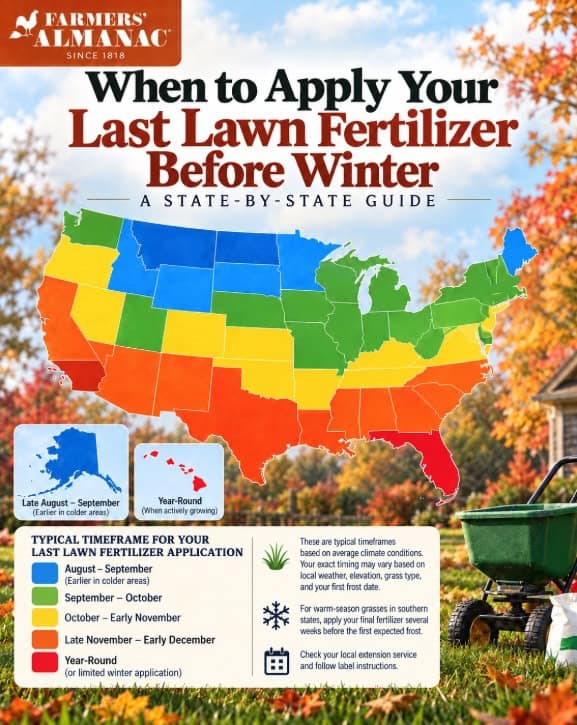
When Should You Apply Your Last Lawn Fertilizer? State-by-State Guide
The dates below are general fall fertilizer windows, not absolute deadlines.
Elevation, grass species, soil, rainfall, temperature, irrigation, and the timing of your first freeze can shift your ideal date by several weeks.
States in the transition zone may have both cool-season and warm-season lawns, so we’ve noted both when necessary.
| State | Typical Final Fall Fertilizer Window |
|---|---|
| Alabama | Warm-season lawns: August–early September. Tall fescue: September–November. |
| Alaska | Late August–September; earlier in colder interior areas. Avoid fertilizing dormant or frozen turf. |
| Arizona | High-elevation cool-season lawns: September–October. Low-desert Bermudagrass may be fertilized into October while actively growing; overseeded winter rye follows a different schedule. |
| Arkansas | Warm-season lawns: late August–September. Cool-season fescue: September–October or early November. |
| California | Cool-season lawns: September–November or later where actively growing. Warm-season grass generally receives its final feeding in September–October, depending on climate and species. |
| Colorado | September–October for most cool-season lawns; finish before turf and soil become dormant or frozen. |
| Connecticut | September–October; some lawns may receive a final feeding into early November. |
| Delaware | September–October or early November for cool-season turf. Warm-season lawns should finish substantially earlier. |
| Florida | North Florida: roughly mid- to late September. Central Florida: around early October. South Florida lawns may grow and be fertilized year-round when needed. Check local fertilizer ordinances. |
| Georgia | Warm-season lawns generally finish nitrogen applications in August or very early September. Tall fescue can be fertilized during fall. |
| Hawaii | No universal winter cutoff. Fertilize according to grass species and active growth rather than a winter calendar. |
| Idaho | September–October, before sustained freezing conditions arrive. |
| Illinois | September–October; some cool-season lawns can receive a final application into early November. |
| Indiana | September–October or early November for cool-season lawns. |
| Iowa | Late October–early November is a common final application window for cool-season lawns. |
| Kansas | Cool-season grass: September–October. Warm-season grass: late August–September. |
| Kentucky | Tall fescue and other cool-season lawns: September–November. Warm-season lawns should finish much earlier. |
| Louisiana | Warm-season lawns generally receive their final nitrogen in late summer to early fall, before growth begins slowing significantly. |
| Maine | Late August–September or early October, depending on location and weather. |
| Maryland | Cool-season lawns: September through November 15. Warm-season grass generally should not receive nitrogen after September 1. Maryland law prohibits homeowners from applying nitrogen lawn fertilizer after November 15. |
| Massachusetts | September–October, with early November possible in milder locations. |
| Michigan | September–October for most cool-season lawns. |
| Minnesota | August through mid-October; early fall is especially important. |
| Mississippi | Warm-season lawns: generally late summer through September. Be cautious with late-season nitrogen and base applications on turf condition and soil testing. |
| Missouri | Cool-season lawns: September–November. Warm-season lawns generally finish nitrogen by late August or early fall. |
| Montana | Late August–September or early October, depending on elevation and first freeze. |
| Nebraska | September–October for cool-season lawns. |
| Nevada | Northern/high-elevation lawns: September–October. Low-desert warm-season lawns can remain active later. |
| New Hampshire | Late August–September or early October. |
| New Jersey | September through November 15. State law generally prohibits homeowners from applying nitrogen or phosphorus lawn fertilizer after November 15. |
| New Mexico | September–October in most areas; high-elevation locations finish earlier than southern valleys. |
| New York | September–October or early November; colder upstate areas finish sooner than New York City and Long Island. |
| North Carolina | Tall fescue: September–November. Warm-season lawns generally finish nitrogen in August or early September. |
| North Dakota | Late August–September or early October. |
| Ohio | September–October or early November. |
| Oklahoma | Warm-season lawns: late August through September 15. Cool-season grass can be fertilized from mid-September into early October. |
| Oregon | Western Oregon: October–November can remain suitable for actively growing cool-season turf. Colder interior/high-desert areas finish earlier. |
| Pennsylvania | September through mid-November; late-fall applications may be useful after shoot growth slows but before soil freezes. |
| Rhode Island | September–October or early November. |
| South Carolina | Warm-season lawns: generally no later than August 15 inland and around September 1 near the coast. Tall fescue can be fertilized in fall. |
| South Dakota | Late August–September or early October. |
| Tennessee | Tall fescue: September–November. Warm-season turf generally receives its final nitrogen in late summer or early fall. |
| Texas | Final nitrogen generally goes down four to six weeks before the historical first frost: September in the Panhandle, October across much of central and northern Texas, and potentially later in coastal and far-southern areas. |
| Utah | September–October for cool-season lawns. |
| Vermont | Late August–September or early October. |
| Virginia | Cool-season turf: September–November. Warm-season lawns should generally finish nitrogen by late summer or early fall. |
| Washington | Eastern Washington: after the final mowing but before soil freezes. Western Washington: late-fall fertilization may extend from mid-November into early December. |
| West Virginia | September–October or early November. |
| Wisconsin | Early September is particularly important; early October may be appropriate for some lawns, but avoid pushing tender late-season growth. |
| Wyoming | Late August–September or early October, depending on elevation. |
Farmers’ Almanac Tip
Don’t treat the table as a countdown clock.
Fall weather changes from year to year.
A warm October may extend active growth. An early cold outbreak can shorten the season considerably.
Your lawn’s grass type and condition matter more than an arbitrary date.
You can compare the timing in your area with our 2026 First Frost Dates guide or find your location in our Average First Frost Dates by City.
Should You Fertilize Before or After Your Last Mowing?
This is another common fall lawn question.
For cool-season grass, your final fertilizer application doesn’t necessarily have to happen after the final mowing.
In fact, you may continue mowing after fertilizing if the lawn remains actively growing.
As we explain in our state-by-state guide to when you should stop mowing your lawn, mowing should continue for as long as the grass continues producing meaningful new growth.
Your final fertilization and final mowing dates therefore won’t always be the same.
In many northern areas, you may fertilize the lawn and then mow it several more times before winter finally shuts growth down.
Should You Wait Until After the First Frost?
Not necessarily.
This is another case where cool-season and warm-season grass behave differently.
Cool-season grasses may remain green and physiologically active after a light frost.
One frosty morning does not automatically mean your lawn has gone dormant.
Warm-season lawns are different. Because they are moving toward dormancy as cooler weather arrives, their final nitrogen application should generally occur before frost becomes imminent.
A useful Southern rule is to count backward from your area’s typical first frost.
For example, Texas A&M recommends making the final nitrogen application to many warm-season lawns approximately four to six weeks before the historical first frost date.
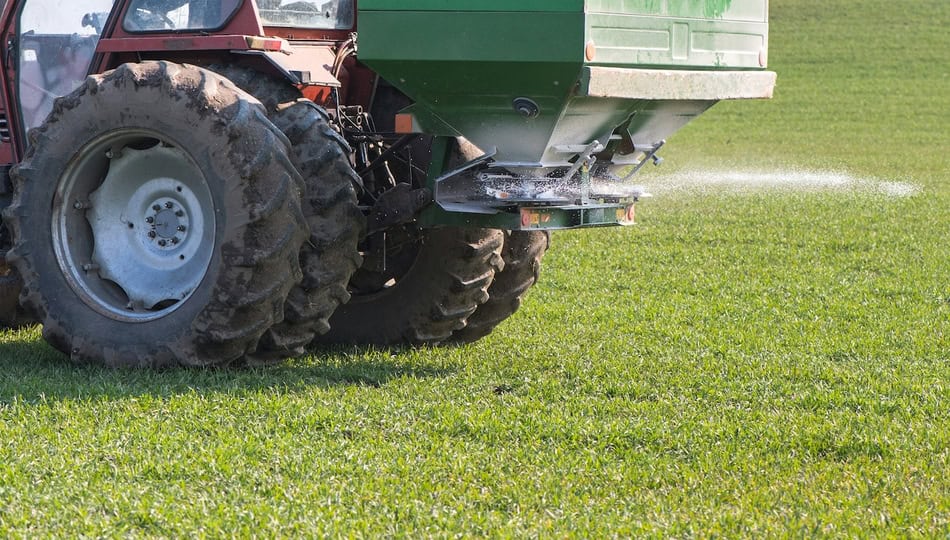
Why Fall Fertilizer Can Be So Important for Northern Lawns
Cool-season grass has two major growth periods:
spring and fall.
By late summer, a lawn may have endured:
- Heat
- Drought
- Foot traffic
- Insects
- Disease
- Compacted soil
- Weeks of frequent mowing
Cooler autumn temperatures allow the grass to recover.
That is one reason Penn State Extension describes late summer and fall as particularly important fertilizing periods for cool-season turf.
The grass may not be shooting upward as rapidly as it did earlier in the year, but important activity is still occurring below ground.
Fall feeding can support:
- Root development
- Turf density
- Recovery from summer damage
- Stored energy reserves
- Spring green-up
In other words:
Just because you’re almost finished mowing doesn’t mean your lawn is finished growing.
Why Late Nitrogen Can Be a Problem in the South
For warm-season lawns, autumn tells the grass something very different:
Slow down. Winter is coming.
Bermudagrass, zoysia, centipedegrass, and St. Augustinegrass gradually reduce their growth as days shorten and temperatures fall.
Heavy nitrogen fertilization can encourage fresh green growth when the turf should instead be preparing for dormancy.
University of Georgia Extension warns that fertilizing warm-season turf too late can delay dormancy and increase susceptibility to cold damage and diseases such as spring dead spot.
Clemson Cooperative Extension similarly recommends that nitrogen applications to warm-season lawns end substantially earlier than fall fertilization of tall fescue.
That is why the same bag of fertilizer may be appropriate for a Kentucky bluegrass lawn in Pennsylvania while being completely unnecessary for Bermudagrass in Georgia.
What About the Transition Zone?
This is where lawn care becomes especially interesting.
A wide band of the United States—including portions of:
- Virginia
- North Carolina
- Tennessee
- Kentucky
- Arkansas
- Missouri
- Oklahoma
- Kansas
can support both cool-season and warm-season grasses.
One homeowner may have tall fescue.
The neighbor next door may have zoysia.
Their fall fertilization schedules could be completely different.
Identify your grass before fertilizing.
If you aren’t sure what you’re growing, your local Cooperative Extension office can usually help identify it.
Is “Winterizer” Fertilizer Really Different?
Sometimes—but don’t shop by the word on the front of the bag.
Look at the three numbers on the fertilizer label.
For example:
24-0-10
Those numbers represent the percentage by weight of:
- Nitrogen (N)
- Phosphate (P₂O₅)
- Potash (K₂O)
Nitrogen is usually the nutrient lawns require most regularly.
Phosphorus generally should not be added unless a soil test indicates that it is needed or you are establishing new turf where local law permits it.
Potassium may benefit deficient soil, but more isn’t automatically better.
A soil test can tell you far more about what your lawn actually needs than the word “winterizer.”
How Much Fertilizer Should You Apply?
There is no single rate appropriate for every lawn.
Grass species, soil type, local regulations, maintenance level, fertilizer formulation, and soil-test results all matter.
Many university turf programs limit individual applications to roughly 1 pound or less of actual nitrogen per 1,000 square feet, and several states impose additional restrictions.
Follow:
- Your soil-test recommendations
- Local Cooperative Extension guidance
- State and local fertilizer regulations
- The fertilizer label
More fertilizer does not mean a healthier lawn.
Excess nitrogen can increase mowing, promote excessive growth, worsen some diseases, reduce stress tolerance, and allow nutrients to wash into waterways.
Don’t Fertilize a Dormant Lawn Just Because the Calendar Says To
This is perhaps the most useful rule in the entire article.
Fertilizer works best when grass is capable of using it.
University of California Integrated Pest Management recommends applying lawn fertilizer while the grass is actively growing.
If your lawn is:
- Frozen
- Completely dormant
- Severely drought-stressed
- Waterlogged
- Covered with snow
put the spreader away.
Wait for an appropriate growing period instead.
Should You Water After Fertilizing?
Usually, yes—but follow your fertilizer’s label.
A light irrigation often helps move granular fertilizer off the leaf blades and into the soil where roots can access the nutrients.
Don’t apply fertilizer immediately before a downpour.
Heavy rainfall can wash fertilizer into:
- Streets
- Storm drains
- Streams
- Lakes
- Ponds
If granules land on a driveway, sidewalk, patio, or street, sweep them back onto the lawn rather than washing them away.
And if autumn has been unusually dry, don’t forget that your lawn may still need water even though summer has ended.
See our guide: When Should You Stop Watering Your Lawn in Fall?
Should You Fertilize After Overseeding?
Newly seeded cool-season lawns frequently have different fertilizer requirements from established grass.
Starter fertilizer may be appropriate when soil testing and local recommendations call for it.
However, don’t automatically pile additional fertilizer onto newly seeded turf simply because you’re also performing your normal fall application.
Seedlings are vulnerable to:
- Fertilizer burn
- Excessive top growth
- Drought
- Frost
- Foot traffic
Follow the fertilizer recommendation associated with your seeding program.
Don’t Forget About Fallen Leaves
Even a perfectly fertilized lawn can suffer if it spends winter buried under a thick, wet blanket of leaves.
Heavy leaf cover can block sunlight, hold moisture against the grass, and smother turf.
You don’t necessarily have to rake every leaf.
A mulching mower can shred moderate leaf cover into small pieces that settle between grass blades.
But don’t allow deep, matted leaves to remain all winter.
See our state-by-state guide to your final fall leaf cleanup.
A Simple Fall Lawn Fertilizer Checklist
Before making your final application of the year, ask yourself:
1. What Kind of Grass Do I Have?
Cool-season and warm-season lawns require very different fall treatment.
2. Is the Grass Still Actively Growing?
Don’t fertilize completely dormant turf.
3. When Is My Average First Frost?
This is particularly important for warm-season grass.
Check our 2026 First Frost Dates.
4. Have I Tested My Soil?
Don’t assume your lawn needs phosphorus or potassium.
5. Is Heavy Rain Coming?
Avoid fertilizing immediately before runoff-producing rain.
6. Is Fertilizer Allowed Right Now?
Some states and municipalities have seasonal fertilizer restrictions.
Maryland and New Jersey, for example, have legal cutoff dates for homeowner fertilizer applications.
Florida communities may also have local fertilizer ordinances.
7. Am I Following the Label?
Never assume more fertilizer produces better results.
Frequently Asked Questions
What month should I apply winter fertilizer?
For cool-season lawns, the final fertilizer application commonly occurs between September and early November, depending on location. Warm-season lawns generally need their final nitrogen application substantially earlier.
Is October too late to fertilize my lawn?
Not necessarily.
October is an important lawn-fertilizing month across much of the cool-season grass region.
In Iowa, Minnesota, Missouri, Pennsylvania, New Jersey, Maryland, and many other states, at least some October fertilization is commonly recommended.
For warm-season grass in the South, however, October may already be too late.
Is November too late to fertilize?
It depends.
In portions of the Northeast and Mid-Atlantic, cool-season grass may still benefit from appropriate late-fall fertilization.
Penn State notes that late-fall fertilization can occur once shoot growth has slowed but before soil freezes.
In much colder northern regions, November may be too late.
And for warm-season lawns, the normal nitrogen window has generally closed well before then.
Should I fertilize before the first freeze?
For warm-season grass, the final nitrogen application should generally happen several weeks before the expected first frost or freeze.
Cool-season grass may remain active after light frost, so the first frosty morning isn’t necessarily the end of its fertilizer window.
Should I fertilize after my final mow?
You can, but the two events don’t have to coincide.
If your cool-season lawn remains actively growing after fertilization, continue mowing it.
Can I fertilize after frost?
Cool-season lawns can remain active after light frost.
Wait until the grass itself is unfrozen and conditions are appropriate.
Do not spread fertilizer over frozen ground.
Is winterizer fertilizer necessary?
Not always.
The lawn needs nutrients—not marketing terminology.
If your soil already contains sufficient potassium, adding more simply because a fertilizer is labeled “winterizer” may provide little benefit.
Should I use fertilizer with phosphorus?
Usually only if a soil test demonstrates a deficiency or you’re establishing new turf under circumstances where phosphorus application is permitted.
Several states restrict phosphorus fertilizer because excess phosphorus can contribute to water pollution.
The Bottom Line: When Should You Apply Your Last Lawn Fertilizer?
There isn’t one date when everyone in America should make their final fertilizer application.
For cool-season lawns, fall is one of the most important feeding periods of the year. Depending on where you live, the final application may fall anywhere from September into early November.
For warm-season lawns, the clock runs differently.
As Bermudagrass, zoysia, centipedegrass, and St. Augustinegrass prepare to enter dormancy, late nitrogen can encourage growth when the lawn should be slowing down. In many Southern locations, the final nitrogen feeding should occur in late summer or several weeks before the first expected frost.
So don’t fertilize simply because the bag says “winterizer.”
Know your grass. Watch the weather. Check your soil.
And most importantly:
Feed the lawn while it can still use the fertilizer—not simply because winter is approaching.

- Tim Konrad

- Tim Konrad
- Tim Konrad
- Tim Konrad