Why Do Fireflies Glow? The Science Behind Summer’s Most Magical Insect

There’s something unforgettable about a warm summer evening filled with the gentle flicker of fireflies. Whether you call them fireflies or lightning bugs, these tiny glowing insects have captivated people for generations. Their flashing lights have inspired folklore, children’s games, and countless summer memories.
But why do fireflies glow in the first place? As it turns out, their magical light show is one of nature’s most fascinating scientific achievements.
It’s Called Bioluminescence
The glow produced by fireflies is known as bioluminescence—the ability of a living organism to create its own light through a chemical reaction.
Inside the firefly’s abdomen, a compound called luciferin reacts with oxygen in the presence of an enzyme called luciferase. With a little help from energy-rich molecules known as ATP, this reaction produces light instead of heat.
In fact, a firefly’s light is remarkably efficient. Nearly all of the energy is converted into visible light, making it one of the most efficient natural light sources on Earth. By comparison, an incandescent light bulb wastes much of its energy as heat.
Why Do Fireflies Flash?
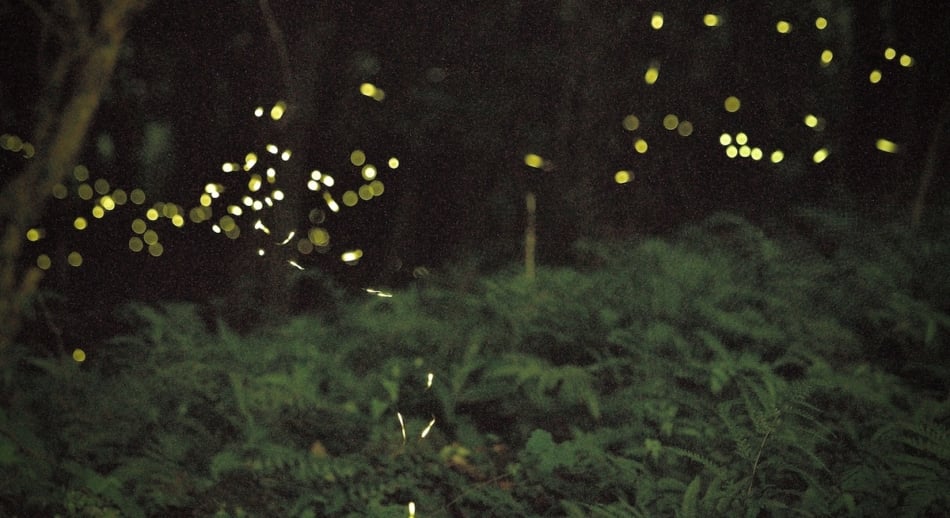
Those blinking patterns aren’t random—they’re a form of communication.
Each species of firefly has its own unique flash pattern, almost like a secret language. Males typically fly through the air flashing in a distinctive rhythm, while females wait on nearby plants or grasses and respond with flashes of their own if they’re interested.
This helps fireflies find mates even in areas where multiple species live together.
Some species even synchronize their flashes, creating breathtaking displays where hundreds—or even thousands—of insects blink in perfect unison. These synchronized fireflies are found in only a few places around the world, including parts of the Great Smoky Mountains National Park.
Not Every Firefly Flashes
North America is home to more than 150 species of fireflies, and not all of them put on evening light shows.
Some species are active during the day and rely more on chemical signals than flashing lights. Others glow only during their larval stage.
Those glowing larvae are sometimes called glowworms, though they aren’t actually worms at all.
The Glow Is Also a Warning
Firefly light doesn’t just attract mates—it can also warn predators to stay away.
Fireflies contain bitter, defensive chemicals that make them unappetizing to birds, frogs, spiders, and many other animals. Their glowing bodies serve as a bright warning: “Don’t eat me.”
This type of warning coloration is common in nature, though few animals advertise it with such spectacular light.
Are Fireflies Disappearing?
Many people say they don’t see nearly as many fireflies as they remember from childhood.
Scientists believe several factors may be contributing to local declines, including:
- Habitat loss as fields and forests are developed
- Artificial outdoor lighting, which interferes with mating signals
- Widespread pesticide use
- Changes in climate and weather patterns
- Loss of moist areas where larvae develop
While fireflies are still common in many parts of North America, protecting their habitat can help keep their summer displays thriving for future generations.
How to Attract Fireflies to Your Yard
Want more fireflies this summer? A few simple changes can make your yard more inviting.
- Turn off unnecessary outdoor lights after dark.
- Leave some leaf litter beneath trees where larvae can develop.
- Avoid broad-spectrum insecticides whenever possible.
- Plant native grasses, shrubs, and wildflowers.
- Allow parts of your yard to remain a little wild rather than perfectly manicured.
A darker, more natural landscape benefits not only fireflies but also many other pollinators and beneficial insects.
A Symbol of Summer
For many people, the first appearance of fireflies marks the true arrival of summer. Their soft glow reminds us to slow down, step outside after sunset, and enjoy one of nature’s simplest pleasures.
Whether you’re watching them dance over a meadow, blink through the trees, or light up your own backyard, fireflies continue to bring a little wonder to warm summer nights—proving that sometimes the smallest creatures create the brightest memories.
Related: Why Do Fireflies Glow? 10 Illuminating Facts About Lightning Bugs
Firefly Fast Facts
- Fireflies are actually beetles, not flies.
- More than 2,000 species are found worldwide.
- Their light is produced through bioluminescence.
- Nearly 100% of the energy becomes light, making it one of nature’s most efficient light sources.
- Most adults live only a few weeks—just long enough to mate and lay eggs.
- Firefly larvae spend much of their lives underground feeding on snails, slugs, and other small invertebrates before emerging as adults.


- Farmers' Almanac Staff

- Farmers' Almanac Staff
- Farmers' Almanac Staff
- Farmers' Almanac Staff