Firefly vs Lightning Bug: Where Each Name Is Popular (and Why It Matters)
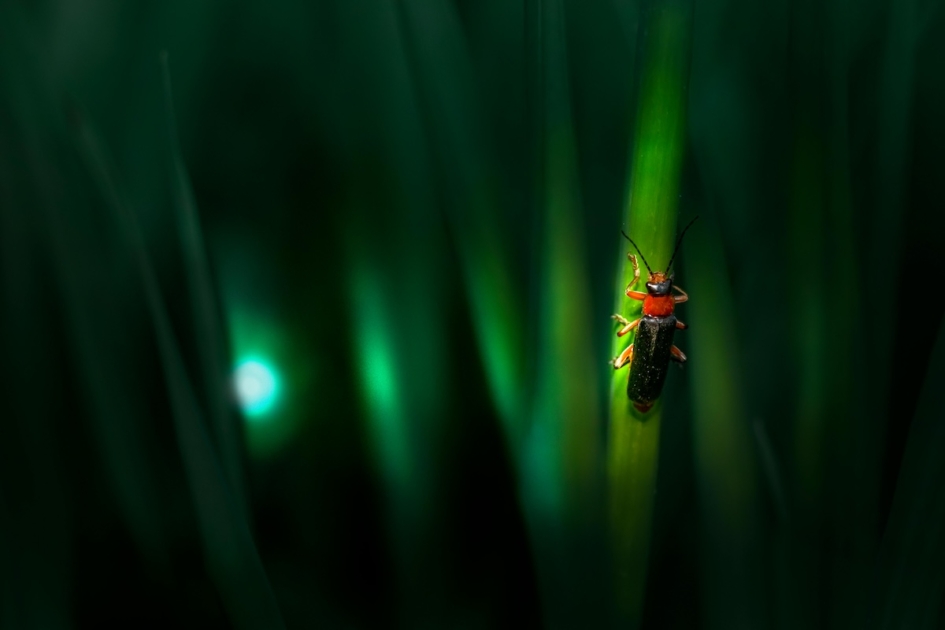
Quick Reference: Firefly vs Lightning Bug
- Same insect: there is no biological difference. They are the same beetle (family Lampyridae).
- Regional split: South and Midwest say lightning bug. New England, West Coast, and most of the rest of the country say firefly.
- Why both names: 18th-century settlers from different European regions used different translations of the same insect.
- The glow: a chemical reaction between luciferin and oxygen, controlled by the insect to find a mate.
- When to see them: June through August, dusk to about 10 p.m., warm humid evenings.
If you grew up calling them lightning bugs, you probably grew up south of the Mason-Dixon Line or in the Midwest. If you grew up calling them fireflies, you probably grew up in New England, the West Coast, or one of the Mid-Atlantic states. They are the same insect either way. Here is where each name is popular, where the divide came from, and the surprising chemistry behind that summer-evening glow.
Where Each Name Is Used
Linguistic surveys by Harvard and the University of Wisconsin have mapped the dialect divide for almost a century. The pattern has stayed remarkably stable:
- Lightning bug: dominant across the South, Lower Midwest, and Texas. Strongest use in Tennessee, Kentucky, Arkansas, Missouri, and the Carolinas.
- Firefly: dominant across New England, the Mid-Atlantic, the Upper Midwest, Pacific Northwest, and California.
- Both: a roughly 100-mile band running through Pennsylvania, Ohio, Indiana, Illinois, and Iowa, where speakers shift between the two depending on context.
Why Two Names for One Bug
The split goes back to 18th-century immigration patterns. English Quakers and German settlers heading into the Mid-Atlantic and Midwest tended to use the older Germanic-rooted word firefly (which simply means an insect that flies and glows). Scots-Irish settlers and English settlers in the Appalachian South gravitated toward lightning bug, a description-by-comparison that fit the dramatic flashing the insects do in southern summers.
By 1900 the dialect divide was firmly mapped. Despite a century of TV, movies, and national publishing trying to standardize on firefly, lightning bug has survived because it is the name people learned as children, and that is the kind of word that does not change.
What Makes Them Glow
The glow is a chemical reaction called bioluminescence. Inside the insect’s lower abdomen, an enzyme called luciferase reacts with a molecule called luciferin in the presence of oxygen. The reaction releases energy almost entirely as light, with very little heat: nearly 100 percent efficiency, compared to about 10 percent for an incandescent bulb.
Each species of firefly has its own distinctive flash pattern (rate, duration, color, height of flight). Males flash to advertise; females respond from the grass with a matching pattern. Get the pattern wrong and you do not get a mate.

Frequently Asked Questions
Are fireflies and lightning bugs the same insect?
Yes, exactly the same. Both names refer to insects in the family Lampyridae. There are about 2,000 species worldwide and roughly 170 in North America.
Why does the regional name split run where it does?
It traces back to 18th-century settlement patterns: German and Quaker settlers brought firefly; Scots-Irish settlers in the South brought lightning bug. The dialect divide has been stable for 200 years.
Are fireflies dying out?
Some species are declining due to light pollution (which disrupts the flash mating signal), habitat loss, and pesticides. Researchers track populations through the volunteer Firefly Watch program.
When and where do you see them?
June through August, after dusk on warm humid evenings, in fields, forest edges, and yards with tall grass and natural ground cover. They are most active until about 10 p.m.



- Farmers' Almanac Staff

- Farmers' Almanac Staff
- Farmers' Almanac Staff

- Farmers' Almanac Staff