

10 Strange Facts About the 2024 Total Solar Eclipse
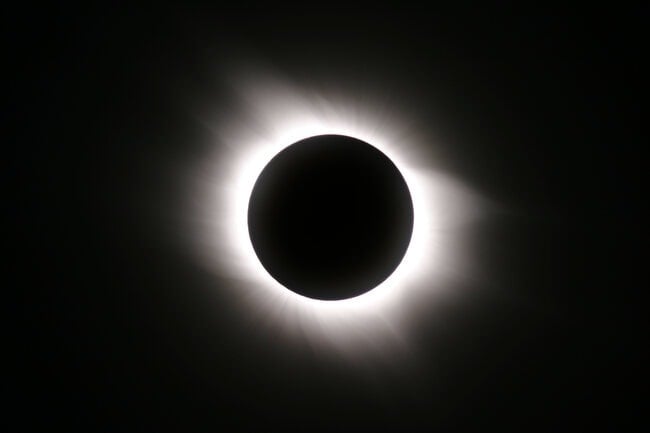
Quick Reference: April 8, 2024 Solar Eclipse
- Date: Monday, April 8, 2024.
- Path: Mexico, USA (15 states from Texas to Maine), Canada.
- Maximum totality: 4 minutes 28 seconds, near Torreon, Mexico.
- Path width: roughly 115 miles.
- Next US total solar eclipse: August 23, 2044.
- Cumulative US viewers in totality: over 31 million.
The April 8, 2024 total solar eclipse was the most-watched eclipse in North American history. Its path swept from Mazatlan in Mexico, across 15 US states from Texas to Maine, and into eastern Canada. Roughly 31 million people lived in the path of totality, and many tens of millions more travelled to watch. Here are 10 strange and surprising facts about that day.
The Facts
Each fact is brief and verifiable. Sources include NASA, the National Solar Observatory, and reports from astronomers stationed along the path.
- 1. The longest totality was 4 minutes 28 seconds, near Torreon, Mexico, the longest US-Canada-accessible totality until 2045.
- 2. The path crossed 15 US states from Texas to Maine, including major cities Dallas, Indianapolis, Cleveland, Buffalo, and Burlington.
- 3. Birds went silent during totality, as documented by acoustic ecologists at Cornell University. Songbirds returned to song within 90 seconds of totality ending.
- 4. The temperature dropped 10 degrees F on average during the 3-4 minute totality, the largest temperature drop ever recorded in such a short window across a wide region.
- 5. The sun’s corona was visible to the naked eye for the duration of totality, the only time corona viewing is safe without special filters.
- 6. Stars and planets became visible. Venus and Jupiter were prominent during totality, with Mars and Saturn fainter.
- 7. A comet was passing nearby. Comet 12P/Pons-Brooks (the “Devil Comet”) was at perihelion the same week and visible to telescopes during totality.
- 8. Air traffic dropped sharply. Major eclipse-path airports tracked a 60-80 percent reduction in flights during totality, partly weather, partly viewing-related.
- 9. Wildlife behavior was studied at 30 zoos along the path. Giraffes ran in circles; flamingos huddled; orangutans climbed to high vantages.
- 10. The next US total solar eclipse is August 23, 2044, a 20-year gap, one of the longest in modern US history.

Frequently Asked Questions
Did the 2024 eclipse really last over 4 minutes?
Yes, in Mexico. Along most of the US path, totality lasted 3 to 4 minutes depending on location. Cities like Dallas and Cleveland saw about 3 minutes 50 seconds.
When is the next total solar eclipse in the US?
August 23, 2044. The path will cross Montana, North Dakota, and South Dakota. A second one follows on August 12, 2045, with a longer path from California to Florida.
Are eclipses dangerous to watch?
Looking at a partial eclipse without certified eclipse glasses can damage the retina. During totality (only) the sun is safe to view naked-eye. Before and after, glasses are essential.
Did animals really react to the eclipse?
Yes. Documented behavior includes birds going silent, dairy cows returning to barns, owls calling, and zoo animals showing nighttime routines. Most species returned to normal within minutes of totality ending.



Jamie Carter
Jamie Carter is an expert author and leading eclipse journalist based in the United Kingdom who writes for BBC Sky At Night, Space.com, Forbes.com, Travel+Leisure, and among other popular publications. Carter has written several astronomy books, including The Complete Guide To The Great North American Eclipse of April 8, 2024, When Is The Next Eclipse? When, Where, and How To See Lunar And Solar Eclipses: Travel Guide 2018-2030, and A Stargazing Program For Beginners: A Pocket Guide.
- Jamie Carter



When there is a massive earthquake, like the ones in japan or Alaska that alter the earth’s rotation, does this affect the path of or the possibility of an eclipse?