

5 Fascinating Facts About Migratory Birds
Why do birds fly south? How do they know when its time to go? We answer these and other questions about this interesting phenomenon here!
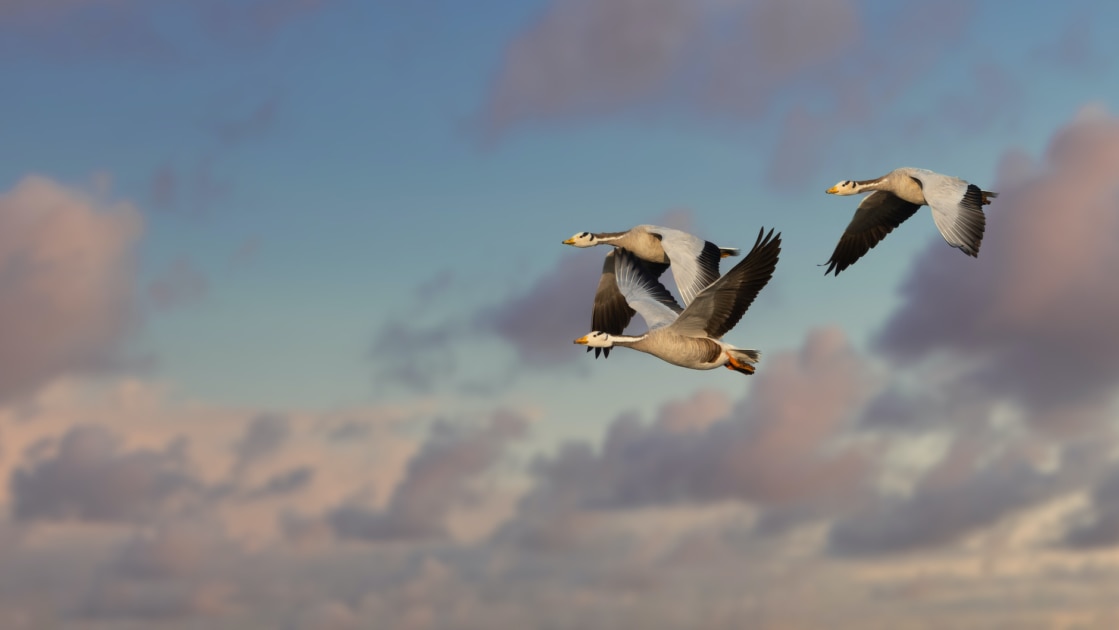
Quick Reference: Migratory Birds
- Why they fly: food and a place to raise young. Insects and nectar disappear in winter; the South has both.
- What triggers takeoff: shortening daylight, cooler temperatures, and a drop in food supply.
- How they navigate: a mix of the Sun, Earth’s magnetic field (magnetite in the beak), the stars (the North Star is a key reference), and even smell.
- The records: Arctic tern (longest, 49,700 mi/year), bar-headed goose (highest, 5+ miles up), great snipe (fastest sustained, 60 mph over 4,200 mi).
- Why a V shape: the lead bird breaks the air; the rest ride its updraft. The formation also keeps the flock visible to each other.
- Forecast it yourself: Cornell’s BirdCast publishes nightly migration radar for the U.S.
Did you ever wonder why birds “fly south for the winter” or how they know where and when to go? Here are answers to some of the most commonly asked questions about migratory birds and their fascinating journey across the skies. For an authoritative deeper dive, see the Cornell Lab of Ornithology guide to migration.
1. Why Do Birds Migrate?
It varies somewhat between species, but in general, birds migrate to find food and to find good places to raise their young. If you live in an area where the winters are harsh, you will notice that most of the species that stick around are those that can forage for seeds and other readily available wintertime foods. Species that need fruit, flowers, or insects, like hummingbirds, bluebirds, and robins, fly south in search of food. Many birds also like to nest in the same place year after year, so the hummingbirds you saw this summer are very likely to come back to your feeders next year.
When Should I Take Down My Hummingbird Feeder? Read article.
2. How Do Birds Know When It’s Time to Go?
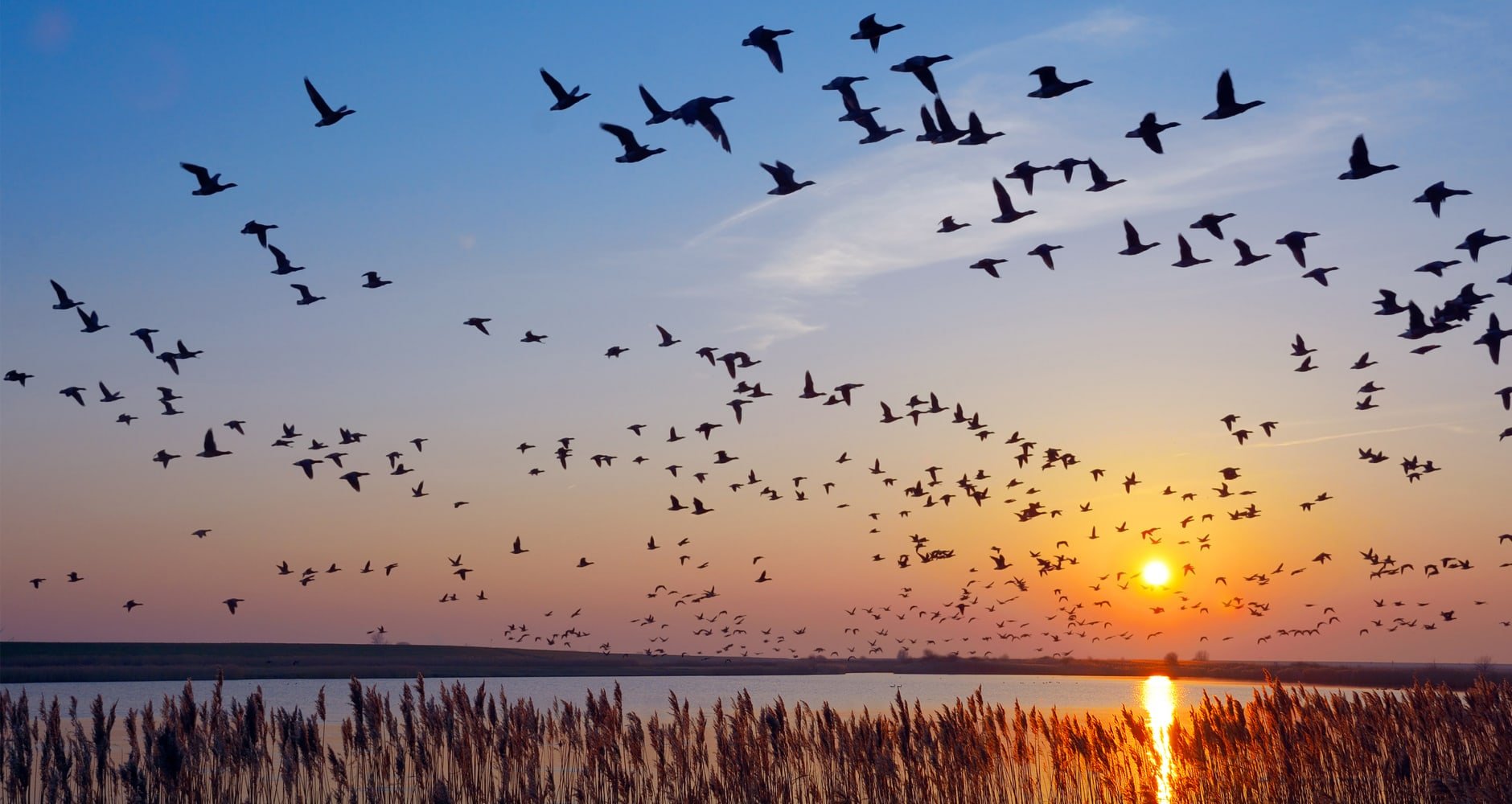
All migratory species, and even different populations within the same species, have different migration patterns. For some birds, migration triggers are still a mystery. Most birds, however, know when it is time to leave based on a few simple factors like changing temperatures, the length of the day, and shortages in their food supply. Photoperiod (the ratio of daylight to dark) is the biggest cue; birds essentially “feel” autumn approaching as the days grow short.
3. How Do Birds Know Where to Go?
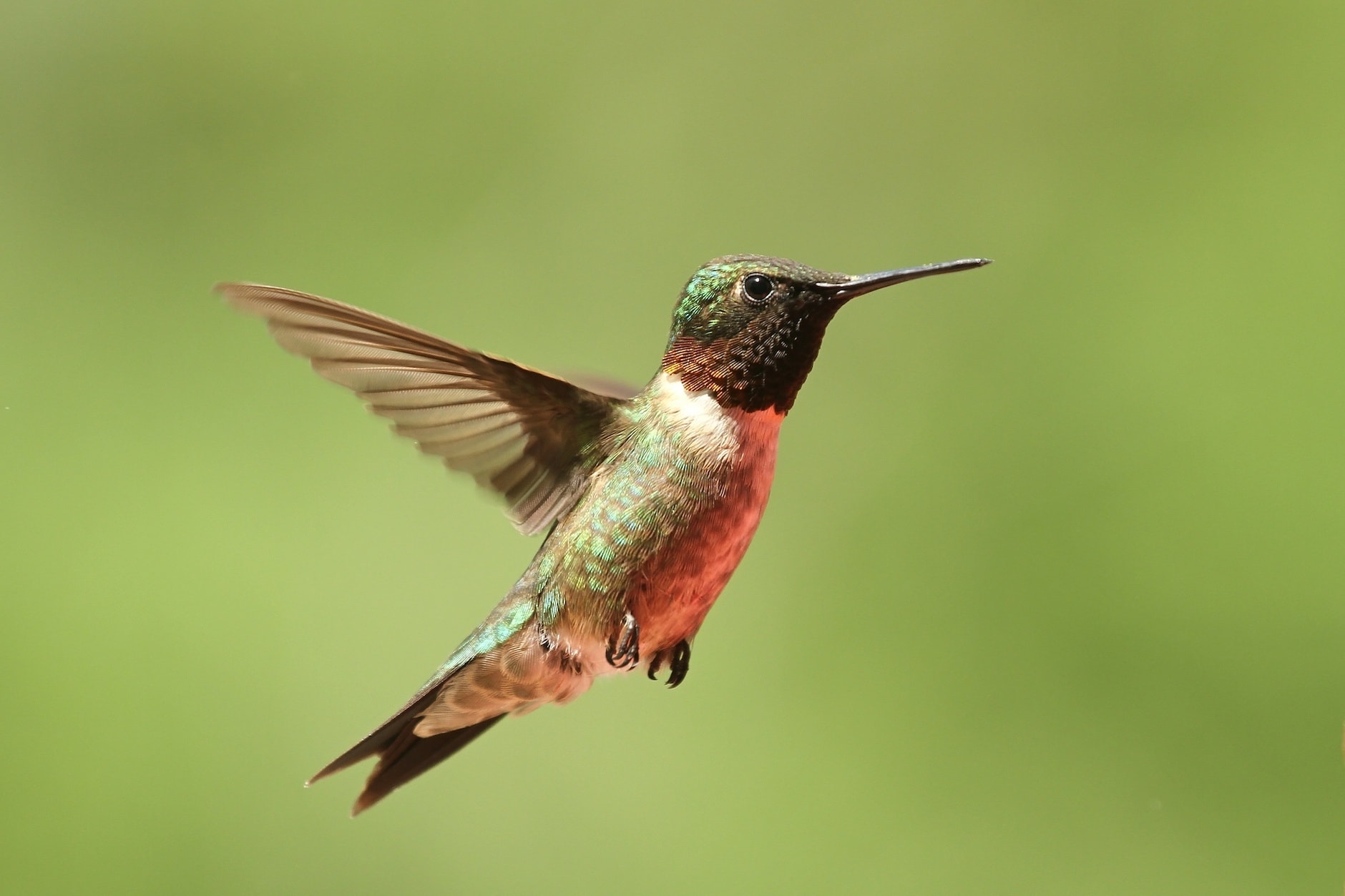
We humans have GPS and even with that, it is sometimes difficult to find our way around. So how do birds do it? It depends on the bird.
- Birds that fly during the day navigate by adjusting their position according to the Sun’s position. Birds flying south know that the setting sun will be to their right.
- Some birds, like homing pigeons, use the Earth’s magnetic field. These birds have tiny pieces of magnetite, a magnetic mineral, in their beaks above their nostrils.
- A few birds can migrate using their sense of smell. Homing pigeons, for instance, use both their sense of smell and their magnetic beaks to navigate.
- Birds that fly at night are astronomy buffs. They can tell the difference between constellations, and they know where to fly based on the positions of important stars (such as the North Star) in relation to the constellations.
4. How High, Far, and Fast Can Migrating Birds Go?
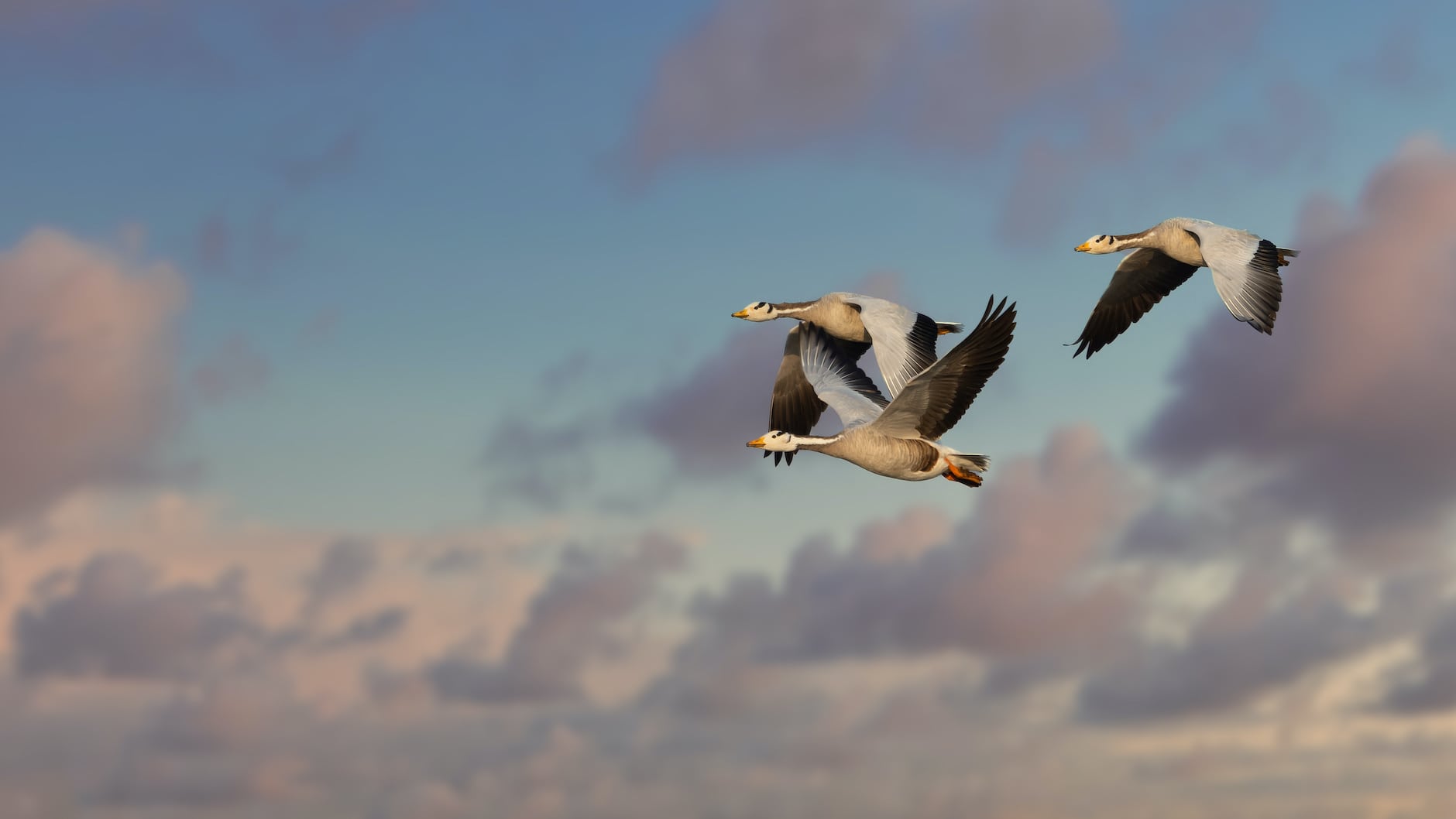
Most migrating birds travel relatively short distances, a few hundred miles north or south, or from high elevations to lower ones. Some birds travel astonishingly far. Others fly at extreme heights or speeds.
- The Arctic tern has the longest migratory route, flying from the northern Arctic to Antarctica for the winter. Round trip, Arctic terns fly upwards of 49,700 miles per year.
- The highest-flying birds are bar-headed geese. These birds fly over the Himalaya Mountains on their migratory route, and to do so, they often soar at heights over five miles above sea level.
- Most birds fly around 20 to 30 miles per hour, but the great snipe is a real speed demon. This bird flies its 4,200-mile migratory route at speeds up to 60 mph. The great snipe is the only known animal to travel at such high speeds over long distances.
5. Why Do Geese Fly in a V Shape?
The V-shape (or sometimes a J-shape) that migrating birds often fly in is called an echelon, and there are two very good reasons birds make these formations. First, birds in the rear of the echelon save energy because it is easier to fly in the vortex created by the birds in front. The V or J formation also makes it easier for a flock of birds to see and communicate with each other. The lead bird rotates back through the flock as it tires, so no single bird does all the work.
North American Migration Record-Setters

Migratory Birds FAQ
Why do birds fly south for the winter?
Food, mostly. Insects, nectar, and fruit largely vanish in northern winters. Birds that cannot switch to seeds or carrion travel to where food is still around. A safer place to raise young is the other half of the answer.
How do birds know when to leave?
A drop in daylight hours (photoperiod) is the strongest trigger, supported by falling temperatures and shrinking food supplies. The decision is timed deep in their hormonal cycle, not in their conscious head.
How do birds navigate?
A mix of cues: the Sun’s daily arc, the Earth’s magnetic field (magnetite in the beak), the position of stars at night, the local landscape they have learned, and in some species smell.
Which bird migrates the longest distance?
The Arctic tern, with an annual round trip of about 49,700 miles between the Arctic and Antarctica. The bar-tailed godwit holds the non-stop record at 11 days, Alaska to New Zealand.
Why do geese fly in a V?
Aerodynamics. The lead bird breaks the air; trailing birds ride the lift from each other’s wingtip vortices. Researchers have measured energy savings of 12 to 20 percent. The V also keeps the flock visible and within calling distance.
When is peak bird migration in the U.S.?
For fall, mid-September through October in most of the country, with hawks earlier and waterfowl later. Spring peaks in late April to mid-May. Cornell’s BirdCast gives nightly forecasts by region.
How can I help migratory birds?
Turn off outdoor lights at night (light pollution disorients migrants), put decals on big windows to reduce strikes, keep cats indoors, and leave native shrubs and seed-heads up through the winter.
If you want to see this fall’s migration in action, check out BirdCast.info from the Cornell Lab of Ornithology. The forecasts page shows a week-by-week breakdown of the birds expected to migrate in the United States.
We love your pictures. If you have any photos you have taken of birds on their migratory flights, share them with us on our Facebook page. For more bird reading, see our companion guides: amazing hummingbird facts, animal weather forecasters, and what the cardinal in your yard might mean.



Amber Kanuckel
Amber Kanuckel is a freelance writer from rural Ohio who loves all things outdoors. She specializes in home, garden, environmental, and green living topics.
- Amber Kanuckel

- Amber Kanuckel

- Amber Kanuckel
- Amber Kanuckel




Hi Krish, this image was purchased from AdobeStock. I am the web content editor and make all photo choices. I do not pick anything off the internet. the AdobeStock number is 338413625.
robins in PA don’t fly south I’ve seen them in the woods gathered in the dead of winter while riding my quad
V formation, I’ve read, is lead by the stronger birds that create the “vortex” you mentioned. The older, weaker and young birds form the rear and they don’t have to “work” as hard because of the “lift” they get?
Thanks Mike Ashworth, glad you liked it!
Hi Michael Stevens, without knowing who Channel 13 is (state? Is it the CBS affiliate in Maine?) I would not be able to say for sure. But I’m assuming they are all going by the same national and European computer models that predict the weather and develop their forecasts, which also predicted an el Nino last year. Our readers indicate that our weather prediction formula carries an 80% accuracy rate.
Great article!
Thank you, Mike Ashworth! Glad you enjoyed it.