

5 Foggiest Places in North America 2026: Ranked by Fog Days
The 5 foggiest places in North America: Grand Banks, Point Reyes, Cape Disappointment, San Francisco, and Mistake Island. Guinness records and NWS data.
Quick Reference
- #1 foggiest place on Earth: Grand Banks, Newfoundland. 206 foggy days a year.
- Pacific champion: Point Reyes, California. 200 foggy days a year and the windiest spot on the Pacific Coast.
- Atlantic-coast capital: Mistake Island, Maine. Roughly 1,600 hours of fog annually at Moose Peak Lighthouse.
- Most overcast state: Washington, with 165 foggy days a year on average.
- Sources: Guinness Book of World Records, US Lighthouse Service of the Department of Commerce, and NOAA / NWS climate data.
The Grand Banks, off the coast of Newfoundland, sit under fog 206 days a year, which makes the spot not just the foggiest in North America but the foggiest place in the world according to the Guinness Book of World Records. Below is the full list of the five foggiest places on the continent, what causes the fog at each one, and what residents have learned about living inside a cloud most of the year.
How Fog Forms (And Why Some Places Can’t Shake It)
There is nothing initially exciting about fog, but it is interesting and a little mysterious that it can change a landscape simply by enveloping it in a cloud. A sunny scene can turn into something out of a movie with one of Mother Nature’s simpler props. The mechanism, though, is plain: fog is moisture in the air.
Fog forms when two ground-level air masses of different temperatures meet, especially over bodies of water, and condense into a low-lying cloud. Mountains and microclimates can trap that fog so it has a tougher time burning off in the sun. Most parts of North America see fog at one time or another. For the five places below, fog is a way of life.
The 5 Foggiest Places in North America
1. Grand Banks, Newfoundland
According to the Guinness Book of World Records, the foggiest place in the world, never mind North America, is the spot off the island of Newfoundland, Canada, where the chilly Labrador current from the north meets the much warmer Gulf Stream from the south. Cold-meets-warm over open water is the canonical fog recipe, and the Grand Banks deliver it on a giant scale: 206 foggy days a year.
When the fog burns off, it starts inland and rolls slowly toward the coast, which means coastal towns are the last to clear. The town of Argentia, once the site of a US Naval Air Station commissioned during World War II, would be fogged in for days at a time. One serviceman recalls, “Being on base was tough. A fog factory. Yet right in the next town over, it would be sunny.”
2. Point Reyes, California
Point Reyes wears two crowns. It is the windiest place on the Pacific Coast, with gusts clocked at hurricane-force levels, and it is the second-foggiest place on the North American continent. The Pacific Ocean delivers both the moisture and the temperature contrast that drive the fog. Point Reyes sees 200 foggy days a year, and the fog can stick around for weeks at a time during the summer months. Visibility is commonly reduced to mere feet.
3. Cape Disappointment, Washington
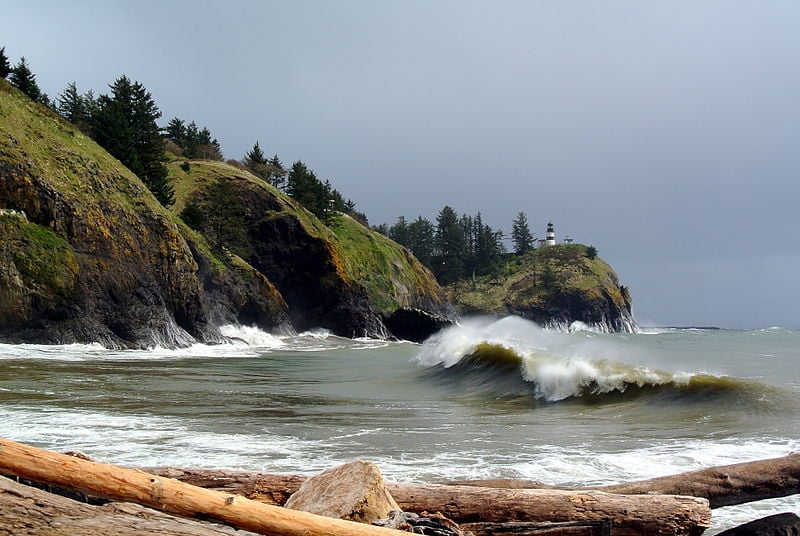
With a name like that, you might wonder if fog had anything to do with the entry on the list. It did. Located in the extreme southwest corner of Washington State, Cape Disappointment sees nearly three and a half months of thick fog each year, again driven by the Pacific Ocean. Washington is the most overcast state in the Union and sees 165 foggy days a year on average. For more on Washington’s overcast crown, see our cloudiest states ranking.
4. San Francisco, California
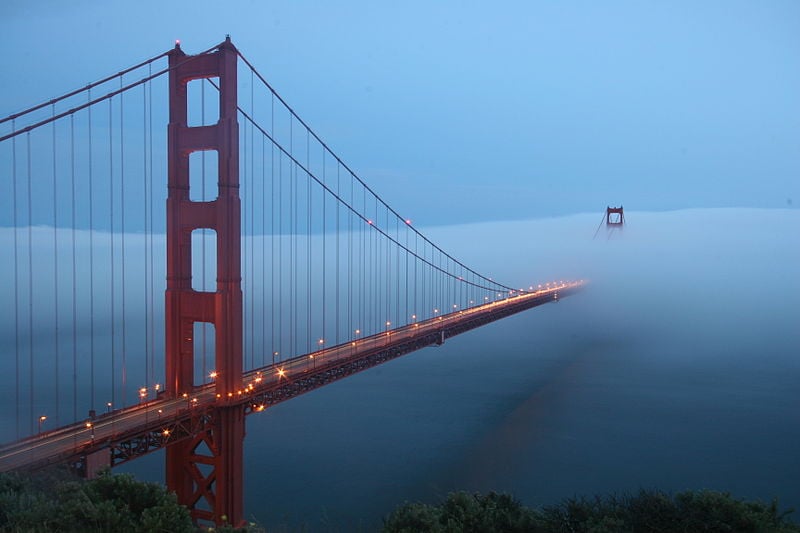
San Francisco does not top the list on raw fog days. The City by the Bay sees roughly half the foggy days that Cape Disappointment does. But no place on Earth is more associated with fog. Who does not picture the Golden Gate Bridge peeking out of a low cloud at the mention of the city?
During the winter months, San Francisco gets enveloped by tule fog, a radiation fog that develops in humid conditions (often after rain), under calm winds, and during abrupt cooling of air temperatures, especially at night when those nights are the longest of the year. The surrounding mountains trap the cool air and push it downward. As one resident put it, “You never think you’ll get used to living in a cloud all the time. But one day, you find you just don’t mind anymore.”

5. Mistake Island, Maine
The Atlantic Coast’s fog capital is Maine’s Moose Peak Lighthouse on Mistake Island, northeast of Bar Harbor, where foggy conditions are reported nearly 1,600 hours annually thanks to the chilly Atlantic Ocean. In early 1931 it was announced that Moose Peak Lighthouse “has just completed another year as the foggiest spot in the United States,” according to the Lighthouse Service of the Department of Commerce. The keepers reported 1,562 hours of fog during 1930, an average of roughly four hours each day.
There are no more lighthouse keepers on Mistake Island. Tourists arrive only by boat, drawn in part by the fog itself.
The Rankings at a Glance
| Rank | Place | Region | Fog metric |
|---|---|---|---|
| 1 | Grand Banks | Newfoundland, Canada | 206 foggy days/yr (Guinness #1 worldwide) |
| 2 | Point Reyes | California | 200 foggy days/yr |
| 3 | Cape Disappointment | Washington | ~3.5 months/yr (state avg 165 days) |
| 4 | San Francisco | California | ~Half of Cape Disappointment |
| 5 | Mistake Island | Maine | ~1,600 hours/yr (1,562 hrs in 1930) |
Why Two Coasts Dominate This List
Fog needs water and a temperature contrast. Two North American coasts deliver both reliably. The Pacific Coast pairs a cold ocean current with relatively warmer onshore air, producing the marine layers that bury San Francisco, Point Reyes, and Cape Disappointment. The Atlantic seaboard, particularly the Gulf of Maine and the Grand Banks, layers chilly current water under warmer southern air, with similar results. The interior of the continent rarely produces fog at this scale because the temperature contrasts and the moisture sources are simply not as strong.
If you enjoy ranking weather extremes, also see the 10 worst weather cities, the worst weather states, and the cloudiest US states.
Coastal fog optics are kin to other atmospheric oddities: see the fata morgana mirage and sun halos, sun dogs, and Sun pillars for the same kind of refraction-driven sky shows.
Compare this list with our 10 worst weather cities and the geography lines up. Coastal Pacific Northwest and the Northeast Atlantic own the cloud and fog rankings; the inland desert Southwest sits at the other end of the scale on our 10 best weather cities list.
Living With Fog , What Residents Plan Around
Fog is not the worst weather in the world. Crops still grow under it, ports still run with the foghorn going, and tourists keep visiting. But residents in these places plan around the fog the way the rest of us plan around rain. Drive times stretch. Outdoor work gets done in the brief afternoon clearings. Coastal commercial fishing fleets read fog as both adversary and shelter. The Farmers’ Almanac long-range forecast can help if you are planning a coastal move or a vacation, especially through the foggy summer months on the Pacific or the foggy spring on the Atlantic.
For more visual scale on the global ranking, photo galleries of foggy cities like Halifax, London, and Lima fill out the picture. None of those international cities, though, sees the day-count totals that the Grand Banks deliver.

The fog-day counts and visibility readings cited in this list come from National Weather Service climate summaries and the NOAA National Centers for Environmental Information station archive.
Frequently Asked Questions
What is the foggiest place in the world?
The Grand Banks off Newfoundland, Canada. The Guinness Book of World Records lists it as the foggiest spot in the world, with 206 foggy days a year. The cold Labrador current colliding with the warmer Gulf Stream produces a near-permanent fog signature over the open water.
Why is Point Reyes so foggy?
The cold Pacific Ocean meets relatively warmer onshore air. The contrast produces a thick marine layer that can sit over the headland for weeks at a time during summer. Point Reyes is the second-foggiest place in North America at 200 foggy days a year and is also the windiest place on the Pacific Coast.
What is tule fog?
Tule fog is a radiation fog that forms in humid conditions, under calm winds, and during abrupt cooling of air temperatures, particularly on long winter nights. San Francisco gets enveloped by it through winter when surrounding mountains trap cool air and force it downward.
Where can I see Mistake Island, Maine?
Mistake Island sits northeast of Bar Harbor and is accessible only by boat. The Moose Peak Lighthouse on the island once recorded 1,562 hours of fog in a single year (1930), averaging four hours of fog each day. Tourists arrive specifically to see the fog.
Why is Washington called the most overcast state?
Washington sees 165 foggy days a year on average across the western half of the state, and Cape Disappointment sees nearly three and a half months of fog annually. The combination of Pacific Ocean moisture and the Cascade Range traps cloud cover over the populated coast for long stretches of every season.
How does fog actually form?
Fog forms when two ground-level air masses of different temperatures meet, especially over bodies of water, and condense into a low-lying cloud. Mountains and microclimates can trap fog so it has a tougher time burning off in the sun.


This article was published by the Staff at FarmersAlmanac.com. Any questions? Contact us at [email protected].
- Farmers' Almanac Staff

- Farmers' Almanac Staff

- Farmers' Almanac Staff

- Farmers' Almanac Staff


Dear Susan,
I’m writing a song needing a two syllable city in the continental US that is known for its fog. Any thoughts?
Hi Pete, I don’t know if I’m the Susan you’re referencing but: San Fran?
It could be Frisco, another name for SF
Frisco is in Texas.