

How to Grow a Pomato Plant (Tomato + Potato in One)
Quick Reference: How to Grow a Pomato Plant
- What it is: a grafted plant that grows tomatoes above ground and potatoes below ground.
- Why it works: tomatoes and potatoes are cousins in the same nightshade family, so a tomato top can be joined to a potato bottom.
- Best for: small gardens, balconies, patios, and containers where space is tight.
- Feeding: pomatoes are heavy feeders, so keep up with water and fertilizer.
- Store-bought names: sold as “TomTato” or “Ketchup ‘n’ Fries” in recent years.
Harvest both tomatoes and potatoes from the same plant: meet the pomato plant. (Yes, you read that right.) A pomato is a single grafted plant that gives you fresh tomatoes off the vines up top and potatoes from the roots down below. Gardeners are growing them as a clever way to save space in small gardens, and they make a fine conversation starter at any backyard gathering. Here is what a pomato is, how to grow a pomato plant, and five good reasons to try one this 2026 season.
What Is a Pomato Plant?
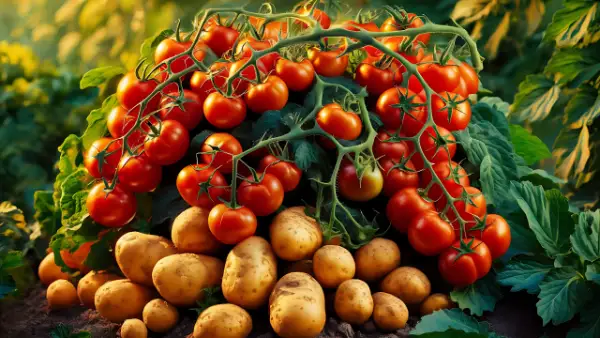
A pomato plant is a grafted plant that produces both tomatoes above ground and potatoes underground. The main appeal is its ability to yield two different crops from one plant, fresh tomatoes from the vines above the soil and potatoes from the roots beneath it.
The trick works because tomatoes and potatoes are close kin. Both belong to the nightshade family, Solanaceae, which is why a tomato stem will knit to a potato rootstock when the two are grafted together. Michigan State University Extension explains that grafting joins the top of one plant to the roots of another so each part does the job it does best. On a pomato, the tomato handles the fruit above the soil while the potato handles the tubers below.
While the concept has been around for a long time, commercially available pomato plants (sometimes branded as “TomTato” or “Ketchup ‘n’ Fries”) have been sold to the public in recent years. You can also graft your own if you like a hands-on project.
5 Reasons to Grow a Pomato Plant
1) Save Space
A pomato plant lets you harvest two different crops, tomatoes (above ground) and potatoes (below ground), from the footprint of a single plant. This is especially valuable for urban gardeners and anyone with a small plot, a balcony, or limited container space. See 10 veggies you can easily grow in pots.
2) Efficient Use of Resources
Since you are tending one plant instead of two, you can be more efficient with resources like water and fertilizer. Pomato plants are “heavy feeders,” but a single, streamlined watering and feeding routine is easier than managing two separate crops with slightly different needs.
Any questions? Contact [email protected]
3) Potential Disease Resistance
When a pomato plant is created, the potato rootstock may be specifically chosen for its natural resistance to common soil-borne diseases (like certain blights or nematodes) that might affect both potatoes and tomatoes. This stronger, more resilient root system can lead to a healthier overall plant, potentially reducing the need for chemical interventions. Because tomatoes and potatoes share the same family, they also share some of the same troubles, so a tough rootstock pays off.
4) Novelty and Educational Value
For many gardeners, the pomato plant is simply a fascinating and fun project. It is a great conversation starter and gives you a hands-on lesson in grafting, plant biology, and how different plant parts develop. Children especially get a kick out of pulling supper off the top and the bottom of one plant.
Watch this video by Mary Jane Duford of HomeForTheHarvest.com:
5) Increased Productivity per Square Foot
While individual yields for either tomatoes or potatoes might not be as high as dedicated plants, the combined output from one pomato plant often exceeds what you could get by growing separate plants in the same amount of space. You are essentially maximizing the return on your garden’s real estate.
How to Grow a Pomato Plant, Step by Step
Whether you buy a ready-grafted plant or graft your own, growing a pomato is a lot like growing a tomato up top and a potato down below at the same time. Here is the short version.
- Start with a grafted plant. Buy one labeled “TomTato” or “Ketchup ‘n’ Fries,” or graft a tomato top onto a potato rootstock yourself once both stems are about pencil thickness.
- Give it a big container. A pot or grow bag of at least five gallons leaves room for the potatoes to form underground while the tomatoes climb above.
- Use rich, loose soil. A blend of one-third garden soil, one-third soilless potting mix, and one-third finished compost drains well and feeds heavy.
- Feed and water like a heavy feeder. Keep the soil evenly moist and feed regularly through the season, since the plant is supporting two crops at once.
- Stake the top, harvest in order. Support the tomato vines, pick tomatoes as they ripen, and dig the potatoes after the foliage dies back in fall.
Because a pomato is a nightshade through and through, treat it like its parents. Our guide to growing your own potatoes covers hilling, soil, and harvest timing for the bottom half, and these tips on common tomato plant problems will help you keep the top half healthy.

Companion Plants for a Pomato
A pomato is part tomato and part potato, so plan its neighbors with both halves in mind. Basil, marigolds, and beans are friendly to tomatoes and help with pests, while beans and corn sit well beside potatoes. Keep a pomato away from other tomatoes and potatoes planted close by, since the whole nightshade clan shares diseases like blight, and crowding them invites trouble. For a fuller pairing chart, see our companion planting guide.

How to Grow a Pomato Plant: Frequently Asked Questions
What is a pomato plant?
A pomato plant is a single grafted plant that produces tomatoes above ground and potatoes underground. It joins a tomato top to a potato rootstock, so you harvest two crops from one plant. Store-bought versions are sometimes sold as “TomTato” or “Ketchup ‘n’ Fries.”
How does a pomato grow tomatoes and potatoes together?
Tomatoes and potatoes belong to the same nightshade family, Solanaceae, so a tomato stem will graft onto a potato rootstock. The tomato half makes fruit above the soil while the potato half makes tubers below, and the two share one stem and one root system.
Is it worth growing a pomato plant?
It can be, especially if space is tight. A pomato lets you harvest tomatoes and potatoes from one footprint, uses water and fertilizer efficiently, and often gives more combined output per square foot than separate plants would in the same spot. It is also a fun, educational project.
Where can I buy a pomato plant?
Commercially available pomato plants have been sold to the public in recent years under names like “TomTato” and “Ketchup ‘n’ Fries.” Look for them at garden centers and online nurseries in spring, or graft your own tomato top onto a potato rootstock if you want a hands-on project.
Does a pomato plant resist disease?
It can. When a pomato is created, the potato rootstock may be chosen for natural resistance to soil-borne diseases like certain blights or nematodes that affect both potatoes and tomatoes. A stronger root system can make for a healthier plant and may reduce the need for chemical treatments.
How big a yield does a pomato plant give?
Individual tomato or potato yields may be lower than from dedicated plants, but the combined harvest from one pomato often beats what you would get from separate plants in the same space. You are trading peak yield of one crop for two crops from a single footprint.
Any Questions?
Do you have specific questions about growing pomatoes or otherwise? Let us know in the comments. Your questions will be answered by our expert gardeners.


This article was published by the Staff at FarmersAlmanac.com. Any questions? Contact us at [email protected].
- Farmers' Almanac Staff

- Farmers' Almanac Staff

- Farmers' Almanac Staff

- Farmers' Almanac Staff





Hi,
My name is Maya Hausammann, and I am a biology student at the high school in Yverdon-les-Bains, Switzerland. As part of a biology project, I would like to conduct a study on grafting tomato plants onto potato plants. The goal is to compare the yield of these grafted plants with that of ungrafted tomato and potato plants. I plan to graft “Marmande” tomatoes onto “Charlotte” tubers. I will start tomato seedlings indoors and plant the tubers directly into the ground in a greenhouse in my parents’ orchard.
I read your article “5 Reasons to Grow a Pomato Plant” with great interest. Could you offer me some advice? In what order should the tomato seeds and the tubers be planted? Should I plant the tomatoes or the potatoes first? At approximately what interval? I have read that the ideal age for tomato seedlings for grafting is 25–32 days. However, I cannot find any information on the best age of potato plants for grafting.
Thank you very much for your valuable advice.
Best regards,
Maya Hausammann
Does this affect the taste of either?