

Top 10 Reasons to Cut Your Own Christmas Tree (2026)
When it comes to getting a Christmas tree, cutting your own real tree over buying an artificial one has its advantages. See the list.
Quick Reference
- Reason to cut your own Christmas tree (top 1): the memories your kids carry into adulthood.
- Cost: typically cheaper than a pre-cut lot tree. No transport or parking-lot rental baked in.
- Tree life: a cut-it-yourself tree lasts longer than a pre-cut because it was alive an hour before you got it.
- Peak cut-your-own weekends (US): Thanksgiving weekend through the second weekend of December.
- Best species by region: Fraser fir (Mid-Atlantic, Southeast), Balsam fir (New England), Douglas fir (Pacific NW), Scotch pine (Midwest), Noble fir (West Coast), Canaan fir (Appalachians).
- Sources: National Christmas Tree Association, Farmers’ Almanac reader notes, US state extension services.
How many times have you bundled up the family and ventured out to cut your own Christmas tree? For some it’s every year. For others, never. If you’ve ever heard the old saw about how much fun it is to choose a live tree, here are ten more reasons to cut your own Christmas tree this season, plus the tree-care steps that will keep it green into January.
Top 10 Reasons to Cut Your Own Christmas Tree
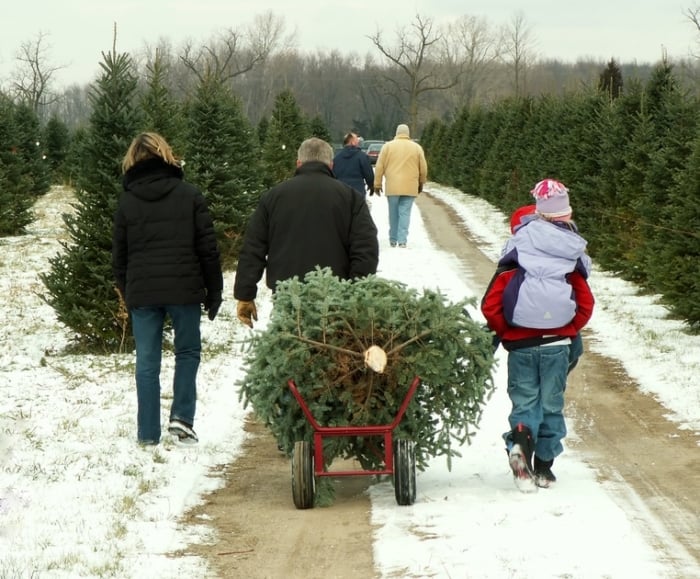
10. Family fun. Going to a Christmas tree farm gets the kids out of the house and into an open field where they cannot get into too much trouble. At least it is safer than a parking lot populated with absent-minded drivers and open barrel fires.
9. It is cheaper. Christmas trees typically cost less if you cut them yourself. Remember, if you get a pre-cut tree at a temporary lot, you are also paying for transportation costs and parking-lot rental.
8. You will be the hero. An outing to a Christmas tree farm will make you a hero in your family’s eyes. They will love you for the fun it brings, and it will make you feel like a good parent, something you may need a shot of after a year of saying, “No, you can’t.”
7. One-stop shop. Most farms also sell fresh wreaths and garland, so you can knock out all decoration errands in one trip. Many also carry handmade ornaments, kissing balls, and pre-made centerpieces if you would rather not deal with a glue gun.
RELATED: How to Make Orange and Clove Pomander Balls
6. A new experience. The trip to the farm is part of the experience. You can drive through the country at an unhurried pace, pointing out old barns and fields of cows. If your usual December is a series of indoor errands, a slow drive past pasture and stone walls is its own kind of reset.
5. Gets you in the Christmas spirit. Just think of the holiday smells: pine, earth, apple cider, and gingerbread cookies. Most cut-your-own farms have a heated shop with cocoa and donuts at the end of the row.
4. Your tree will last longer. Since it was living up to the moment you cut it, and did not sit on a truck or warehouse, your tree should last longer. When you get it home, cut off about an inch of the base, making a diagonal cut. Pass around the cut piece for everyone to smell.
3. Support family farms. Cutting your own tree supports these family-owned farms. According to the National Christmas Tree Association, the average US Christmas tree farm is around 28 acres and family-run, with most trees taking 7 to 10 years to grow to harvest size.
2. A bonding experience. A trip to a tree farm takes longer, so you spend more time with your family. Enough said.
1. Make memories. Your kids will tuck away this memory in their heads, and tell their kids about it one day.
When to Go, by Region
Most cut-your-own farms open the day after Thanksgiving and stay open through the third weekend of December. The early weekends have the deepest selection. The later weekends have the heaviest crowds and a thinner field. Plan the trip for a clear forecast, since rain on red flannel is no one’s favorite memory. Our long-range weather forecast can help you pick the weekend with the best chance of dry boots.
How to Spot a Healthy Tree on the Lot or in the Field
- Run a needle through your fingers. Fresh needles bend without breaking. Dry needles snap.
- Pull a branch lightly. Healthy trees hold their needles. If a handful comes off in your palm, walk on.
- Look at the trunk. Straight, no big sweep at the base. The base needs to fit your stand.
- Smell. A healthy tree gives off a sharp, resin-and-citrus pine scent. Trees that smell sour or musty have been sitting too long.
- Check the cut. If you’re at a pre-cut lot, ask when the trees came in. Anything older than 10 days from cut is usually past its best.
If you are weighing the cut-your-own option against an artificial tree, our piece on real vs. fake Christmas trees walks through the cost, mess, and environmental angles.
Tips to Preserve Your Tree
- Store your tree outside in a sheltered area in a bucket of water (a cold garage is ideal, since wind will dry out the tree) until you are ready to trim it. If it is going to be a week or more before you decorate, make a fresh straight cut across the trunk about an inch up from the original cut. This opens the tree stem so it can take up water. Then plunge the trunk end immediately into fresh water. Keep water above the fresh cut or a new cut will be necessary.
- If possible, bring the tree into a partially heated area (basement) the night before decorating. This will help it adjust gradually to the warmer temperature.
- Locate the tree well away from sources of heat, such as fireplaces, heater vents, space heaters, and stoves.
- Keep it hydrated. During the first few days after it has been cut, it is pretty thirsty, so water it more regularly. A 6-foot tree can drink a gallon of water in the first 24 hours.
The old farmer’s trick of adding sugar, aspirin, or bleach to the water bowl shows up online every December. Multiple studies, including those summarized by the National Christmas Tree Association, find no benefit from any of them. Plain tap water, kept topped up, works. The real variable is how fresh the tree was when it went in the stand.
What to Do With the Tree in January
Once the holidays wind down, the tree has one more job in it. Most towns run a curbside tree-pickup window in the first two weeks of January, and many turn the trees into mulch for parks and trails. In rural areas, the tree can be dropped at the edge of a pond as fish habitat (check local rules), used as a windbreak for a garden bed, or chipped on-site. The needles make excellent acid-soil mulch under blueberries and rhododendrons. Whatever route, do not burn a dry Christmas tree in a fireplace. The resins flare hot and throw embers.

Frequently Asked Questions
When is the best time to cut your own Christmas tree?
The first three weekends after Thanksgiving for most of the US. The earliest weekend has the deepest selection. With proper care, a fresh-cut tree easily lasts through the New Year.
How much does it cost to cut your own Christmas tree?
Most cut-your-own farms charge a flat price by height (often $50 to $120 for a 6 to 8-foot tree), regardless of species. That is usually less than a pre-cut tree on a city lot, since you are not paying for transport or lot rental.
What is the best species to cut your own Christmas tree from?
Fraser fir is the most popular nationally for needle retention and shape. Balsam fir is the New England favorite for its scent. Douglas fir dominates the West Coast farms. Scotch pine is the Midwest workhorse.
How long will a cut-your-own Christmas tree last?
Four to six weeks indoors with regular water. Trees cut fresh at a farm last longer than pre-cut lot trees because they were alive an hour ago. Make a fresh diagonal cut on the trunk before standing it up, and keep the stand topped with plain water.
Do I need a permit to cut a Christmas tree on US Forest Service land?
Yes. Most national forests issue $5 to $20 tree-cutting permits each November for personal-use trees. Permits are sold through Recreation.gov or the local ranger station. Each forest has its own rules on species, height, and which roads are open.
Should I add sugar or aspirin to the tree water?
No. Multiple studies have found no benefit from sugar, aspirin, or bleach in the water. Plain tap water, kept topped above the fresh cut, works as well as anything.
What can I do with the tree after Christmas?
Curbside tree pickup or local mulch programs in January. Outside town, the tree can become a fish-habitat drop in a pond, a garden windbreak, or chipped on-site. The needles work as acid-soil mulch under blueberries.


This article was published by the Staff at FarmersAlmanac.com. Any questions? Contact us at questions@farmersalmananac.com.
- Farmers' Almanac Staff

- Farmers' Almanac Staff
- Farmers' Almanac Staff
- Farmers' Almanac Staff




My dad would dig out the tree so he could replant it after Christmas.
That is always the best possible option!!