

What the Heck Is Mincemeat? History, Spice, and a Modern (Meat-Free) Recipe
Learn the history behind this traditional holiday food and how to make it yourself with our easy-to-follow recipe!
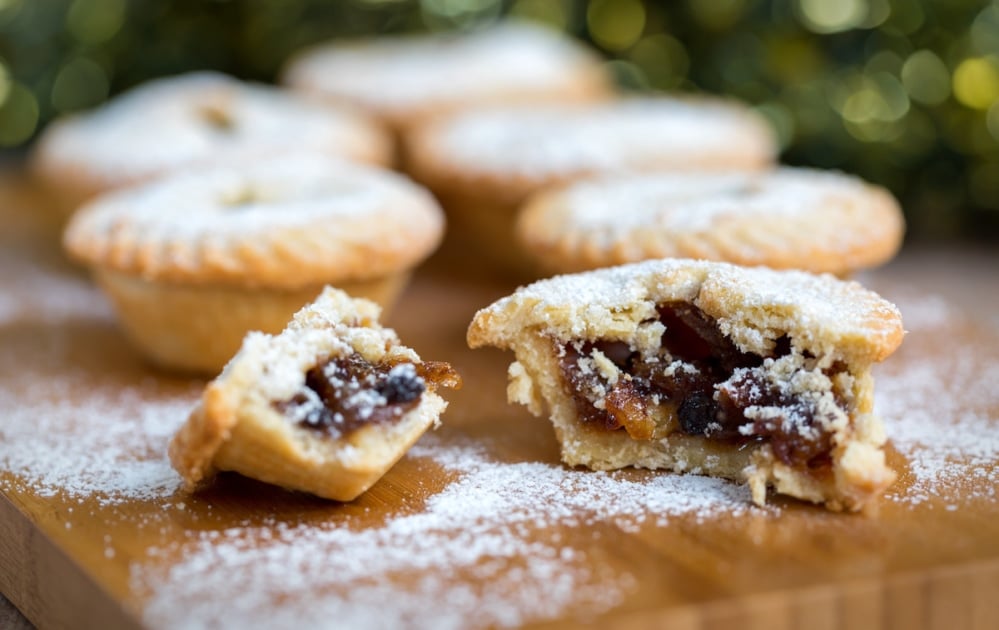
Mincemeat at a Glance
- What it actually is: a spiced mixture of dried fruit, brandy or other spirit, citrus peel, sugar (and, historically, finely minced beef, mutton, or venison) used as a pie filling.
- Why the name: “minced” meat = finely chopped meat. The word survives even though modern recipes rarely include meat.
- When it shows up: Christmas through Twelfth Night (Jan 6, Epiphany). The 12-mince-pies-12-days-of-Christmas custom is medieval English.
- The spice profile: cinnamon, cloves, nutmeg, mace, allspice, ginger, the cabinet brought back from the Crusades.
- What modern mincemeat keeps: the alcohol, the sugar, the spice cabinet, and the fruit; what it dropped: the suet and the minced lamb.
Ever wonder how mincemeat got its funny name? And what is it about this fragrant concoction of chopped dried fruit, distilled spirits or brandy, and pungent spices (and in past centuries it was made with beef, beef suet, or venison) that makes avowed acolytes out of many but sends some of us running for cover?
According to the Encyclopaedia Britannica, the modern mince pie is the direct descendant of medieval English meat pies, made smaller, sweeter, and more spice-forward over the centuries until the meat disappeared entirely. The name “mincemeat” stuck because, well, English food vocabulary is conservative.
So What is Mincemeat?
Historically, mincemeat was a way of preserving meat using sugar and alcohol without smoke or salt. The meat of choice tended to be mutton.
Records also tell us that cloves, nutmeg, cinnamon, and mace were added to late Medieval and Renaissance-era meat dishes, which may have been the precursor of sweet mincemeat as we know it. In the 11th century, members of the Crusades returning from the Holy Land brought back oriental spices.
Three of them, cinnamon, cloves, and nutmeg, were added to food to commemorate the gifts of the Magi. Mince pie, made with meat and spices, was prepared in a manger-shaped casing with an indentation for an edible baby Jesus to be placed on top. It was considered lucky to eat one of these pies on each of the 12 days of Christmas, ending with the Epiphany on January 6th.
In the 15th, 16th, and 17th centuries, mincemeat was a mixture of fruit (prunes, raisins, dates) and finely diced meat, along with wines or vinegars. But by the 18th century, wine and vinegar were replaced mostly by brandy or other distilled spirits. In the mid- to late 18th century, sources say mincemeat was connected with a more rural palate, though the Victorians recast it as a refined Christmastime tradition.
Fast forward to modern times, particularly toward the mid-20th century, and meat was primarily gone from the recipe.
Commonly acceptable fruits included dried fruit, chopped apples, citrus peel, currants, citron, candied fruits, brandy, rum, or another liqueur. Suet, which is kidney fat, was sometimes included and occasionally still is.
Try this variation on the traditional treat to sweeten your holidays, or any day, and tempt those mincemeat maligners to the dessert table.
Mincemeat Through the Centuries
| Period | What It Was | Key Shift |
|---|---|---|
| Medieval England (13th-15th century) | True minced meat: mutton, beef, or venison chopped fine with suet, dried fruits, spices (cinnamon, cloves, mace), and wine or verjuice | Spices were expensive; meat pies spiced this way signaled wealth. The combination of sweet and savory was standard medieval fare |
| 17th century | Still predominantly meat-based; recipes in English cookbooks specify mutton or veal. Brandy or sherry increasingly used as a preservative | The alcohol content improved shelf life; pies could be made weeks in advance and kept in a cool larder |
| 18th century | Mincemeat slowly begins shifting toward more fruit and less meat; tongue and suet remain common | Sugar became cheaper after trade expansion; the sweet component grew. The oval coffin-shaped casing gave way to the small round tart we recognize today |
| Victorian England (19th century) | Recipes still call for beef suet and sometimes ox tongue, but fruit dominates (currants, sultanas, raisins, citrus peel) | Mrs. Beeton’s Book of Household Management (1861) includes recipes with suet as the main fat but only trace meat. This is the pivot point |
| 20th century (US and UK) | Commercial jarred mincemeat becomes common; most use suet and no meat; many “vegetarian” versions use vegetable shortening | By the 1950s, most commercially sold mincemeat contained no actual meat at all in North America |
| Today | Two camps: traditional (with beef suet, sometimes ox tongue or venison) and vegetarian/vegan (suet replaced with vegetable fat or coconut oil) | UK supermarkets sell both; artisan producers have revived the meat-inclusive version as a specialty item |
New England Mincemeat Filling Recipe
Ingredients:
- 2/3 cup apple cider (may substitute cranberry juice)
- 2 cups whole cranberries, fresh or frozen
- 1 cup raw cane sugar (or brown sugar)
- 2 teaspoons cinnamon, freshly ground if possible
- 1/2 teaspoon both allspice and ginger
- 1 cup currants
- 1 cup raisins
- 1 cup dried cranberries
- 2 medium apples
- 3-4 tbsp. brandy, port, or maple whiskey
- 1/4 cup maple syrup
- 2 tablespoons honey
Directions:
- In a large saucepan, warm the apple cider and dissolve sugar over low heat. Wash, core, and finely chop or grate apples.
- Add the whole cranberries into the pot and stir to combine. Add cinnamon, ginger, and allspice, along with currants, raisins, dried cranberries, and apple.
- Stir and simmer over medium-low heat until mixture starts to darken and has absorbed most of the liquid, about 20 minutes.
- Stir occasionally. Remove from heat and add the brandy, port, or whiskey, maple syrup, and honey. Beat well to incorporate everything and crush the cranberries slightly.
- Spoon into sterilized jars and cover with lids. This will store in the refrigerator for several weeks.
- May also be frozen for up to three months.
- Simply use as you would any fruit pie filling to make pies or tarts with your favorite crust.

Frequently Asked Questions About Mincemeat
Is there actually meat in mincemeat?
In most modern jars, no. Traditional British recipes still include beef suet (kidney fat) as the fat carrier, and a small number of specialty butchers in the U.K. still make a meat mincemeat with minced beef or mutton. American supermarket mincemeat is almost always fruit-only.
Where does the name “mincemeat” come from?
The medieval verb “to mince” meant to chop into very fine pieces, and the noun “mincemeat” was literally that, finely minced meat. The meat dropped out of the recipe over centuries, but the name stuck, just as we still say “horseradish” for a plant with no relation to horses.
What does mincemeat taste like?
Dense, dark, sweet, fruity, and spiced, somewhere between fruitcake and very thick chutney. The alcohol gives it warmth and depth; the citrus peel keeps it from being cloying. Best served warm in a small tart, with cream or hard sauce.
What’s the difference between mincemeat and Christmas pudding?
Same flavor family, different format. Christmas pudding is a steamed batter with dried fruit, suet, eggs, flour, and spices, served whole and flamed. Mincemeat is the spiced fruit filling, with no batter, used inside small pies, tarts, or pastry.
How long does homemade mincemeat keep?
Several weeks refrigerated in sterile jars; up to three months frozen. Traditional alcohol-heavy versions can keep a year in a cool dark pantry because the spirit acts as a preservative. The all-fruit recipe above keeps best refrigerated.
Why are mince pies eaten on the 12 days of Christmas?
An English tradition. Eating one mince pie on each of the 12 days of Christmas (Dec 25 to Jan 5, ending at Twelfth Night and Epiphany on Jan 6) is said to bring 12 months of happiness in the new year. Each pie must be eaten in a different house to count, which used to be easier when neighbors made them.
Can I make mincemeat without alcohol?
Yes. Substitute the brandy or port with extra apple cider or unsweetened cranberry juice and add a quarter teaspoon of pure vanilla and an extra spoon of maple syrup. Texture and depth take a small hit; flavor is still good.
For more holiday-food reading, see hoppin’ john for New Year’s luck, what the Pilgrims really ate, and Irish soda bread for St Patrick’s Day.


Beth Herman
Beth Herman is a freelance writer with interests in healthy living and food, family, animal welfare, architecture and design, religion, and yoga. She writes for a variety of national and regional publications, institutions, and websites.
- Beth Herman

- Beth Herman
- Beth Herman
- Beth Herman



Both my grandmothers had recipes for mincemeat and for MINCED meat pie filling. The mincemeat was a fruit pie filling that varied a bit from year to year since it used available dried fruits (Usually not raisins though) and brandy. The MINCED meat pie filling used available beef, venison, and pork scraps for half and finely chopped green tomatoes, dried apples and dried pears for the other half with whiskey or moonshine. Both were canned–and my grandmothers bought some of the first publicly available pressure canners so they could safely can the meat version. And both those early pressure canners are in local museums.
I have made mincemeat from a recipe in the Farm Journal Freezing and Canning Cookbook. I used venison, chopped apples, raisins, currants, cider, and many spices and cooked it all together. Then I pressure canned the mixture to preserve it. Makes the most wonderful pies.
I’m looking for the cookie recipe?
Hi Helen, which cookie recipe are you referring to? We’re happy to help! We have a lot of good ones for Christmas!
I use the store bought pie filling but ass a pound of cooked Jimmy Dean maple sausage
My Mom made mince meat pie with real meat. All us kids loved it, but we do not have her recipe. Dad couldnt remember or wouldn’t tell us. Does anyine have any old recipes that might be the same as Mom’s. Her’s tasted sweeter than commercial mincemeat. I think it had pork and dates. I don’t know what else. She was from Eastern Kentucky.
this is not the original recipe for mincemeat. the original recipe included boiling a hogs head and then taking all the meat off it and shredding it with the other ingredients.
Hi Sally, that is correct. We say, “Try this variation on the traditional treat,” which is more “traditional” today.
During the Christmas Holidays, my family would come down from the San Luis Valley and all the elders would get together in the kitchen. Each knowing their role in making our holiday feast. And one of them was mince-meat empanadas. Ours were made of the sweet meet made out of beef tongue. One of the most tasting fried pies that I will keep in my family tradition
My mom a made mincemeat cookies yummy. Happy hoildays
every year my grandmother makes me a couple of batches of mincemeat cookies its real easy she makes a sugar cookie dough from scratch then rolls the dough out cuts circles and then puts some mincemeat on one circle then puts one over and crimps with a fork all the way around the cookie there really good and better than making in to a pie
I LOVE mincemeat pie!! I actually love straight mincemeat. When I was little my family would make it every winter. I liked eating it right out of the HUGE washtub we mixed it in. I remember one year we actually cooked a real hogs head for the meat. That was a lot of work. We would mix “everything but the kitchen sink” in our recipe…as well as most of the ingredients you’ve listed…lol.