

Hoppin’ John Recipe: New Year’s Tradition for Luck and Folklore
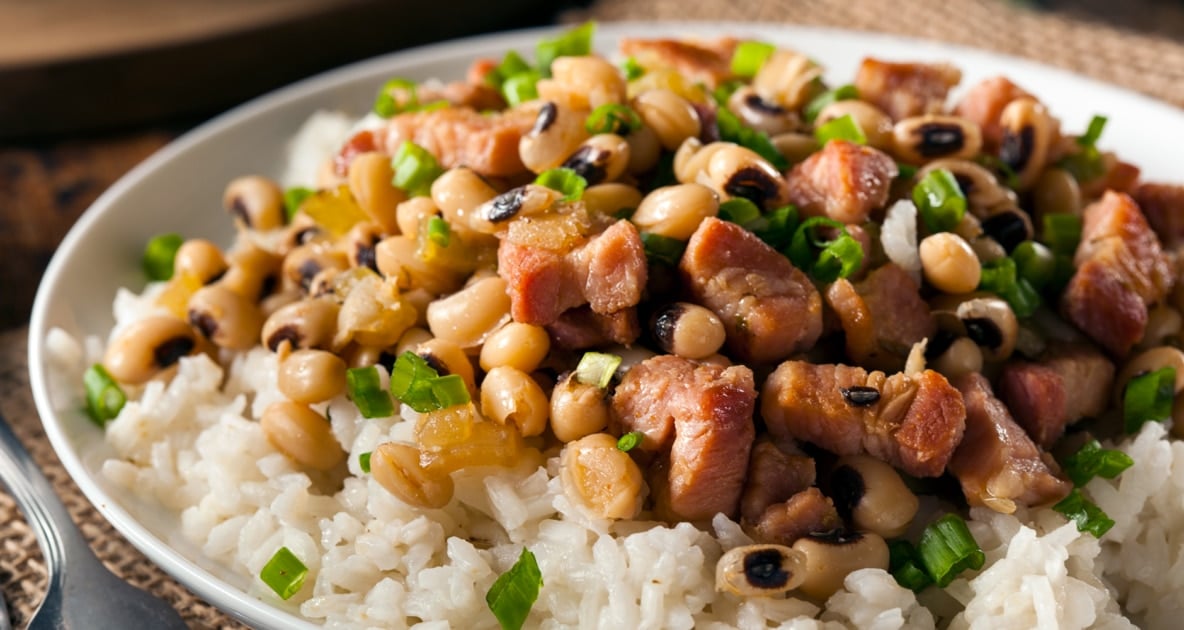
Black-eyed peas and rice with fat back, salt pork or bacon is a staple in the south on New Year's.
Quick Reference: Hoppin’ John Recipe at a Glance
- What it is: a Southern dish of black-eyed peas and rice cooked with bacon, salt pork, or fatback.
- When you eat it: New Year’s Day, for luck and prosperity in the year ahead.
- Symbolism: peas = coins, greens = dollar bills, pork = forward motion, cornbread = gold, tomatoes = good health.
- The folk rules: the more peas you eat, the more luck; leave 3 peas on the plate; a hidden dime in the pot brings extra luck.
- Day-after dish: leftover Hoppin’ John eaten January 2 is called Skippin’ Jenny and multiplies your luck.
- Origin: West African cowpea tradition carried to the Lowcountry by enslaved Africans, with later Civil War and Charleston street-peddler legends layered on top.
Feast your eyes on this hoppin john recipe, black-eyed peas and rice sizzling with fatback, salt pork, or bacon. A staple in the South on New Year’s, this humble dish carries a history and tradition as rich as its flavor. Why is a bowl of beans and rice considered a bringer of good luck? The honest answer goes back to West Africa, the Lowcountry rice plantations, and a stubborn belief in eating your way into a better year.
Picture this: the warmth of the Thanksgiving turkey, the mouth-watering aroma of the Christmas ham, and then New Year’s arrives. What’s on the menu? Black-eyed peas. It might seem an unusual choice for celebrating, but for generations, this has been a cherished tradition across the Southern United States. The belief is simple: welcoming the New Year with a hearty serving of black-eyed peas (also called “cowpeas”) promises a year of luck and prosperity.
The black-eyed pea itself has a long history. According to Encyclopaedia Britannica, the cowpea (Vigna unguiculata) was domesticated in West Africa thousands of years ago and reached the American South through the Atlantic trade, becoming a staple food and a fixture of holiday tables.
Read about other lucky foods for the new year.
Where Did This Tradition Begin?
The true origins of the custom are layered. One popular tale claims that during the Civil War, Confederate soldiers considered themselves lucky to survive the harsh winter of 1864 thanks to fields of black-eyed peas, one of the few food sources left untouched by General Sherman’s Union Troops, who reportedly saw the peas as livestock feed and moved on. It is a memorable story, but it sits on top of a much older root.
Most food historians trace the tradition to West Africa. Black-eyed peas are believed to have been brought to America by enslaved Africans working the rice plantations of South Carolina and Georgia. The peas were a staple of the home cooking they carried with them, a daily protein, a symbol of survival, and a marker of identity that quietly outlasted everything done to suppress it. The combination of peas and rice (and the practice of cooking them together in one pot with smoked pork) settled into the Gullah Geechee kitchens of the Lowcountry and from there spread outward through the South. The New Year’s good-luck framing came along with the dish.
So the next time you sit down to a plate of black-eyed peas and rice on New Year’s Day, you are not just having a tasty meal. You are participating in a tradition of hope, frugality, and resilience that spans centuries and crosses an ocean.
Boost Your Luck With These Foods
The Southern tradition insists that the first meal of the New Year should be a feast of black-eyed peas, greens, pork, and cornbread. Some folks serve the peas over rice in a popular dish known as “Hoppin’ John” (see the recipe below). Each component is believed to bring a unique slice of good fortune. Our companion guides to New Year’s superstitions and traditions and eating for luck dig into the wider folklore.
- Black-eyed peas, resembling “coins,” signify potential monetary windfall.
- Greens (collards, mustard or turnip greens, and cabbage) represent the green of “dollar bills,” promising a financially prosperous New Year.
- Pork, whether used to flavor the Hoppin’ John or the greens, symbolizes “forward motion” or “advancement” in the upcoming year.
- Cornbread, with its golden hue, embodies “gold.”
- And if you choose to add tomatoes to the meal, usually stewed with the Hoppin’ John, they are believed to symbolize “good health.”
Hoppin’ John Symbolism, at a Glance
But It’s Not Just What You Eat, It’s How You Eat It:
- The more you consume, the more luck and wealth you stand to gain.
- Some tradition-followers place a clean dime in the pot of peas right before serving. The lucky individual who finds the dime on their plate is believed to receive an extra dose of luck.
- Leaving 3 black-eyed peas on your plate after finishing your meal is said to ensure a New Year filled with luck, prosperity, and romance.
- Eating Skippin’ Jenny (that’s leftover Hoppin’ John) on January 2 supposedly multiplies your chances for good luck as a reward for your frugality.
Round the meal out with a hot square of cornbread from our best cornbread recipe, and if you want to lean further into the old-pantry mood, leather britches green beans are an honest Lowcountry side. Ready to kick off a prosperous New Year? Why not try your hand at this traditional Hoppin’ John recipe?
Hoppin’ John
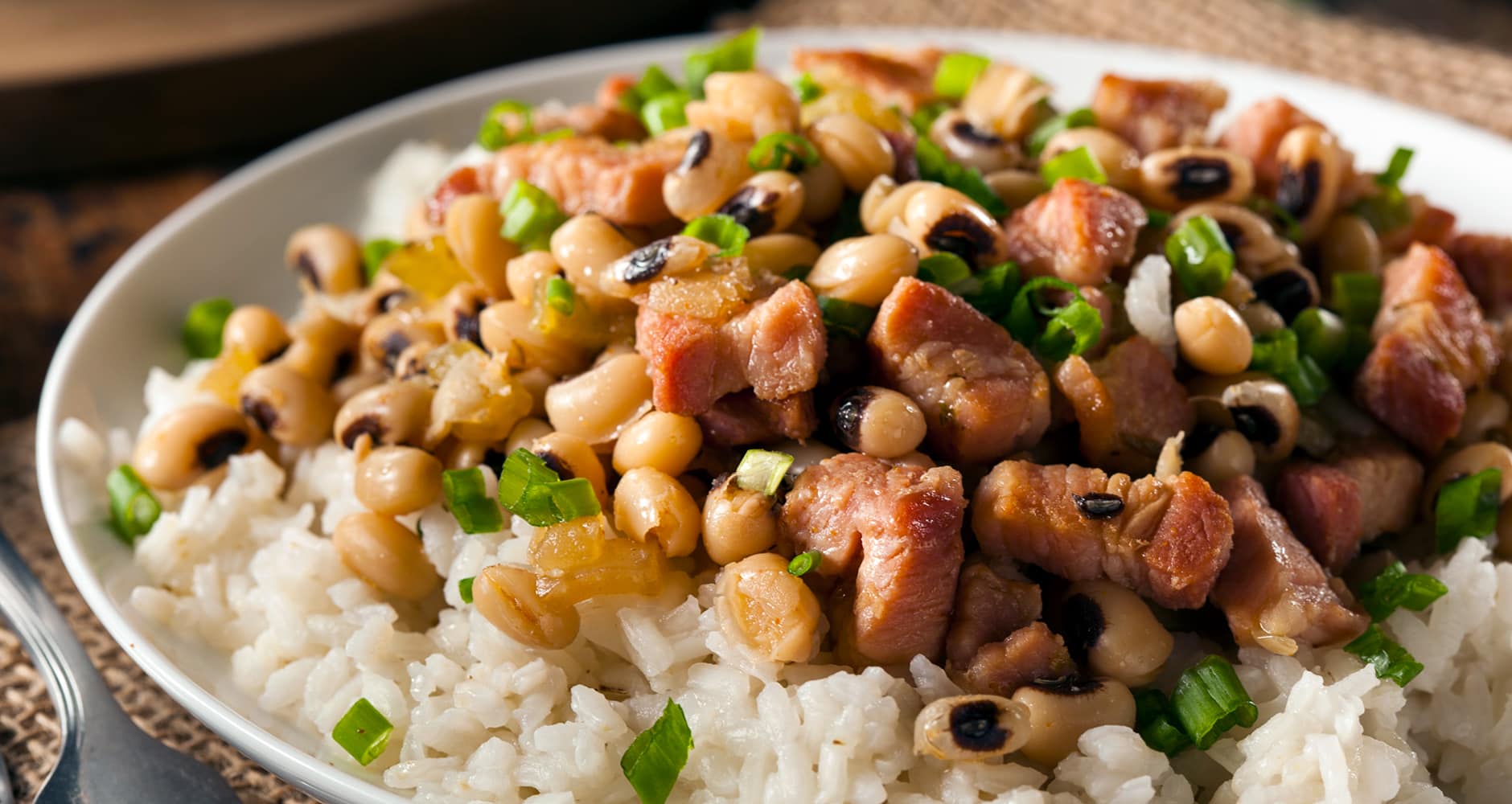
- 1 cup dry black-eyed peas
- 4 thick slices bacon, cut into small pieces
- 1 cup chopped onion
- 1/2 cup chopped green pepper
- 1 teaspoon salt
- 1 bay leaf
- 1 dash each of cayenne & black pepper
- 3 cups cooked rice
Wash peas, then cover with 5 cups water.
Boil 2 minutes. Remove from heat and soak overnight.
The next day, rinse the beans and drain thoroughly.
Cook the bacon in a heavy pan until browned. Add onion and green pepper. Saute until onion is tender.
Add beans, 2 cups water, and seasonings. Cover and simmer 40 to 50 minutes or until peas are tender.
Remove bay leaf; stir in rice.
Continue simmering for about 10 minutes until all liquid has been absorbed.
Serve with ham, cornbread and collard greens.

Who Was Hoppin’ John? The Name Behind the Hoppin John Recipe
The origins of the name “Hoppin’ John” are a topic of debate among food historians. Some argue it comes from an old, hobbled man named Hoppin’ John who peddled peas and rice on the streets of Charleston in the 19th century. Others believe the name derives from the excitement of enslaved children who eagerly “hopped around the table” in anticipation of the dish. A third line of speculation points to a corruption of a French or Caribbean Creole phrase, such as pois pigeons (pigeon peas), softened across generations of cooks into something that sounded like Hoppin’ John. Linguists have not settled the question, but the name has stuck for at least two centuries, and the dish has stayed on the table.
Hoppin’ John FAQ
What is a traditional hoppin john recipe made with?
A traditional Hoppin’ John recipe combines dry black-eyed peas, rice, onion, green pepper, bay leaf, salt, and a pork element (bacon, salt pork, fatback, or a smoked ham hock). The peas are simmered with the pork until tender, then the cooked rice is stirred in to finish. The dish is usually served alongside braised collards or other greens and a square of cornbread.
Why do Southerners eat black-eyed peas on New Year’s Day?
The custom traces to West African foodways carried into the American South by enslaved Africans on Lowcountry rice plantations. The peas, eaten on the first day of the year, came to stand for coins and prosperity. A Civil War legend, in which Confederate soldiers survived a harsh winter on fields of black-eyed peas left untouched by Sherman’s troops, layered on top of the older tradition.
Do you have to eat exactly 365 black-eyed peas on New Year’s Day?
No. Some tellings of the tradition say one pea per day of the year ahead, but the more common rule is simply “the more you eat, the more luck.” Most households eat a normal portion. The peas are meant as a symbol, not a counting exercise.
What is Skippin’ Jenny?
Skippin’ Jenny is the leftover Hoppin’ John eaten on January 2. The tradition says eating it on day two is a sign of frugality and is rewarded with even more luck in the year ahead. Practically, it is also one of the better leftovers you will ever reheat: the rice soaks up the pot liquor and the peas pick up flavor overnight.
Can you make a vegetarian Hoppin’ John?
Yes. Skip the bacon or salt pork and build the flavor base with olive oil, plenty of onion and green pepper, smoked paprika, and a piece of dried mushroom or a Parmesan rind in the pot for depth. The dish is no longer strictly “traditional,” but the symbolic content (peas for coins, rice as the base, a hot square of cornbread on the side) is still there.
What is the difference between Hoppin’ John and red beans and rice?
Both are one-pot bean-and-rice dishes from the American South, but Hoppin’ John uses black-eyed peas and is tied to New Year’s Day in the Carolinas, Georgia, and the wider Lowcountry. Red beans and rice uses small red beans (sometimes kidney beans) and is the Monday-night dish of New Orleans and the Louisiana Creole kitchen. Different beans, different region, different occasion.
Should you cook the peas and rice together or separately?
Both methods are traditional. The recipe above cooks the peas with pork and aromatics, then stirs cooked rice in at the end so the grains stay distinct. Some Lowcountry cooks add raw rice to the simmering pot of peas, lid it tight, and let everything finish together in one vessel, the way pilau is cooked. Same dish, slightly different texture.
For more food-and-holiday folklore, see our pieces on what the Pilgrims really ate and Kwanzaa traditions and the karamu feast. Whatever ends up on the table, eat well, share the bowl, and leave three peas on the plate.



Tiffany Means
Tiffany Means is a freelance writer and a degreed meteorologist. She specializes in weather forecasting and enjoys making the subject of weather (and the science behind it) more relatable. She currently resides in the Blue Ridge Mountains of North Carolina.
- Tiffany Means

- Tiffany Means
- Tiffany Means
- Tiffany Means





Going to try the HoppinJohn for New Years Day sounds delicious!!!!!!!