

12 Vegetables You Can Regrow From Kitchen Scraps: Full Setup, Timing, and Yields
Kitchen scrap gardening saves you money on grocery bills and reduces waste. Regrow your kitchen waste into edible veggies and greens!
Quick Reference: Regrowing From Kitchen Scraps
- Easiest 3: green onions (5 to 7 days), romaine lettuce (14 days), basil (14 to 21 days).
- Highest-yield: sweet potato (slips can produce 4 to 10 lbs/plant), garlic, ginger.
- Lowest-effort method: water-cup regrowing on a sunny windowsill.
- Soil method: required for sustained yield. Move from water to soil after roots are 2 inches.
- Tool: the Almanac’s Best Days calendar for moon-aligned propagation.
On this page
Related Almanac guides
Sources cited in this guide
Most of what gets thrown in the compost from a kitchen still has the genetic machinery to grow a new plant. Green onion roots will sprout new green shoots in a water cup within 5 days. A garlic clove pushed into soil will produce a full bulb in 8 months. A romaine heart will give you 2 to 3 harvests of fresh leaves from one stem. This guide is 12 vegetables you can regrow from scraps, the setup each one needs, and the realistic yield (because most blog claims are wildly optimistic).
What Actually Works in a Kitchen-Scrap Garden
Per UMN Extension and USDA NIFA kitchen-gardening guidance, three categories of regrow have real yield, the rest are decorative.
- Category 1: cut-and-come-again leafy crops. Green onions, romaine, celery, leek bases. Real continuous yield for 4 to 8 weeks before the plant exhausts itself.
- Category 2: bulb and tuber regrows. Garlic, sweet potato, ginger, regular potato. Highest absolute yield but require soil + months of growth.
- Category 3: herb cuttings. Basil, cilantro, mint, parsley. Real continuous yield once rooted, indefinitely with care.
- Decorative-only (not real yield): carrot tops produce greens but no new carrots. Pineapple regrows a beautiful houseplant but rarely fruits indoors in a meaningful window.
The 2 Setups: Water Cup vs Soil Pot
Most regrows start in water and move to soil once rooted.
- Water-cup setup. Clear glass with 1 inch water. Root end down. Sunny window. Change water every 2 to 3 days. Good for 2 to 4 weeks before transferring or harvesting.
- Soil-pot setup. Standard potting mix in a 6 to 8 inch pot with drainage. Full sun (south window or under grow lights). Required for any regrow lasting beyond 4 weeks.
- Hybrid (best for green onions and lettuce): regrow in water for 7 days, transfer to soil for continuous harvest 4 to 8 more weeks.
- When to give up: rotten smell, slime, or mold means start over with a fresh scrap. Wash the cup thoroughly.
12 Vegetables You Can Regrow From Scraps (Full Detail)
Below are the original 12 detail sections, plus notes on kitchen-scrap gardening basics.
A Few Things To Keep In Mind
Not everything will sprout. Check on your plants and if after a week you don’t see anything is happening, compost the scraps and try again.
1. Green Onions
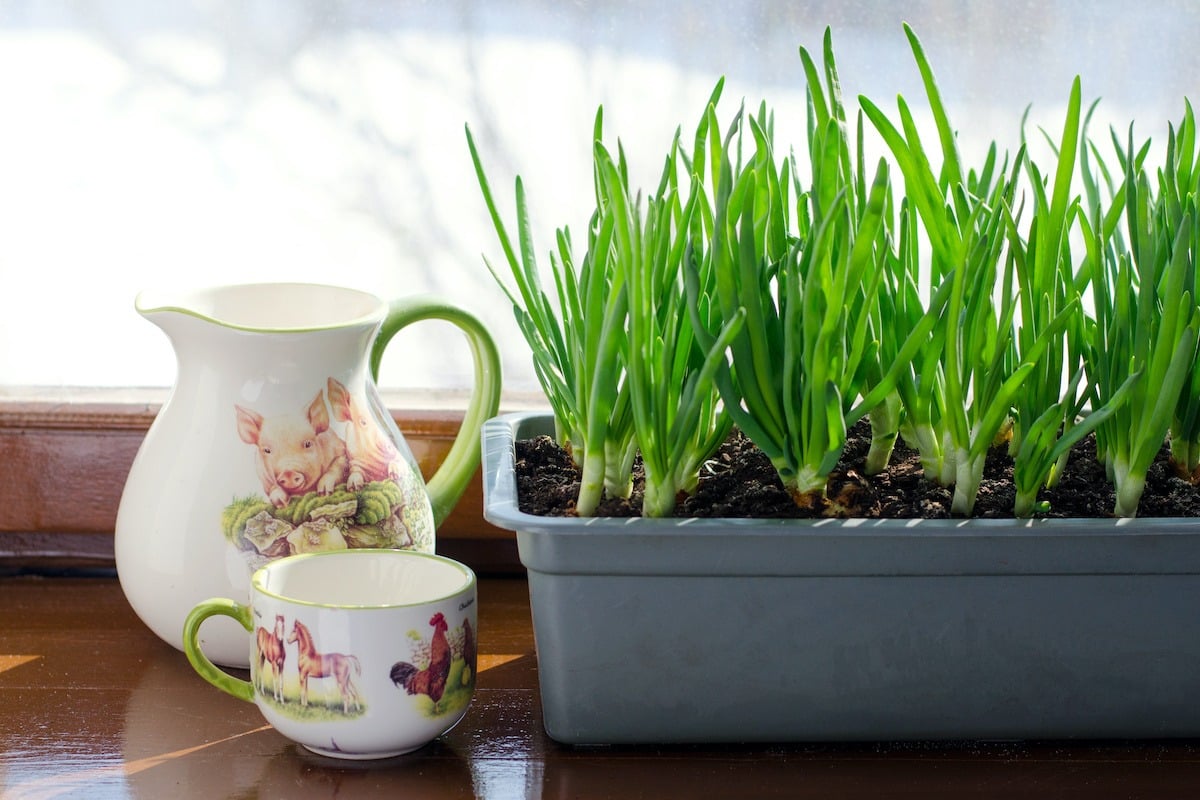
If you cut off and toss the end of the onion with the little roots growing out of it, try growing a new onion with it instead. Plant it root end down in some quality potting soil, place it in a sunny window, keep it watered and watch it grow. This is a great first kitchen scrap gardening project because the green part of the onion will grow back quickly. In less than two weeks it will be tall enough to snip the top off to eat. Then you can plant and keep enjoying them!
2. Celery
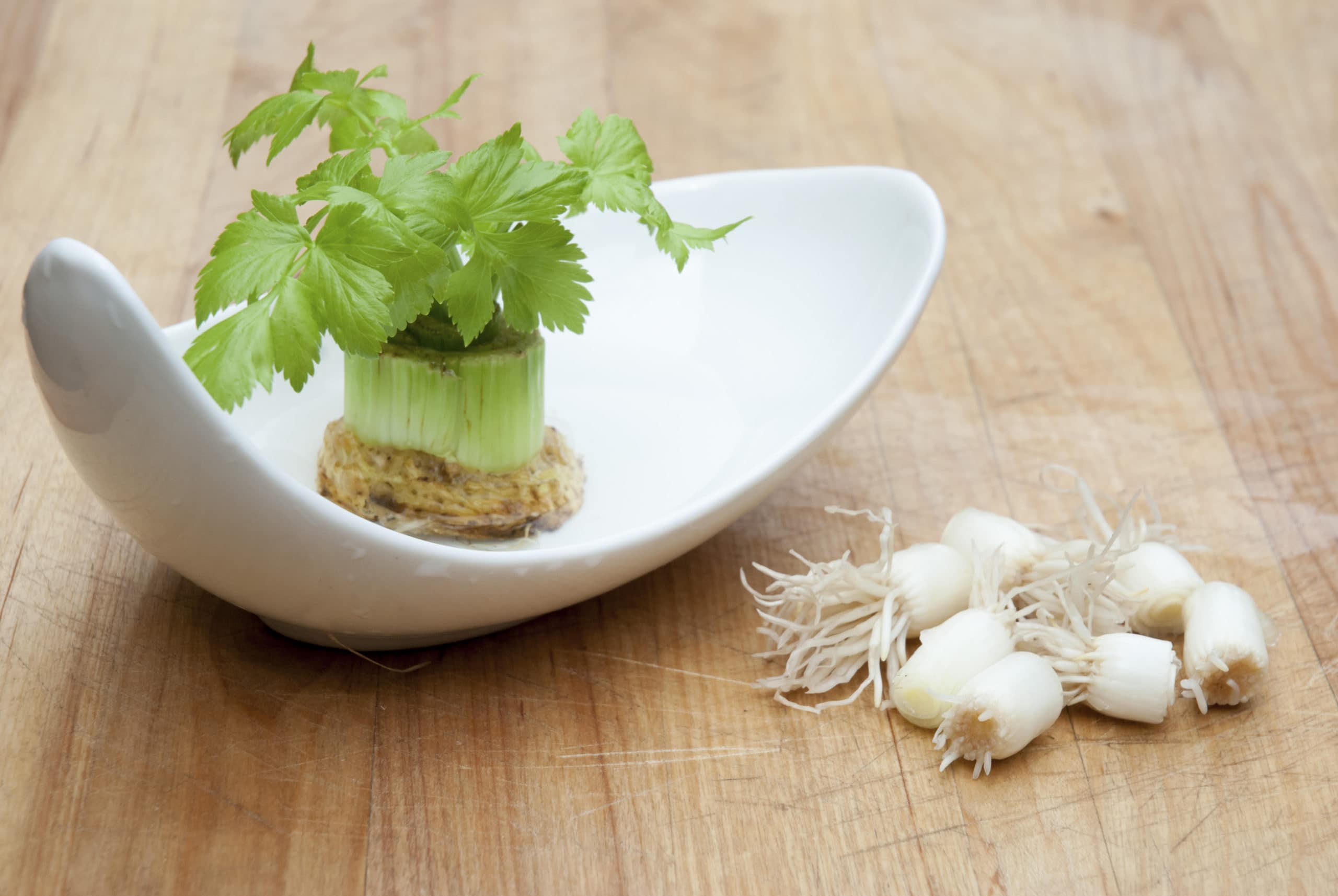
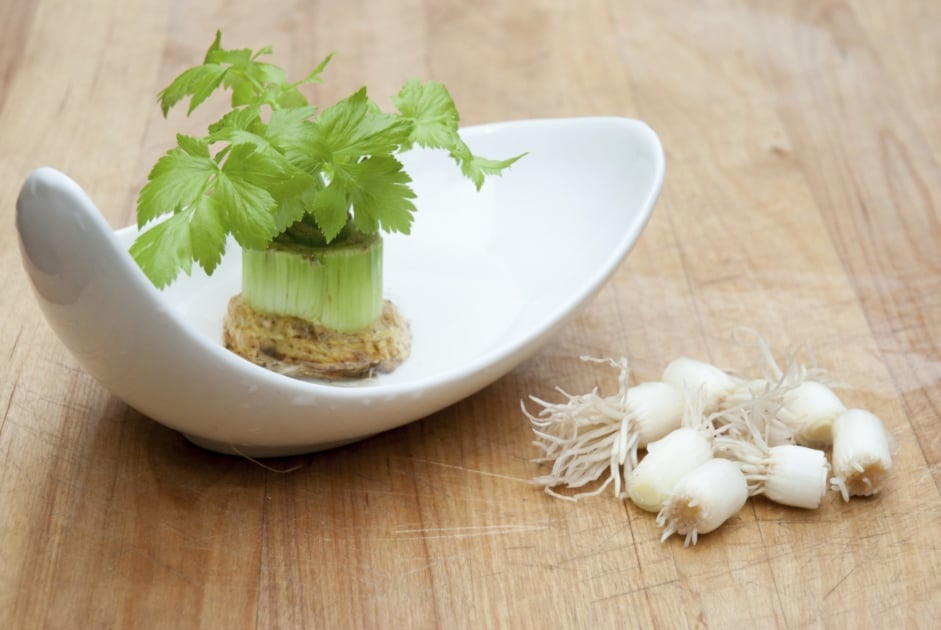
Cut stalks off about two inches from the bottom of the celery bunch and place that white base in a shallow bowl of water. Do not submerge. After several days roots will begin growing from the base and leaves will grow from the top. After about a week, you can plant in soil with only the leaves above the surface. The plant will continue to grow until you’ve got a new head of celery to harvest. Keep in mind that celery is a cool weather crop, so plant outside in early spring rather than waiting until the hot summer months.
3. Romaine Lettuce
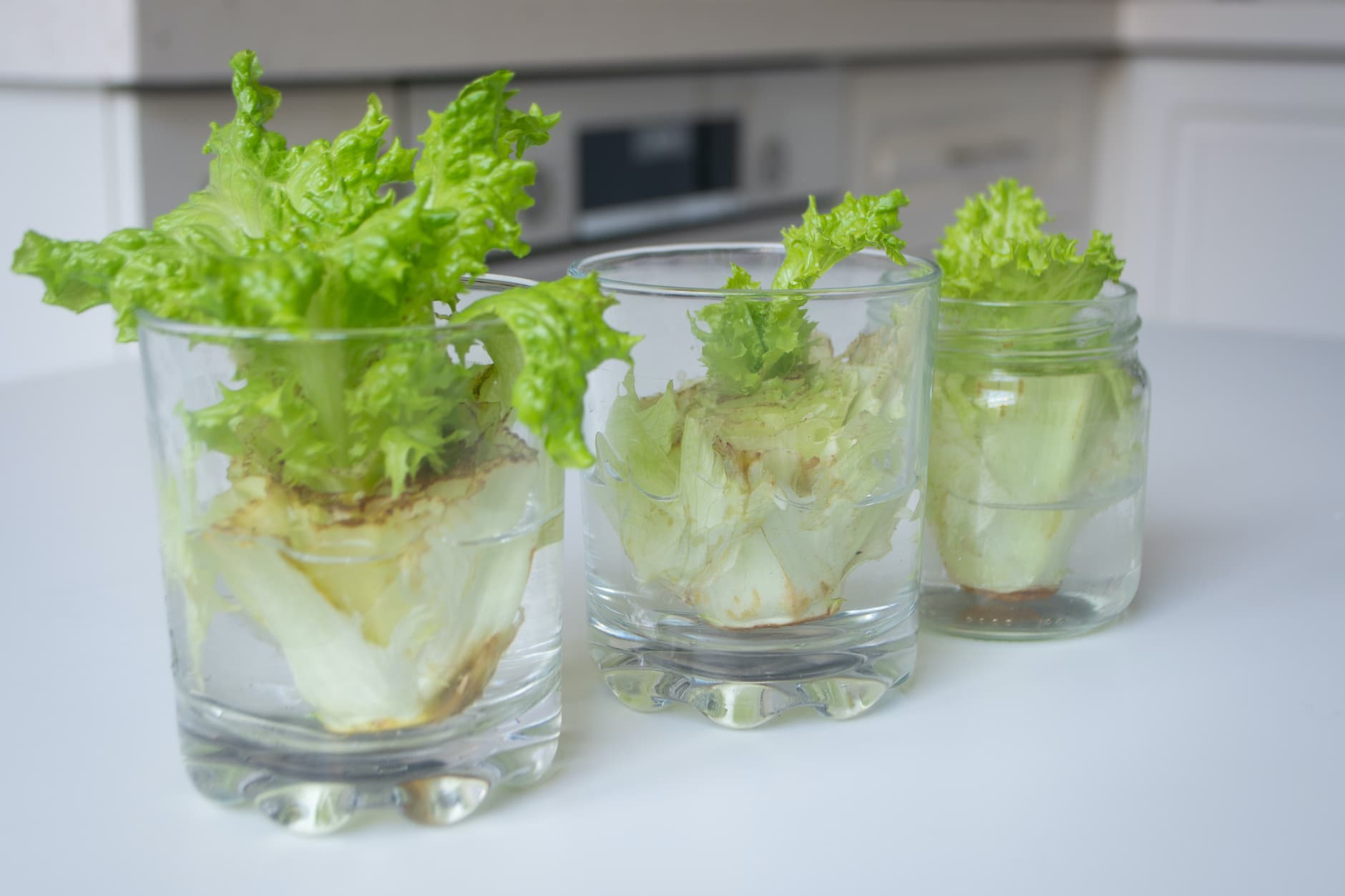
Growing romaine lettuce from scraps is similar to growing green onions and celery. Cut off the lettuce you plan to eat and leave a couple of inches at the base. Place this romaine heart in water and new leaves will start to grow from the center. Remove outer leaves as they start to die. You can eventually plant your romaine in soil when the time is right.
4. Garlic
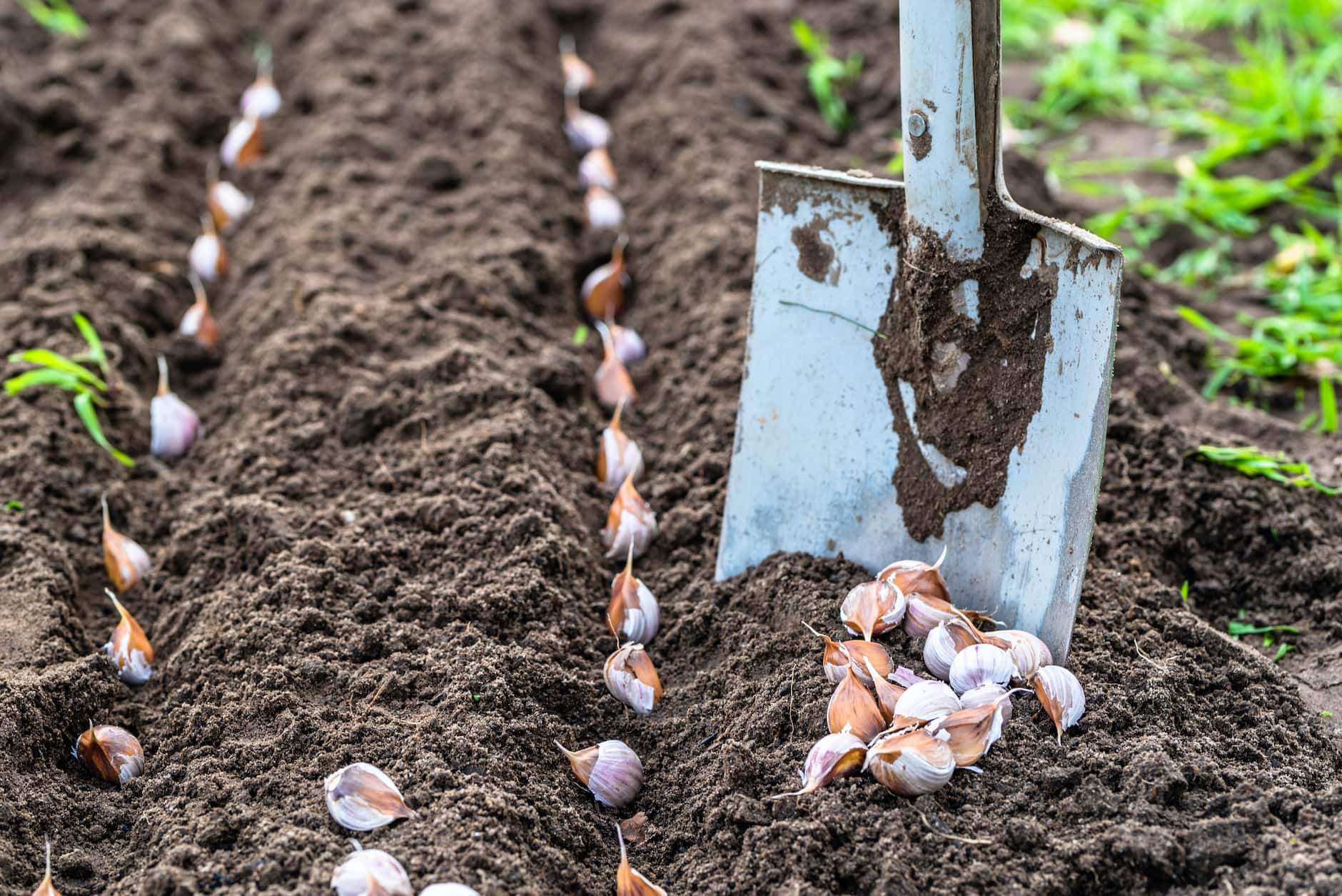
A garlic bulb is made up of individual garlic cloves. Hold one clove back from that pesto you’re making and plant it in your garden in the fall; root side down of course, and the tapered end of the clove pointing up. The next spring or summer you can harvest a full bulb of garlic. It’s ready when the tops begin to turn yellow and fall over. You can also plant garlic cloves in pots indoors near a sunny window and have a constant supply of fresh garlic bulbs.
5. Ginger
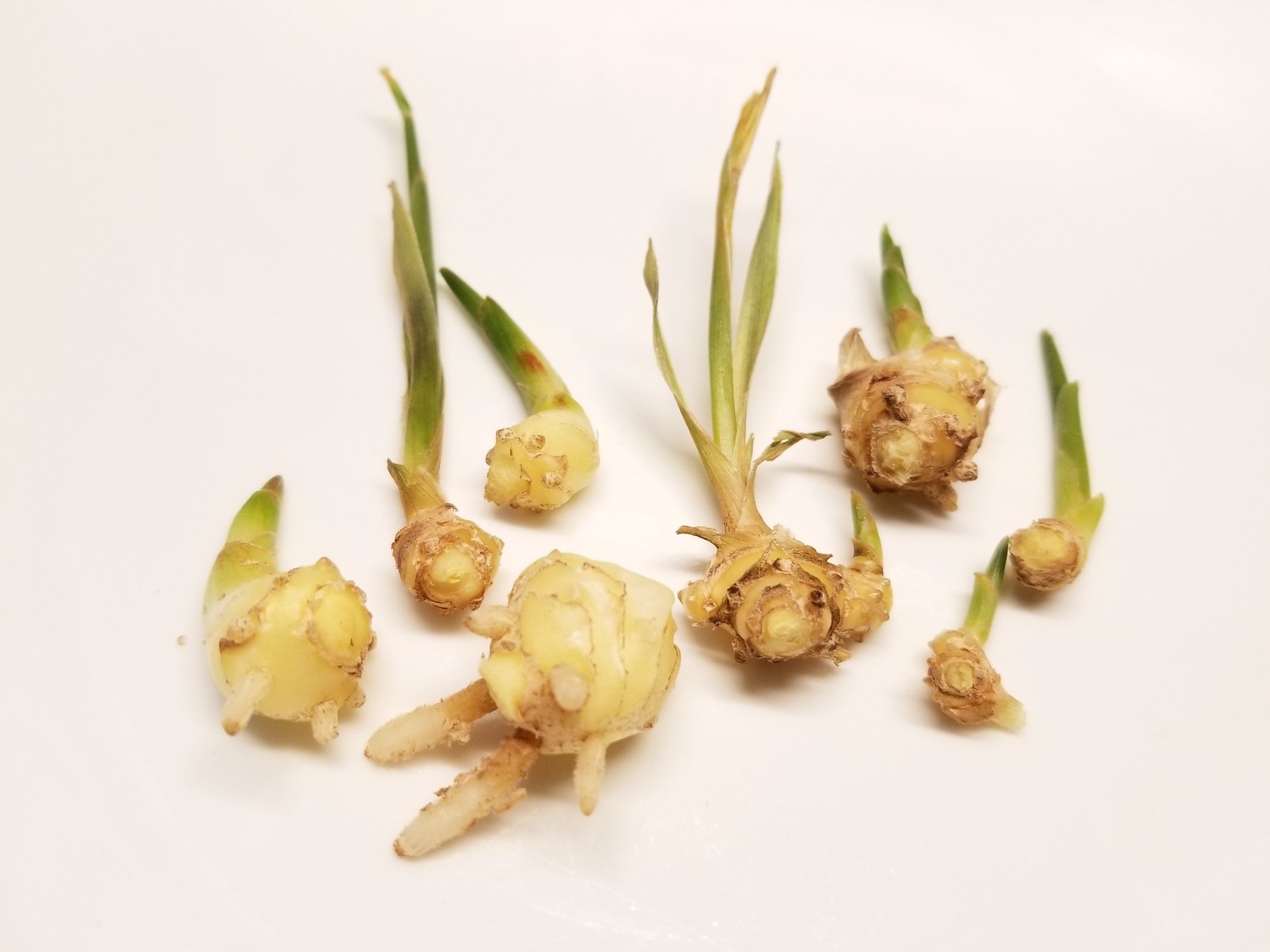
If you’ve got more ginger root than a recipe calls for, you can freeze it to use later, or you can plant it to grow more ginger root. Put the root in moist potting soil with the newest buds facing up. Ginger is a tropical plant, so you’ll probably want to keep this one indoors. Green shoots will come up out of the soil and the roots will spread out. After a few months, you can harvest pieces of the root, covering it up with soil again when you’ve taken what you need so that it can continue growing.
6. Potato
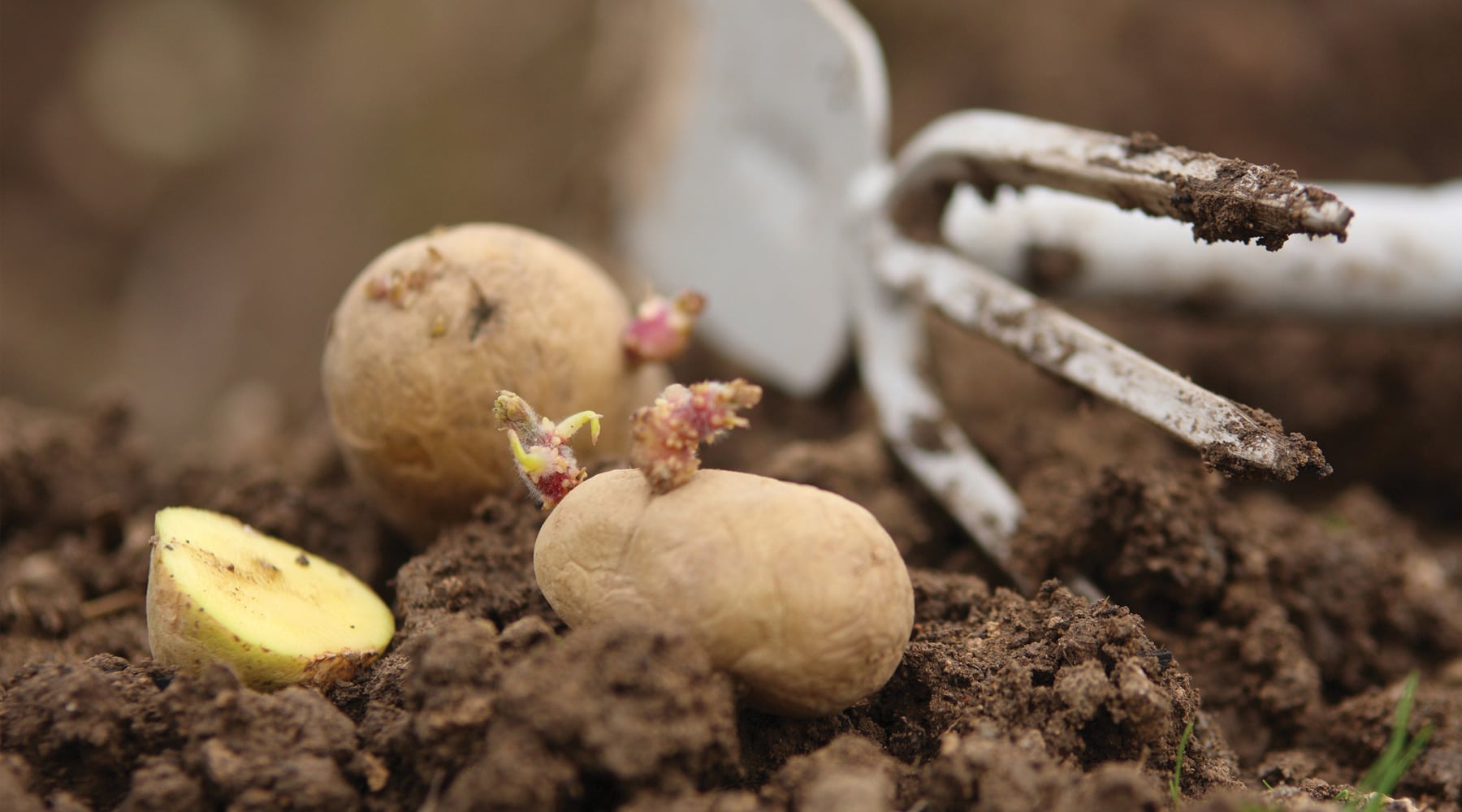
Small potatoes can be planted whole. For large potatoes like bakers, cut into pieces making sure there are a couple of eyes on each piece. Allowing the pieces to dry out for a day or two may help prevent rotting. Plant the pieces in your garden or a container filled with well-drained potting mix and wait for them to sprout. In a few months, you should be able to dig up a whole bunch of new potatoes! Learn more about growing potatoes here.
7. Sweet Potato
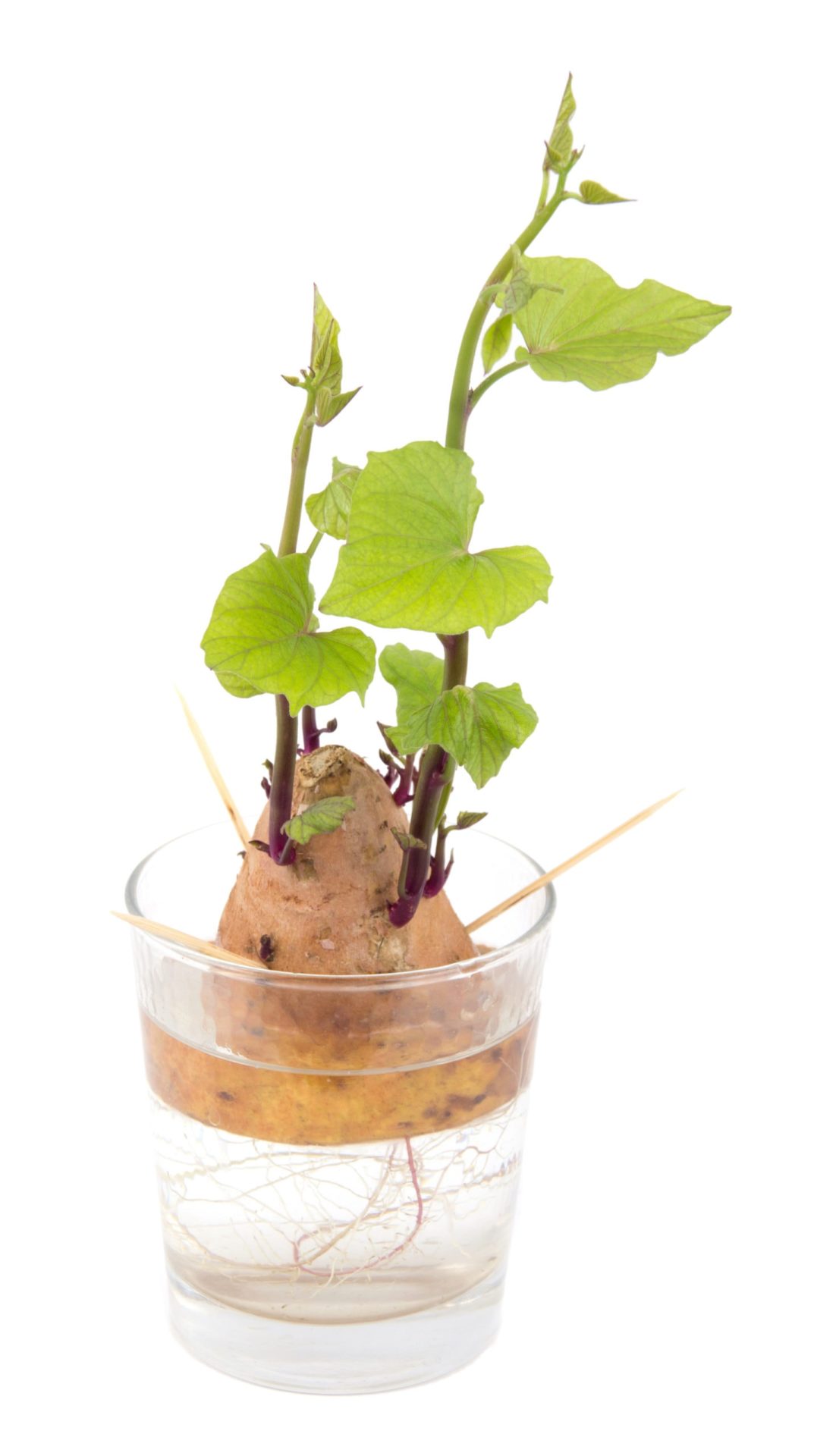
Even easier to grow than potatoes, with sweet potatoes you don’t have to look for any eyes. The easiest method is to plant the entire sweet potato. To produce more than one plant, however, cut a sweet potato in half and suspend it using toothpicks in a shallow container of water. Roots and sprouts will begin to grow in a few days. Once the sprouts are about four inches or so in length, just twist them off and place them in a container of water. When the roots from this container reach about an inch in length, you can plant them in soil in a garden or large container.
8. Basil, Cilantro, and Other Herbs
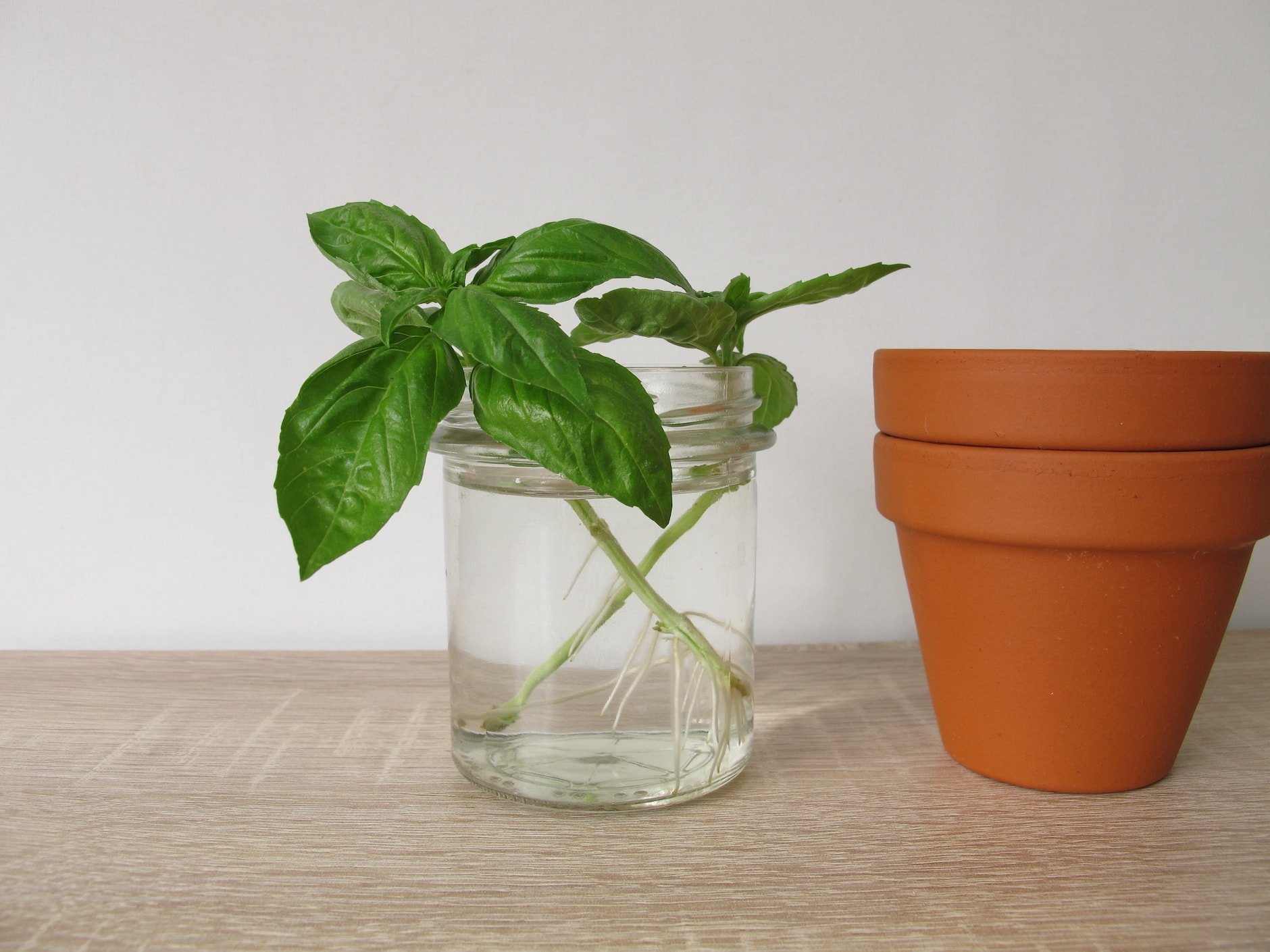
Re-growing herbs, such as basil and cilantro, is fairly easy to do. Cut a stem about four inches long, and place it into a glass of water. Be sure that the leaves are not submerged in the water. Place your stem in a bright area, but out of direct sunlight. In a few days, look for roots forming. Once these roots are about an inch long, go ahead and transplant them into some soil. In no time you will have your very own flourishing herb garden.
9. Mushrooms
Re-growing mushrooms from scraps, while more challenging, is still possible. Mushrooms thrive in a warm room with plenty of humidity. Planting in a pot, rather than in the ground, will allow you to control your planting environment better. First cut off the cap of a mushroom and stick the stem into nutrient-rich soil leaving the top exposed. Keep an eye out for a new growth. Harvest when fully grown.
10. Carrots, Beets, and Other Root Crops
For these veggies, you aren’t actually re-growing the root themselves, but rather the leafy tops. Beet and carrot greens house an enormous amount of the plant’s nutrients and carry a notably wide range of uses. Tossing them into a salad, sauté, or smoothie is a great way to get a nutrient boost. To regrow root vegetable greens, salvage the tops (the part of the vegetable where the leaves come out, about 1″ of the vegetable still intact) and place in a shallow tray of water (but don’t submerge). Within a few days, you should notice new green tops growing. You can harvest the greens when ready, or once the roots have begun to grow, simply transplant them into the ground and harvest the greens as needed. This method will work with beets, turnips, carrots, and parsnips.
11. Onions
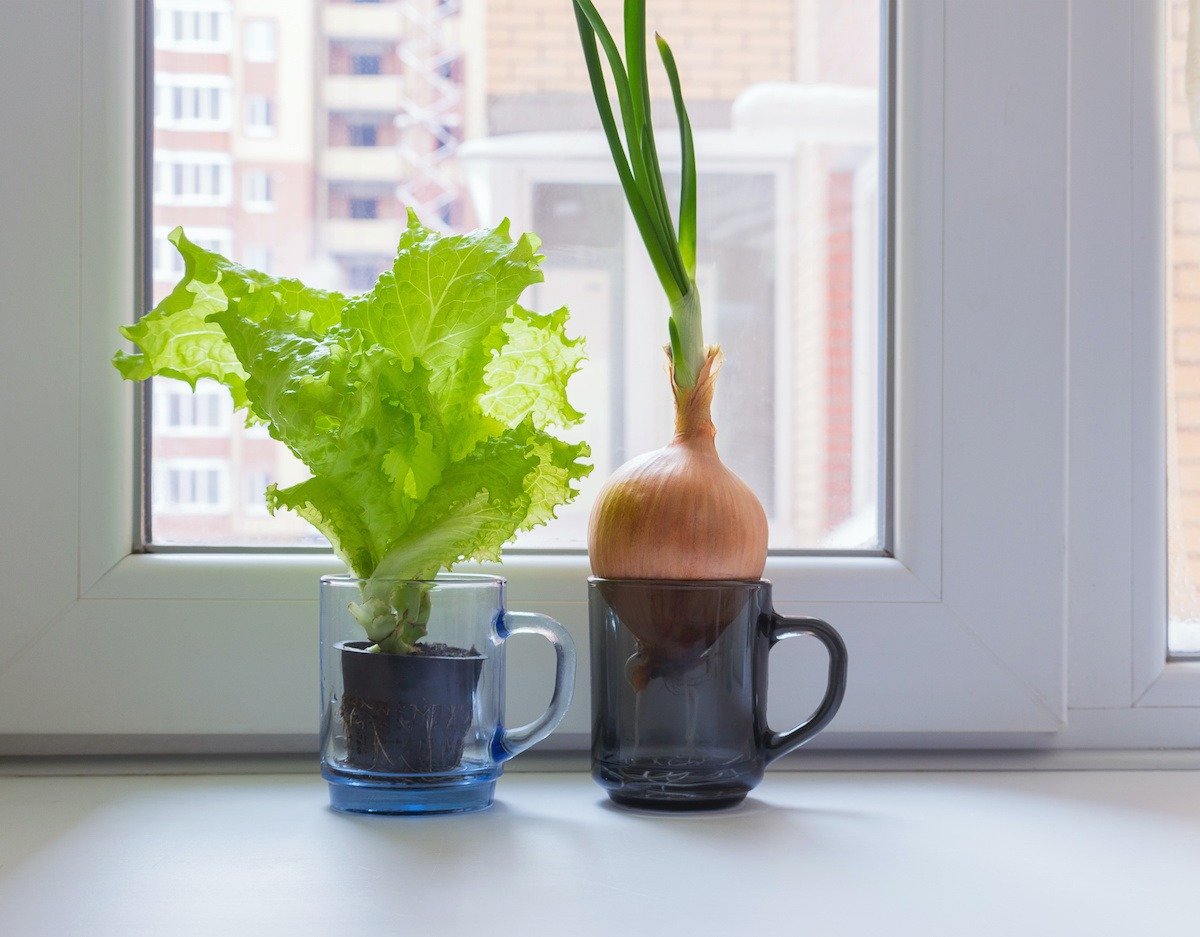
Another simple one to regrow from scraps are bulbs, such as yellow or red onions. Simply cut a one-inch piece off the root end of the onion and set it on the ground or in a bowl of shallow water with the cut surface above the water. It will soon begin to regenerate its roots which can then be planted in soil. You can even set an entire onion in water and watch it sprout! Then it can be planted outside in the garden.
Regrow Vegetables From Seeds
Don’t stop with just scraps! You can also retrieve your own seeds from your food scraps in order to propagate. Rinse off the slimy, seedy insides of your organic tomatoes and allow them to dry thoroughly. Plant them in a container inside until sprouted to a few inches tall, when they can then be transplanted outside. Peppers, cucumbers, pumpkins, winter squash, and microgreens can all also be re-grown by salvaging their seeds. Turn those composting scraps into new, edible treasures.
Content developed by freelance writers Judy Kneiszel and Natalie LaVolpe.


Kitchen Scrap Regrow FAQ
What is the easiest vegetable to regrow from scraps?
Green onions. Put a 2-inch root end in a small cup with 1 inch of water on a sunny windowsill. New green shoots emerge within 3 days and you can harvest fresh tops in 5 to 7 days. Repeat 3 to 4 times before the bulb exhausts itself.
Can you really regrow vegetables from scraps?
Yes for cut-and-come-again leafy crops (green onions, lettuce, celery), bulbs and tubers (garlic, sweet potato, ginger), and herb cuttings (basil, mint, cilantro). Decorative-only for carrot tops (greens but no new carrots) and pineapple (rarely fruits indoors).
How long do vegetables take to regrow?
Quick (5 to 14 days): green onions, romaine lettuce, basil cuttings. Medium (4 to 8 weeks): celery, garlic greens, ginger. Long (3 to 8 months): garlic bulbs, sweet potatoes, full ginger rhizomes.
Do regrown vegetables taste the same?
Cut-and-come-again leafy regrows often taste milder and softer than the original. Garlic and ginger regrown to full bulb match the original quality. Sweet potatoes vary by variety. Pineapple regrows are usually decorative, not eatable-quality.
Can you regrow vegetables from grocery store produce?
Yes for most. The exception is anything labelled “hybrid F1” or grown from sterilized hybrid seed; those may regrow but their seed will not be true-to-parent. Organic produce is generally more reliable for regrowing than conventional because it has not been treated with sprout inhibitors.
Why is my regrown vegetable rotting?
Water not changed often enough (change every 2 to 3 days), submerged too deep (only the bottom 1/2 inch of the root end should sit in water), or scrap was too old to start. Toss and start over with a fresh scrap and clean cup.


This article was published by the Staff at FarmersAlmanac.com. Any questions? Contact us at [email protected].
- Farmers' Almanac Staff

- Farmers' Almanac Staff

- Farmers' Almanac Staff

- Farmers' Almanac Staff





Veg from veg. Great article. Plenty more, though.
Are there any books that are recommended for we growing Vegetables from vegetables?
While we haven’t read this – two that look like they would be helpful are: Grocery Store Garden by Michelle Marsh and Don’t Throw It, Grow It! by Deborah Peterson Best wishes for your scrap gardening!!
why would you throw squash or peppers in your own yard or why would it make good fertilizer?
Pineapple is Questionable most plantations use first and second-gen pineapples after that good luck.
Need help with my 6 mo old cherry ? blossom tree the leaves are still intact but they are folded over and hanging. I think at 1st it was overwatered
. Then the freezing temps started. My son started this tree from a seed . Anyone! Please offer me some advice!!
Need help with my Lemon tree anyone please. The foliage is good but I have no fruit. What am I doing wrong?
Did you grow from a lemon seed? Will probably take 10 years to get fruit. You need to plant a grafted tree….one with rootstock!
Can take up to 15 years for the healthy tree to produce a lemon ?
I too have a problem with my lemon tree. I do have one singular lemon on it and am very keen on it. Meyers Lemon going into her second year with me as well as my Key Lime. Mine is growing in a container.
Sorry I meant Susan
No worries Agnes! Thank you for your comment – if you were referring to our Susan, our web content editor, she does a great job!
Is there someone I can ask a question via email?
I’ve just found this site ,it’s great Sandy ,thankyou
You need to make this page, and others like it, printable. It would be a great help.?
Hi Sandy, you can print any web page from any browser, and you can control which pages come out. What browser are you using? Just go to the top menu bar and hit print, then preferences.
You do not have to suspend avacado seed over water . I have much better luck just fixing a pot of soil, water it good and push the bottom or side of the seed about half way down in the soil, leaving about half above the soil. Keep the soil moist. After a month or two, it will split open and it will grow a plant up through the split. Oh, also before planting, I take a sharp knife and whack the seed, while in my hand, a few times just to make the skin outer layer where water can get in. I enjoy seeing them grow. They will need bright light of sunny window if grown inside.