

Growing Potatoes: How to Get a Bumper Crop in Any Space
Want to grow your own tasty spuds? You can, right in your own backyard! Here are the things you need to know to get a bumper crop this summer.
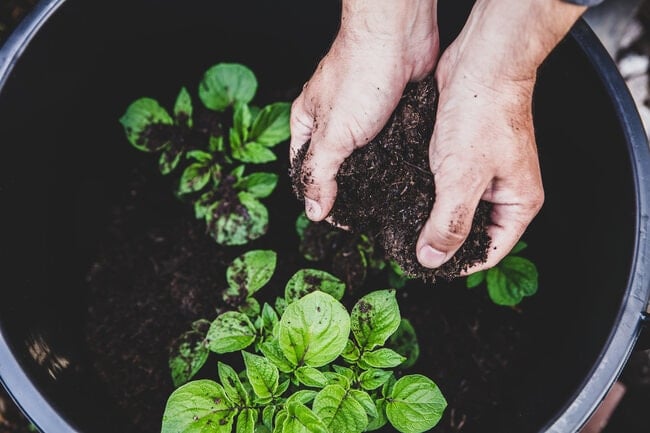
Quick Reference: Growing Potatoes
- Plant when: soil reaches 45 degrees and nights hold near 55 degrees, usually two to four weeks before your last spring frost.
- Where: garden beds, raised beds, grow bags, or burlap sacks. No large plot of land required.
- How deep: three to four inches deep, nine to 12 inches apart, eyes facing up.
- Best Days by the Moon: potatoes are a root crop, so plant in the dark (waning) of the Moon.
- Harvest: new potatoes in two to three months, full-size potatoes in 70 to 100 days.
You do not need an acre, a tiller, or a back forty to grow a season’s worth of spuds. A grow bag on the patio or a burlap sack by the back step will do it. Russet, white, red, yellow, even deep purple potatoes all start the same way, with a seed potato and a sunny corner, and this 2026 growing season is a fine time to start. Here is what you need to know to get a bumper crop, whether you are planting in a garden bed or a bag.
When to Plant Potatoes
Timing matters, both for the seed potatoes and the soil. Potatoes like cool weather, so plan your planting for when nighttime temperatures sit around 55 degrees. The soil should be cool but not freezing, and 45 degrees is ideal. As a rule of thumb, that lands about two to four weeks before your last spring frost. The University of Minnesota Extension has a plain-English guide to growing potatoes if you want to confirm the window for your own ground.
Do not wait too long. Seed potatoes grow well as long as the sprouts coming from the eyes are no more than 1/2-inch long. If there are no sprouts or only short ones, you are good to go. To keep seed potatoes from sprouting before you are ready, store them in a cool, dry, dark place away from other fruits and vegetables.
Frost dates run weeks apart across the country, so the calendar date shifts with your region. The planting window does not.
| Region | Average last frost | Plant seed potatoes |
|---|---|---|
| Deep South and Gulf Coast | Late February into March | January into February |
| Mid-South and Southern Plains | Mid to late March | February into March |
| Mid-Atlantic and Ohio Valley | Mid to late April | Late March into April |
| Midwest and Great Lakes | Early to mid May | Mid April into early May |
| Northeast and New England | Mid to late May | Late April into May |
| Mountain West and Pacific Northwest | Mid May into early June | Late April into May |
In Canada, gardeners in British Columbia and southern Ontario often plant from mid to late spring, while the Prairies, Quebec, and the Maritimes wait until the soil thaws and warms, usually late spring. In every region the same trigger applies: cool soil at 45 degrees, two to four weeks before your last frost.
Gardening by the Moon for Potatoes
Potatoes grow below ground, which makes them a root crop. Traditional Gardening by the Moon wisdom says to plant root crops during the dark, or waning, of the Moon, when the old timers believed the pull of moisture moved downward toward the roots. Above-ground crops like beans and lettuce go in during the light, or waxing, of the Moon.
- Potatoes are a root crop. Favor the dark of the Moon for planting.
- The Gardening by the Moon Calendar lists this month’s Best Days to plant root crops in your area.

Start With Seed Potatoes
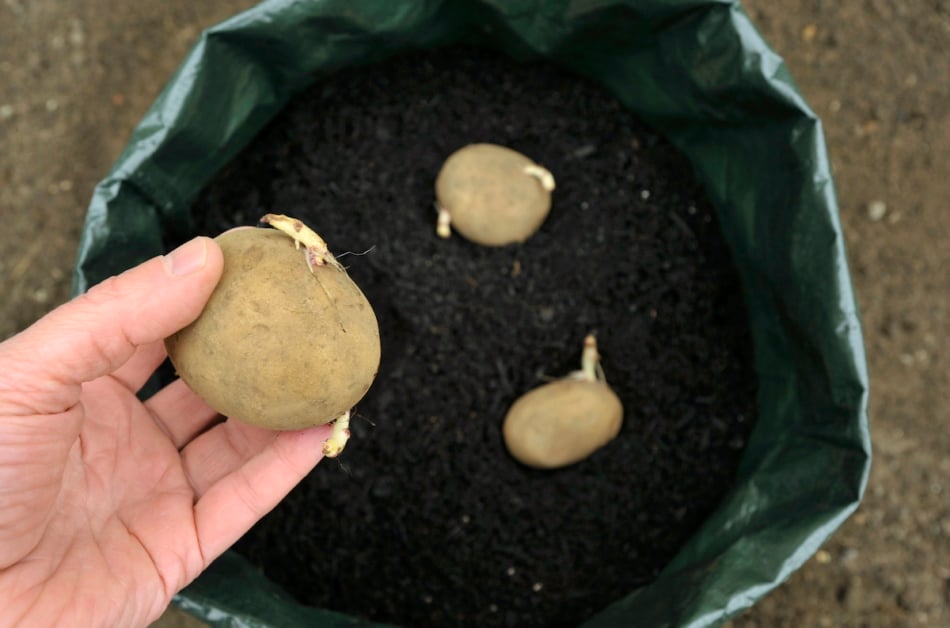
Seed potatoes generally come in two sizes. Small tubers run between one and two inches in diameter, and large ones are anything over two inches. Small tubers can be planted directly, so do not worry about cutting them up.
If you buy large seed potatoes, cut them down to about the size of a small seed potato. Cut them in half, or into quarters if they are really large. Make sure each chunk has at least one eye, which is the small depression in the surface where the roots sprout. After cutting, wait at least four to seven days before planting. Letting the cut surfaces “heal” in a cool, dry place reduces the risk of your seed potatoes rotting in the ground.
Choosing the Right Soil
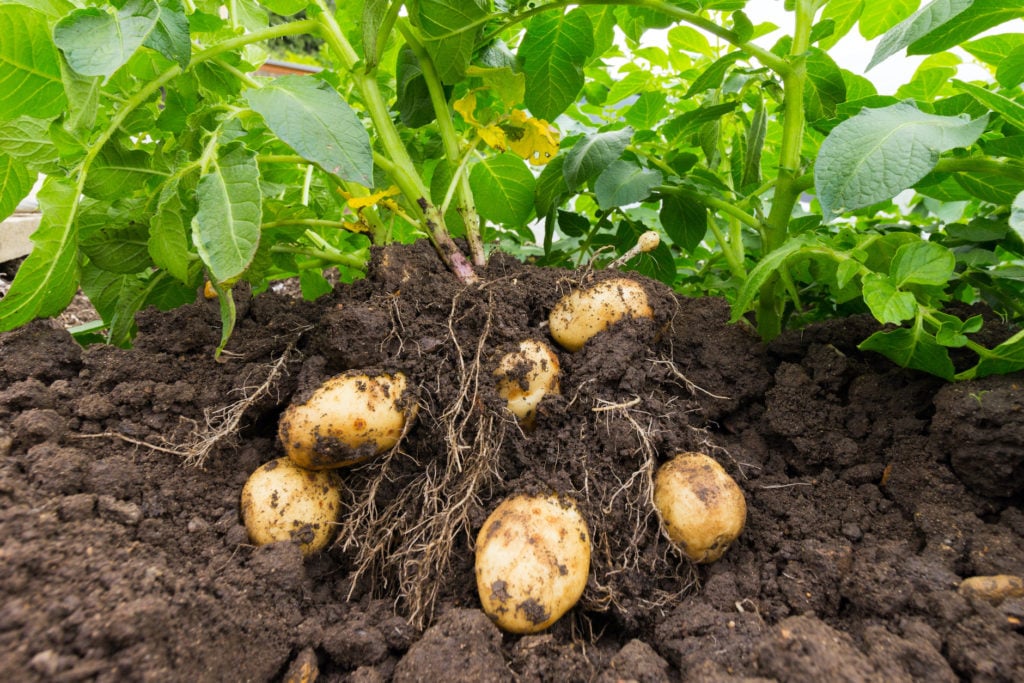
The right soil is the key to growing potatoes. Soil should not be heavy or wet, because the potatoes may rot, but it should not be too dry either, since that slows growth. Pick a spot with moist but not soggy soil, or use a potato growing box so you can control the moisture all season. There are plenty of build-your-own tutorials online.
For containers, do not use plain garden soil on its own. It is too dense and will compact. Reach for a good potting mix, sold in 40-pound bags at most garden centers. A reliable blend is one-third garden soil, one-third soilless potting mix, and one-third finished compost.
How to Plant Potatoes: Eyes Up
Plant seed potatoes between three and four inches deep, spaced between nine and 12 inches apart, with the sprouts, or eyes, facing up. The farther apart you space each seed potato, the larger the tubers can grow. Give them room and they will reward you.
Caring for Your Potato Plants
To keep potato plants growing strong all summer, there are a few things to do. Once the plants reach roughly 12 inches in height, mound soil around the base. This is called “hilling,” and it protects the growing tubers from light, which turns them green. Mound the soil up to six inches high, out to about 15 inches from the base of the plant.
You can also mulch your potatoes with straw, between four and six inches deep. Mulch does two jobs at once: it keeps weeds down, and it holds the ground cool and moist through the heat of summer.
Common Pests and Problems
Keep an eye out for pests and disease. To avoid bacterial or fungal trouble, plant your potatoes in a new spot each year so soil-borne problems do not build up. The potato beetle is the usual culprit. You can head off an infestation by checking the undersides of the leaves for eggs. If you spot a yellow to orange cluster, remove the affected leaves before they hatch.
Companion Plants for Potatoes
Potatoes get along with plenty of neighbors. Beans, corn, cabbage, and horseradish are traditional friends, and many gardeners tuck marigolds nearby to help with pests. Keep potatoes away from tomatoes, since the two share the same diseases and planting them side by side can spread blight. For a fuller pairing chart, see our companion planting guide.
Harvesting Your Spuds
If you like “new potatoes,” you can start harvesting within two to three months of planting, though most gardeners lift only a few while letting the rest keep growing. For larger potatoes, check the recommended growing time for your variety, usually between 70 and 100 days. When the time is right, cut the plants back to the ground, water them one last time, and then wait two weeks, leaving the potatoes in the ground to age and toughen their skins.
Harvesting itself is easy. If your potatoes are in a garden plot, gently turn the soil with a spade or potato fork and pick up what you find. Brush off the dirt and let them cure for another week or two in a cool, dry place. Many grow bags have “windows” that let you reach in for tubers without disturbing the rest. New potatoes do not need curing, so eat those fresh.
Remember: the green parts of the potato plant are poisonous and should never be eaten.
Storing Your Potatoes
Cured potatoes keep for months in the right spot: cool, dark, dry, and well ventilated, somewhere around 45 to 50 degrees. Skip the refrigerator, which turns the starch to sugar, and store them away from onions, which give off gases that hurry spoilage. For the full method, see our guide on storing potatoes, onions, and garlic.

Grow Potatoes In A Burlap Bag
Potatoes will grow in almost any style of planter, and bags are the most popular of all. Burlap sacks breathe, drain well, and let you “hill” by simply rolling up the sides as the plants climb. When harvest comes, you tip the bag instead of digging. Check out this clever method of growing potatoes right in a burlap sack.
Growing Potatoes: Frequently Asked Questions
When is the best time to plant potatoes?
Plant when the soil reaches 45 degrees and nighttime temperatures hold near 55 degrees, usually two to four weeks before your last spring frost. Soil temperature, not the calendar, is the real trigger, so a Southern garden may go in during late winter while a Northern one waits until mid or late spring.
Is growing potatoes in containers or bags worth it?
Yes. Grow bags, burlap sacks, and potato boxes all work well, and they let you control moisture and harvest without digging. Use a potting blend of one-third garden soil, one-third soilless potting mix, and one-third compost rather than plain garden soil, which compacts in a container.
How long do potatoes take to grow?
New potatoes are ready two to three months after planting. Full-size potatoes need the variety’s recommended growing time, usually between 70 and 100 days. After cutting the plants back, wait two weeks before harvesting full-size potatoes so the skins toughen up.
Does planting potatoes by the Moon really work?
Gardening by the Moon is a traditional planning method, not a guarantee. Potatoes are a root crop, so the old rule is to plant them during the dark of the Moon. Direct scientific proof is limited, but generations of gardeners have used the calendar to time their work, and it costs nothing to try it alongside good soil and proper timing.
Why are my seed potatoes rotting, and how do I prevent it?
Rot usually comes from soggy soil or freshly cut surfaces going straight into the ground. Choose moist but not soggy soil, and after cutting large seed potatoes, let the cut faces heal in a cool, dry place for four to seven days before planting.
Are potato plant leaves poisonous?
Yes. The green parts of the potato plant, including the leaves and stems, are poisonous and should never be eaten. Only the tubers are safe to harvest and store, and any potato that has turned green from light exposure should be discarded.


Amber Kanuckel
Amber Kanuckel is a freelance writer from rural Ohio who loves all things outdoors. She specializes in home, garden, environmental, and green living topics.
- Amber Kanuckel

- Amber Kanuckel

- Amber Kanuckel
- Amber Kanuckel





I have been told you can use the leftover potatoes you have purchased at your local grocery store following the same directions as given in this article – would save $$ by using unused potatoes you have already paid for and not eaten and have eyes starting to grow
when is it time to harvest? what should I look for?
what is the best crop to plant after potatoes have been grown in a bed and finished
Question, if I have potatoes with sprouts growing off them can I cut them down and plant them. They are from a local farm near us.
Are the potatoes bigger more towards the top of plant or towards the bottom
We found small clay flower pots on sale and bought several. When the frost came we covered our plants with these. They work better than a sheet or plastic because the plant can get air but at the same time the frost does not get the plant
Great tip, Harriett, thanks for sharing!
Howdy, just wondering but when is the best time to plant seed potatoes? Is there a specific date or time frame? Any advice is helpful, thanks.
Hi Tim, first, you want to be sure the danger of frost has passed. You can check out our average frost dates calendar here: https://www.farmersalmanac.com/average-frost-dates
Then, you can follow the “planting by the Moon” calendar, which will give you best days to do certain gardening tasks, here: https://www.farmersalmanac.com/calendar/gardening
What do you do if your potato plant looks like it’s going to flower after a month and a half. Do you trim back or let them be?
Hi Tracey, we found some information on when potato plants flower that might be of help: https://www.gardeningknowhow.com/edible/vegetables/potato/potato-plant-flowering.htm
Do you plant with the eye up or down?
Hi Sue ford: Eyes or sprouts should be facing up when planting.
Hi Gladys, it’s a common practice to let the skins set for 2 weeks before harvest.
I’ve never heard of cutting the tops off watering and leaving for two weeks. Is there an advantage by doing this? I wait till the plants die, then dig the potatoes. Thanks.