

How to Attract Dragonflies for Natural Mosquito Control
Not only are they beautiful, but dragonflies consume an abundance of pesky, annoying mosquitoes. See how to attract dragonflies to your yard for the ultimate pest control.
Quick Reference: Attract Dragonflies for Mosquito Control
- Why dragonflies: One dragonfly can eat hundreds of mosquitoes a day, plus gnats, midges, and flies.
- What they need: Still, shallow water (pond, basin, or rain-fed pool) and aquatic plants for egg-laying.
- Best time to set up: Late April through June across most of the United States and Canada, so adults arrive in mid-summer.
- Top plants for the water: water lily, cattail, arrowhead, pickerelweed.
- Top plants on land: black-eyed Susan, white yarrow, meadow sage, Joe Pye weed.
- What to skip: Bug zappers, mosquito fogging near the pond, and goldfish in a small breeding pool.
Mosquitoes show up the minute the cookout starts. The good news for 2026: you can build a yard that turns those mosquitoes into lunch. Dragonflies are one of the most efficient hunters in the insect world, and a single adult can eat hundreds of mosquitoes in a day. Add the right water feature and a short list of native plants, and you give dragonflies a reason to settle in your yard for the whole season. This guide walks you through how to attract dragonflies for mosquito control, what to plant, and how to tell a dragonfly from a damselfly.
Why Dragonflies Earn Their Spot in the Garden
Dragonflies are unusual garden allies. They cannot walk, but they fly like helicopters, hovering, darting sideways, and reaching speeds near 30 miles per hour. They catch, kill, and eat prey in mid-air with a near-perfect strike rate. According to the Smithsonian, researchers have measured dragonfly hunting success at roughly 95 percent, which is one of the highest in the animal world. That accuracy is what makes them so useful around standing water, where mosquitoes breed.
For the home gardener, the math is simple. The same pond that could become a mosquito nursery becomes a hunting ground when dragonflies show up. They patrol the air just above the water, where adult mosquitoes hover, and their larvae live underwater, where mosquito larvae also live. You get pest control on two levels of the food chain without spraying anything.
Interesting Facts About Dragonflies
- Dragonflies cannot walk, but they are expert flyers. They can fly up, down, sideways, and hover in place, reaching speeds of up to 30 mph.
- They catch, kill, and eat their prey in flight, with a near-perfect success rate.
- They use sharp teeth to tear and chew insect prey, but they cannot bite humans.
- Adults eat mosquitoes, gnats, midges, and small flies. A single dragonfly can take hundreds of mosquitoes in a day.
- The aquatic young, called nymphs, also feed on mosquito larvae and tadpoles. Many species spend a year or more underwater before flying.
- Common North American species include the green darner, common whitetail, and twelve-spotted skimmer. The green darner migrates south each fall, similar to monarchs.
Is It A Dragonfly Or Damselfly?
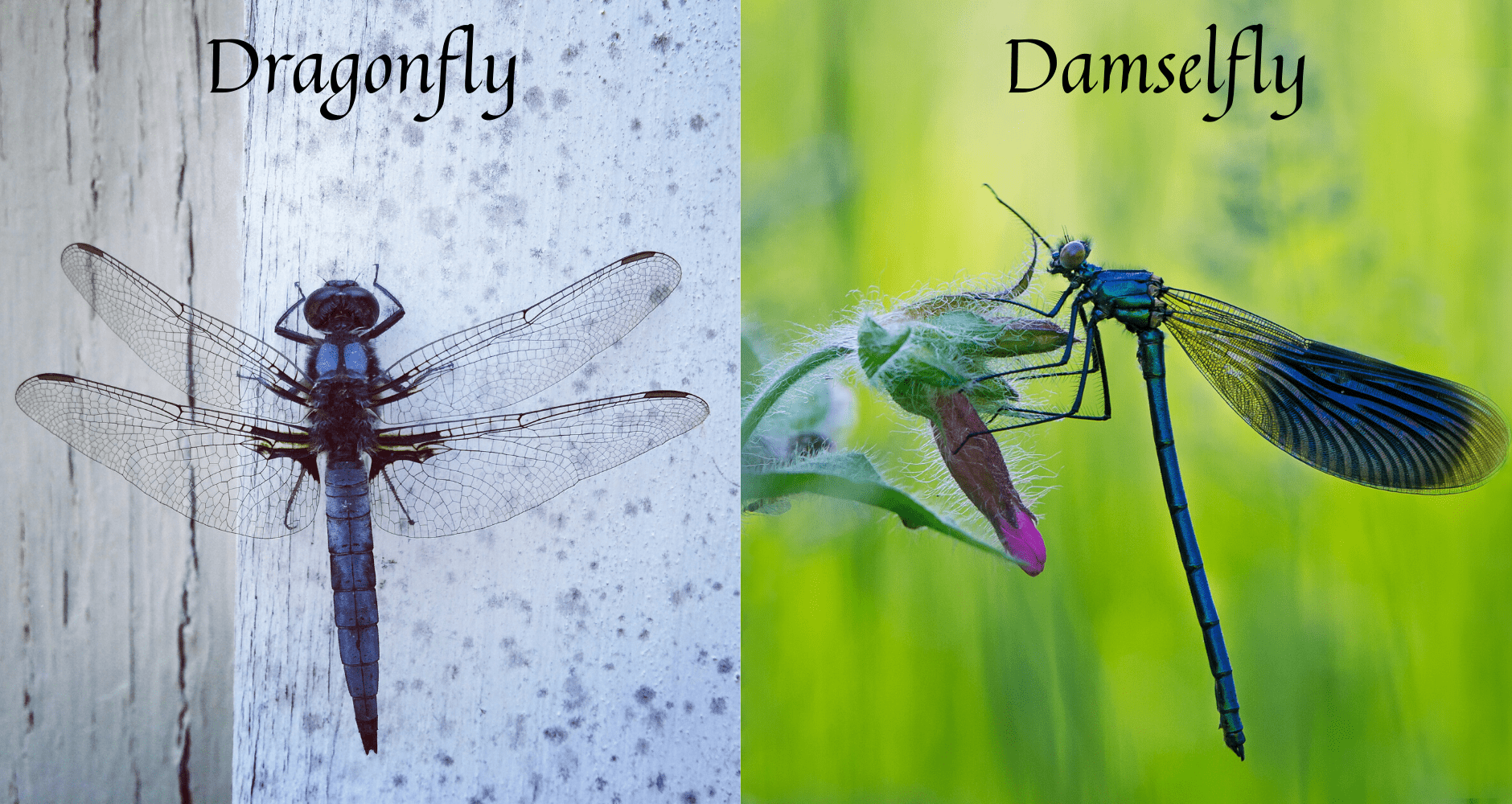
Both belong to the order Odonata, and both eat mosquitoes, so either one is a win in the yard. They are easy to tell apart once you know what to look for. Dragonflies are larger and stockier, with eyes that meet at the top of the head and wings held flat out to the side when at rest. Damselflies are slimmer, with eyes on either side of a wider head, and they fold their wings together over the back when they perch. If you see a thin, needle-like body and folded wings, it is a damselfly. If you see a chunkier body with wings spread like an airplane, it is a dragonfly. A helpful overview is in this Britannica entry on dragonflies.

How to Attract Dragonflies to Your Yard
This beneficial insect is worth inviting in. Here is what works, in the order most home gardeners should tackle it.
- Turn off the bug zapper. Bug zappers kill far more beneficial insects than mosquitoes. Let the dragonflies do the zapping instead.
- Add a pond or water feature. Dragonflies lay their eggs in still water, not moving water, and they spend most of their life as aquatic nymphs. The size is not essential. A half-barrel, a stock tank, or a small in-ground pond all work. Aim for at least 2 feet deep in part of the pool so nymphs can overwinter below the freeze line in the northern United States and Canada.
- Skip the fish in a small pool. Goldfish and koi eat dragonfly eggs and young nymphs. If you already have fish, put aquatic plants in pots and submerge them so the eggs have cover. Older nymphs can defend themselves and are less vulnerable.
- Plant the edges, not just the water. Adult dragonflies need sunny perches to bask and tall plants for shelter from wind. A mix of upright pond plants and a strip of native flowers along the bank gives them both.
- Stop the spraying. Mosquito fogging, broad-spectrum yard sprays, and most over-the-counter insecticides kill dragonflies and their nymphs along with the pests. For a softer first line of defense, try the plants we cover in our guide to mosquito-repelling plants.
- Leave a few leaves. Fallen leaves and twigs on the pond bottom give nymphs cover. A spotless pool is a hostile pool.
What To Plant
Aquatic plants do the heavy lifting. They oxygenate the water, give nymphs places to hide, and give emerging adults something to climb out on for that first flight. Pick a mix of submerged, floating, and emergent species native to your region. Check your local garden center or a state native-plant society for the right cultivars.
- Hardy or Tropical Water lily (Nymphaea)
- Cattail (Typha latifolia)
- Arrowhead (Sagittaria latifolia)
- Water Horsetail (Equisetum fluviatile)
- Pickerelweed (Pontederia cordata)
- Wild Celery (Vallisneria americana)
- White bulrush (Scirpus albescens)
- Umbrella palm (Cyperus alternifolius)
- Swamp milkweed (Asclepias incarnata)
- Joe Pye Weed (Eupatorium fistulosum)
On land, around the pond and through the rest of the yard, these flowering perennials give adult dragonflies the perches and prey-attracting blooms they like. They pair well with the pollinator strategy in our companion planting guide.
- Black-eyed Susan (Rudbeckia hirta)
- White Yarrow (Achillea millefolium)
- Meadow Sage (Salvia marcus)
Check your local garden center for aquatic and land plants that thrive in your growing region, and start enjoying your back yard again.
Regional Notes: Setting Up Across The United States And Canada
Dragonflies live across all of North America, but timing and plant choice shift by region. Use this as a starting point and adjust to your USDA Hardiness Zone or the Canadian Plant Hardiness Zone for your area.
Once a few dragonflies find your pond, they tend to return year after year. Some species are loyal to a single hunting ground for the whole adult flight season, which typically runs from May through October across most of the country.
A Word About Bees And Other Pollinators
Note: If you keep bees, or are trying to attract bees to your yard, keep in mind that dragonflies, which are carnivores, are known to eat bees too. In practice, healthy bee colonies handle the occasional loss, and dragonflies usually target slower-moving prey like mosquitoes and midges first. If you are running a backyard hive, place the hive at least 30 feet from the pond and keep flight paths open in different directions, so your bees are not crossing the dragonflies’ hunting lane.
Common Mistakes That Drive Dragonflies Away
- Treating the pond with mosquito dunks or larvicide. Most products that kill mosquito larvae also kill dragonfly nymphs. Let the predators do the work.
- Cleaning the pond too aggressively each spring. A scrub-down removes egg masses and overwintering nymphs.
- Stocking goldfish in a small breeder pool. Fish eat eggs and young nymphs faster than the dragonflies can produce them.
- Mowing the bank flush every week. Tall grasses and reeds at the edge give adults perches and shelter.
- Forgetting the sun. Dragonflies thermoregulate by basking. A pond in deep shade all day will not hold a population.
A Practical Close
You do not need a koi pond or a wetland to bring dragonflies in. A half-barrel of still water, a handful of native aquatic plants, and a few perennials along the edge will do it. Pick one weekend in late spring to set it up, watch the yard for a few weeks, and let the dragonflies tell you the rest. Plan the pond. Plant the edge. Let the dragonflies hunt the mosquitoes.

FAQ: Attract Dragonflies For Mosquito Control
How many mosquitoes does a dragonfly really eat in a day?
Field and lab estimates run from dozens to several hundred per adult dragonfly per day, depending on the species and how many mosquitoes are around. A single dragonfly can eat hundreds in a day when prey is dense, which is exactly the situation around a backyard pond in mid-summer. Their aquatic nymphs eat mosquito larvae underwater too, so you get pest control above and below the surface.
How big does the pond have to be to attract dragonflies?
The pond does not have to be large. A half-whiskey-barrel or a small in-ground pool of about 4 feet across is enough to attract dragonflies and give them a place to lay eggs. What matters more than size is that the water is still, gets sun for at least part of the day, and has a deeper pocket of around 2 feet so nymphs can overwinter in cold regions.
Will dragonflies actually replace my bug spray and zapper?
For mosquitoes near the pond, yes, a healthy dragonfly population can drop the bite count noticeably. They will not patrol your entire half-acre yard the way a fogger covers it, and they do not work indoors. The honest read is that dragonflies are a strong layer of control near water, paired with mosquito-repelling plants and a sealed rain barrel for breeding sources.
Do dragonflies bite or sting people?
No. Dragonflies have sharp teeth and they tear and chew insect prey, but they cannot bite humans through skin and they have no sting. They are safe to have around children and pets, and they often land on a hat or shirt for a quick rest.
What if I do not want a permanent pond?
A seasonal water feature still works. Set up a half-barrel or stock tank with aquatic plants in April or May, run it through the warm months, and drain it before a hard freeze. You will still attract adult dragonflies that summer. To carry a population through the winter, you need a deeper pool, around 2 feet, where nymphs can sit below the ice.
Will dragonflies hurt my bees?
Dragonflies are carnivores and they will eat the occasional honey bee. In practice, the loss is small and a healthy colony absorbs it. Place the hive at least 30 feet from the pond, keep flight paths open in different directions, and the bees and dragonflies usually share the yard without trouble.
When is the best time of year to plant for dragonflies?
In most of the United States and Canada, late April through June is the sweet spot. That gives aquatic plants time to root before mid-summer mosquito season and gives adult dragonflies a destination once they emerge or arrive from the south. Use the Farmers’ Almanac Planting Calendar to pick a Best Day for your ZIP code.
Join The Discussion
Do you plan on attracting dragonflies to your yard this year?
Let us know in the comments below!


Deborah Tukua
Deborah Tukua is a natural living, healthy lifestyle writer and author of 7 non-fiction books, including Pearls of Garden Wisdom: Time-Saving Tips and Techniques from a Country Home, Pearls of Country Wisdom: Hints from a Small Town on Keeping Garden and Home, and Naturally Sweet Blender Treats. Tukua has been a writer for the Farmers' Almanac since 2004.
- Deborah Tukua

- Deborah Tukua
- Deborah Tukua
- Deborah Tukua




I understand the “Dragonflies lay eggs in still, rather than moving, water” part, but don’t the mosquitoes like this also? Or am I relying on the dragonflies to take care of that problem later?
Hi Wayne,
Yes unfortunately mosquitoes like still water too. If you have a lot of those pesky bugs, you may want to skip a pond even if it means more dragonflies.
I live in the Caribbean. I see very few dragonflies. What plants can I grow to invite them to my garden?
Thank you Farmers Almanac
Thank YOU, Joe, we appreciate you taking the time to comment.
They also kill honey bees and the bees are crucial to our survival.
Hi Steve, we do mention that in the article. It’s true they are carnivores and are indiscriminate at what they eat.
Do the yarrow flowers need to be white to attract the dragonflies? We have multiple beds of classic yellow yarrow.
Very helpful, thank you!
How do I know if it is dragon fly nymph or mosquito larvae in the pond
If you look at the abdominal segments (the lower third) you will see the difference. On a dragonfly nymph it’s a smooth oval or football shape. Mosquito larvae are slim, straight and fuzzy looking. Mosquitoes need stagnant water to breed in. I have some life stage charts from my college biology class but can’t find how to upload them. I made an old plastic kiddie pool into a pond with rocks and water plants that I put a fountain pump in for a small waterfall to keep it oxygenated and give the birds a place to bathe.
dragonflies…awesome!!!