

Mosquito-Repelling Plants: What Actually Works in 2026
Mosquito plant? Lemongrass? Do these plants and others really repel mosquitoes? If you bought some for your backyard, there's good news and bad news...
Quick Reference
- Do mosquito-repelling plants work just sitting in a pot? No. The oils only release when the leaves are crushed.
- Best performers in studies: Lemon thyme and lemon balm, ahead of lemongrass and the citrosa “Mosquito Plant.”
- Most citronella by volume: Lemon balm carries up to 400 times more citronella than the citrosa Mosquito Plant.
- How long does crushed-leaf repellent last on skin? About 30 minutes, then reapply.
- Pet safety: The Mosquito Plant and other geraniums are toxic to dogs and cats per the ASPCA. Lemongrass should not be eaten by either.
- Planting window: After your last frost date for tender annuals; lemon balm and lemon thyme are hardy perennials in most US zones.
Summer 2026 is here, and the bloodthirsty mosquitoes are back. More gardeners are reaching for fragrant, leafy mosquito-repelling plants instead of chemical sprays like DEET, and garden centers are happy to sell them. Do the claims hold up? The honest answer: a leafy “Mosquito Plant” sitting on the patio will not save your cookout. Crushed leaves rubbed on skin will, for a while. Here is what the research shows, which plants actually carry the most citronella, and how to grow them so you can put them to work.

Do Mosquito-Repelling Plants Actually Work?
The short answer is yes, but only when you help them. The aromatic oils that mosquitoes dislike, citronellol, geraniol, citral, and linalool among them, sit inside the leaf cells. A plant standing untouched in a flower bed releases very little of that oil into the air. Crush a handful of leaves between your palms and you release a strong dose, enough to keep most mosquitoes off bare skin for roughly 30 minutes. That is the rule the rest of this guide is built on.
Mosquitoes are not a nuisance you can ignore. The CDC notes that mosquitoes can carry West Nile virus, Zika, eastern equine encephalitis, and several other illnesses in the United States. The agency recommends EPA-registered repellents as the most reliable defense. Plants are an addition to that line of defense, not a replacement for it, and the science backs the same picture.
Lemongrass
Lemongrass (Cymbopogon) is the tall, grassy tropical that gardeners often call the “real” source of citronella. It is the oil pressed from lemongrass cousins that goes into citronella candles, sprays, and household cleaners. A pot of lemongrass on the patio will not repel mosquitoes by sitting there. Like every plant on this list, the leaves must be crushed to release the mosquito-repelling oils. Treat it as an ingredient, not a force field.
For most US gardeners, lemongrass is grown as an annual or wintered indoors. It needs full sun, warm soil, and rich, well-drained ground. Plant after your last frost date, water steadily through summer, and harvest stalks as needed.
Mosquito Plant (Citrosa Geranium)
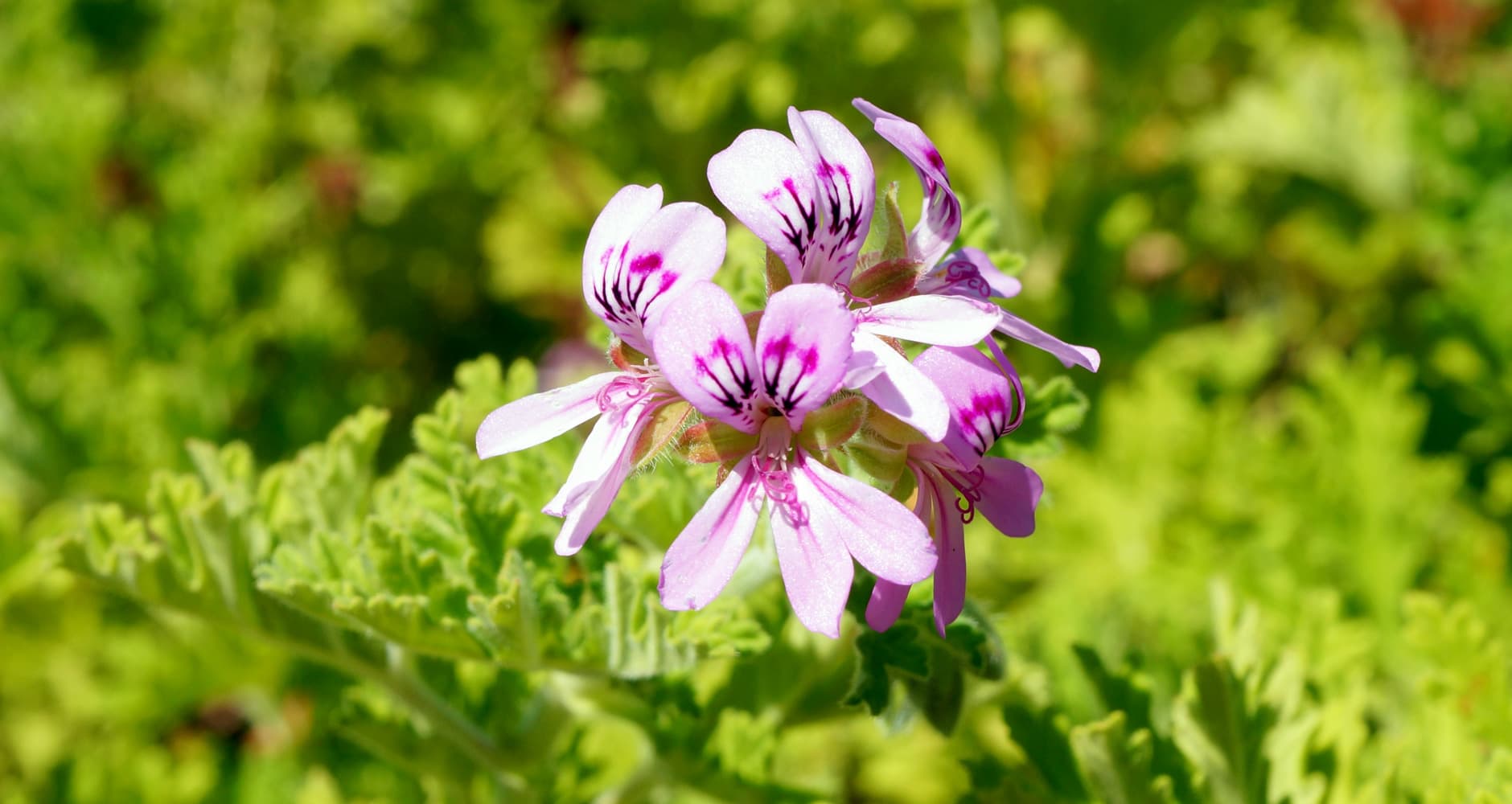
The Mosquito Plant (citrosa geraniums or Pelargonium citrosum) is the showy patio plant with lacy green foliage and pink-purple flowers that nurseries push every May. It is a member of the geranium family and prized for the citrus aroma in its oils. Setting a Mosquito Plant on your patio will not stop the biting. According to the American Botanical Council, while the plant was bred to produce citronella oil, it carries only trace amounts, not enough for lasting pest control. It is a pretty plant. It is not a repellent on its own.
It is not all doom and gloom. If you already bought one in hopes of a bug-free porch, studies do show the oils from the crushed leaves of these plants are somewhat effective at repelling mosquitoes, at a fraction of the effectiveness of DEET. They are not long-lasting. About 30 minutes is the honest window before you need to reapply.
Unsung Heroes: Lemon Thyme and Lemon Balm
Two plants get far less marketing attention and actually outperform both the Mosquito Plant and lemongrass in repellent studies.
- Lemon Thyme or “Creeping Lemon Thyme” (Thymus X citriodorus), a hardy perennial, outperformed both lemongrass and the Mosquito Plant at repelling mosquitoes in research trials.
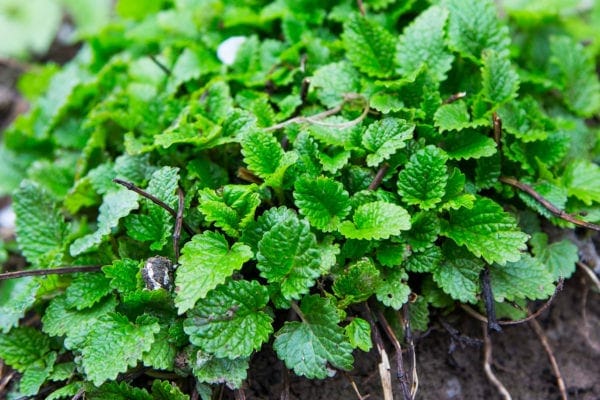
- Lemon Balm (Melissa officinalis) contains as much as 400 times more citronella than the Mosquito Plant. Both lemon thyme and lemon balm are less expensive at the garden center and easier to grow.
The leaves of both plants still need to be crushed to release the oils. That is the rule, not the exception.
Side-by-Side: Four Mosquito-Repelling Plants Compared
Regional Planting Notes for the US and Canada
When to plant depends on your last spring frost. Use these regional anchors:
Pair the plant date with the Moon for Best Days. Above-ground herbs like these are traditionally set out during the waxing Moon, especially the second quarter, the same window the Farmers’ Almanac flags on its Gardening by the Moon calendar.
DIY Methods: How to Use Mosquito-Repelling Plants on Skin
To test the mosquito-repelling properties of any of the plants above, crush the leaves between your fingers and rub the released oils directly onto bare arms and legs. Test a small patch of skin first to check for sensitivity. Reapply about every 30 minutes, or sooner if you have been sweating or swimming.
For a longer-lasting option, try this DIY spray: harvest a generous handful of leaves, crush them, and soak them in three parts vodka to one part plant material. Bottle it up, keep it out of direct sunlight, and let it steep for a few weeks before using. Strain, then spray on skin (test a small area first) before you head outdoors. The EPA does not certify homemade preparations, so think of this as a yard-and-porch helper, not a substitute for an EPA-registered repellent when mosquitoes are heavy or disease risk is real.
Are Mosquito-Repelling Plants Safe for Pets?
Not all of them, and the Mosquito Plant is the one to watch. The ASPCA warns that all members of the geranium family, Pelargonium, are unsafe for pets. They contain the active toxins geraniol and linalool. Contact with the Mosquito Plant can cause skin irritation, so do not rub the leaves on your dog or cat. Ingestion can cause diarrhea and other unpleasant side effects. Keep the Mosquito Plant and other geraniums out of reach of pets.
Lemongrass has a catnip-like effect on most cats but should not be eaten by cats or dogs. Lemon balm and lemon thyme are generally regarded as low-risk in small contact amounts, but any new plant in the yard is worth a quick check with your vet.
Other Yard Habits That Cut Mosquitoes
Plants are one piece of the picture. Mosquitoes breed in standing water, so the rest of the work is housekeeping. Walk the yard once a week and tip out anything holding rain: saucers under pots, kids’ toys, wheelbarrows, clogged gutters, birdbaths. Change pet water bowls every couple of days. Run a fan on the porch, since even a light breeze knocks mosquitoes off course. Plant your lemon balm and lemon thyme near the seating area so you have leaves to crush within arm’s reach.

FAQ: Mosquito-Repelling Plants
Do mosquito-repelling plants work without crushing the leaves?
Not in any meaningful way. The repellent oils sit inside the leaf cells. A plant standing in a pot releases too little oil into the air to keep mosquitoes off you. Crush a handful of leaves and rub them on bare skin, and you will get about 30 minutes of protection.
Which mosquito-repelling plant is the strongest?
Lemon balm (Melissa officinalis) carries the most citronella by volume, up to 400 times more than the citrosa Mosquito Plant. In comparative repellent studies, lemon thyme also outperformed both lemongrass and the Mosquito Plant. Pair either with crushed-leaf application for best results.
How long does crushed-leaf repellent last on skin?
About 30 minutes per application. Reapply more often if you are sweating, swimming, or in a heavy mosquito spot. The CDC recommends EPA-registered repellents for longer protection and for areas with West Nile or Zika risk.
When should I plant mosquito-repelling plants?
Set out tender plants like lemongrass and the Mosquito Plant after your last spring frost date, generally late April in the South, mid-May through early June across the Northeast, Midwest, and most of Canada. Lemon balm and lemon thyme are hardy perennials and can go in earlier. The Farmers’ Almanac Planting Calendar pairs these dates with Best Days by the Moon for above-ground herbs.
Are mosquito-repelling plants safe for dogs and cats?
Some are not. The ASPCA lists all geraniums (Pelargonium), including the Mosquito Plant, as toxic to pets thanks to geraniol and linalool. Lemongrass should not be eaten by cats or dogs, although it has a catnip-like effect on many cats. Lemon balm and lemon thyme are generally low-risk in small amounts. Check with your vet before introducing any new plant near pets.
Can I make my own mosquito-repelling plants spray?
Yes. Harvest a generous handful of leaves from lemon balm, lemon thyme, or lemongrass. Crush them and soak in three parts vodka to one part plant material. Keep the jar out of direct sunlight and let it steep for a few weeks. Strain, bottle, and spray on skin after testing a small patch. Treat it as a yard helper, not a replacement for an EPA-registered repellent when mosquito-borne illness is a concern.
Will mosquito-repelling plants protect my whole yard?
No single plant ring will. The plants help when you crush and apply the leaves, and they give the yard a pleasant scent, but you still need to dump standing water, run a fan on the porch, and reach for an EPA-registered repellent during peak biting hours and in higher-risk regions.
With contributions from freelance writer Deborah Tukua.


This article was published by the Staff at FarmersAlmanac.com. Any questions? Contact us at [email protected].
- Farmers' Almanac Staff

- Farmers' Almanac Staff

- Farmers' Almanac Staff

- Farmers' Almanac Staff




I have a Question.. Why isn’t Chrysanthemum on the List? Its what the ACTUAL State used Mosquito spray is. SC Johnson Lice spray, is practically the same thing from a mosquito truck in my neighborhood. I was mad to see a truck, spraying something like that, only to find its artificial chrysanthemum spray. Its only dangerous to Cats and Water. Like Really bad to put in the drain, and a cat cant process the enzyme. Similar to how a Dog cant process Xylitol . I would suggest buying pure chrysanthemum oil, then spritzing around all the doors, and planting chrysanthemums around the house. Lice Flea and Tic.. ALL Dont Like. Fairly Cheap. A Hunter could spray their pants and shoes.. less tics. You could spray your dogs collar while not on them. Its known safer to humans than nail polish remover. yikes.
Hi David, we do have a post about chrysanthemums and their bug repelling powers here: https://www.farmersalmanac.com/what-to-plant-to-keep-bugs-away-24734
The mosquito-repelling plants we limited to those with the “citronella” component. But thanks for the information.
Catmint or catnip would also be a good choice since the oil has remarkable insect repellent properties, according to scientific studies. Plus it makes a dandy blue flowered perennial with a bonus: countless visiting cats. They love the fragrance since it reminds them of their own..well, you get the picture!!
We plant mint by our pond and on our deck in planters and never have a problem with mosquitoes. We have done this for about 10 years now. Seems to work for us.
I personally have tried several mosquito and bug repellent plants and I can attest to their effectiveness. The best plant I have found for mosquitoes and other bugs is basil. I plant basil by my front door and very rarely see a mosquito. I used to be bombarded with them. Other lesser effective plants are lemon balm, lavender and rosemary.