

Why Are Red and Green the Colors of Christmas? Saturnalia, Holly, and a 1931 Coca-Cola Ad
'Tis the season for decking the halls with red and green, but did you ever wonder why these colors are associated with Christmas? We explain.

Quick Reference
- Roman roots: ancient Romans decorated homes with holly and evergreens during Saturnalia, the winter-solstice festival honoring Saturn, god of sowing and seeds.
- Christian symbolism: evergreens signal eternal life, holly’s thorny leaves and red berries evoke the crown of thorns and the blood of Christ.
- The 1931 shift: Coca-Cola illustrator Haddon Sundblom drew the modern round, red-suited Santa; the specific Coke red became the shorthand for Christmas red.
- Color-wheel science: red and green sit opposite each other, a complementary pair that produces the ‘simultaneous contrast’ effect that makes them visually pop.
- Pre-1931 Santa looked different: Victorian illustrations often showed him as a tiny elf; the modern jolly figure is barely a century old.
- Not a Coke invention: red-suited Santa figures existed in 19th-century magazine art; Sundblom standardized the look for a mass audience.
As the holidays bear down on us like a runaway sleigh, many of us are decking our halls with festive Christmas decorations of red and green. But how did these two colors become such an important part of our traditions? While no one knows for certain, there are several theories that draw from both ancient and modern traditions.
The short version: pagan Rome decorated with holly and evergreens for a winter-solstice festival that Christianity later absorbed; the Church added its own symbolic reading of the same plants; and in 1931 a Coca-Cola illustrator locked the color scheme into the modern American Christmas. Color-theory research, including work summarized by the Smithsonian, explains why the pairing sticks: red and green are complementary on the color wheel and vibrate visually when placed side by side.


An Ancient Roman Winter Festival
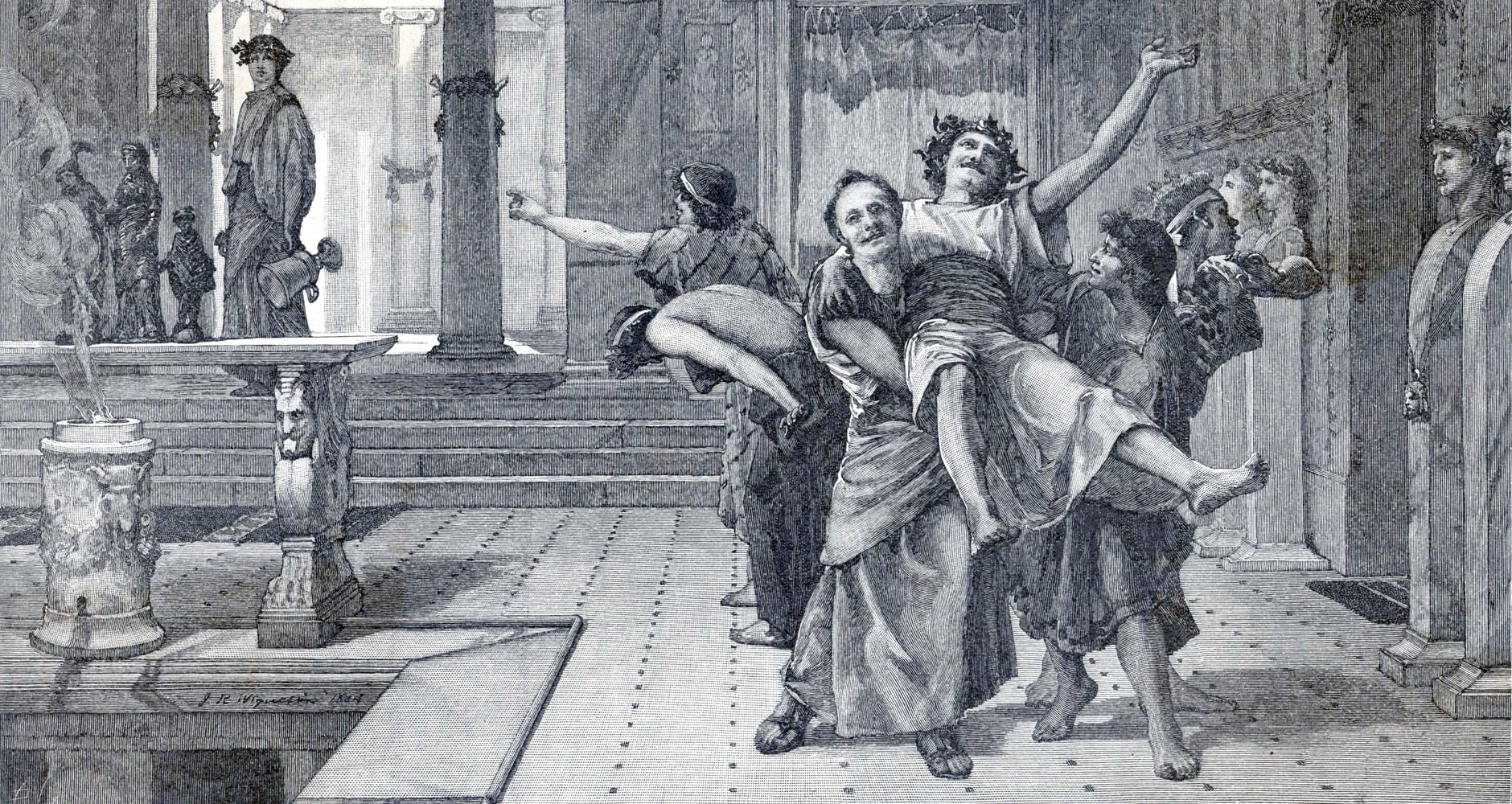
In ancient times, Romans celebrated Saturnalia, an agrarian winter festival held around the time of the winter solstice in honor of the god Saturn, who was, among other things, the god of sowing and seeds. When the winter planting was done, Romans celebrated with raucous abandon: feasting, drinking, and reversing social roles. In the name of fun, dress codes relaxed, gifts were exchanged, and charity and goodwill were expressed publicly and privately throughout the festival days. Homes were decorated with candles and evergreens including holly. The red berries and green leaves became associated with Saturnalia, and many of these traditions were absorbed into Christmas celebrations in Europe with the advent of Christianity.
The Christian Symbolism of Red and Green: Evergreens and Holly

The use of evergreens and holly for Christmas decorations continues to the present day. For Christians, the evergreen leaves, which do not lose their color or die during the winter, are seen as a powerful symbol of the eternal life promised by Jesus Christ in the gospels. The sharp, pointy leaves of holly call to mind the crown of thorns, and its red berries are seen as emblematic of the blood shed on the cross. The death and resurrection of Jesus have become associated with the vibrant red and green boughs.
RELATED: How to Make Orange and Clove Pomander Balls
A Coca-Cola Influence?

In 1931, an illustrator named Haddon Hubbard ‘Sunny’ Sundblom, working for Coca-Cola, created the iconic jolly Santa Claus as we know him today. Sundblom drew inspiration from Clement Moore’s 1822 poem, “A Visit from St. Nicholas” (better known as “‘Twas the Night Before Christmas”). In Victorian times, Santa was often portrayed as an elf, with miniature reindeer. It was Sundblom who transformed the character into the warm, happy, rosy-cheeked bearded man wearing that iconic red suit that Americans grew to love. The particular shade of red borrowed from Coca-Cola’s branding. Sundblom used aspects of his own face in creating his Santa, and his work has influenced generations of merrymakers.
The Coca-Cola Company keeps a short history of the Sundblom Santa in its public archive, which confirms the 1931 debut and the illustrator’s use of a friend, Lou Prentiss, as the original model before Sundblom switched to a mirror and his own reflection.
The Merriest Colors
If you take the colors of the rainbow (red, orange, yellow, green, blue, indigo, and violet) and arrange them in a continuous circle (a color wheel), red and green sit at opposite ends. That arrangement is known as complementary colors. When shown together, complementary colors create an effect in our eyes called simultaneous contrast, which means they naturally pop, or vibrate visually, and grab a viewer’s attention. Today, we cannot see red and green together without thinking of Christmas.
What the Data Shows: Search Interest in Red vs. Green
Google Trends data for the past decade shows the phrase “red and green Christmas” spikes every year in the first week of December and drops to near zero by January 5. The pairing is not evenly popular by region: the American South and Midwest search the term at roughly twice the rate of the Pacific Northwest, where blue-and-silver “winter” palettes trend higher during the same weeks. The pattern lines up with 2024 Pantone Color Institute commentary that regional Christmas palettes are drifting toward frost-tone alternatives while the classic red-green pair holds firm in traditional markets.

May you all have a Merry Christmas and enjoy these rich traditions swathed in red and green.
Frequently Asked Questions
Why are red and green the colors of Christmas?
Three overlapping influences shaped the pairing. Ancient Romans decorated with red-berried holly and green evergreens during Saturnalia, a winter-solstice festival. Christians later read the same plants as symbols of eternal life and the sacrifice of Christ. Then, in 1931, Coca-Cola illustrator Haddon Sundblom’s red-suited Santa fixed the specific shade of red in the American imagination.
Did Coca-Cola invent the red Santa suit?
No, but Coca-Cola standardized it. Red-suited Santa figures appear in 19th-century magazine art before 1931. What Haddon Sundblom did was draw a warm, rosy-cheeked, full-bodied Santa in a specific Coca-Cola red and reproduce the image at national scale every December for decades. The Coca-Cola Company’s own archive dates the campaign to 1931.
Is holly really a Christmas plant?
Yes, and it predates Christmas as a decoration. Ancient Romans hung holly during Saturnalia, and pre-Christian Celtic and Germanic traditions used it as well. The red berries and glossy evergreen leaves stayed green when the rest of the landscape did not, which made it a natural winter-solstice symbol.
Why do red and green look so good together?
They are complementary colors, which means they sit at opposite ends of the color wheel. When placed side by side, the eye reads a heightened contrast effect known as simultaneous contrast. The colors appear brighter and more vibrant than they would alone. The Smithsonian’s color-theory explainers cover the same effect.
When did Christmas colors become standardized?
The specific red-green pairing was popular in Victorian-era Christmas cards but became universally standardized in American households through 20th-century mass advertising. The 1931 Coca-Cola Santa campaign is usually credited as the tipping point; department-store window displays and Hollywood films of the 1930s and 1940s reinforced the choice.
Are there other traditional Christmas colors?
Yes. Gold and white symbolize the star of Bethlehem and purity. Purple and pink appear in Advent traditions. Blue is common in Hanukkah displays that share the December calendar. The Pantone Color Institute has noted a modern drift toward frost-tone palettes (icy blue, silver, white) in regions that get less snow, treated as a nostalgic replacement rather than a rival.
Was the original Santa Claus green?
Some 19th-century illustrations, especially in the United Kingdom, showed a Father Christmas figure in green or brown robes tied to older folk traditions. The green Santa was never dominant in North America. Illustrations by Thomas Nast in the 1860s and 1870s, and later the Sundblom Coke ads, cemented red as the American color.


This article was published by the Staff at FarmersAlmanac.com. Any questions? Contact us at [email protected].
- Farmers' Almanac Staff

- Farmers' Almanac Staff

- Farmers' Almanac Staff

- Farmers' Almanac Staff





The Coca-Cola Santa is the BEST Santa ever!
Thanks for the info and a Merry Christmas to you and yours
I always enjoy reading and learning in Farmers Almanac. Such great info and cool tips n tricks!
Thank you Heather. We do try to share interesting and informative articles here and in our print edition.
Thank you for the information and Merry Christmas to you ??
huh