

How to Grow Turnips: Cool-Season Root Crop From Sowing to Harvest in 40 Days
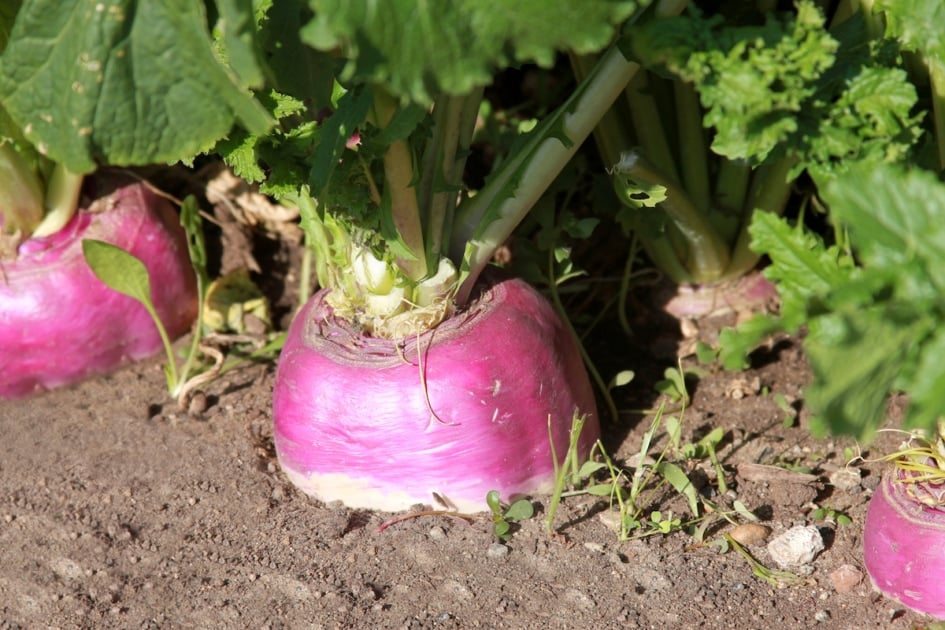
Quick Reference: Growing Turnips
- Cool-season crop. Sow 2 to 4 weeks before last frost (spring) or 6 to 8 weeks before first fall frost.
- Harvest: 40 to 60 days from sowing. Best at golf-ball size; bigger gets woody.
- Spacing: sow 1/2 inch deep, thin to 3 to 4 inches between plants.
- Best cultivars: Purple Top White Globe (classic), Hakurei (Japanese salad), Tokyo Cross (fast).
- Eat the greens too. Turnip greens are more nutritious than the roots.
On this page
Related Almanac guides
Sources cited in this guide
Turnips are one of the fastest cool-season root crops you can grow. From seed to harvest in 40 days. Sweet, mild, tender at golf-ball size, and the greens are arguably more nutritious than the roots themselves. This guide is the UMN Extension method for spring and fall turnip planting, with the best cultivars, the spacing and thinning rules, and the storage methods that keep your harvest fresh through winter.
Spring vs Fall Turnip Sowing
Per UMN Extension’s growing turnips guidance.
- Spring sowing. 2 to 4 weeks before last frost. Soil 45 F minimum. Harvest May to June.
- Fall sowing (best for storage). 6 to 8 weeks before first fall frost. Cooler weather sweetens the roots. Harvest October to November.
- Skip mid-summer. Hot weather causes turnips to bolt before forming roots.
- Succession plant. Sow every 2 weeks in spring and fall for a continuous harvest.
- Direct sow only. Turnips do not transplant well; root disturbance causes branching.
The Best Turnip Cultivars for Home Gardens
Per UMN Extension and home-grower surveys.
- Purple Top White Globe. The classic American turnip. 55 days. Purple top, white bottom, mild sweet flavor.
- Hakurei (Japanese salad turnip). 35 days. Small white, exceptionally sweet, can be eaten raw like radish. The premium choice.
- Tokyo Cross. 35 days. Fast, vigorous, large round white roots. Great fall crop.
- Scarlet Queen. 45 days. Bright red exterior, white interior, mild.
- Seven Top (greens only). Grown for greens, not roots. 40 days. Highest leaf yield.
How to Plant Turnips (Detail)
Below are the original detailed sections on turnip planting and tips.
How To Plant Turnips
Start: The best times to start turnips are either early in the spring or in the fall, about 70 days before the first fall frost. These need to be started from seed. Sow directly in the ground about 1/2 an inch deep. Once seedlings are around 3 inches high, thin them so they’re 2 to 4 inches apart.
Water: One inch of water per week ensures turnips grow healthy and fast.
Soil: Turnips like sandy soil that drains well, though it doesn’t hurt to mix it a little compost, too. pH 6.0 to 6.5
Light: Full sun.
Fertilize: Turnips are a fuss-free veggie that shouldn’t require fertilizing. However, if you have particularly poor soil, mixing a little bit of compost in before planting will provide plenty of nutrients.
Harvest: Both the greens and the roots can be harvested. If you want to harvest greens, wait until they’re 4 inches high, and then trim them, taking care not to damage the tops of the bulbs. The greens will grow back. Harvesting the roots depends on the variety. Most common turnips are harvested at around 2 to 3 inches in diameter, but smaller turnip varieties will be harvested at smaller sizes.
Notes: Pay close attention to the harvest time for the turnip variety you’ve chosen. Old turnips can be tough and woody, so make sure to harvest when the time is right!
Turnip Trivia
What’s The Difference Between A Turnip and A Rutabaga?
Before Jack-O-Lanterns, there were carved turnips at Halloween!

Growing Turnips FAQ
When should I plant turnip seeds?
2 to 4 weeks before last frost (spring) or 6 to 8 weeks before first fall frost. Fall planting produces sweeter roots and is generally preferred. Direct sow only; turnips do not transplant well.
How long do turnips take to grow?
40 to 60 days from sowing, depending on cultivar. Hakurei and Tokyo Cross mature in 35 days. Purple Top in 55. Harvest at golf-ball to baseball size for the best flavor; larger roots get woody.
Can you eat turnip greens?
Yes, and they are more nutritious than the roots. Per USDA FoodData Central, turnip greens are exceptionally high in vitamins A and K. Use young leaves raw in salads; older leaves cooked like collards or kale. Some cultivars (Seven Top) are bred specifically for the greens.
Why are my turnips tough or bitter?
Heat-stressed turnips bolt and become woody. Always harvest at golf-ball to baseball size; bigger gets bitter and tough. Spring-grown turnips are more prone to bitterness because of warming weather; fall-grown are sweeter.
How do you store turnips?
Cool storage. Trim greens to 1 inch. Pack in damp sand or sawdust in a wooden crate at 32 to 40 F (cool garage, basement, or unheated mudroom). Keeps 4 to 6 months. See our sand-storage guide for the full method.


This article was published by the Staff at FarmersAlmanac.com. Any questions? Contact us at [email protected].
- Farmers' Almanac Staff

- Farmers' Almanac Staff

- Farmers' Almanac Staff

- Farmers' Almanac Staff


Very useful information, Thank You