

August Birthstone: Peridot Meaning, Color, and 16th Anniversary Gift
Quick Reference: August Birthstones
- Modern stones: Peridot (primary), spinel, and sardonyx
- Primary color: Light olive-green (peridot)
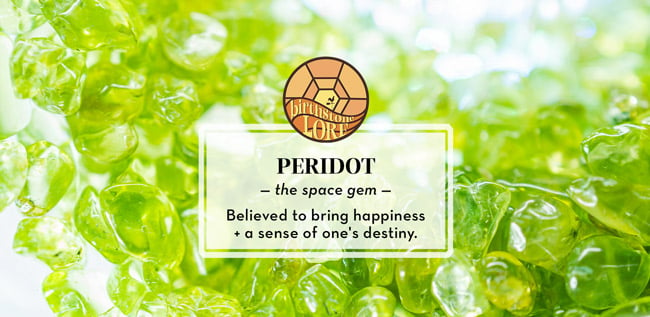
- Meaning: Prosperity, strength, protection, and a sense of one’s destiny
- Mohs hardness: Peridot 6.5 to 7, spinel 8, sardonyx 6.5 to 7
- Zodiac: Leo (July 23 to August 22) and Virgo (August 23 to September 22)
- Anniversary: Peridot marks the 16th wedding anniversary
- Famous fact: Peridot has been found in meteorites and on the Moon, earning the nickname “the space gem”
August’s birthstone is peridot, the light olive-green gem the ancient Egyptians called the “gem of the sun.” Two other stones share the month: spinel, added to the official list in 2016 by the American Gem Trade Association and Jewelers of America, and sardonyx, the red-and-white banded chalcedony that served as August’s traditional stone long before peridot took the spotlight. Whether you’re shopping for an August birthday, a 16th anniversary, or simply curious why one of Cleopatra’s “emeralds” turned out to be something else entirely, this guide walks through the history, geology, and folklore of all three.
What Are the August Birthstones?
August is one of three months on the modern American birthstone list with more than one official stone. The other two are June (pearl, alexandrite, moonstone) and December. For August, the three are peridot, spinel, and sardonyx.
- Peridot is the primary modern August birthstone. It is gem-quality olivine, light olive-green, and is one of only two gemstones (alongside diamond) formed in the Earth’s mantle rather than the crust.
- Spinel was added to August in 2016 by the AGTA and Jewelers of America. It comes in nearly every color, but the red and pink stones from Burma, Tajikistan, and Sri Lanka are the most prized.
- Sardonyx is August’s traditional historical stone, a banded variety of chalcedony with alternating red (sard) and white (onyx) layers. The Romans favored it for cameos and signet rings.
Peridot is the stone most jewelers will offer first when you ask for an August birthstone, and it is what most birthstone charts show. Spinel and sardonyx give August-born readers a wider choice of color, durability, and price, which is genuinely useful when the primary stone runs softer than you would like.
Peridot: History, Meaning, and Folklore
The Egyptians believed peridot was brought to earth from an “exploding sun” and called it the gem of the sun. They mined it at night, on the theory that the stone absorbed sunlight by day and released it after dark. The ancient mine sat on Zabargad Island in the Red Sea, also known as St. John’s Island and once called the Island of Topazios. Mining there dates back to roughly 1500 B.C., and peridot remains the national gem of Egypt to this day.
The Romans called the olive-green stone the “evening gem” because they, too, believed it glowed in the dark. The Roman writer Pliny the Elder grouped it under topazion, a name later transferred to the entirely different stone we now call topaz. In biblical times, it was called chrysolite, from the Greek chrysolithos, meaning “golden stone.” There is evidence that peridot was one of the twelve gems set on the breastplate worn by Moses’ brother, Aaron.
The Crusaders are believed to have carried peridot back from the Holy Land in the Middle Ages, mistaking it for emerald along the way. The Three Magi shrine at Cologne Cathedral in Germany was decorated with what were assumed to be emeralds for centuries; later analysis showed them to be peridots. Setting the stone in gold was thought to amplify its powers, and Egyptian priests are said to have used peridot-encrusted goblets to commune with their gods.
One charming protective ritual: peridot was strung on donkey hair and tied around the left arm to ward off evil spirits and the “terrors of the night.” (Do you like superstitions? Read more about superstitions here.)
In Hawaii, peridot is called “Pele’s tears,” named for Pele, the volcano goddess of the elements. The link is geological as well as poetic: peridot forms in basaltic lava, and the Big Island has a green-sand beach, Papakolea, made almost entirely of olivine grains worn down from a nearby volcanic cone.
Peridot Metaphysical Properties
Worn as a charm rather than as proof, the traditional August birthstone is believed to:
- Release negativity and inspire happiness.
- Inspire a calm demeanor and bring a better understanding of one’s destiny and purpose.
- Connect the wearer with their heart chakra and attract love.
- Bring success, mental clarity, and protection.
- Motivate growth.
These are folk beliefs and cultural traditions. They are not medical or scientific claims, and no birthstone is a substitute for medical care or sound counsel. Enjoy the gem for the meaning you give it.

Peridot: The 16th Wedding Anniversary Gemstone
Peridot is the traditional gift for a 16th wedding anniversary, a quietly perfect pairing of the August birthstone with a milestone year. The bright olive-green stone is light enough to wear every day, durable enough to set into a ring, and inexpensive enough that you can buy a real one rather than a synthetic. Couples often choose peridot in three ways for the anniversary: a pendant or simple solitaire necklace for her, a tie tack or signet ring for him, or a matched pair of stud earrings as a shared gift.
If you are buying for the 16th anniversary, look for a stone graded “olive” or “lime” with high clarity and no visible inclusions. Avoid stones with dark spots or cloudy patches, both of which dull peridot’s signature glow. A 1-2 carat stone in a 14k gold setting hits the sweet spot for an anniversary gift: substantial without being showy.
Peridot Color Guide: Yellow-Green vs Olive vs Chartreuse
Peridot covers a narrow but distinct range of greens. The three names you will see in jewellery descriptions are:
- Yellow-green peridot – the lightest, most common shade. Brighter than olive, with a hint of lemon. Most affordable.
- Olive peridot – the classic “August” shade, deeper and slightly grey-green. Pairs well with yellow gold.
- Chartreuse peridot – the rarest and most prized, a vivid pure green close to emerald. Commands a premium per carat.
All three are the same gemstone (a magnesium-iron silicate called olivine); colour varies with iron content in the stone. Pick the shade that flatters the wearer’s skin tone, not the one with the higher price tag.
Misidentifications
Peridot has long been mistaken for emerald. When the Egyptians first discovered the gem, they believed it to be emerald, and that confusion has rippled through history. Many historians now believe that Cleopatra’s famous “emerald” collection was actually peridot, mined from the same Zabargad Island deposit Egypt had worked for more than a thousand years.
The mix-up carried into the medieval period. The emeralds set into the Shrine of the Three Holy Kings (the Three Wise Men) at Cologne Cathedral in Germany were later identified as peridot. Spinel has its own version of this story, which we cover further down the page.
Common Mispronunciation
Many people ask, “How do you pronounce peridot?” or “Is the ‘t’ pronounced in peridot?” Yes, the “t” is pronounced. It sounds like “peh-ruh-daat” when pronounced correctly, though some pronounce it as peh-ruh-doe. Hear how to say it right.
Ambiguous Name Origins
The origins of the name peridot are uncertain. Some scholars trace it to the Latin pedoretes, meaning a “kind of opal.” Others connect it to the French peritot, meaning “unclear,” a nod to the gem’s slightly cloudy luster. A third theory points to the Arabic faridat, which simply means “gem.” The name’s origin is one of the many mysteries this stone holds.
Spinel: History and Lore
Spinel is the youngest of August’s three official stones. It was added to the modern birthstone list in 2016 by the American Gem Trade Association and Jewelers of America. The decision recognized what collectors and gem dealers had known for years: spinel is a hard, brilliant, surprisingly affordable stone that had been quietly traded under other names for centuries.
For most of that history, “other name” meant ruby. Red spinel and red ruby look nearly identical, and the world’s two most famous “rubies” turned out to be spinel.
- The Black Prince’s “Ruby”, set in the front of the Imperial State Crown of the United Kingdom, is a 170-carat red spinel that has been passed through English royal hands since the 14th century.
- The Timur Ruby, a 361-carat polished red stone now in the British royal collection, is also spinel. It is engraved with the names of the Mughal emperors who owned it.
Spinel’s color range goes well beyond red. Pink, lavender, violet, blue, and the rare cobalt blues from Vietnam are now sought after in their own right. In Buddhist tradition, spinel was prized for its supposed protective qualities and was placed in shrines and reliquaries. Long associated with rejuvenation, it is thought in modern crystal lore to open all chakras and encourage the movement of Kundalini energies.
Sardonyx: History and Lore
Sardonyx was August’s traditional birthstone for centuries before peridot took the lead. It is a banded variety of chalcedony, layered in reddish-brown sard and white onyx, and it carved beautifully. That is why the ancient world used it for the work jewelry could not always do: cameos, intaglios, and signet rings.
The Romans pressed sardonyx signet rings into hot wax to seal letters and documents, and unlike many stones, the carved sardonyx did not stick to the cooling wax. Roman soldiers wore sardonyx amulets engraved with images of Mars, the god of war, for courage in battle. Egyptian craftsmen carved it into protective amulets, often in the shape of the scarab. Some of the finest surviving Roman cameos, in collections at the National Archaeological Museum of Naples and the Kunsthistorisches Museum in Vienna, are sardonyx.
In Polish tradition, sardonyx was the favored August birthstone, and it remains popular in folk jewelry from that region. Crystal traditions describe it as a stone of self-control, willpower, and integrity, useful for those trying to build steadier habits.
Geology and Sources
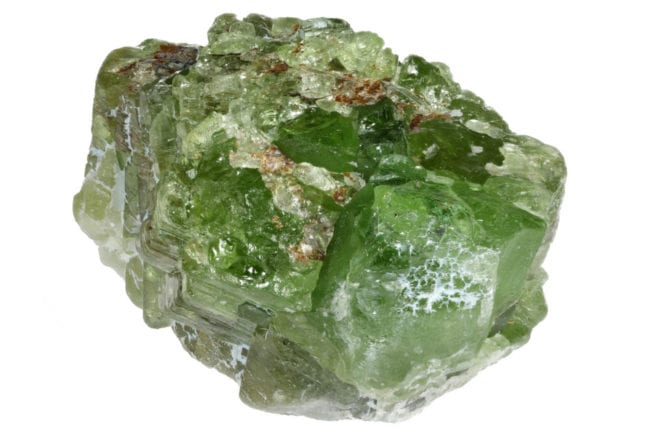
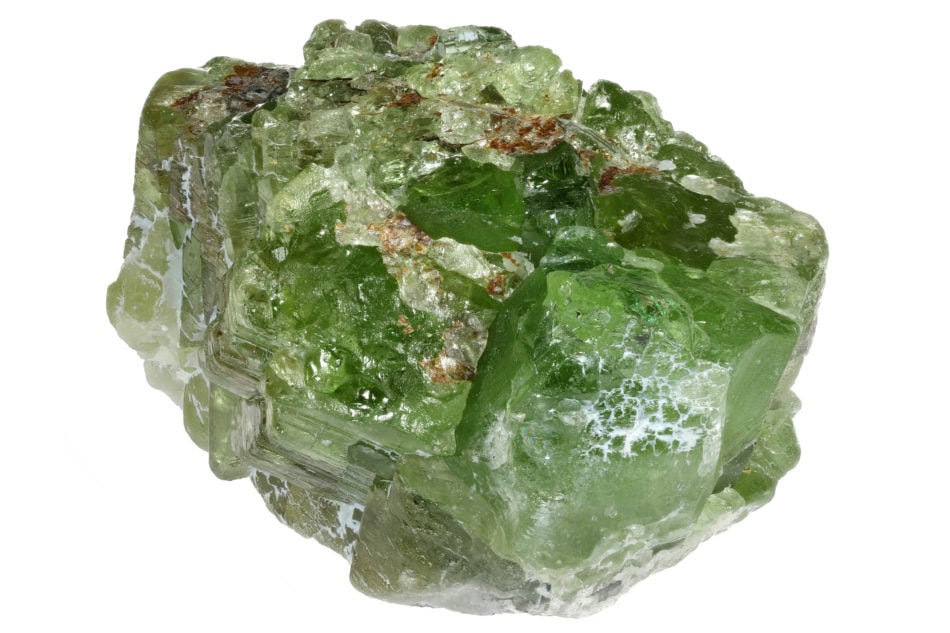
Peridot belongs to the olivine family. Olivine is called peridot only when it is of gem quality, with the right color and clarity for cutting. Iron, not impurities, gives the stone its green color, which makes peridot what mineralogists call idio-chromatic (colored from within) rather than allo-chromatic (colored by impurities).
The gem is one of only two minerals (with diamond) that form in the Earth’s mantle. Peridot forms closer to the surface than diamond, in a rock called peridotite, and is carried up by volcanic activity. It comes in many shades of green, from greenish-yellow to greenish-brown.
Where Was Peridot First Discovered?
Peridot dates back billions of years and has reached human hands by several routes. The earliest known mine is on St. John’s Island (Zabargad Island, formerly the Island of Topazios) in the Red Sea, where Egyptians worked the deposit around 1500 B.C. The island remained the world’s main source for more than a thousand years.
Today, peridot is mined commercially in several places:
- Arizona, United States: the San Carlos Apache Reservation is the largest producer of commercial peridot in the world.
- Pakistan: the Kohistan region in the Himalayas yields large, intensely green stones.
- Myanmar (Burma): Mogok produces fine large crystals.
- Vietnam, China, and Kenya: smaller commercial sources.
- Hawaii, United States: small olivine crystals weather out of the basalt of the Big Island, giving Papakolea its green sand.
Spinel is mined chiefly in Myanmar (Burma), Sri Lanka, Tajikistan (the famous pink spinels of the Pamir Mountains), Tanzania, and Vietnam. Sardonyx comes mainly from India, Brazil, Uruguay, Madagascar, and Germany.
Does Peridot Really Come from Outer Space?
Yes. Pallasite meteorites, the stony-iron meteorites whose primary silicate mineral is olivine, carry gem-quality peridot to Earth. Many of the surviving samples date back billions of years. Pallasite is what gives some meteorites their unmistakable greenish hue when cut and polished.
What Is Peridot Made Of?
Peridot is a magnesium-iron silicate. Iron gives it the green color. Most colored gemstones get their color from trace impurities; peridot’s color is part of its core chemistry, which is what idio-chromatic means. The prefix “idio” means distinct; “allo” means other.
Famous August Birthstone Pieces
A look at some famous August birthstones throughout history starts, fittingly, with the cosmos and ends with the museum case. Peridot has been found in meteorites, on Mars, and on the Moon. Sardonyx fills the cabinets of the great classical museums. Spinel sits at the front of a working crown.
The Smithsonian’s “Peridot Stone”
The Smithsonian National Museum of Natural History is home to the largest cut peridot in the world. Simply called the “Peridot Stone,” it weighs 311.78 carats and came from the original deposit on Zabargad Island, Egypt.
The Springwater Pallasite Meteorite
The Royal Ontario Museum hosts the world’s largest pallasite meteorite, found in 1931 outside Springwater, Saskatchewan. It dates back 4.5 million years and weighs 117 pounds. The Springwater meteorite is one of only three pallasite meteorites found in Canada.
Peridot on the Moon
A Japanese research team examining the larger craters on the Moon also found olivine, the raw form of the gem. The find suggested that the Moon, like the Earth, may have an olivine-rich mantle below its crust.
The Black Prince’s “Ruby”
The Black Prince’s Ruby, set into the front cross of the United Kingdom’s Imperial State Crown, is a 170-carat red spinel. It has been in the English royal collection since the 1360s and was reportedly worn by Henry V at the Battle of Agincourt. The Timur Ruby, also spinel, weighs 361 carats and carries Mughal inscriptions.
Roman Sardonyx Cameos
Two of the finest surviving classical cameos are sardonyx. The Farnese Cup, a libation dish carved in Ptolemaic Egypt, is now in the National Archaeological Museum of Naples. The Gemma Augustea, a carved scene of the Roman emperor Augustus, is held by the Kunsthistorisches Museum in Vienna.
Future Space Gems: Mars Samples
In 2021, NASA’s Perseverance rover collected rock samples believed to contain olivine. Under the current Mars Sample Return plan, those samples are not expected to reach Earth until sometime around 2030. If the olivine identification holds up, peridot will become the first gem species confirmed to have been hand-collected from another planet.
Peridot Treatments
One genuine value point for peridot buyers: the gem is rarely treated. Where most colored stones on the market have been heated, oiled, irradiated, or fracture-filled to improve color or clarity, peridot is almost always sold in its natural state. The color is intrinsic, so heat treatment does not improve it. If you are paying for a peridot, you are paying for what the ground produced. Ask your jeweler to confirm, but expect a straight answer.
August Birthstone Folklore and Healing Beliefs
Folklore says peridot brings happiness, good fortune, and a sense of one’s destiny. It has been associated with protection from nightmares, the calming of anger, and the strengthening of close relationships. Spinel is associated with revitalization and renewed energy after burnout. Sardonyx is the discipline stone, said to support self-control, willpower, and steady habits.
These are folk beliefs and cultural traditions, not medical or scientific claims. A birthstone is a meaningful keepsake; it is not a treatment plan. Wear what you love for the reasons that matter to you, and keep your doctor in the loop for everything else.
Peridot, Spinel, Sardonyx, and the Zodiac
August spans two zodiac signs: Leo (July 23 to August 22) and Virgo (August 23 to September 22). Peridot is most often paired with Leo, the bold and sunlit sign of the lion. The gem’s “evening glow” and the lion’s solar associations are a natural fit, and traditional jewelers will offer peridot as a Leo’s stone as readily as the August birthstone. Learn more about Leo here.
For Virgo, the earth sign of harvest and careful work, sardonyx is often suggested, the discipline of its banded layers matching Virgo’s love of order. Spinel, with its wide range of colors, suits either sign, with red and pink for the warmer Leo and cooler blues and violets for the more reflective Virgo. Carnelian, another reddish-orange chalcedony, is also commonly associated with Leo and is a popular alternative for those born early in the month.
How to Care for August Birthstones
Care depends on the stone. Peridot is the softest of the three; sardonyx is similar; spinel is the toughest by a clear margin.
- Peridot: Mohs hardness 6.5 to 7. Treat it like emerald. Avoid steam cleaners, ultrasonic cleaners, and sudden temperature changes; the gem can fracture under stress or extreme heat. Clean with warm soapy water and a soft brush. Store separately so harder stones do not scratch it.
- Spinel: Mohs hardness 8. The most durable of the three, suitable for everyday rings. Clean with warm soapy water; ultrasonic cleaning is usually safe for untreated stones.
- Sardonyx: Mohs hardness 6.5 to 7. Reasonably tough, but the banded structure can be damaged by sharp blows. Clean with warm soapy water and a soft brush. Avoid acids and household chemicals.
For a daily-wear ring, spinel is the practical pick. For a special-occasion piece, peridot is the historical and emotional choice. For an heirloom in the classical mode, a carved sardonyx cameo is hard to beat.
Choosing Among the August Birthstones
A few quick rules of thumb when you are shopping for a birthday, a wedding, or a milestone:
- Choose peridot for the traditional August color and the strongest historical and folkloric story. Best for pendants, earrings, and occasional-wear rings.
- Choose spinel for hardness, brilliance, and color choice. Best for everyday rings, especially if the wearer is hard on their jewelry.
- Choose sardonyx for cameos, intaglios, men’s signet rings, and pieces with a classical or heritage feel.
- Set peridot in yellow gold to deepen the green; in white gold or platinum it reads cooler and brighter.
- For larger stones, expect peridot from Pakistan or Burma to fetch the highest per-carat prices.
August Birthstone Anniversary Significance
Peridot is the traditional gift for the 16th wedding anniversary. A peridot pendant, a pair of earrings, or a ring set in yellow gold is a fitting marker, and the stone’s “gem of the sun” history gives the gift its own short speech. Spinel, less formally, is sometimes given for the 22nd anniversary in modern lists. Sardonyx does not carry a major anniversary association in the United States, but it remains a frequent choice for graduation gifts and heirloom signet rings.
If you are buying for an August birthday or anniversary, choose the stone that matches the wearer’s everyday hands. A jeweler will help with mounting; you do not need to be an expert to make a good call. (And if you would rather mark the day with a different stone, that is your call to make. Birthstones are tradition, not a rule.)

August Birthstone FAQ
What are the August birthstones?
The three modern August birthstones are peridot (the primary stone, a light olive-green gem-quality olivine), spinel (added in 2016 by the AGTA and Jewelers of America), and sardonyx (the traditional historical stone, a banded red-and-white chalcedony).
Why does August have three birthstones?
Sardonyx was August’s traditional stone in early lists. Peridot replaced it as the primary modern stone in the 20th century. Spinel joined the official list in 2016 to give August-born readers a hard, brilliant, more affordable alternative to ruby and to recognize the stone’s long undocumented history in royal jewelry.
Is peridot a valuable gemstone?
Mid-range commercial peridot is inexpensive, which is part of its charm. Large, intensely green stones from Pakistan or Burma can command thousands of dollars per carat. Peridot is also rarely treated, so what you see is what came out of the ground, which is unusual in the colored-stone market.
How do you pronounce peridot?
The “t” is pronounced. The accepted pronunciation is “peh-ruh-daat,” though many people say “peh-ruh-doe.” Both are widely understood in the jewelry trade.
What is the difference between peridot and emerald?
They are different minerals. Emerald is a variety of beryl colored by chromium or vanadium; peridot is gem-quality olivine colored by iron. Peridot is softer (6.5 to 7 Mohs versus 7.5 to 8 for emerald) and a different shade of green, more olive than blue-green. Historically, the two have been confused often enough that some of Cleopatra’s famous “emeralds” and the “emeralds” on the Cologne Cathedral shrine were later identified as peridot.
Can peridot be worn every day?
Peridot is wearable but not bulletproof. At 6.5 to 7 on the Mohs scale, it can scratch and chip with rough handling. For daily-wear rings, especially on active hands, a protective setting or a harder August stone like spinel (Mohs 8) is the safer choice. Pendants and earrings see less abuse and are fine for everyday wear.
What is the August birthstone for Leo?
Peridot is the most common August birthstone associated with Leo. Carnelian, a reddish-orange chalcedony believed to inspire courage and creativity, is also traditionally linked to Leo and is a popular alternative for Leos born in early August.
Where can I buy a peridot ring?
Most jewelers stock peridot in some form, especially in late summer. For larger or finer stones, look for sellers with an AGS, GIA, or AGTA affiliation, and ask whether the stone is untreated (most peridot is). The American Gem Society’s directory is a good place to start.
Join the Discussion
Were you born in August? Do you wear peridot, spinel, or sardonyx? If you could pick a new gem to represent your birth month, which would you choose? We would love to hear from you in the comments below.
Learn more about other birthstones here. Or jump straight to a neighboring month: July’s birthstone, ruby, or September’s birthstone, sapphire. You can also explore more August birth-month symbols and fun facts.


Tamra Albright-Johnson
Tamra Albright-Johnson specializes in the unique histories and folklore around rare stones. She owns and operates a custom jewelry shop with her daughter, Kennie, in Iowa.
- Tamra Albright-Johnson

- Tamra Albright-Johnson
- Tamra Albright-Johnson
- Tamra Albright-Johnson



Being born August 31 I never really liked the color of the peridot, but this article helped me to really make it a lot more interesting , a lot I didn’t know about it. Comes from space and goes back to the Egyptians and more. Really cool.
I have worn the Perodot as a symbol of my
August 29th birthday since my teens. However, I honestly never emotionally connected with it. I’m so happy to hear that there are other stones I can wear. Thanks for the great article.