January Birth Flower: Carnation Meaning and Growing Guide
Quick Reference: The January Birth Flower
- The flower: the carnation (Dianthus caryophyllus), with the snowdrop as the traditional alternate.
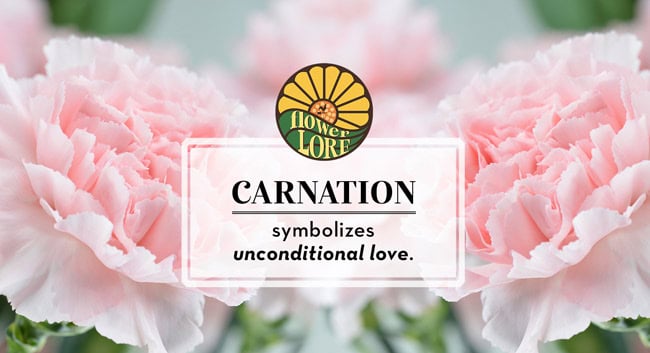
- What it means: love above all, especially a mother’s love, though the message shifts with the color.
- Zodiac tie: the Capricorn flower, for birthdays from December 22 through January 19.
- Grow it: USDA Hardiness Zones 3 to 10, full sun to partial shade, well-drained and slightly alkaline soil.
- Good to know: carnations are edible with a clove-like flavor, but only from plants grown without pesticides.
If you were born in January, your birth flower is the carnation, a bloom that folklore has tied to love, remembrance, and quiet devotion for more than 2,000 years. The carnation brings colorful, long-lasting blooms to an otherwise dull winter month, and behind those ruffled petals sits a long history of symbolism, spiritual legend, and garden lore. Here is what the carnation means, why it belongs to January, and how to grow one of your own.
About Carnations
A fragrant perennial, the carnation (Dianthus caryophyllus) is believed to be native to the Mediterranean region of Europe. Its history can be difficult to track, since these flowers, also known as clove pink for their spicy fragrance and signature natural color, cottage pinks, or simply pinks, have been cultivated for more than 2,000 years. That long run has made them prominent in history, symbolism, art, and literature the world over. The Encyclopaedia Britannica traces the carnation to the same Dianthus family as sweet William and the garden pinks, all prized for their fringed petals and clove-like scent.
The name carnation is believed to be a variation of the Latin word corona, meaning “crown.” Carnation flowers were often worn in ceremonial crowns in ancient Rome, for religious occasions as well as more secular celebrations. The scientific name, dianthus, is Greek for “heavenly flower” or “divine flower,” which shows this popular bloom’s early connection to religious ceremony and folklore.
Natural carnations come in primarily pink or pink-purple hues, but different cultivation techniques and modern floriculture have bred carnations in a wide range of shades, from bright red to deeper wine tones as well as white, yellow, cream, peach, green, and even variegated or striped flowers. There is a homely tell in the family name, too. The zigzag edge of a pair of pinking shears takes its name from the fringed, “pinked” edge of these very petals.
An interesting note is that there are no naturally occurring blue carnations, but these flowers take up dye very easily and are often dyed blue, purple, or even rainbow colors to suit a customer’s preference. Dyeing carnations is a fun science experiment used in elementary and junior high schools to demonstrate how plants take up water, and to time how long the process takes depending on the size of the flower.
The ruffled, fringed petals of carnations give these blooms a lovely delicacy, and they are widely popular for all sorts of cut uses, from corsages and boutonnieres to bouquets, centerpieces, and garlands. In the yard, garden, or landscape, they can be beautiful in flowerbeds or as borders, and carnations also thrive in containers for a burst of color anywhere.
Types of Carnations
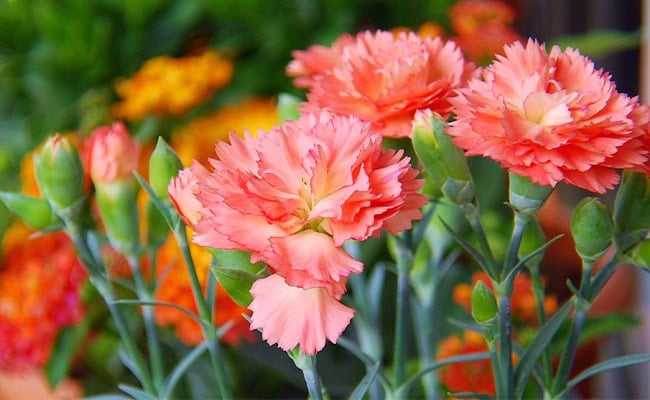
Not every carnation is the tall florist bloom you see wrapped for a corsage. Growers and florists generally sort them into three groups, and knowing which is which helps you pick the right one for a vase, a border, or a window box.
- Large-flowered, or standard, carnations, carry one big bloom to a stem. These are the classic florist carnations grown for cutting.
- Spray, or mini, carnations branch into several smaller flowers per stem, filling out a bouquet without a single dominant bloom.
- Border, or garden, pinks stay low and mounding, which makes them ideal for edging a bed or spilling over the front of a container.
All three share the same clove scent and fringed petals, and all three carry the same folklore. The difference is habit and height, so match the type to the job before you plant or buy.
Carnation Symbolism
Carnation meaning can vary widely depending on the flower’s color and the culture where it is used. Flower color meanings are especially layered, and they have long been used to send specific messages, or even secret ones, when different colors are mixed in a single bouquet or arrangement. For carnations, the general guidelines below apply to the flower’s color meanings.
- Pink, Motherly love, unconditional love, or sweetheart love
- Light Red, Affection or admiration
- Dark Red, Deep, passionate love and desire
- White, Pure love or good luck, sweetness, and innocence
- Purple, Sorrow or apology
- Yellow, Sorrow, disdain, or regret
- Green, Individuality or self-expression
Regardless of the shade, a variegated or striped carnation generally symbolizes disappointment or rejection, as if the colors of the bloom never quite blended into one vibrant tone.
Related: 43 Flowers And Their Meanings

Carnation Meaning Around the World
In different cultures, specific carnation colors carry very deep meanings and even historical connections. For example, a red carnation is the official state flower of Ohio in honor of former United States President William McKinley, a native of Niles, Ohio, and the twenty-fifth president of the country, who considered the red carnation his personal lucky flower. The state flower was adopted in 1904, three years after McKinley’s assassination.
In Azerbaijan, however, a red carnation is a symbol of mourning in remembrance of the Black January Massacre of January 1990, when Soviet troops cracked down on Azerbaijan’s independence movement. More than 200 protestors in the capital, Baku, were killed when Soviet troops fired into the crowds, one year before the country became an independent nation.
White carnations also carry a remembrance connection, as these pure blooms are used to honor and remember veterans in the Netherlands, specifically for World War II.
Green carnations are special to Ireland, and not just as fun decorations on St. Patrick’s Day. Celebrated Irish author Oscar Wilde often wore a green carnation, a habit that also linked that particular carnation color with the LGBTQ community.
In many countries, carnations, particularly rich red shades, are linked with socialist movements, especially in Portugal, Italy, Russia, Germany, and Greece. The bold shade of this very popular flower represents the fight for workers’ rights and solidarity with laborers.
In the United States, the meaning of carnations is closely tied to Mother’s Day and the flower’s symbolism of motherly love. In 1907, Anna Jarvis, widely recognized as the founder of Mother’s Day, chose the carnation as the holiday’s official flower in honor of her own mother, who favored carnations. Pink and white carnations are especially popular for Mother’s Day.
Related: When Is Mother’s Day This Year?
With their symbolism of love, it is no surprise that carnations are often used for wedding bouquets, and in China the carnation is the most popular wedding flower. These beautiful blooms are also considered the traditional flower to celebrate a first wedding anniversary.
Spiritual Symbolism of Carnations
Carnation meaning goes beyond history, holidays, and political movements. These flowers carry some deeply meaningful spiritual folklore and legend as well.
In Christian folklore, red carnations are said to have sprung up wherever the tears of the Virgin Mary fell as she wept while her son Jesus bore his cross. Another version of the same tale has carnations appearing as Mary wept during the crucifixion. Because of that association with the Virgin Mary, red carnations are sometimes called “Mary’s flowers,” and the sorrowful circumstances of the legend have also given rise to carnations being linked with heartache or a mother’s mourning.
The etymology of the word “carnation” may also point to the incarnation of God as man, which explains why these flowers are sometimes called “God’s flowers.”
Ancient Greek mythology gives a divine connection to carnations too, particularly the red ones. When Aphrodite, the goddess of love, wept for her beloved Adonis, the god of beauty and desire, as he was dying from wounds inflicted by a wild boar, she is said to have created white carnations that were then stained red by Adonis’ blood.
Carnations also connect to the zodiac as a Capricorn flower, tied to the birth symbol Capricorn, which runs from December 22 through January 19. Because carnations are long-lasting blooms, the flower’s longevity and loyalty pair naturally with the Capricorn sign, which values those very traits.
Carnations in Art and Literature
Because these flowers are popular worldwide, it is no surprise that they have been showcased in art and literature for centuries. Many Renaissance paintings show betrothed or affectionate couples holding a carnation, and carnations often appear in paintings of the Madonna and Child to reflect the flower’s association with the Virgin Mary.
Poets have long used carnations as part of the language of flowers, and the blooms have turned up in other literary works, including as part of a horticultural debate in the 1623 play “The Winter’s Tale” by William Shakespeare. In that scene the characters argue over whether it is fair to improve on nature by crossbreeding “streak’d gillyvors,” an old name for carnations, a small moment that shows how familiar the flower already was to audiences 400 years ago.
Cooking With Carnations
Carnations are edible, with a clove-like or peppery, spicy flavor. While these flowers are not widely found on menus today, apart from the occasional sugared carnation used as a cookie or cake decoration, they can be worked into wine or syrups for cocktails, or used as a garnish for salads and other dishes.
Carnation flowers may be pickled, candied, or even sauteed, depending on the dish, and they pair well with either sweet or savory preparations. For the best flavor, use only the petals and trim away the bitter white base where each petal meets the stem.
To use carnations in the kitchen, it is important to grow your own or buy flowers from a food-approved source. Carnations from florists are often treated with pesticides or herbicides that could make them highly toxic if eaten.
Related: Edible Flowers
Growing Carnation Plants
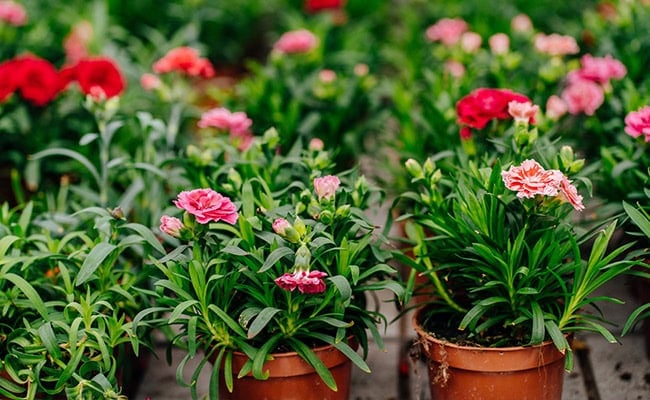
Whatever symbolism you enjoy in a carnation, and whether or not it happens to be your birth flower, it can be a beautiful addition to your garden or landscape. Smaller carnation plants do very well in containers or window boxes, adding both color and texture, and as deer-resistant flowers they are a welcome addition to the yard that can be enjoyed without much disturbance from eager wildlife.
Carnation plants are easy to grow in USDA Hardiness Zones 3 to 10, depending on your overall climate, the microclimates in your yard or landscape, and the type of carnation you choose: annual, perennial, or biennial, those short-lived perennials that last for 2 to 3 years.
- Carnations bloom above ground, so tradition favors planting during the light, or waxing, of the Moon.
- The Gardening by the Moon Calendar lists this month’s Best Days to plant flowers in your area.
Related: Farmers’ Almanac Gardening By The Moon Calendar
Planted in containers, carnations can be moved about to the ideal conditions as the season progresses. They are popular in cottage garden or English garden landscapes, but they add a colorful touch to almost any design. Carnations bring an unexpected pop of color to rock gardens, and they are ideal for cutting gardens meant for bouquets and arrangements. Do not forget to plant a few extra to dry for potpourri or to press for cards and crafts.
Related: 9 Flowers You Can Grow For Beautiful Bouquets
When deciding where to plant carnations, first consider the plant’s mature size so it can reach its full growth potential without becoming crowded, which could impede airflow and invite pests or disease. Depending on the cultivar, carnations may grow from 6 to 30 inches tall and from 10 to 15 inches wide. They prefer full sun or partial shade, and they show their brightest colors when they receive six or more hours of full morning sun. Afternoon shade is best to prevent foliage burn and stress.
Plant carnations in well-drained, slightly alkaline soil. Aerating the soil before planting helps ensure proper drainage, as these flowers do not perform well in soggy or dense ground. They can thrive in sandy or chalky soils, which makes them useful in spots where flowers with more demanding nutritional needs may struggle.
A slow-release fertilizer is best to feed carnations without damaging their roots, or you can amend the soil with compost before planting for good nutrition. Water these flowers about once a week, whenever the top 2 to 3 inches of soil feel dry. Container-grown carnations need watering more often than those in the ground, and if the summer is exceptionally hot or dry, more frequent watering may be necessary or the plants may droop, or even fail to produce blooms.
Carnations bloom from late spring into the midsummer months, and they will rebloom generously if deadheaded through the season, stretching out how long you can enjoy their cheerful colors. As perennials, they return year after year when growing conditions suit them, letting you enjoy the beauty of the carnation well beyond a single month.
Keeping Cut Carnations Fresh
Part of the carnation’s charm is how long it lasts once cut, which is one reason it has been a florist favorite for generations. With a little care, a bunch can stay bright for two to three weeks, far longer than most cut flowers. A few old-fashioned habits go a long way.
- Cut or trim the stems at an angle so they can draw up water, and snip a little off every few days.
- Strip off any leaves that would sit below the waterline, since submerged foliage rots and clouds the water.
- Change the water every couple of days and keep the vase out of direct sun and away from ripening fruit, which gives off gases that shorten a bloom’s life.
Grown in the garden, carnations reward the same attention. Cut them in the cool of the morning and bring them straight indoors to a jar of water, and you will have a clove-scented bouquet that carries the meaning of the month with it.
Another January Birth Month Flower, The Snowdrop
While most of the attention goes to the carnation as the January birth month flower, there is an alternative symbolic bloom, the snowdrop.
One of the earliest flowers to bloom, the snowdrop suits January with its pure white petals and a shape reminiscent of a drop of melting snow. These bulbs send blooms bursting through the last remnants of snow, heralding the arrival of spring with their innocent beauty and representing purity, modesty, and renewal in different cultures.
Like carnations, snowdrops carry lore with religious roots. In Christian mythology, snowdrops are said to have appeared after Eve was cast from the Garden of Eden and sat sobbing in the cold. An angel turned falling snowflakes into snowdrops to show her that love and hope could return.
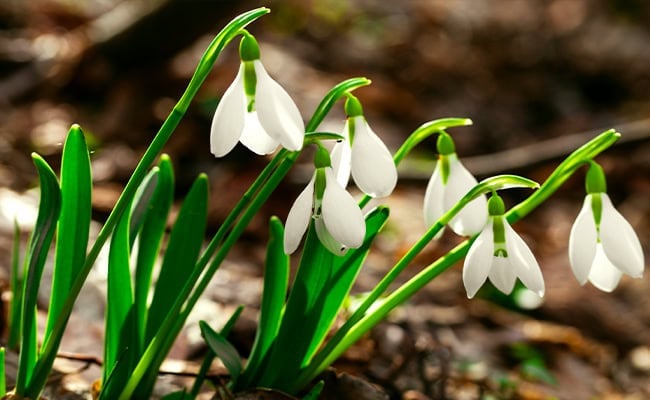
In Victorian culture, snowdrops did not carry that hopeful association, but were instead considered an omen of bad luck or death. Today these flowers have blended the symbolism of renewal with the somber note of death, and they are often used to express sympathy.
The snowdrop is also mentioned in famous literature, including Tennyson’s “The Lotus Eaters” and other well-known works, often under its ancient Greek name, moly. These flowers are even set to music through Tchaikovsky’s “April: Snowdrop” composition.
Whether carnation or snowdrop, both flowers are beautiful and meaningful choices for a January birthday, and both can be given as lovely gifts, planted in a family garden, or simply added to the landscape for their own beauty and meaning.

January Birth Flower: Frequently Asked Questions
What is the January birth flower?
The January birth flower is the carnation, a fragrant perennial in the Dianthus family that has been cultivated for more than 2,000 years. The snowdrop is the traditional alternate flower for January, valued as one of the earliest blooms of the year.
What do carnation flowers symbolize?
Carnations symbolize love, above all a mother’s love, along with fascination and distinction. The exact meaning shifts with the color and the culture, from deep passion in a dark red bloom to remembrance and mourning in a red carnation in Azerbaijan.
What do the different carnation colors mean?
Pink stands for a mother’s or a sweetheart’s love, light red for admiration, and dark red for deep passion. White signals pure love and good luck, purple an apology, yellow disappointment, and green individuality. A striped or variegated carnation traditionally means refusal or regret.
Are carnations edible?
Yes. Carnation petals are edible, with a clove-like, peppery flavor, and can be candied, pickled, or used to flavor syrups and garnish dishes. Only eat carnations grown without pesticides, since florist flowers are often treated with chemicals that make them unsafe to eat. Trim away the bitter white base of each petal first.
How do you grow carnations, and in which zones?
Carnations grow in USDA Hardiness Zones 3 to 10 in well-drained, slightly alkaline soil with six or more hours of morning sun and afternoon shade. Water about once a week when the top 2 to 3 inches of soil feel dry, and deadhead through the season to keep them reblooming into midsummer.
Why is the carnation connected to Capricorn?
January birthdays from December 22 through January 19 fall under Capricorn, and the carnation is considered the Capricorn flower. Because carnations are long-lasting blooms, their longevity and loyalty match the traits the Capricorn sign is said to value.
How long do cut carnations last?
Cut carnations can stay fresh for two to three weeks, longer than most cut flowers. Trim the stems at an angle, remove any leaves below the waterline, change the water every couple of days, and keep the vase out of direct sun and away from ripening fruit.
Join The Discussion
Which January birth month flower is your favorite, the carnation or the snowdrop?
Do you grow your own?
Share your tips and tricks for the most beautiful carnations and snowdrops in the comments below!
Related
How To Grow A Birth Flower Garden
Related product: January Birthstone – Garnet Necklace


Melissa Mayntz
Melissa Mayntz is a writer who specializes in birds and birding, though her work spans a wide range—from folklore to healthy living. Her first book, Migration: Exploring the Remarkable Journeys of Birds was published in 2020. Mayntz also writes for National Wildlife Magazine and The Spruce. Find her at MelissaMayntz.com.
- Melissa Mayntz

- Melissa Mayntz
- Melissa Mayntz
- Melissa Mayntz