Why September Mornings Suddenly Feel So Much Cooler—Even When Afternoons Are Still Hot
That crisp September morning followed by an 80-degree afternoon isn’t unusual. Here’s why fall often arrives overnight before it shows up during the day.

That crisp 50-degree morning followed by a warm, almost summery afternoon isn’t your imagination. September creates the perfect setup for big temperature swings—and the rapidly lengthening nights are a big reason why.
Step outside early on a September morning and you may suddenly need a sweater.
Then, by mid-afternoon, you’re wondering why you bothered bringing it.
That familiar September temperature whiplash—cool, crisp mornings followed by surprisingly warm afternoons—is one of the first unmistakable signs that the seasons are changing.
And there’s a good scientific reason for it.
The nights are getting longer quickly, giving the ground more time to cool, while the September Sun can still provide enough energy to warm things right back up during the afternoon.
Add clear skies, dry air, light winds, and the lingering warmth of summer, and September can produce some of the most noticeable day-to-night temperature swings of the year.

The Quick Answer: Why Are September Mornings Getting So Cool?
Three things are happening at once:
- Nights are getting longer, giving the ground more hours to lose heat.
- The Sun is lower in the sky, so the Northern Hemisphere receives progressively less solar energy.
- Summer warmth doesn’t disappear overnight, so sunny afternoons can still get quite warm.
In other words, autumn often arrives first at night.
The afternoons may still feel like summer, but the mornings are already responding to the changing season.
September Is Losing Daylight Fast
Perhaps the biggest change happening right now isn’t something you can see on a thermometer.
It’s happening on the clock.
September is one of the fastest-changing months of the year for daylight across much of the Northern Hemisphere.
According to our September daylight loss map, between September 1 and September 30, 2026:
- Seattle loses about 98 minutes of daylight
- Minneapolis loses about 89 minutes
- Chicago loses about 80 minutes
- New York loses roughly 77 minutes
- Atlanta loses around 60 minutes
- Miami loses about 43 minutes
That means sunrise arrives later while sunset keeps creeping earlier.
Each night becomes a little longer than the one before it.
And those extra nighttime minutes matter.
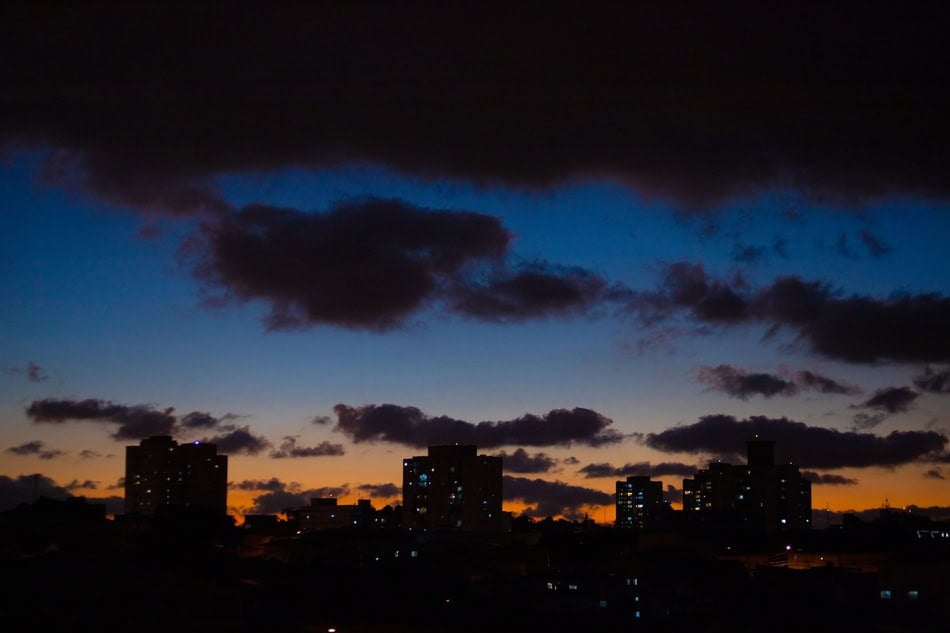
The Ground Is Cooling All Night
After sunset, the ground stops receiving energy from the Sun and begins releasing heat back into the atmosphere and toward space.
Meteorologists call this radiational cooling.
The National Weather Service explains that radiational cooling is the cooling of Earth’s surface as it loses heat at night, and that the effect is especially pronounced under clear skies.
In June, the nighttime cooling period is relatively short.
By September, darkness lasts considerably longer.
That gives fields, lawns, rooftops, forests, cars, and other surfaces additional time to cool before the Sun comes up again.
The air immediately above those surfaces then cools too.
So even when the afternoon temperature reached 80°F the previous day, the next morning can feel surprisingly chilly.
Clear September Nights Can Get Especially Chilly
Not every September night cools at the same rate.
The biggest temperature drops tend to happen when several conditions come together:
Clear skies. Clouds act somewhat like a blanket, absorbing and re-radiating some of the heat leaving Earth’s surface. With few clouds overhead, more heat can escape.
Light or calm winds. Wind mixes warmer air from above with cooler air near the ground. On a calm night, the coldest air can remain concentrated close to the surface.
Dry air. Dry conditions generally favor more efficient nighttime cooling than muggy conditions.
The National Weather Service notes that nighttime radiational cooling is maximized with clear skies, light winds, and dry air.
That’s why a beautiful stretch of September high pressure can deliver such a striking combination:
Sunny, warm afternoons—and remarkably crisp mornings.
So Why Can the Afternoon Still Feel Like July?
If we’re losing so much daylight, why can September afternoons still become hot?
Because Earth doesn’t cool down instantly when summer ends.
There is a delay between the year’s peak sunlight and the year’s peak temperatures known as seasonal lag.
Think of it like turning off an oven.
The heating element may stop producing heat, but the oven doesn’t immediately become cold.
The same basic principle applies to the seasons.
Land, water, buildings, and the atmosphere have spent months absorbing summer heat. Even after the June solstice, when daylight begins decreasing, that stored warmth remains.
NOAA explains that temperatures across much of the United States continue rising for weeks after the summer solstice because incoming daytime energy initially remains greater than nighttime heat loss. Temperatures generally begin their seasonal decline later in summer.
By September, that balance is changing—but there is still plenty of warmth available.
A sunny September afternoon can therefore heat the ground quite effectively, especially when dry air and clear skies allow strong sunshine to reach the surface.
The result?
Sweater weather at breakfast. Shorts weather after lunch.
The September Sun Is Getting Weaker, Too
Day length isn’t the only thing changing.
The Sun itself appears progressively lower in the sky as the Northern Hemisphere moves toward the autumnal equinox.
Lower-angle sunlight spreads the Sun’s energy over a larger area than the more direct sunlight experienced around early summer.
So even during a perfectly sunny September day, the Northern Hemisphere is gradually receiving less heating than it did earlier in the season.
The transition accelerates as we approach the equinox.
In 2026, the autumnal equinox arrives September 22 at 8:05 p.m. EDT. The U.S. Naval Observatory calculates the equinox at 00:05 UTC on September 23, which corresponds to the evening of September 22 in the continental United States.
By then, the balance has clearly shifted.
Night is winning.
Why Valleys Can Get Much Colder Than Nearby Hills
Here’s another September weather oddity you may notice.
Two places only a few miles apart can wake up to very different temperatures.
One reason is terrain.
Cold air is denser than warm air and can settle into valleys and low-lying areas overnight. When winds are light and skies are clear, those sheltered locations can become significantly cooler than surrounding hillsides.
Radiational cooling can also create a temperature inversion, in which the air immediately near the ground becomes colder than the air above it.
The National Weather Service notes that these nighttime inversions commonly develop because Earth’s surface cools more rapidly than the air higher above it. They usually disappear fairly quickly after sunrise as the ground heats again.
Gardeners know this phenomenon well.
A vegetable patch in a low spot may experience frost while a garden farther uphill escapes entirely.
Why Cities Stay Warmer at Night
The opposite effect often occurs in cities.
Concrete, brick, pavement, and buildings absorb solar energy during the day and gradually release that heat after dark.
This helps create the familiar urban heat island effect, allowing densely developed areas to remain warmer overnight than nearby rural communities.
That’s one reason an airport or downtown weather station might report 59°F while a sheltered rural valley 30 miles away falls into the upper 40s.
Location matters enormously when it comes to September morning temperatures.
Dry Areas Can Have Bigger Temperature Swings
Humidity also helps explain why some parts of the country experience especially dramatic temperature swings.
Moist air tends to moderate nighttime cooling.
Dry air generally allows temperatures to fall more readily after sunset.
That’s why the interior West, high deserts, mountain valleys, and other dry environments can sometimes experience enormous differences between afternoon highs and morning lows.
Coastal locations tend to behave differently because large bodies of water heat and cool much more slowly than land.
An ocean or large lake can act as a temperature moderator, keeping nearby nights warmer and afternoons cooler.
Cool Mornings Don’t Mean Summer Heat Is Finished
This is an important point.
A chilly September morning is not proof that hot weather is finished for the year.
September is a transition month, and warm air masses can still produce stretches of genuine summer heat across large portions of the United States.
That’s especially true across the South, Southwest, and parts of the West, where summerlike temperatures can persist well into autumn.
Even farther north, September frequently alternates between chilly Canadian air and warm air surging northward.
That’s part of what makes the month so interesting.
One week can feel like October.
The next can feel like August.
Meteorologists actually consider September 1 the beginning of fall. Read our explanation of why meteorological fall starts September 1, even though astronomical fall doesn’t begin until the September equinox.
What About September 2026?
That morning-versus-afternoon contrast may be particularly noticeable at times this September.
Our September 2026 guide notes that the Farmers’ Almanac outlook calls for widespread warmth to linger across much of the country during September before cooler conditions become more established as autumn progresses.
So don’t be surprised if your jacket comes off before lunchtime.
The seasonal transition rarely happens in a straight line.
Gardeners: Start Watching Those Overnight Lows
Warm afternoons can also create a false sense of security in the garden.
Tomatoes, peppers, basil, houseplants, and other cold-sensitive plants don’t care how warm it was at 3 p.m.
What matters is how cold it becomes around dawn.
September is already within the normal first-frost window for some northern and high-elevation communities.
Check the Farmers’ Almanac 2026 First Frost Dates guide or our average first frost dates by city before those overnight lows begin creeping toward freezing.
Pay particular attention when the forecast calls for:
- Clear skies
- Calm winds
- Dry air
- Temperatures in the upper 30s
- A cold, sheltered location
Those are exactly the kinds of nights when localized temperatures near the ground can become colder than you might expect.
Cool Nights Are Also Helping Autumn Along
The changing temperature pattern affects far more than what you wear in the morning.
Shortening daylight and cooler nighttime temperatures are among the environmental signals accompanying the transition toward autumn.
Trees begin preparing for dormancy, migratory birds head south, insects change behavior, gardens slow down, and autumn color begins advancing from north to south.
For leaf peepers, the combination of sunny days and cool—but not freezing—nights can also help produce brilliant color in certain trees.
See our guide to the weather conditions that produce the brightest fall foliage and our 2026 Fall Foliage Outlook.
Try This Simple September Weather Experiment
Want to watch autumn arrive in real time?
Record the temperature outside your home at roughly the same two times each day:
Around sunrise and around 3 or 4 p.m.
Also jot down whether the previous night was cloudy, clear, windy, calm, humid, or dry.
After a couple of weeks, a pattern should begin to emerge.
Clear, calm nights will often stand out.
And as September progresses, you’ll see something even larger unfolding:
The Sun rises later.
The shadows stretch farther.
The evenings arrive sooner.
The mornings become cooler.
Eventually, the afternoons follow.
That’s autumn taking over—one night at a time.
Frequently Asked Questions
Why are mornings colder in September?
September nights are becoming longer, giving Earth’s surface more time to lose heat before sunrise. Clear skies, calm winds, and dry air can make that overnight radiational cooling especially effective.
Why can September afternoons still be hot?
Summer heat lingers because land, water, and the atmosphere don’t cool instantly after the summer solstice. Strong September sunshine can still warm the surface considerably during the daytime, producing warm or even hot afternoons.
Why does it get so cold overnight when the sky is clear?
Clouds can reduce nighttime heat loss. On a clear night, Earth’s surface can radiate heat away more efficiently. Calm winds can further enhance cooling by preventing warmer air above from mixing down to the surface.
What time of night is usually coldest?
The lowest temperature commonly occurs around or shortly after sunrise. The ground has been losing heat throughout the night, and warming doesn’t begin in earnest until incoming sunlight becomes strong enough to reverse that energy loss.
Does a cold September morning mean an early winter?
No. Individual cool mornings are normal during September and do not reliably predict the severity or timing of the coming winter. September often produces large swings between cool and warm air masses.
September Has One Foot in Summer and One in Fall
Perhaps no month demonstrates the changing seasons quite like September.
The afternoon sun can still feel warm on your face.
The garden can still be producing tomatoes.
You may still hear cicadas in the trees.
But step outside just after sunrise and something has changed.
The grass is heavy with dew.
Your breath may almost show.
There’s a chill in the shade that wasn’t there a few weeks ago.
Summer hasn’t disappeared.
It is simply losing a little more ground every night.


This article was published by the Staff at FarmersAlmanac.com. Any questions? Contact us at [email protected].
- Farmers' Almanac Staff

- Farmers' Almanac Staff

- Farmers' Almanac Staff

- Farmers' Almanac Staff