Should I Leave Fallen Leaves on My Lawn? Here’s What You Should Really Do
Should I leave fallen leaves on my lawn? Learn when leaves help your grass and soil, when they can smother turf, and what to do with them this fall.

Every autumn, millions of homeowners face the same question.
Should I leave fallen leaves on my lawn—or rake them all up?
For generations, the answer seemed obvious: rake every last leaf, bag them up, and leave the lawn perfectly clean before winter.
But lately, you’ve probably heard the opposite advice: “Leave the leaves.”
So which is right?
Actually, both can be—depending on where the leaves are and how thickly they’ve fallen.
A light covering of shredded leaves can benefit your lawn by returning organic matter and nutrients to the soil. Fallen leaves can also provide valuable winter habitat when left beneath trees, shrubs, and in garden beds.
But there is one important catch:
A thick, wet blanket of whole leaves should not be left sitting on your grass all winter.
It can block sunlight, reduce airflow, trap moisture, and smother the turf underneath.
Here’s the simple Farmers’ Almanac approach:
Mulch some. Move some. Compost some. Leave some.
You don’t need to rake your property bare—but you shouldn’t bury the lawn, either.
Quick Answer: Should I Leave Fallen Leaves on My Lawn?
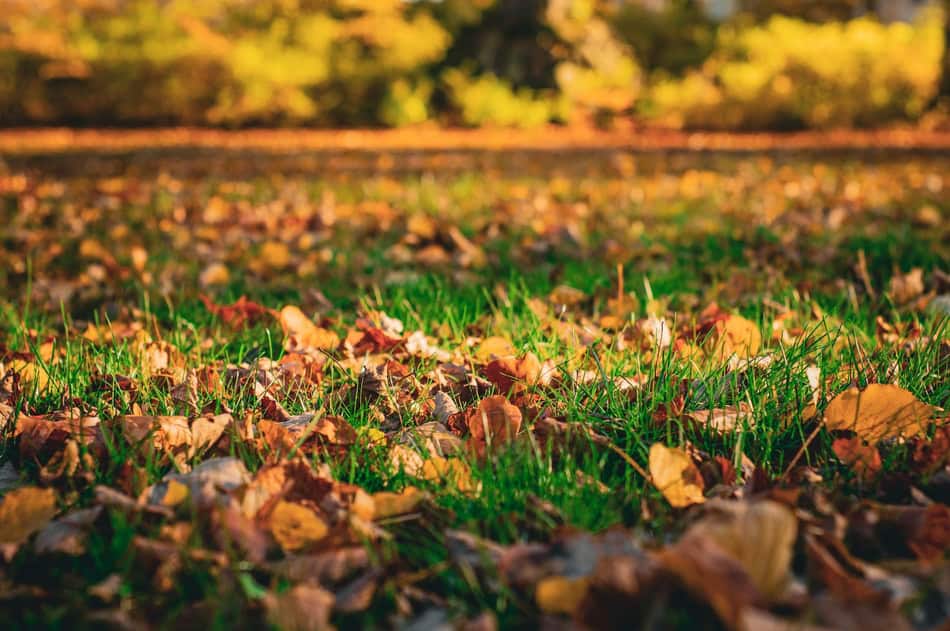
Yes, you can leave some fallen leaves on your lawn—especially if you chop them into small pieces with a mower.
A light layer of shredded leaves can decompose between the grass blades and return organic matter to the soil.
However, if the leaves are so thick that you can barely see the grass beneath them, you have too many.
The University of Minnesota Extension recommends mulching leaves into turf until roughly half of the lawn surface is still visible. Once leaves become heavy enough that less than about 50% of the grass can be seen, the excess should be collected or moved elsewhere.
University of Minnesota Extension’s guide to fall leaf mulching
And if you’re already thinking ahead to your final cuts of the season, see our Farmers’ Almanac guide to when you should stop mowing your lawn for the year.
Fallen Leaves Aren’t Yard Waste—They’re Part of the Cycle
A leaf doesn’t suddenly become useless when it falls from a tree.
For months, that leaf used sunlight, water, carbon dioxide, and nutrients to help support the tree.
When it falls and eventually decomposes, some of that organic material returns to the soil.
It’s one of nature’s oldest recycling systems.
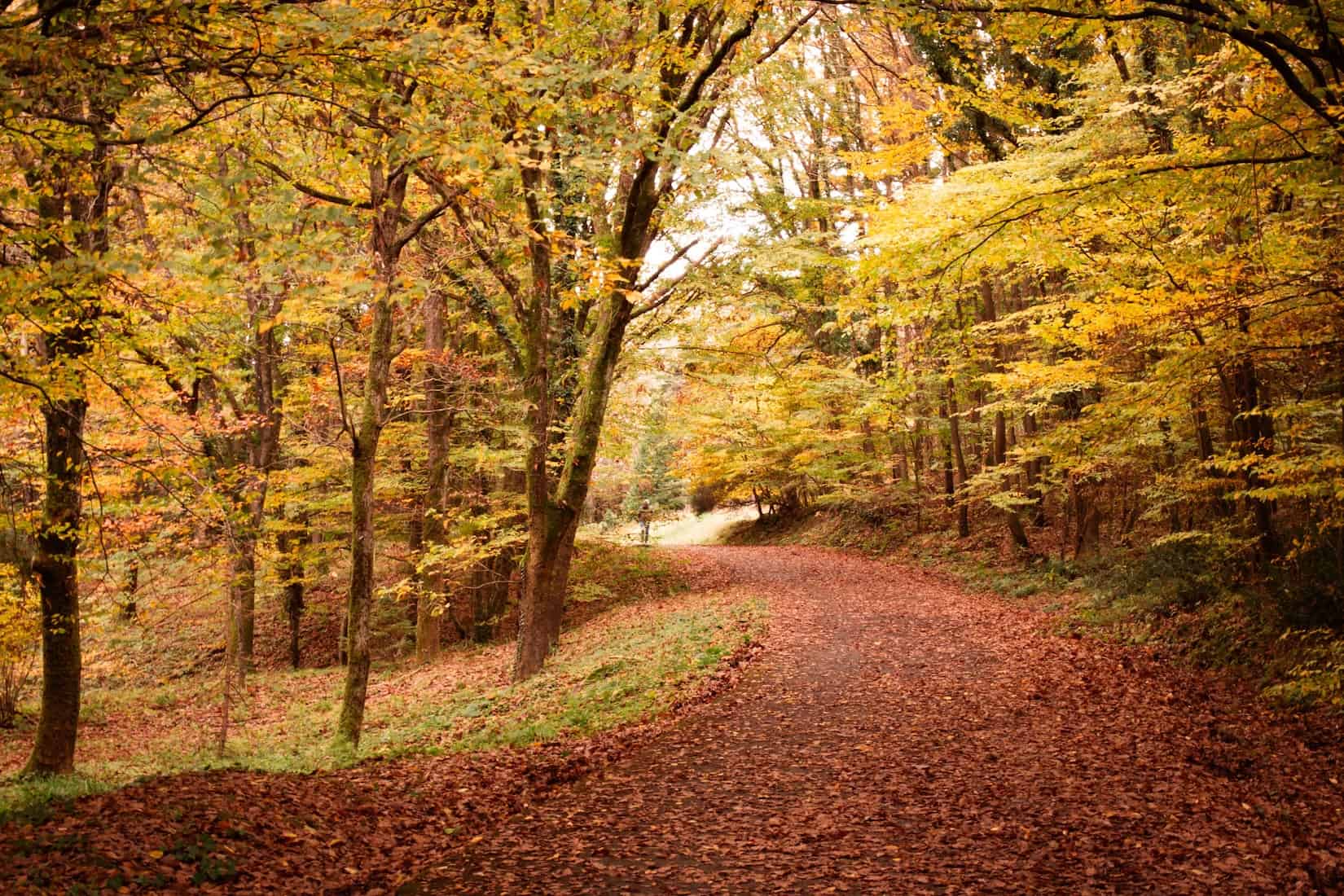
Walk through an undisturbed forest in October and you’ll see it everywhere.
No one rakes the forest floor.
Leaves fall, insects and microorganisms begin breaking them down, and the resulting organic matter becomes part of the soil.
Your backyard doesn’t need to become a forest, of course.
A turf lawn has different needs.
But there’s no reason every autumn leaf needs to be treated like garbage.
What Happens If You Leave Too Many Leaves on the Lawn?
This is where the popular “leave the leaves” message can become misleading.
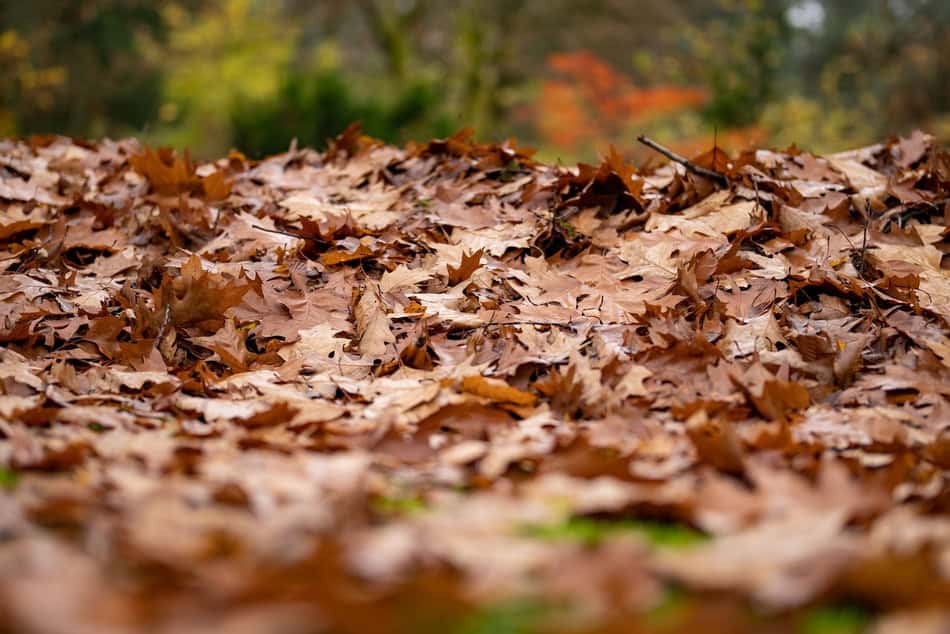
Leaving scattered leaves is very different from allowing four inches of wet maple leaves to mat themselves across your lawn.
A thick layer can:
- Block sunlight from reaching grass blades
- Restrict airflow
- Hold excess moisture against the turf
- Flatten grass
- Create conditions favorable to certain lawn diseases
- Contribute to snow mold in colder climates
- Leave thin, yellow, or bare patches in spring
University of Minnesota Extension specifically cautions that excessive leaf residue can contribute to spring lawn problems, including snow mold.
So don’t worry about having a perfectly clean lawn.
Instead, worry about whether your grass is being smothered.
Farmers’ Almanac Rule of Thumb
If you can still easily see the grass through the leaves, you probably don’t need to panic.
If you can barely tell there’s a lawn underneath, it’s time to mulch or move some leaves.
The Easiest Solution: Mow Over Them
Before spending an entire Saturday raking, try your lawn mower.
For a light to moderate leaf cover, mowing is one of the easiest ways to deal with it.
Wait until the leaves are reasonably dry and then mow as usual. A mulching mower is ideal, but many standard mowers will chop leaves effectively.
If necessary, make a second pass.
The goal is to reduce large leaves into small pieces that fall between the grass blades rather than sitting on top as a solid mat.
Those fragments gradually break down.
University of Minnesota Extension notes that decomposing mulched leaves can improve soil structure, moisture retention, water infiltration, and root growth while returning nutrients to the soil.
And there’s another advantage:
You don’t have to bag them.
If your lawn is still actively growing this September, this fits neatly into your regular fall maintenance. Our guide to September lawn care and your lawn’s “second spring” explains why early fall can be such an important period for cool-season lawns.
How Many Leaves Are Too Many?
You don’t need a ruler.
Look at the grass.
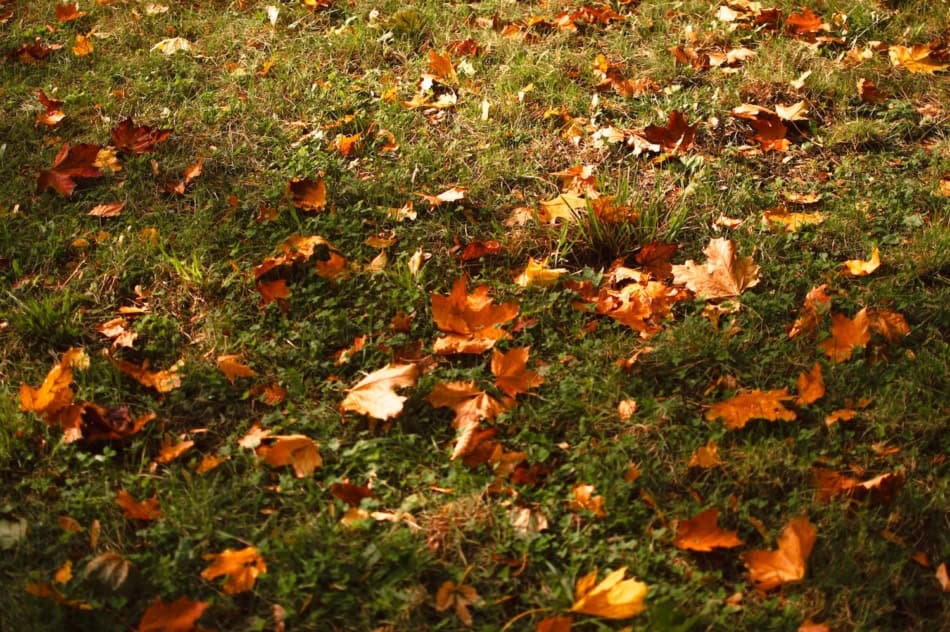
Mostly grass with scattered leaves?
Mow them.
Plenty of shredded leaf pieces, but you can still see the lawn?
Leave them.
Grass nearly disappears beneath the leaves?
Remove or relocate some.
A heavy, wet mat has formed?
Definitely break it up and move it.
University of Minnesota’s practical guideline is a useful one: once less than about half of the lawn surface remains visible, begin removing excess leaf material.
In other words:
Your lawn doesn’t need to be leaf-free. It needs to be able to breathe.
Don’t Bag the Extra Leaves—Move Them
What should you do with all the leaves your lawn can’t handle?
This is where fall cleanup gets much easier.
Instead of bagging every leaf and sending it away, move excess leaves to areas where they can do more good.
Good places include:
- Beneath mature trees
- Around shrubs
- In established garden beds
- At the back of perennial borders
- In a compost pile
- In a dedicated leaf pile
- Over bare garden soil where appropriate
Leaves can help cover exposed soil, reduce erosion, conserve moisture, moderate soil-temperature changes, suppress some weeds, and eventually add organic matter.
Farmers’ Almanac readers can also see our guide to using leaves as natural mulch for more ways to put autumn leaves to work rather than throwing them away.
There’s One Place You May Want to Leave Leaves Whole
Here’s an important distinction that often gets lost in the debate.
Shredding leaves is useful on a lawn.
But if you’re moving leaves into garden beds or naturalized areas, you don’t necessarily need to shred all of them.
Why?
Because fallen leaves aren’t just soil amendments.
They’re habitat.
Penn State Extension notes that many beneficial insects spend the winter in gardens, stems, and leaf litter. Some butterflies and moths overwinter as eggs, caterpillars, pupae, or adults among fallen leaves and plant debris.
Penn State Extension’s fall garden care recommendations for pollinators encourage gardeners to think twice before completely clearing every garden bed in autumn.
So there’s a sensible compromise:
Shred leaves that need to remain on your lawn. Leave some whole in garden beds, beneath shrubs, and in less-manicured corners of the yard.
Your grass gets what it needs.
Wildlife gets what it needs.
And you get less raking.
Why “Leave the Leaves” Helps Wildlife
A quiet layer of autumn leaves may look empty.
It isn’t.
Leaf litter can shelter insects, spiders, caterpillars, beetles, and other tiny creatures through winter.
Those insects, in turn, form part of the food web for birds and other backyard wildlife.
Some native pollinators also overwinter in plant stems and garden debris—which is why modern wildlife-friendly gardening advice increasingly recommends delaying the urge to make every bed perfectly tidy in autumn.
Nature has always been a little messy.
That mess serves a purpose.
Consider dedicating a few areas of your yard where leaves can remain relatively undisturbed until spring.
Even a small patch beneath shrubs or along a wooded edge can be useful.
Are Fallen Leaves Good for the Soil?
Yes.
As leaves break down, they add organic material to the soil.
That organic matter can help improve soil structure and the soil’s ability to hold water and nutrients.
Illinois Extension notes that leaves also contain plant nutrients and that shredded leaves can be reused around landscapes instead of being discarded.
Illinois Extension’s guide to putting fall leaves to work
If you’re interested in building better garden soil naturally, our Farmers’ Almanac guide to natural garden fertilizers and organic soil amendments includes compost, leaf mold, shredded leaves, and other traditional soil-building methods.
What About Oak Leaves? Aren’t They Too Acidic?
This is one of the most persistent fall-gardening myths.
You’ve probably heard someone say:
“Don’t use oak leaves. They’ll make the soil too acidic.”
Fresh oak leaves can indeed be acidic.
But that doesn’t mean a layer of decomposed oak leaves is going to turn an ordinary lawn or garden into highly acidic soil.
According to Illinois Extension, oak leaves become closer to neutral or even slightly alkaline as they break down, and leaf mulch generally does not significantly change soil pH under normal conditions.
So if your backyard oak drops thousands of leaves every fall, don’t think of them as a liability.
They’re a resource.
Can I Compost Fallen Leaves?
Absolutely.
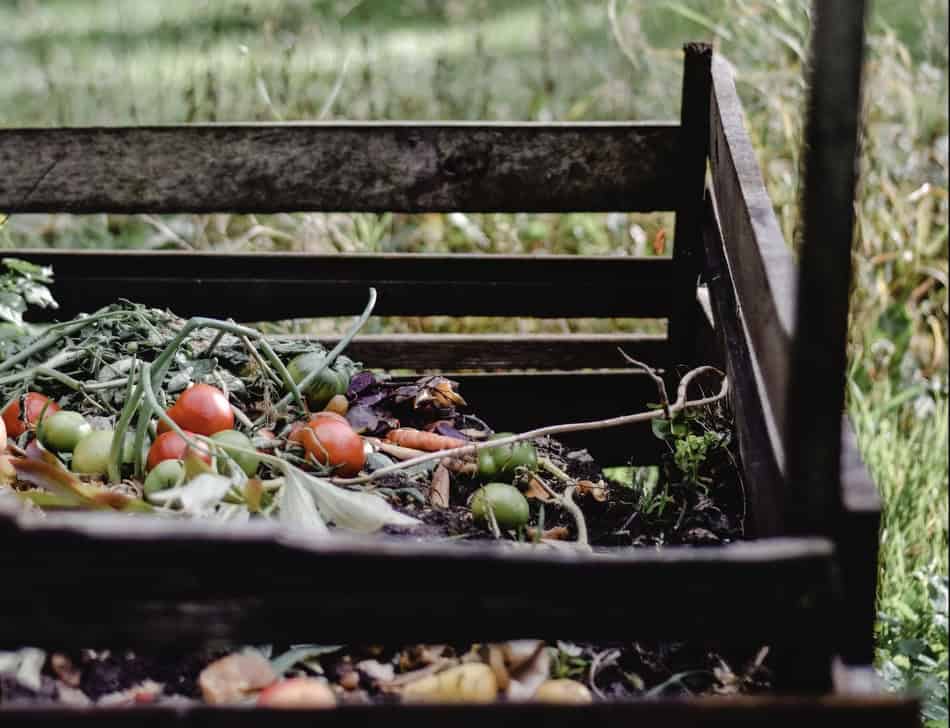
Autumn leaves are one of the best materials for a home compost pile.
Dry leaves are rich in carbon—the “brown” side of the classic compost equation.
Combine them with nitrogen-rich “green” materials such as:
- Fresh grass clippings
- Vegetable scraps
- Coffee grounds
- Fresh garden debris
Penn State Extension recommends fall as an excellent time to begin composting and notes that leaves can become a valuable soil amendment rather than waste.
Penn State Extension’s guide to composting leaves
If you don’t have a traditional compost bin, Farmers’ Almanac readers may also want to explore trench composting—the old-fashioned “lazy” way to compost kitchen and garden scraps.
What Is Leaf Mold?
If you’ve ever pushed aside several years’ worth of leaves beneath an old tree and discovered dark, crumbly material underneath, you’ve seen nature making something gardeners prize:
Leaf mold.
Leaf mold is simply leaves allowed to slowly decompose, primarily through fungal activity.
Unlike a carefully managed compost pile, it doesn’t require an exact mixture of “greens” and “browns.”
Pile leaves in an out-of-the-way spot, keep them reasonably moist, and give them time.
The finished material can be worked into garden soil or used as mulch.
It’s slow.
It’s simple.
And it’s essentially free.
Should Diseased Leaves Stay in the Yard?
Here’s an important exception to the “leave the leaves” rule.
If your tree or garden plants suffered from certain diseases during the growing season, infected leaves and plant debris may harbor pathogens.
In those situations, sanitation may be more important than habitat.
University of Minnesota Extension recommends removing diseased plant material at the end of the growing season and notes that some diseased material should only be composted if the compost reaches sufficiently high temperatures.
University of Minnesota Extension’s guide to managing plant diseases in the home garden
If you know your trees or plants suffered from a specific disease, check recommendations for that disease through your local Cooperative Extension service.
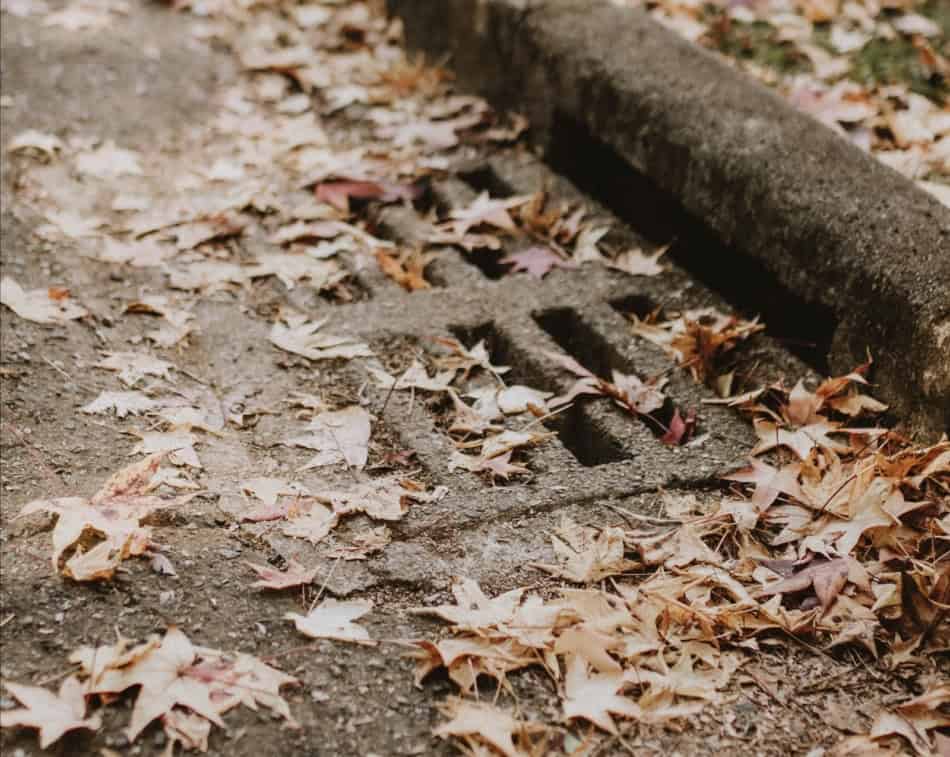
Keep Leaves Out of Storm Drains
There is one place autumn leaves definitely don’t belong:
The street gutter.
Leaves and other yard debris can wash into storm drains, where they may clog drainage systems and add nutrients and organic material to streams and waterways.
The U.S. Environmental Protection Agency recommends keeping leaves and yard waste out of gutters and storm drains and using them as mulch or compost whenever possible.
EPA guidance for managing yard waste and protecting waterways
So if you’re blowing leaves off your driveway or sidewalk, blow them back onto your property—not into the street.
Should I Rake Leaves Before Winter?
The answer depends on where the leaves are.
Here’s a simple guide:
| Location | What To Do |
|---|---|
| Light covering on lawn | Mow and mulch |
| Heavy covering on lawn | Remove or relocate excess |
| Under trees and shrubs | Leave some in place |
| Perennial beds | Leave healthy leaves where practical |
| Vegetable garden | Compost or use appropriate leaves as organic material |
| Diseased planting areas | Remove infected debris as recommended |
| Sidewalks and driveways | Remove for safety |
| Storm drains and gutters | Keep clear |
That’s far more useful than a blanket rule telling everyone either to rake everything or rake nothing.
The Timing of Fall Cleanup Matters, Too
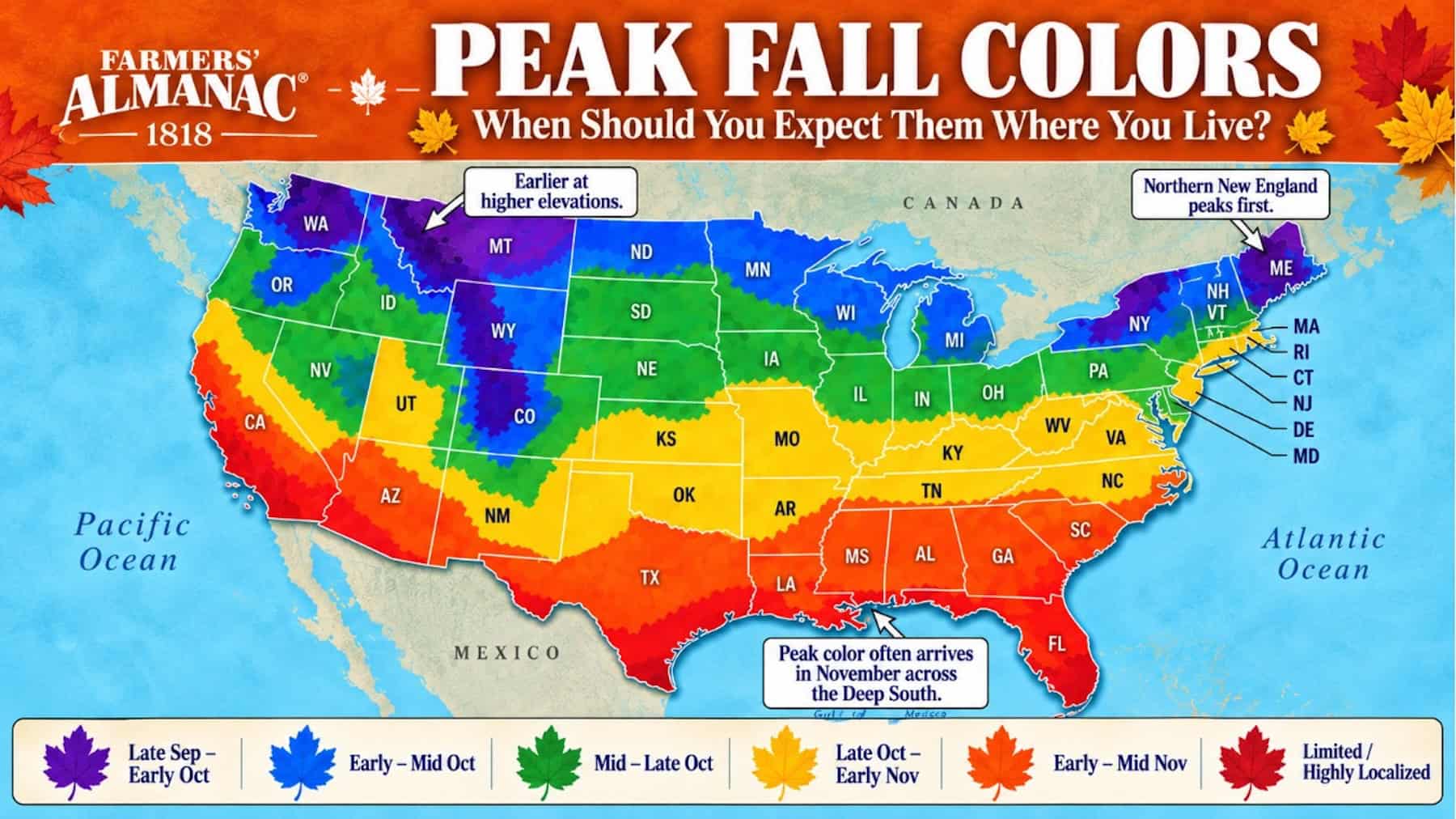
Autumn doesn’t arrive everywhere at once.
While northern New England may already be approaching peak foliage and frost, parts of the South can remain warm and green for weeks longer.
If you’re planning your fall lawn and garden work, check the Farmers’ Almanac 2026 First Frost Dates guide to see when colder weather normally reaches your area.
And if you’re wondering when all those leaves will actually start coming down, our 2026 Fall Foliage Forecast shows the expected progression of autumn color around the country.
The Old Way Wasn’t Entirely Wrong—It Was Just Too Thorough
There’s something deeply satisfying about a freshly raked autumn lawn.
For generations, homeowners considered a bare lawn part of “putting the yard to bed.”
And there was some logic behind it.
Heavy leaves really can cause problems on turf.
But somewhere along the way, fall cleanup became an attempt to remove every leaf from every corner of the property.
Nature doesn’t work that way.
A healthy backyard can have both:
A lawn that isn’t buried beneath leaves—and garden areas where fallen leaves are allowed to remain.
That’s the middle ground.
And for many homeowners, it means considerably less work.
Farmers’ Almanac Fall Leaf Strategy
Instead of asking, “Should I rake my leaves or leave them?”, try this:
1. Mow the light stuff.
If the lawn has a scattering of leaves, run over them with the mower.
2. Move the heavy stuff.
If leaves are piling up, rake the excess beneath trees, shrubs, or into garden beds.
3. Keep some leaves whole.
Allow whole leaves to remain in wildlife-friendly areas where overwintering insects can use them.
4. Compost the surplus.
Save extra leaves as valuable carbon-rich material for your compost pile.
5. Remove diseased material.
Don’t knowingly spread infected plant debris around the garden.
6. Keep drains clear.
Never rake or blow leaves into streets or storm drains.
That’s it.
Six simple rules—and probably a lot less raking.
Frequently Asked Questions
Should I leave fallen leaves on my lawn?
Yes, but only in moderation. A light layer can be chopped with a mower and allowed to decompose. A thick layer of whole leaves can smother grass and should be removed or relocated.
Is it better to rake leaves or mow them?
For a light to moderate covering, mowing and shredding leaves is usually easier and allows the material to break down in place. Heavy accumulations should be removed from the turf.
Will mowing leaves hurt my lawn?
Generally, no. Finely chopped leaves can settle between grass blades and decompose. The key is making sure leaf material isn’t so heavy that it covers most of the turf.
How many leaves are too many on a lawn?
A useful guideline from University of Minnesota Extension is to begin removing excess leaves once less than roughly half of the lawn surface remains visible.
Do fallen leaves fertilize grass?
Decomposing leaves return nutrients and organic matter to the soil. They are not necessarily a complete substitute for fertilizer, but they can contribute to healthier soil.
Can fallen leaves kill grass?
A thick, wet, matted layer can weaken or kill turf by blocking light, restricting airflow, and trapping moisture.
Should I leave leaves in flower beds?
Healthy fallen leaves can often remain in perennial beds and beneath shrubs, where they provide organic matter, insulation, and wildlife habitat.
Should I leave leaves under trees?
In many cases, yes. Trees naturally grow with leaf litter around them. A reasonable layer beneath mature trees can return organic matter to the soil and reduce the amount of lawn that needs to be raked.
Should I remove oak leaves?
Not simply because they’re oak leaves. Although fresh oak leaves are acidic, research-based Extension guidance indicates that they become much closer to neutral as they decompose.
Can I compost leaves?
Yes. Dry leaves are an excellent carbon-rich ingredient for a compost pile and can also be saved separately to make leaf mold.
The Bottom Line: Should You Leave Fallen Leaves on Your Lawn?
So, should I leave fallen leaves on my lawn?
The best answer is:
Leave some—but don’t let them bury the grass.
Run your mower over a light covering and allow the shredded pieces to decompose.
Move heavier accumulations into garden beds, beneath trees and shrubs, or into the compost pile.
Leave some whole leaves in less-manicured areas for insects and other wildlife.
And don’t worry if your yard doesn’t look perfectly swept.
For more than two centuries, the Farmers’ Almanac has followed the rhythms of the seasons—and autumn has always reminded us of one simple truth:
What looks like nature’s waste is often nature’s way of preparing for what comes next.
Sometimes the smartest fall chore is knowing what not to rake.


- Farmers' Almanac Staff

- Farmers' Almanac Staff

- Farmers' Almanac Staff
- Farmers' Almanac Staff