

How to Stay Cool Without Air Conditioning at Home

Quick Reference: How to Stay Cool Without Air Conditioning
- Shut out the midday sun: close windows, doors, and shades when the afternoon heat peaks.
- Flush in the cool air: open the windows at bedtime and let the night air settle in.
- Shift the work: save cooking, baking, and chores for the cooler evening hours.
- Move the air: blow a fan across a block of ice for a homemade cooler.
- Get wet: a swimming hole, a sprinkler, or a cold treat brings the temperature down fast.
Our parents and grandparents had to get creative when it came to keeping cool, and a fair number of their tricks still work on a hot July afternoon. Air conditioning has been around since 1902, but the technology stayed too expensive and too bulky for most folks to put in their homes for decades. As late as the 1960s, only 10% of U.S. homes had air conditioning installed. So what did people do who could not afford it, or who lived before it was available? Below is the old list of ways to stay cool without air conditioning, the reason summers felt cooler back then, and a few notes on putting these habits to work today. Share your own tips for beating the heat in the comments.

8 Things People Did To Stay Cool Before Air Conditioning
People relied on simple ingenuities like these to carry them through the Dog Days and the late-summer hot spells. None of them needs a compressor or an electric bill, and most cost nothing at all:
- Took day trips to nearby mountain towns to enjoy a bit of “cool mountain air.”
- Kept windows and doors shut at midday to keep hot air out.
- Delayed cooking, baking, and kitchen chores until the cooler evening hours.
- Opened windows at bedtime to let in the cool nighttime air.
- Blew fans across blocks of ice.
- Took a dip in a swimming hole.
- Ran through sprinklers or opened fire hydrants.
- Ate cool and refreshing treats (ice cream, watermelon, ice-cold lemonade, or tea).
How to Stay Cool Without Air Conditioning Today
The same instincts hold up in a modern house. The single biggest move is to keep the sun’s heat out before it gets in. Close the curtains and blinds on the sunny side of the house through the afternoon, then open everything wide once the air outside drops below the air inside, usually after sundown. A box fan in a window, pointed out, pushes the day’s heat from the house and pulls cooler air in behind it. The U.S. Department of Energy notes in its guide to home cooling systems that fans, shading, and natural ventilation can carry a home through warm stretches and trim the bill even when you do run an air conditioner.

Simpler, Cooler Times?
Another thing that helped keep our parents and grandparents cool was the weather itself. The graph below shows temperature anomalies, or changes, for the summer months of June through August from 1917 to 2016. It depicts how much colder (dark blue) or warmer (dark red) a year’s summer was than what we think of as “normal” these days, based on the 20th-century average.
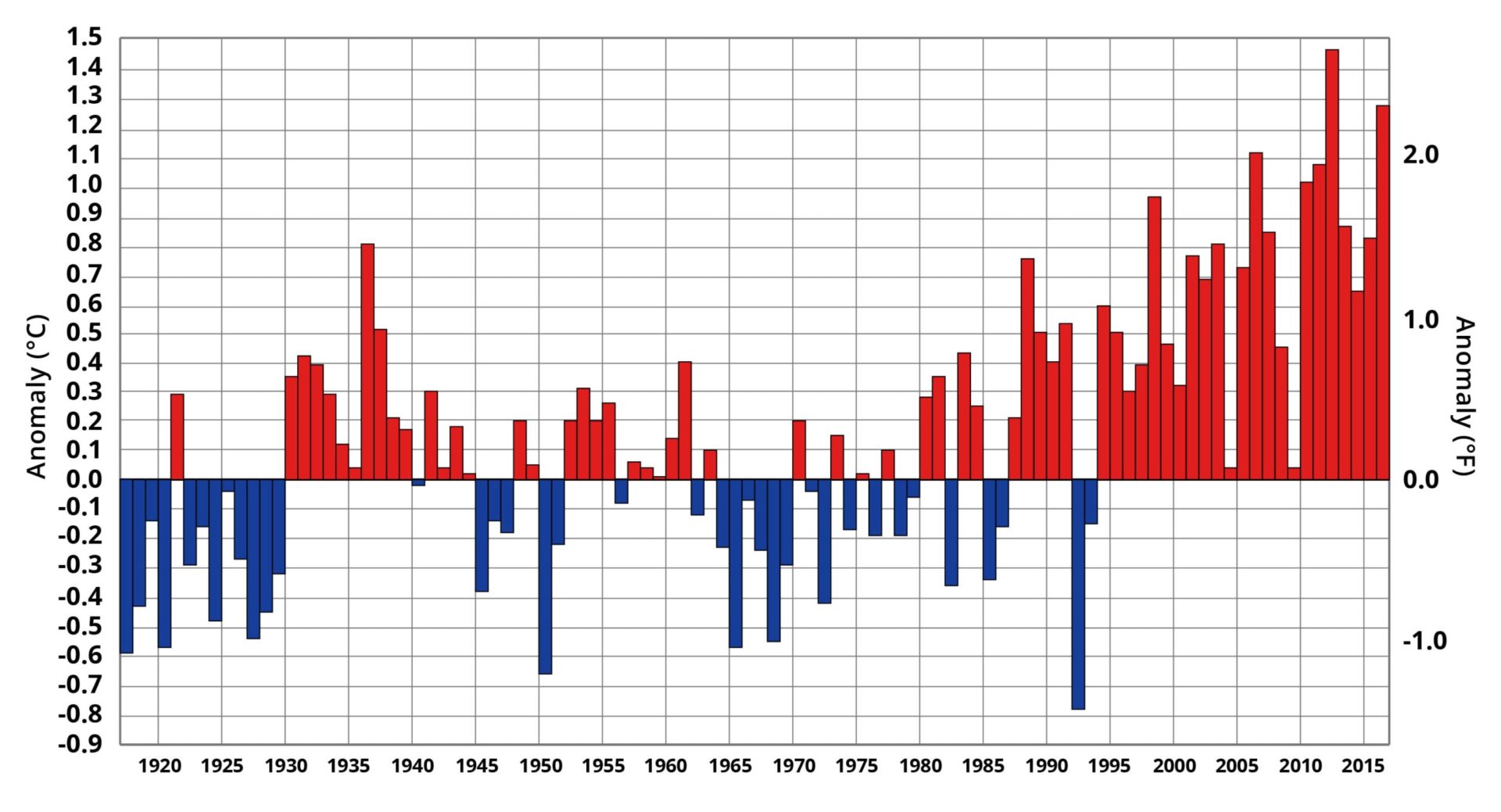
One thing is clear: the extraordinarily hot summers that are commonplace today were virtually unheard of 50 to 100 years ago. In fact, 7 of the top 10 coolest U.S. summers on record occurred between 1900 and 1950, further proof that cooler summers were a trend in our grandparents’ time. With less heat to fight, a porch, a shade tree, and a pitcher of lemonade really could get a family through July.
Keep the House Cool Without Running Up the Bill
If you do have air conditioning, the old habits still save money by giving it less work to do. A few that pay off through a hot summer:
- Cook outside or after dark. A stove or oven dumps heat into the house. Grill out, or save the baking for the cool of the evening, the same way the old-timers did.
- Run fans with the AC. A ceiling or box fan lets you set the thermostat a few degrees higher and still feel comfortable, since moving air carries heat off your skin.
- Shade the windows. Awnings, blinds, and a well-placed shade tree block the sun before it ever warms the glass.
- Let the night do the work. Open up after sundown, close up at first light, and trap the cool air inside for the morning.
For more old-fashioned, low-cost comfort, it helps to know when the heat is coming. Our long-range weather forecast can tell you which weeks to brace for, you can plan the rest of your summer chores around the cooler days on our Best Days Calendar, and you can read up on why the hottest stretch earns the name Dog Days of summer while you wait it out.
Join The Discussion
Do you save money on your electric bill by doing any of the above things?
Share your tips for staying cool in the comments below! Your community here would love to hear from you.

How to Stay Cool Without Air Conditioning: Frequently Asked Questions
How did people stay cool before air conditioning?
They kept windows and doors shut at midday to hold the hot air out, opened them at bedtime to let the cool night air in, and saved cooking and chores for the evening. They also blew fans across blocks of ice, took dips in swimming holes, ran through sprinklers, took day trips to cooler mountain towns, and ate cooling treats like ice cream, watermelon, and ice-cold lemonade.
When was air conditioning invented, and why didn’t homes have it?
Air conditioning has been around since 1902, but the technology stayed too expensive and too bulky for most homes for decades. As late as the 1960s, only 10% of U.S. homes had air conditioning installed, so most families relied on fans, shade, and open windows instead.
What is the cheapest way to keep a house cool in summer?
Block the sun before it gets in. Close curtains and blinds on the sunny side through the afternoon, then open the windows after sundown to flush in cooler air. A box fan in a window pushes the day’s heat out, and running ceiling fans lets you set a thermostat a few degrees higher and still feel comfortable.
Were summers really cooler in our grandparents’ time?
The record suggests so. The extraordinarily hot summers that are common today were virtually unheard of 50 to 100 years ago, and 7 of the top 10 coolest U.S. summers on record occurred between 1900 and 1950. Less heat made it easier to get by with a porch, a shade tree, and an open window.
Do fans actually cool a room?
A fan does not lower the air temperature, but moving air carries heat off your skin and helps sweat evaporate, so you feel cooler. For a stronger effect, blow a fan across a block of ice, the old homemade cooler, or point a box fan out a window at night to pull the cool air in behind it.
Does saving these habits really lower my electric bill?
It can. Every degree your air conditioner does not have to work, and every hour it stays off, is money saved. Shading windows, cooking after dark, running fans, and flushing in cool night air all reduce the load. Do you save on your electric bill with any of these? Share your tips for staying cool in the comments below. Your community here would love to hear from you.


Tiffany Means
Tiffany Means is a freelance writer and a degreed meteorologist. She specializes in weather forecasting and enjoys making the subject of weather (and the science behind it) more relatable. She currently resides in the Blue Ridge Mountains of North Carolina.
- Tiffany Means

- Tiffany Means
- Tiffany Means
- Tiffany Means





Houses were built different back then. Very little insulation back then. So if a house heated up during the day it would cool back off rather quickly. Then some folks had whole house fan in the ceiling. Open all the doors and windows and turn it on it would pull cooler air from outside through the house.
When I was stationed at Minot AFB ND (it got HOT in summer) we lived in barracks with no AC, it was miserable trying to sleep at night. We wet our pajamas, put a wet towel on our heads and slept under fans running at high.
At Yuma, Arizona, one of the hottest cities in the US, they have a historic building (Quartermaster Depot) that was built in the 1800s. It has long windows that go from almost floor level to six or eight feet up. I think that was to allow the coolest (least hot) air to come into the building. The building also had a deep porch the whole way around and direct sun probably didn’t hit the building itself in the summer. The adobe walls also would have been some insulation. The rooms had very high ceilings, maybe to keep the heat of the roof up there. It still wouldn’t have been very pleasant, but it was better than it could have been.
I remember summers in Maryland in the 60’s. We did have a fan behind a block of ice, swam in the creek, made ice cream on the porch, and my grandma cooked a Turkey at night so we could have sandwiches for three days.
The idea of extraordinary hot summers seen today doesn’t compare well with cooler summer times a hundred years ago. The 1930’s summer’s were comparable to today. But even in cooler summers, you were still looking at daily highs between 95-105 in Dallas, New Orleans, Atlanta, and other hot cities. At that time, no one stuck their hand out the window and said, “Look, Marge, its a cooler summer. The average high this July was 97, instead of the 101 in the hotter summers. Can’t you feel the difference?”
The narrative along with the small size but bright colors of the temp graph are a little misleading. If you open the picture up and look the “coldest summers on record” are in actuality only a couple of degrees cooler. C is on the left, F on the right.
You call it by the proper name: convection currents, and that is the proper term. However, in Tx. we call it the wind-tunnel-effect…lol…
We didn’t have air conditioning as a kid. We put a fan in the window at night and close up everything during the day. We would hang out in our basement to escape the heat during day. I would put a damp towel on your chest or neck at night. You can create a draft in a two story house by open windows on the shaded side of the house on the first floor and cracking a window on the hot/ sunny side of the building on the second floor. You can plant a shade tree that shades the house from the late afternoon sun during the summer. Because of the change in the sun angle, this tree will not shade the house during the winter.
My brothers and I hung out in the river all day. We were river rats.
So. Calif for the first 27 years of my life. No AC. Glad it was my earlier years. Don’t know how My folks did it for all their lives. Mom now has AC but had to wait until she was 80. We were a more tuff people in the past.
When I went to college in Dallas, I didn’t have AC in my ’79 Ford Bronco. It was murderous. I got heat sickness a couple of times.
Good story. I always wondered how people stayed cool before air conditioning.