

How Did April 1 Become April Fools’ Day? Origins, History, 2026 Date
How did April Fools' Day get started as a day for practical jokes? We share some of the theories and pranks from around the world.

Quick Reference
- April Fools’ Day 2026: Wednesday, April 1, 2026.
- Most popular origin story: France, 1564, when the Julian-to-Gregorian calendar shift moved New Year from April 1 to January 1. Holdouts were mocked as “April fools.”
- Older root: Sizdah Bedar, the Persian New Year (about 536 BC). Always on April 1 or 2. Still observed in modern-day Iran.
- Chaucer reference: “March 32” in The Canterbury Tales, roughly 200 years before the Gregorian shift.
- Pranking deadline: noon in Canada, the UK, and much of Europe. Anyone caught pranking after noon is themselves the April fool.
- Sources: Encyclopaedia Britannica, Farmers’ Almanac folklore archive, reader letters across multiple generations.
No matter where you live in the world, chances are you are familiar with the tradition of playing practical jokes on friends and family on April 1. So how did April Fools’ Day get started? In 2026 it falls on Wednesday, April 1, and the answers below trace through 16th-century France, an ancient Persian new year, a line from Chaucer, and traditions still practiced from Scotland to Iran today.
How Did April Fools’ Day Get Started?
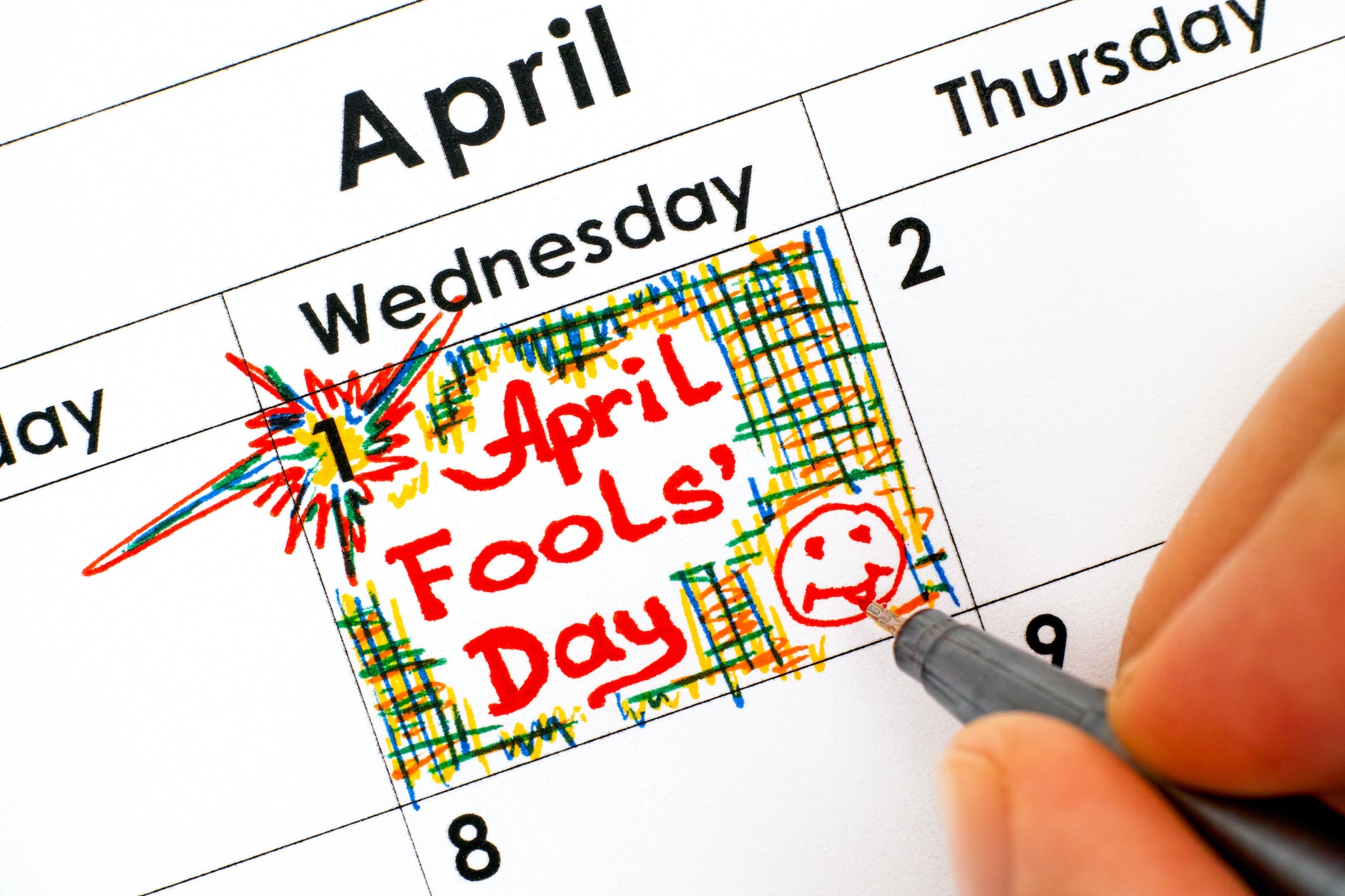
Legends have it that April Fools’ Day began in France in 1564. Prior to 1564, April 1 used to be celebrated as New Year’s Day. Those who insisted on celebrating the “old” New Year’s became known as April fools, and it became common to play jokes on one another.
Some also say that it has to do with Mother Nature fooling us. Sometimes, a late March or early April storm brings snow, fooling us, since the calendar says it is spring. The Almanac’s long-range forecast tries to flag those late surprise storms ahead of time.
The truth is, no one really knows for certain what the origin of April Fools’ Day is, though it has been celebrated in many varied cultures for hundreds, maybe even thousands, of years. The Britannica entry on April Fools’ Day walks through the leading theories.
One popular story posits that the tradition began during the 16th century after Pope Gregory XIII decreed the switch from the Julian calendar to the Gregorian calendar. Prior to that time, the first day of April marked the start of the New Year, but the new calendar moved the start of the year to January. According to this particular origin story, an “April fool” was someone who could be tricked into receiving visitors on April 1 for a “New Year” celebration.
But other evidence seems to indicate that April Fools’ Day existed, in some form or other, long before Pope Gregory’s day. Roughly 200 years before the calendar changed, English poet Geoffrey Chaucer seemed to reference April Fools’ Day in his Canterbury Tales, when the characters of a rooster and a fox each trick one another. Chaucer notes that the date of the events described is March 32 (also known as April 1).
One of the oldest known prank traditions at this time of year is Sizdah Bedar, the Persian New Year. Residents of the area that became modern-day Iran have played jokes on one another during this holiday, which always falls on either April 1 or 2, since at least 536 BC. This tradition is still practiced today.

Whatever the origin of April Fools’ Day, different traditions have developed in different countries over the years. Here are just a few.
April Fools’ Day Pranks Around the World
- In some countries, all April Fools’ Day pranks must be completed by noon. Anyone playing a joke after that deadline is called an “April Fool.” In North America, this tradition is generally followed in Canada, but not in the United States.
- In Italy, France, and French-speaking areas of Canada, one popular tradition is to attempt to stick a paper fish on someone’s back without their noticing. This practice is known as poisson d’avril, or “April’s fish,” a phrase that can sometimes refer to April Fools’ pranks in general.
- In Belgium, children often lock parents or teachers out of a room or building, only agreeing to let them in exchange for a treat.
- In Poland, large-scale hoaxes by the media and even the government are so widespread that people often avoid engaging in serious activities for the day. At least one important historic event, the signing of the anti-Turkish alliance by Emperor Leopold I in 1683, was backdated from April 1 to March 31.
- In Scotland, April Fools’ Day used to be called “Hunt the Gowk Day.” “Gowk” is an old Scottish word for a foolish person. A traditional prank involved sending the “gowk” to deliver a sealed message. The message instructed the recipient, “Dinna laugh, dinna smile. Hunt the gowk another mile.” The recipient would then send the victim onward to another person, bearing an identical sealed message. The joke went on until either the “gowk” got wise to what was going on, or someone took pity on him.
Famous April Fools’ Pranks in History
- 1957, BBC Spaghetti Harvest: the BBC’s flagship news program aired a three-minute segment showing Swiss farmers harvesting spaghetti from “spaghetti trees.” Hundreds of viewers called in to ask where to buy their own tree.
- 1962, Sveriges Television, Sweden: a technical expert announced that putting a nylon stocking over the front of a black-and-white set would convert the picture to color. Thousands of viewers tried it.
- 1980, BBC Big Ben: the BBC World Service announced that Big Ben would be converted to a digital clock face. Listeners flooded the switchboard in protest.
- 1996, Taco Bell + the Liberty Bell: the fast-food chain ran full-page newspaper ads claiming it had purchased the Liberty Bell to ease the national debt and would rename it the Taco Liberty Bell.
- 2008, BBC Penguins: a “documentary” clip showed Adelie penguins taking flight from Antarctica to fly to South American rainforests. The clip went viral the same week.
Why Some Cultures Stop Pranking at Noon
The noon-cutoff rule is one of the older customs in the Anglo-Scottish tradition. The folk logic: a prank after the sun crosses its highest point of the day puts the prankster, not the target, in the foolish position. Practically, the rule probably kept the day from spiraling into all-day chaos in market towns and schoolyards. The cutoff is still observed in much of Canada, the United Kingdom, and parts of Ireland and New Zealand. The United States, for whatever reason, never picked it up, and most US offices accept that the day can go until knockoff time.
Calendar Math for April Fools’ Day
| Year | April 1 falls on | Notes |
|---|---|---|
| 2026 | Wednesday | Weekday |
| 2027 | Thursday | Weekday |
| 2028 | Saturday | Weekend |
| 2029 | Sunday | Weekend |
| 2030 | Monday | Weekday |
| 2031 | Tuesday | Weekday |
| 2032 | Thursday | Weekday (leap year) |
| 2033 | Friday | Weekday |
| 2034 | Saturday | Weekend |
| 2035 | Sunday | Weekend |
Looking for spring-related folklore the rest of the season? See our in like a lion, out like a lamb piece and our take on the Moon phase calendar for the right week to start anything new.

Frequently Asked Questions
When is April Fools’ Day 2026?
Wednesday, April 1, 2026. The date is always April 1, regardless of the day of the week.
What is the most accepted April Fools history origin?
The 1564 French calendar shift, when the New Year moved from April 1 to January 1. Holdouts who celebrated April 1 anyway were mocked as “April fools.” Chaucer’s earlier “March 32” reference suggests the tradition predates that.
What is the noon rule?
In Canada, the UK, and much of Europe, all April Fools’ pranks must be done by noon. Anyone pranking after that becomes the fool. The US doesn’t follow the rule.
What is poisson d’avril?
“April’s fish.” A French, Italian, and French-Canadian tradition of sticking a paper fish on someone’s back without their noticing. The phrase can also mean April Fools’ pranks in general.
Is April Fools’ Day a public holiday?
No. It is not an official holiday in any country. Banks, schools, and offices stay open. The tradition is purely social.
What is Sizdah Bedar?
The Persian New Year, observed since at least 536 BC, always on April 1 or 2. It includes a long-running tradition of practical jokes that predates the European April Fools’ custom by centuries. Still observed in modern Iran.


This article was published by the Staff at FarmersAlmanac.com. Any questions? Contact us at [email protected].
- Farmers' Almanac Staff

- Farmers' Almanac Staff

- Farmers' Almanac Staff

- Farmers' Almanac Staff


Thanks for help