

Raising Backyard Chickens For Beginners
Thinking about raising backyard chickens for eggs? Before you dive into this popular pastime, here is some important must-read advice!
Quick Reference: Backyard Chickens
- Check local rules first. Most towns cap the flock at 5 to 6 hens, restrict roosters, and require a setback from the property line.
- Starter flock: at least 3 chickens (they are flock animals). 3 layers give about a dozen eggs a week.
- Friendly breeds: Buff Orpington, Australorp, Cochin, Wyandotte. Add Easter Eggers for colored eggs.
- Coop minimum: 3 to 5 sq ft floor space per hen, 8 in roost bar each, 1 nesting box per 3 to 4 hens, 10 sq ft of run per hen.
- Chicks indoors for 8 weeks. Move outside when night lows are reliably above 55°F.
- The #1 backyard predator: the family dog. Train “leave it” and “stay” before the chicks arrive.
Flocks of chickens are popping up in urban backyards all across the country. The allure of binfuls of adorable peeping chicks at the feed store is often just as strong as the desire to collect fresh eggs right from your backyard. Before you dive into the popular pastime of raising backyard chickens, here are a few things you will want to consider. For a clearinghouse of breed information, see The Livestock Conservancy’s poultry profiles.
Check Local Ordinances
The first thing you should do if you are thinking about raising backyard chickens is check with your municipality to learn the regulations in your area. Most towns have restrictions on flock size (usually limited to five or six hens), owning a rooster, and the distance a coop must be from your property line. Some towns require a permit to own chickens or a building permit for a coop over a certain size, so check with your local government and be sure to get the rules in writing to prevent problems in the future. If you are not allowed chickens, or do not agree with some of the restrictions, work to change the law. The time to do that is before you get your chickens.
Breeds and Flock Size
Once you have confirmed that you are allowed to have backyard chickens, it is time to do some research into the breeds you want. Different breeds have different personalities and temperaments. For example, Buff Orpingtons, Cochins, and Australorps are all gentle breeds perfect for families with children. Some breeds are better suited for extremely cold or hot climates.
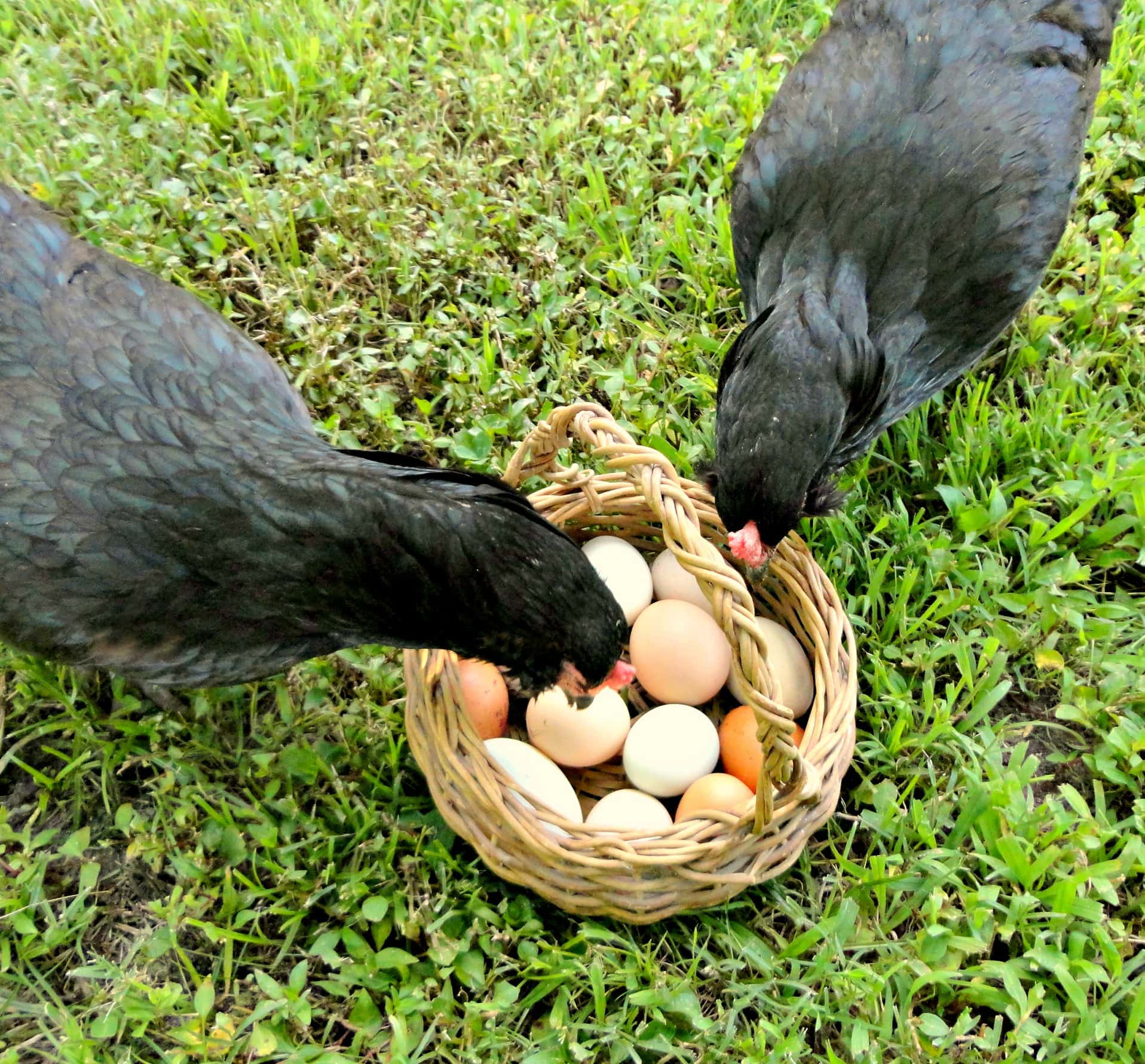
Some breeds lay colored eggs, such as Easter Egg Chickens. Your local feed store should carry a variety of breeds suitable for your area, or you can order day-old chicks online from a hatchery. Hatchery websites are also good sources for breed information.
Chickens are extremely flock-oriented, so a good starter flock size is no fewer than three chickens. You should collect about a dozen eggs a week from three laying hens. A flock of five or six hens is a good choice for slightly larger families.
Timing the Arrival of Your Chicks
Baby chicks need to be kept under a heat lamp in the house for the first eight weeks of their life. Until they grow their feathers, they cannot keep themselves warm on their own. Chicks grow fast, so time their arrival carefully in order to get them outside as quickly as possible. To do that, count back eight weeks from the time you expect the nighttime temperatures to stay consistently above 55 degrees and schedule that date for your chicks to arrive.
BONUS! Farmers’ Almanac takes the guesswork out of it. Be sure to check out our Best Days to Set Eggs chart.
Supplies
Before your chicks arrive, you will need a brooder for them (a cardboard box or plastic tote works just fine), a heat lamp, a chick-sized waterer and feeder, and chick feed. Until they are eight weeks old, your chicks should eat chick feed; then switch over to starter/grower feed until they are 18 weeks old, at which point they need layer feed.
Your chickens need a home. If you plan on building your own coop, the next eight weeks should be ample time to research plans, choose a design, and get your coop built. There are also coop kits available online or ready-made coops available from shed and building companies. Craigslist is another good source for an inexpensive, used coop or shed that could be converted into a coop.
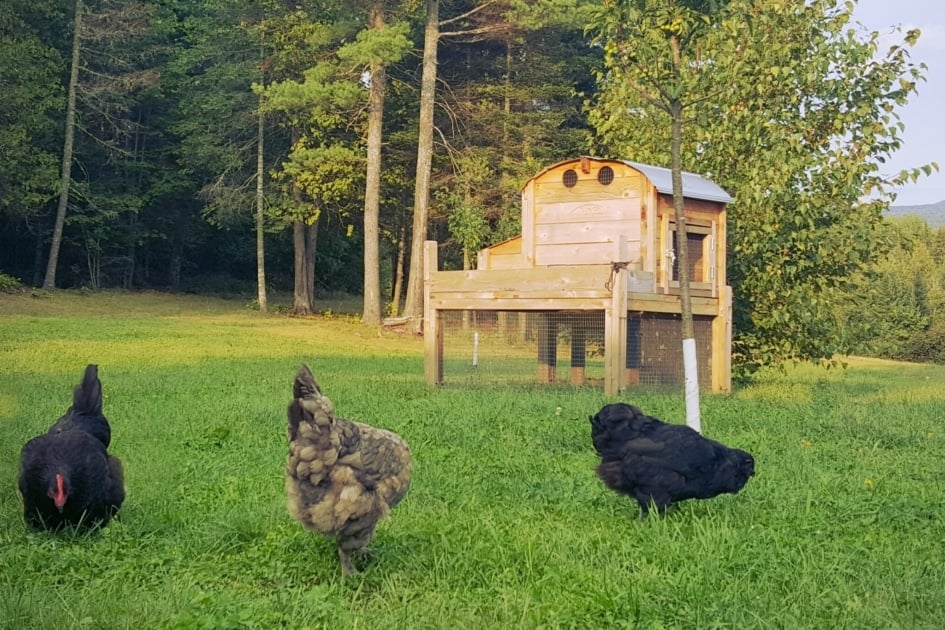
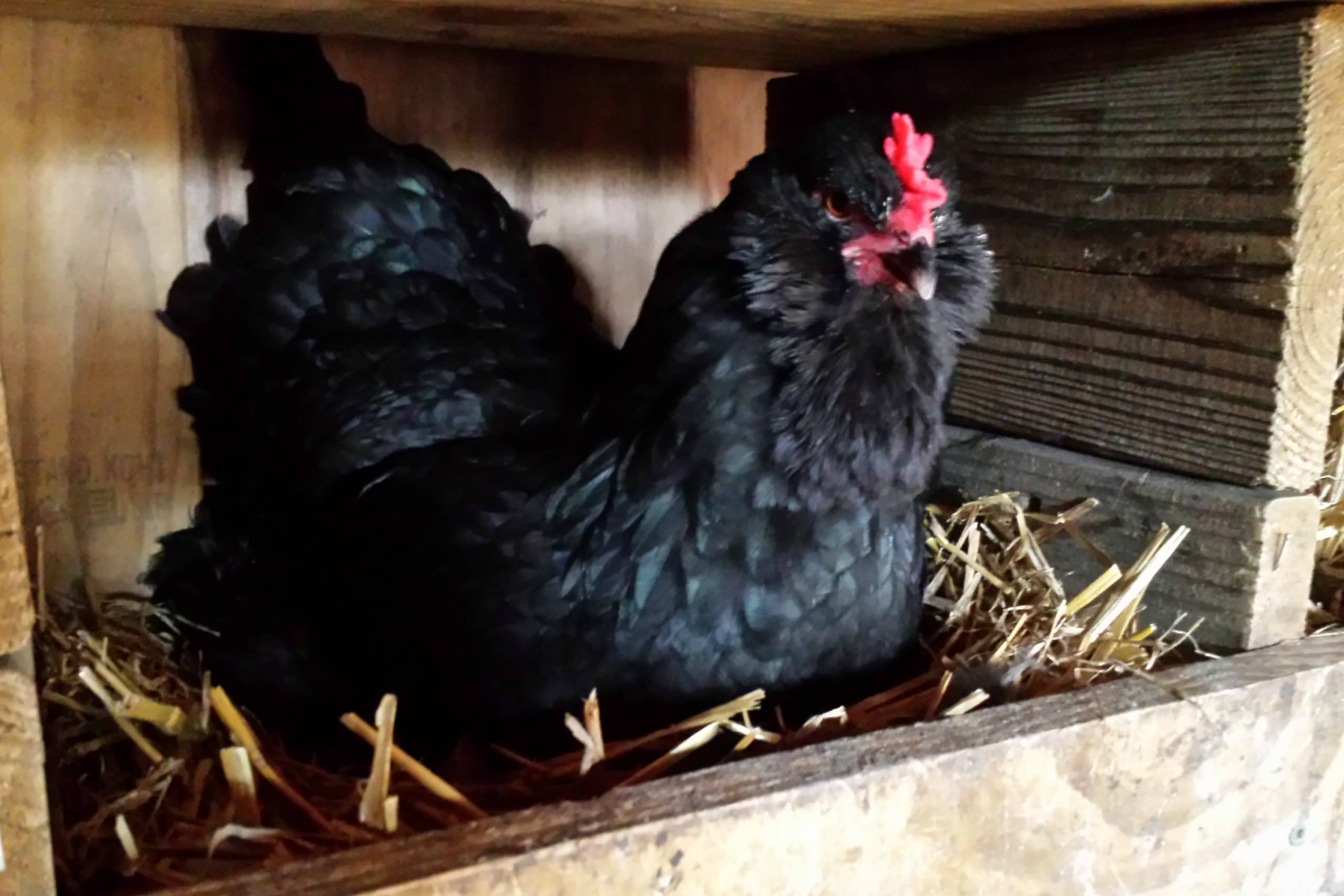
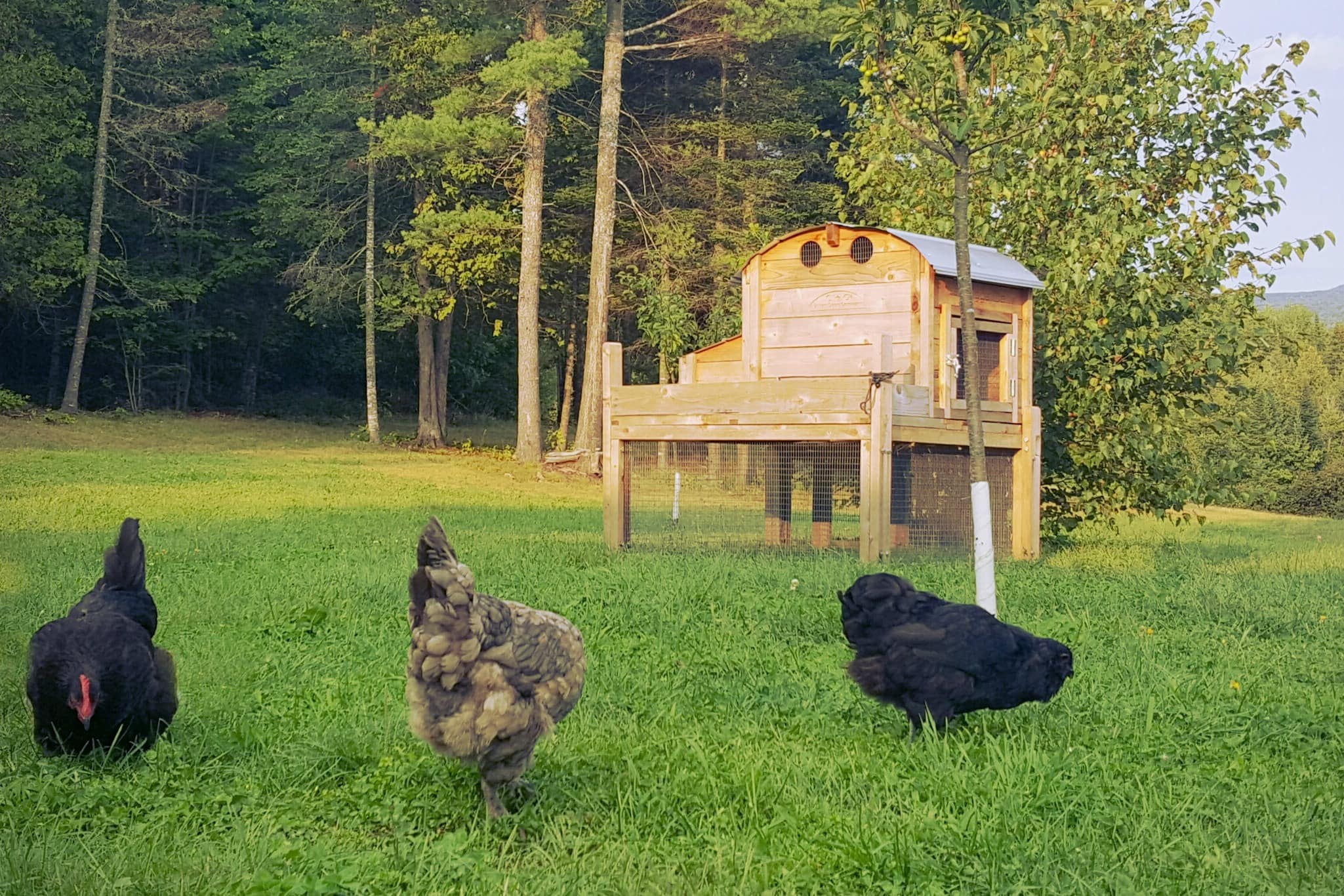
Plan on a coop large enough to give each hen 3 to 5 square feet of floor space and 8 inches of roosting bar, plus one nesting box for each 3 to 4 hens. Since predators are a concern for nearly every backyard flock, an attached run that allows each hen a minimum of 10 square feet of space is a good idea so your chickens can be outside when no one is home to keep an eye on them.
Training Your Pets
Dogs are the number one killer of backyard chickens. No one wants to believe their golden retriever could ever harm another animal, but the reality is, if you do not train your dog to behave around your chickens, you might very well lose them to your beloved family pet. Plan on doing some basic training with your dog prior to getting your chicks, including commands such as “drop it,” “leave it,” “stay,” and “sit.”
When your chicks arrive, let your dog investigate their brooder and allow supervised time around the chicks. Once the chickens are outside, leash your dog and give stern corrections any time a move is made to lunge at them. Dogs should never be allowed to chase chickens, even in play. Once boundaries are set and respected, your dog should become your best predator deterrent and a wonderful guardian of your flock.
Eggs
Your backyard chickens will lay eggs for 3 to 4 years, and then production starts to drop off. However, a chicken can live for another 6 or more years, so be sure to think about plans beyond the first few years.
First-Year Backyard Chicken Checklist
| Task or item | When | Notes |
|---|---|---|
| Set up brooder (heat source, bedding, feeder, waterer) | Before chicks arrive | Start brooder at 95 F; use pine-shaving bedding; heat plate preferred over heat lamp for fire safety |
| Reduce brooder temperature by 5 F per week | Weeks 1-6 | Stop reducing once temperature matches outdoor ambient |
| Provide chick starter feed | Weeks 1-8 | High-protein (18-20%) crumble; keep fresh water available at all times |
| Handle chicks daily | Week 1 onward | Builds tameness and reduces stress at coop transition |
| Build or prepare coop | Before week 6 | Minimum 4 sq ft per bird inside; 10 sq ft per bird in run; predator-proof latches essential |
| Transition chicks to coop | Weeks 6-8 (when fully feathered) | Introduce outdoor time gradually; ensure coop is draft-free but ventilated |
| Expect first eggs | Weeks 18-24 (breed dependent) | Leghorns lay earlier; heritage breeds later; shorter winter daylight delays laying |
| First molt | Around 12-18 months (often fall of the first full year) | Egg production drops or stops for 6-12 weeks; boost protein in feed during molt |
| Winter prep | Before first frost | Add extra bedding; confirm ventilation is adequate; consider supplemental lighting (14-16 hr/day) to maintain production |

Backyard Chickens FAQ
How many chickens should a beginner start with?
Three is the floor. Chickens are flock animals and stress when alone. Three hens give roughly a dozen eggs a week, plenty for most families.
What is the easiest chicken breed for beginners?
Buff Orpington and Australorp are friendly, hardy, and reliable layers. Wyandotte and Plymouth Rock are also classic starter birds. Cochins are gentle but lay fewer eggs.
Do I need a rooster to get eggs?
No. Hens lay eggs without a rooster. You only need a rooster if you want fertilized eggs to hatch new chicks.
How much space does each hen need?
3 to 5 square feet inside the coop, 8 inches of roosting bar, and at least 10 square feet of outdoor run. More is always better; less leads to bullying and disease.
Are backyard chickens noisy?
Hens are quiet most of the day with a brief loud “egg song” after laying. Roosters crow at sunrise (and often other times). Most municipal ordinances ban roosters for that reason.
How long do backyard chickens live?
8 to 10 years on average, with 6 to 12 years possible. Egg production peaks in the first two years and slows after year three or four.
What predators should I worry about?
In order of risk: family dogs, raccoons, foxes, coyotes, hawks, owls, weasels, and rats. Hardware cloth (not chicken wire) on the run, a roof, and a locking coop door at night handle most threats.
Tell us about your experiences raising chickens in the comments below. Be sure to check out our other helpful story, Selecting The Right Chicken Coop For Your Flock. For more backyard reading: 15 fun egg facts, 10 surprising uses for eggshells, and how fresh are supermarket eggs?.
Photos used with permission by FreshEggsDaily.com



Lisa Steele
Lisa Steele is an author and 5th generation chicken keeper who shares a farm in Maine with her husband, mixed flock of chickens and ducks, two dogs, and a cat. She writes the natural chicken keeping blog Fresh Eggs Daily. Visit www.FreshEggsDaily.com.
- Lisa Steele

- Lisa Steele
- Lisa Steele



I like rearing broiler
Am in nigeria what can I do as a bigginer?
Join a republican based chicken farming organization. Lots of old fashioned know-how and you will raise the best, most polite birds in your country. Most regions have such a thing. Contact your local extension office!
I’ve been wanting to get some chickens for a long time, love fresh eggs but not sure if they allow it here where I am living unfortunately!
I find raising backyard chickens very interesting and easy,I want to raise them for commercial purpose.
I have one ben laying but the other five are bot.
Just bought my first coop, and assembled it. Bought all supplies needed, and will be heading to get my chicks tomorrow. Exciting times indeed!
I live in South Central Alabama and I am thinking of getting some chickens! I would like to know your thoughts on specific breeds & what mix of breeds would be good together? I am interested in dual purpose chickens and heavy layers. They will be have a nice coop with plenty of space to scratch. 10 sq. or more per chicken with a predictor proof top,wire. Im thinking a 16X 30 fenced area with the coop outside but attached to the pen. Your thoughts are appreciated!
I started my chicken adventure in May of 2017. Got 15 chicks.. 14 pullets & a rooster. They are all ISA Browns (red sex link). Early on I had to cull the roo as he was attacking the pullets & ME!!! I live in S.D. & it has been a cold winter but the “girls” continue to lay eggs! I love them & yes, I’m hooked!!! 🙂
can we come to your farm to see the baby chick
how do you care for chickens in winter
Great Post! I hope I came by something like this when I decided to start raising chickens. HomeAnimal careChickensRaising Chickens In Your Backyard: What You Need To Know
Raising Chickens In Your Backyard: What You Need To KnowCHICKENS BY GEOFF KINGMAN MARCH 29, 2017
Are you interested in raising chickens in your own backyard for the first time but have absolutely no clue how to do it? No need to panic, somebody has been there before you. And that somebody is me. (If you’re an Enrique fan, then we have more than one point in common).
I had to go through a whole process of trial and error in which I made a couple of mistakes that I could have easily avoided had I known some basics. Of course, one doesn’t need to be a professional farmer to raise a flock of a couple pullets, but it is only now, after more than one year and half of experience, that I can say quite confidently that I master the elementary tools to handle my chickens in almost optimal conditions.
For those who are interested in learning more about raising chickens, I share with you an article I recently wrote about my journey. I hope you like it.
https://www.farmingstyle.com/raising-backyard-chickens/