

November Witch: The Great Lakes’ Deadliest Storm
The freighter, The SS Edmund Fitzgerald, sank from this brutal system of storms that scream across the Great Lakes from Canada every autumn. Listen to the haunting song by Gordon Lightfoot and learn more about "The November Witch."
Quick Reference: The November Witch
- What it is: a popular name for the fierce windstorms that scream across the Great Lakes every autumn, also called the Witch of November.
- When: right around mid-November, when arctic cold collides with warm air pulled up from the Gulf of Mexico.
- How strong: force equal to a low-level hurricane, with winds above 80 miles per hour and towering 20-foot seas.
- Deadliest wreck: the SS Edmund Fitzgerald, lost with all 29 crew on Lake Superior on November 10, 1975.
- The toll: an estimated 25,000 mariners have died on the Great Lakes over 300 years, most within the grip of the November Witch.
Every year, right around the middle of November, the Great Lakes turn mean. Sailors have a name for the storms that do it. They call the season the November Witch, and folks who live and work along these inland seas learned long ago to respect her.
What Is the November Witch?
The November Witch, sometimes phrased as “the Witch of November,” is a popular name for the frequent and brutal system of windy storms that come screaming across the Great Lakes from Canada every autumn. The name is folklore, but the danger is real, and generations of Great Lakes captains have planned their late-season runs around it.
Though termed “lakes,” North America’s Great Lakes are each large enough to create their own weather systems, making them, more accurately, inland seas. In fact, collectively, the Great Lakes chain makes up the Earth’s largest system of freshwater seas. Water that big does not calm quickly once the wind gets under it.
How the November Witch Forms
Each year, right around mid-November, violent gales occur when the low pressure from the frigid arctic air north of the lakes comes into contact with warmer fronts pulled up from the Gulf of Mexico. The two air masses clash over open water, and the temperature gap between them acts like fuel.
Meteorologists call these systems extratropical cyclones, which is a plain way of saying a large storm that forms outside the tropics. When the pressure inside one falls fast enough over a day, forecasters call it a bomb cyclone. That rapid drop is what turns an ordinary autumn front into the Witch.
These storms can be so severe that their force is equivalent to a low-level hurricane, with winds above 80 miles per hour and towering 20-foot seas. The lakes make it worse. Their open water holds late summer warmth well into fall, so a cold front crossing them picks up heat and moisture the way it would over the ocean.
The same setup that raises the waves also loads the sky with snow. Cold air racing over warm lake water is what drives our lake-effect snow, and a strong dip in the polar vortex can send the arctic air south to start the whole engine. NOAA’s Great Lakes Environmental Research Laboratory studies how these lakes build and drive their own weather.

The Wreck of the Edmund Fitzgerald
The term “Witch of November” was famously used in the song, “The Wreck of the Edmund Fitzgerald,” by Canadian singer-songwriter Gordon Lightfoot, a poetic tribute to one of the most well-known Great Lakes shipwrecks in recent memory. The song kept the name alive for a whole generation that never set foot on a lake boat.
On November 10, 1975, the SS Edmund Fitzgerald, a massive ore freighter that had once been the largest in its class, sank to the bottom of Lake Superior during a particularly violent autumn gale, killing all 29 of its crew members. No distress call ever came, and no bodies were recovered. You can read the full account of the ship and her loss at the SS Edmund Fitzgerald record.
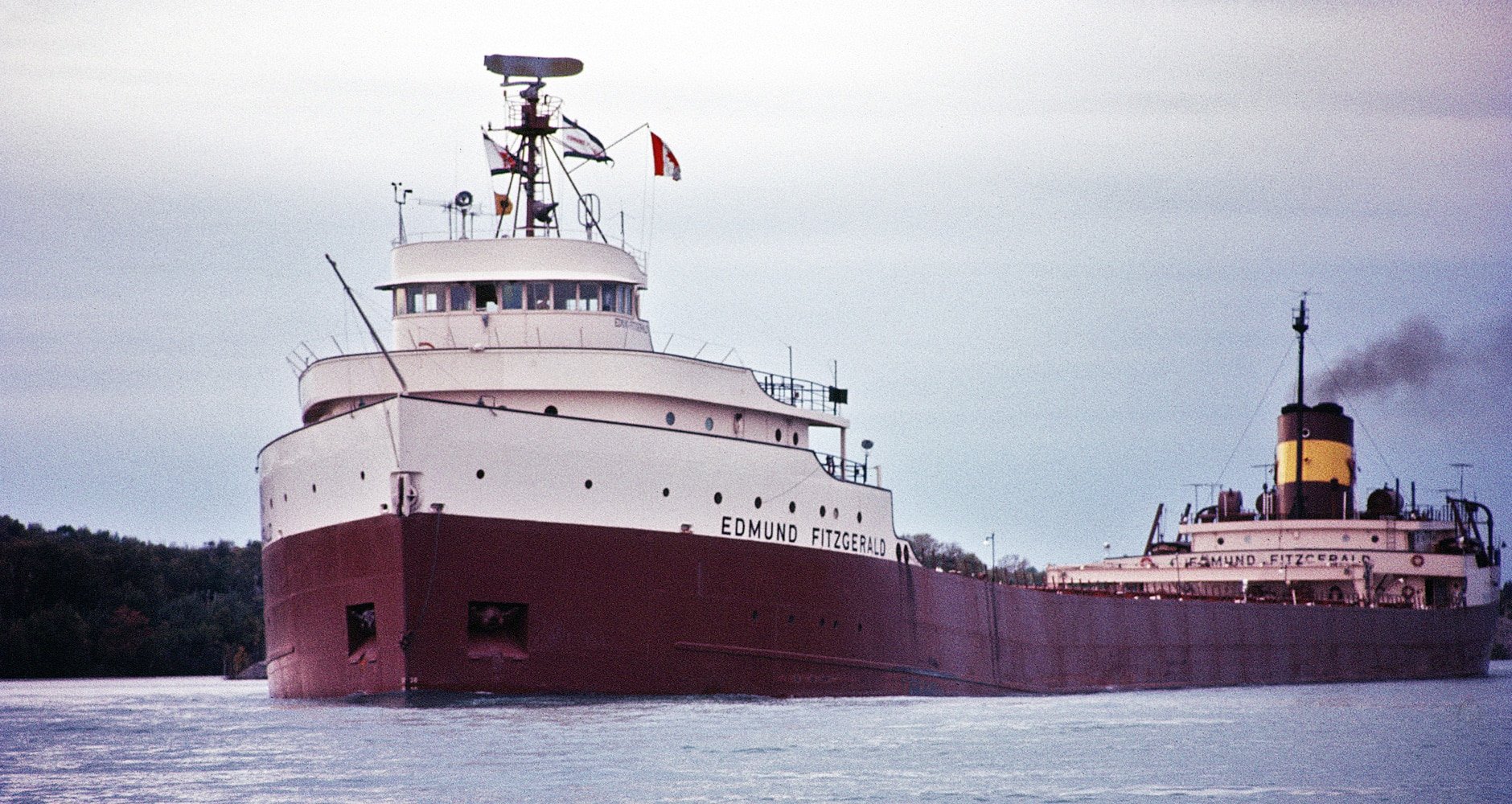
Though one of the most infamous, Edmund Fitzgerald was far from the only ship to succumb to the Witch of November. The floors of all five Great Lakes are littered with thousands of wrecked vessels.
More than 6,000 ships were lost on the Great Lakes between the years 1878 and 1897 alone. Over the last 300 years, an estimated 25,000 mariners have lost their lives on the Great Lakes, with the vast majority of those casualties occurring within the icy grip of the November Witch.
The Fitzgerald was not even the worst single day on these waters. The Great Lakes Storm of 1913, remembered as the White Hurricane, wrecked more than a dozen ships and killed over 250 sailors across four days of blizzard and wind. The Armistice Day Blizzard of 1940 brought another deadly November blow. The Witch has a long ledger.
Watch the following tribute to the Edmund Fitzgerald, with real news footage, set to Gordon Lightfoot’s famous tune:
Five Lakes, Five Inland Seas
The November Witch does not treat every lake the same. Each of the five has its own depth, shape, and stretch of open water, and that changes how the storms build. Here is a quick look at what the season tends to bring on each one.
Weather Signs and Folklore of a Hard November
Long before radar, lake sailors and farmers read the sky for the Witch. A ring around the Moon, a falling glass on the barometer, and a sudden warm spell out of the south were all taken as signs that a blow was on the way. November’s Full Moon, the Beaver Moon, often rises just as the first big gales arrive. You can check its exact date on our Full Moon dates and times page.
Some of the old signs hold up better than others. A falling barometer really does mark an approaching low, so that one has science behind it. Others are pure lore. We pass them along because they are part of the Great Lakes story, and we let you decide how much stock to put in them.
Staying Safe When the Gales of November Come
You do not need to captain a freighter to feel the November Witch. Her winds down trees, cut power, and push high water onto the shore across the whole Great Lakes region. A little planning goes a long way once the calendar turns to November.
- Watch the forecast closely from early November on, and take gale and wind warnings seriously.
- Stay off the water in small boats when a strong low is coming. The lakes turn deadly fast.
- Keep flashlights, batteries, water, and a few days of food on hand for the power outages that follow big blows.
- Secure or bring in anything the wind can throw, from patio furniture to trash cans.
- Give the lakeshore a wide berth during a storm. Waves and spray can sweep a person off a pier in a heartbeat.
For the season ahead where you live, our long-range weather forecast is the place to start. Plan ahead, and let the Witch pass you by.

The November Witch: Frequently Asked Questions
What is the November Witch?
The November Witch, also called the Witch of November, is a popular name for the fierce windstorms that sweep across the Great Lakes from Canada every autumn. They form around mid-November when frigid arctic air collides with warm air pulled up from the Gulf of Mexico, and they can hit with the force of a low-level hurricane.
Why is it called the Witch of November?
The name is Great Lakes folklore for the sudden, violent gales of late autumn. It reached a wide audience through Gordon Lightfoot’s 1976 song “The Wreck of the Edmund Fitzgerald,” which used the phrase “the witch of November come stealin'” to describe the storm that sank the ship.
How strong can a November Witch storm get?
These storms can reach the force of a low-level hurricane, with winds above 80 miles per hour and towering 20-foot seas on the open lakes. The wide, deep water of the Great Lakes lets waves build to heights that surprise people who think of them as calm inland lakes.
What happened to the Edmund Fitzgerald?
On November 10, 1975, the SS Edmund Fitzgerald sank to the bottom of Lake Superior during a violent autumn gale, killing all 29 crew members. The freighter had once been the largest of its class. No distress call was ever sent, and the wreck became the most famous loss to the November Witch.
How many ships have the Great Lakes claimed?
More than 6,000 ships were lost on the Great Lakes between 1878 and 1897 alone. Over the last 300 years, an estimated 25,000 mariners have died on these waters, and the floors of all five lakes hold thousands of wrecked vessels. Most of those losses came during autumn storms.
When is the November Witch most dangerous?
The peak risk runs right around mid-November, though strong lows can spin up any time from late October into December. The lakes still hold summer warmth then, which feeds the storms, so the water stays dangerous even as the air turns cold. Check the long-range forecast for your region and plan ahead.


Jaime McLeod
Jaime McLeod is a longtime journalist who has written for a wide variety of newspapers, magazines, and websites, including MTV.com. She enjoys the outdoors, growing and eating organic food, and is interested in all aspects of natural wellness.
- Jaime McLeod

- Jaime McLeod
- Jaime McLeod
- Jaime McLeod





I stood on the shore of Lake Erie that day and had never seen the Lake so wild. Never gave a thought about the ship even though my good friend was on it. What a shock when I saw the headlines on the Star Beacon the next day saying she had gone down. 46 years now and every year I still feel the pain.
Thanks for sharing your story with us, Sheri. Heartbreaking.
Powerful video–thank you…
While I am a Gordon Lightfoot Fan of numerous decades, this Tribute was very sad, Dirgeful tune/melody but, unfortunately, it fit the situation. Those Greedy Corporate Tycoons HAVE NO FEELING FOR PRECIOUS LIVES LOST BECAUSE OF THEIR GREED ! I AM VERY GLAD THAT THOSE SHIPS ARE NOT ALLOWED SAIL IN WEATHER LIKE THAT ANYMORE !
Also, I am a Fan of Lighthouses, as well and NEW JERSEY HAS MANY OF THEM. Every Third Weekend in October there is “The Lighthouse Challenge”. Those entered try to visit and walkup or down every single Lighthouse in the State. I have gone to visit Lighthouses on a different weekend than this October and have visited several Lighthouses.
Thank you for your time and interest ..
SINCERE SYMPATHIES TO ALL THOSE FAMILIES WHO LOST RELATIVES IN THOSE SHIPWRECKS. MAY THEIR MEMORIES BE FOR AN ETERNAL BLESSXING ! LET UIS SAY AMEN.
Why do they allow shipping to proceed during a time of the year recognized to be particularly dangerous? Aren’t the lives of all those men worth more than a load of ore or any other cargo for that matter?
The Edmund Fitzgerald was the last large commercial ship to sink on the Great lakes and that was 45 years ago. This is because of the improved weather forecasting technology. They don’t sail anymore in bad weather.
Beautiful way to remember
I normally don’t do a lot of posting however want to share my story. We lived on the north shore of Lake Superior when this storm hit and my husband, myself, and two friends went to a lookout to check out the storm. To avoid being blown away, the stronger one held onto the door handle of the car and we all looped our arms together. I have never experienced the strength of such a wind until that moment in time and haven’t since.
This song has always made me cry. Even when it first came out, although at the time I didn’t realize it was a true story. When I learned it was true, for a long time I thought the wreck was much older. But after I learned the truth…even now I weep for the lives lost, and for the grief of the families left behind. Davy Jones got himself a good crew. May they and their loved ones know peace.
I am from Illinois and I can remember as a kid always hearing the older folks talk about the Edmond Fitzgerald the closer it got to November. A true loss that will never be forgotten. May the souls and the families of the Fitzgerald find peace.
I have always liked Gordon Lightfoot. This particular song was informative and a beautiful musical tribute to the crew. May God give peace and comfort to their families.
This has been one of the best posts ever on Facebook. If you’ve ever been on the Great Lakes you can imagine what it felt like. I went once on rugged waters as a dare and needless to say I’ll never do big water again!