

Extend Your Harvest: Hoop House Winter Growing (Full Guide)
Enjoy fresh vegetables all winter long by "growing undercover." Learn more.
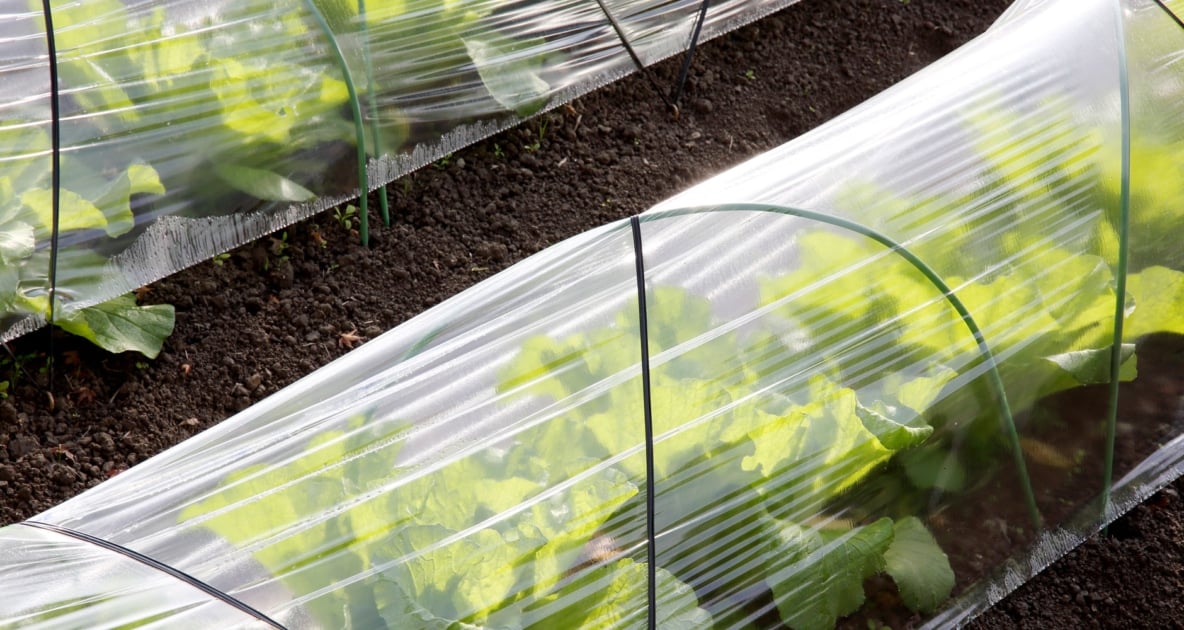
Quick Reference: Hoop House Winter Growing
- Season stretch a hoop house adds: about one month on each end of the outdoor season.
- Each layer of cover shifts you: 1.5 USDA plant hardiness zones warmer.
- Zone 5 Maine with hoop house plus row cover: effectively growing Zone 8 (southern Pennsylvania) crops.
- Temperature boost from a mini greenhouse inside a hoop house: 2 to 4 degrees F under the row cover.
- Best cold hardy crops for winter harvest: kale, mustard greens, spinach, arugula.
- Cheapest thermal mass: gallon milk jugs painted black and filled with water; scale up to 50 to 55 gallon drums in large tunnels.
- USDA Plant Hardiness Zone Map (2023 update): most of the US shifted about a half zone warmer, which stacks with your covers.
For gardeners and small scale farmers, a hoop house or high tunnel is one of the cheapest ways to add roughly a month to each end of the growing season. When neighbors are still hardening off seedlings after the last frost, you can already have flowers setting on your plants. When those same neighbors are putting their beds to sleep in the fall, you can still be pulling ripe tomatoes and tender greens out of the tunnel.
The interesting question is how much further you can push it. With a little innovation, hoop house winter growing can keep salad greens on the table straight through January, even when snow is piling on the plastic. Here is what actually works, why it works, and how each layer of cover changes your climate on paper.
Growing (Even More) Under Cover
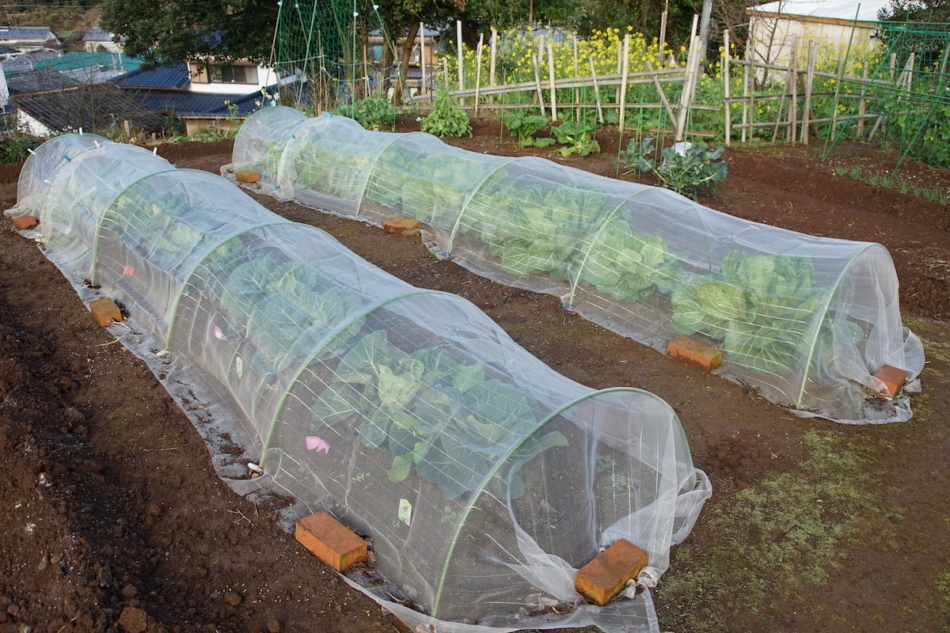
If you live in a colder climate, a single layer of plastic will not protect your plants forever. Eventually the cold and frost seep in. That does not mean you are out of options for holding the temperature inside that high tunnel. The simplest fix is to build a mini greenhouse inside your tunnel, so the plants live inside two layers of protection instead of one.
Some garden centers use recycled metal fencing, flexible enough to bend into an arch, to build the frame of a mini greenhouse. Bend it over a bed of lettuce, drape reemay (a floating row cover fabric) over the arch, and clip the fabric on with clothespins. The resulting tunnel-inside-a-tunnel sits about 14 inches over the greens. It is cheap, it is fast to set up, and it does most of the winter work.
The extra cover raises the temperature under the row cover 2 to 4 degrees F. That is enough to keep cold hardy plants from taking damage on a hard night, and it is enough to keep them growing on a bright day instead of just surviving.

The Cover-Layer Math: How Row Covers Shift Your Zone
Here is the rule of thumb that makes hoop house winter growing feel almost unfair: each layer of cover you put over a plant is equivalent to moving it one and a half USDA plant hardiness zones south. Stack the layers and you stack the zones.
Two things to keep honest here. First, the shift is nighttime protection, not day length; a Zone 5 tunnel in December still gets Zone 5 sunlight, so cold hardy leafy greens work better than fruiting crops. Second, the USDA 2023 Plant Hardiness Zone Map update pushed roughly half the country up by a half zone from the 2012 map, so many gardens are already a little warmer than the label on the seed packet suggests. That stacks on top of your covers.
Which Crops Actually Keep Growing All Winter
The cover-layer system works well for a whole shelf of cold hardy vegetables. Kale, mustard greens, spinach, and arugula can be harvested all winter under a hoop-plus-row-cover setup. Add mache (corn salad), claytonia, tatsoi, and winter density lettuce if you can source the seed. Carrots and parsnips that were sown in late summer keep sweetening in the soil under a heavy row cover, since sub-freezing nights convert their starch to sugar.
For varieties that lean more cold sensitive, use clear plastic instead of reemay over the mini greenhouse. Plastic holds more heat, but you will need to vent it, especially on warm sunny days when humidity spikes and fungal pressure jumps. Lift the plastic in the morning, tuck it back down before sundown. On the coldest forecast nights, drape a warm blanket over the mini greenhouse in the evening for one more layer of protection.
A Quick Tip on the Magic of Hot Bottles
Another cheap way to keep your plants snug as bugs in rugs is thermal mass. Place gallon milk jugs painted black and filled with water throughout the cold frame or tunnel. They soak up heat during the day and slowly release it through the night, which softens the coldest hours before sunrise. If your hoop house is large, step up to black 50 to 55 gallon drums filled with water. A 55 gallon drum stores roughly ten times the heat energy of a gallon jug, so a few of them across the tunnel can hold the interior several degrees warmer through a cold snap.
Position the drums along the north wall so sunlight hits them squarely, and paint the exteriors flat black to maximize daytime absorption. This is the same passive solar principle greenhouse growers have used since the 1970s and it costs almost nothing to add once the tunnel is built.
A Simple Winter Tunnel Routine
Season extension rewards routine. Here is what a low fuss weekly rhythm looks like from November through February:
- Morning: vent the tunnel if the forecast tops the mid 40s. Roll back row cover on sunny days above freezing.
- Late afternoon: close the tunnel doors, drop the row cover back, and top off water jugs if any drained.
- Harvest: pick greens in mid morning after leaves thaw. Frozen leaves bruise when handled.
- Watering: once every 10 to 14 days is plenty in a tunnel; roots grow slowly in short daylight and overwatering invites damping off.
- Cold snap prep: add the blanket layer the night before the low is forecast, not the night of.
Books and Resources on Season Extension
Growing (even more) undercover is a great way to keep fresh greens, tender shoots, and crunchy roots on your plate all winter long. If you are ready to go deeper on hoop house winter growing and season extension, these are the field-tested classics:
The Winter Harvest Handbook, by Eliot Coleman
Four Season Harvest, by Eliot Coleman
Walking to Spring: Using High Tunnels to Grow Produce 52 Weeks a Year, by Paul and Alison Wiediger, Au Naturel Farm
The Hoophouse Handbook, by Lynn Byczynski
For deeper technical reading, USDA’s Natural Resources Conservation Service High Tunnel System Initiative publishes free grower guides and cost share programs for new tunnel construction. It is worth a look before you buy hoops.
Until next time, keep growin.

Hoop House Winter Growing FAQ
How much does a hoop house extend the growing season?
Roughly one month on each end. That is with a single layer of plastic and no supplemental heat. Add a floating row cover inside and you can harvest cold hardy greens straight through winter in most of the United States.
What is the difference between a hoop house and a high tunnel?
Practically nothing. Both terms describe an unheated arch of hoops covered in greenhouse plastic. USDA formally calls them high tunnels for grant purposes. Backyard growers usually say hoop house. The build, the crops, and the cover math are the same.
What can I grow in a hoop house in winter?
Kale, spinach, mustard greens, arugula, mache, claytonia, tatsoi, winter density lettuce, and any carrots or parsnips left in the ground under a heavy row cover. Fruiting crops like tomatoes and peppers need supplemental heat once daylight drops below about 10 hours.
Do I need to heat a hoop house for winter growing?
Not for the crops above. The rule of thumb is that each layer of cover shifts you 1.5 USDA zones warmer. A Zone 5 tunnel with a row cover reads like Zone 8 at night. That is enough for cold hardy leafy greens without paying for heat.
How do black water drums keep a hoop house warm?
Passive solar thermal mass. Water absorbs heat all day and releases it slowly all night. Painted black, a 55 gallon drum stores roughly ten times the heat energy of a gallon milk jug. A few drums along the north wall of a large tunnel can hold interior temperatures several degrees warmer through a cold snap.
When should I open the tunnel to vent?
Any morning the forecast tops the mid 40s. Interior temperatures spike fast in sun, and humidity spikes with them, which invites gray mold and damping off. Roll the row cover back, crack the doors, and close it all up an hour before sundown.
Can I use a hoop house in Zone 3 or Zone 4?
Yes. In colder zones you will lean harder on row covers, thermal mass, and cold hardy varieties, and yields drop through the darkest six weeks around the winter solstice. Growth resumes fast in late January as day length returns.
Where can I get help paying for a hoop house?
USDA’s Natural Resources Conservation Service runs the High Tunnel System Initiative, which offers cost share funding to qualifying growers. Applications open annually at your state NRCS office.
Join The Discussion
Are you growing under cover this winter? What crops are working best in your tunnel, and how are you handling the coldest nights? Share your setup in the comments below.

Sherie Blumenthal
Sherie Blumenthal is a Food Access Coordinator with Lots to Gardens, an urban gardening and community nutrition initiative sponsored by St. Mary’s Health System in Lewiston, Maine.
- Sherie Blumenthal

- Sherie Blumenthal

- Sherie Blumenthal

- Sherie Blumenthal


Thank you, Sherrie, for this valuable information. I’m a native Californian, who lived there 50 years until we retired 5 years ago to the mountains of Tennessee. (zone 6/7) I figured I wouldn’t be able to grow anything during late fall through winter but you’ve blown that idea away with the above information! I never planted fall/winter veggies because I didn’t have room in my garden; but now with hoophouses and row covers, I’ll be able to double my yearly harvest! I hate paying such high prices on veggies during the winter and they never taste as good as home-grown. Thank you!