

Fresh Figs: When They’re in Season, How to Pick Ripe Ones, and a 3-Ingredient Appetizer
Fresh figs are popping up all over produce departments and farmers' markets now. They're delicious and a much different experience than their dried cousin. If you see them, grab 'em. Here's why.
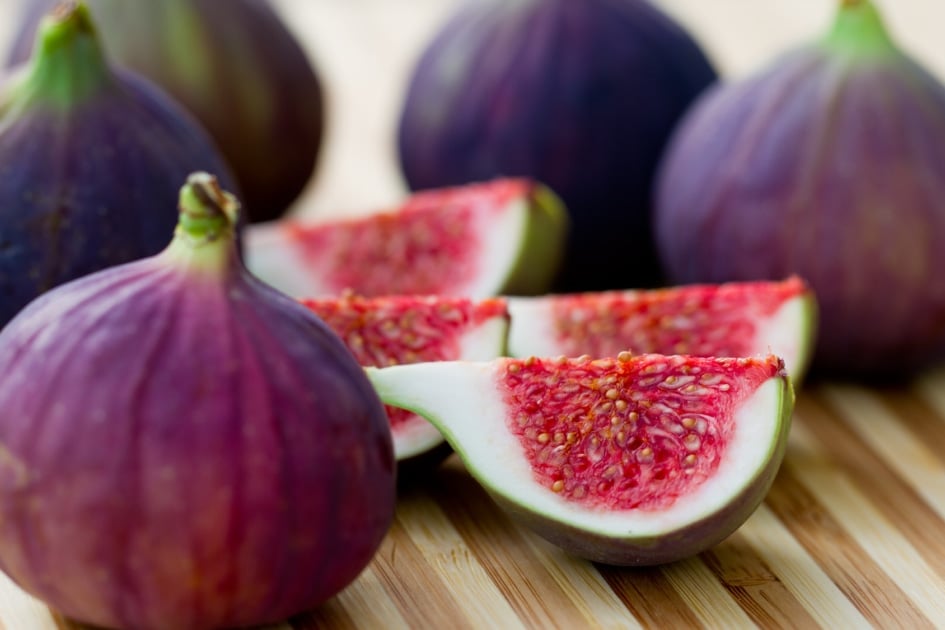
Fresh Figs at a Glance
- Two seasons a year: a small first (“breba”) crop in June, then a main crop August through fall.
- What ripe looks like: the texture of a ripe peach, slight give, a tiny clear drop of sap at the stem.
- Best-known variety: Black Mission, planted along the California coast by Franciscan missionaries; also Brown Turkey, Celeste, Kadota, Alma.
- Health profile: ~37 cal each (per medium fig), no fat, 1 g protein, high in fiber, potassium, manganese, and the digestive enzyme ficin.
- Best food pairings: goat cheese + honey, blue cheese, prosciutto, mascarpone, port, walnuts, oranges.
Ah, the fresh fig. A sweet, seed-studded fleshy nectar of the gods for centuries. These fresh figs have two growing seasons, the first being in June, and the second starts in August and goes into the fall. If you’ve never tried fresh figs, now is a great time to give them a taste-bud test drive.
According to the Encyclopaedia Britannica, the common fig (Ficus carica) is one of the oldest cultivated fruits on the planet, with archaeological evidence of fig cultivation predating both wheat and barley in the Jordan Valley. Most of what we eat today still comes from cuttings traceable back to the Mediterranean basin, which is exactly why a fresh fig still tastes like Sicily even when it grew in a California orchard.
About Fresh Figs
Before you turn up your nose at the mere thought of biting into a whole fig (which, for many, conjures up the image of the brown sticky filling of the well-known Newton cookie), it should be noted that the fresh version is nothing like its dried, wrinkly cousin. Both are delicious, but the fresh variety is lighter and fresher tasting. They’re full of nutrients and fiber, and are very versatile, working well in appetizers, desserts, and just plain snacking.
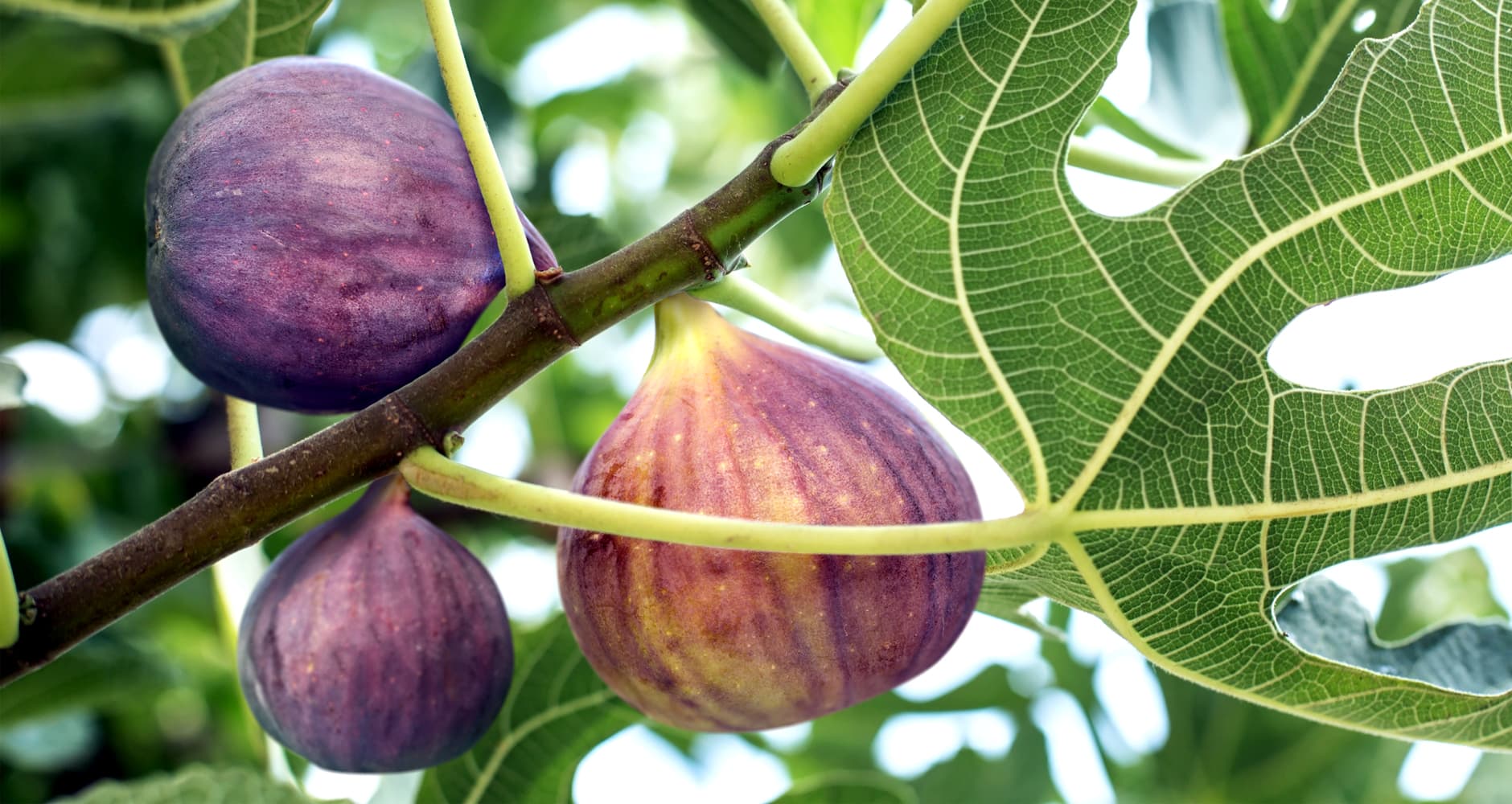
Because of where they are traditionally grown, they thrive in warm, dry climates, fresh figs are mostly associated with Italian and other Mediterranean cuisines in which fresh fruit takes center stage. California, which has a similar climate to Italy, has been the main grower of figs in the United States, but more local farmers are giving the prolific fruit tree a try because it’s fairly easy to manage, given the right growing conditions.
Fun Fact: Although the fig is considered a fruit, it’s actually a flower that has inverted into itself, clustered inside the “pod.”
What Do Fresh Figs Taste Like?
Some say the fresh fig is reminiscent of a less-tart strawberry, with a honeyed sweetness. Its flesh is soft (it should never be “mushy”) and while not tart, it has a clean, refreshing quality.
Selecting The Perfect Fruit
Look for fruit that is slightly soft to the touch with no surface breaks in the skin. Because figs fully ripen on the tree and are then harvested, the day you purchase them is really when they are ready to eat. A fresh fig should have the texture of a ripe peach. Seeing clear sap coming through the stem of the fig is perfectly fine, and usually indicates the fruit is at its sweetest and ripest. Avoid fruit that looks shriveled or has a milky liquid oozing from the stem. Figs are usually packed in mesh plastic containers containing about 8 to 10 pieces, so be sure to check the fruit at the bottom of the container for freshness.
Storing
“A fig waits for no one.” Figs won’t last long at room temperature, so it’s best to consume them right away. If you must store them, remove the figs from their container, place in a shallow bowl in a single layer, and store in the refrigerator where they will keep for several days. Rinse under cool water before eating or cooking, but avoid rinsing the fruit before refrigerating. Chilling does take away from their flavor so it’s recommended to eat them straight from the market.
Varieties
The most common variety of fig is the Black Mission, which was named for the mission fathers who planted the fruit along the California coast. This variety is a deep purple color that darkens to black when dried. Other varieties include Alma, Celeste, Kadota, and Brown Turkey, to name a few.
Common Fresh-Fig Varieties at a Glance
| Variety | Skin Color | Flesh Color | Flavor Notes | Best Use |
|---|---|---|---|---|
| Black Mission | Deep purple to black | Pink-red | Rich, jammy, intensely sweet with berry notes | Eating fresh, cheese boards, jams, drying |
| Brown Turkey | Copper-brown to purple | Light pink to amber | Mild, mellow sweetness; less complex than Mission | Beginner-friendly; good fresh or baked |
| Kadota | Yellow-green | Creamy white to light amber | Mild, honey-sweet, less figgy than darker varieties | Canning, preserves, cheese plates (neutral color) |
| Calimyrna (Smyrna) | Yellow-green | Amber | Nutty, rich flavor; the variety that requires wasp pollination | Fresh eating; also the main commercial dried fig in the US |
| Celeste | Violet to brown | Rose-pink | Very sweet, honey-forward; good acidity balance | Excellent fresh; popular home-garden variety in the South |
| Alma | Light yellow-green | Amber | Rich, sweet, slightly caramel notes | Fresh eating; Texas A&M introduction, suited to hot climates |
How To Eat Fresh Figs
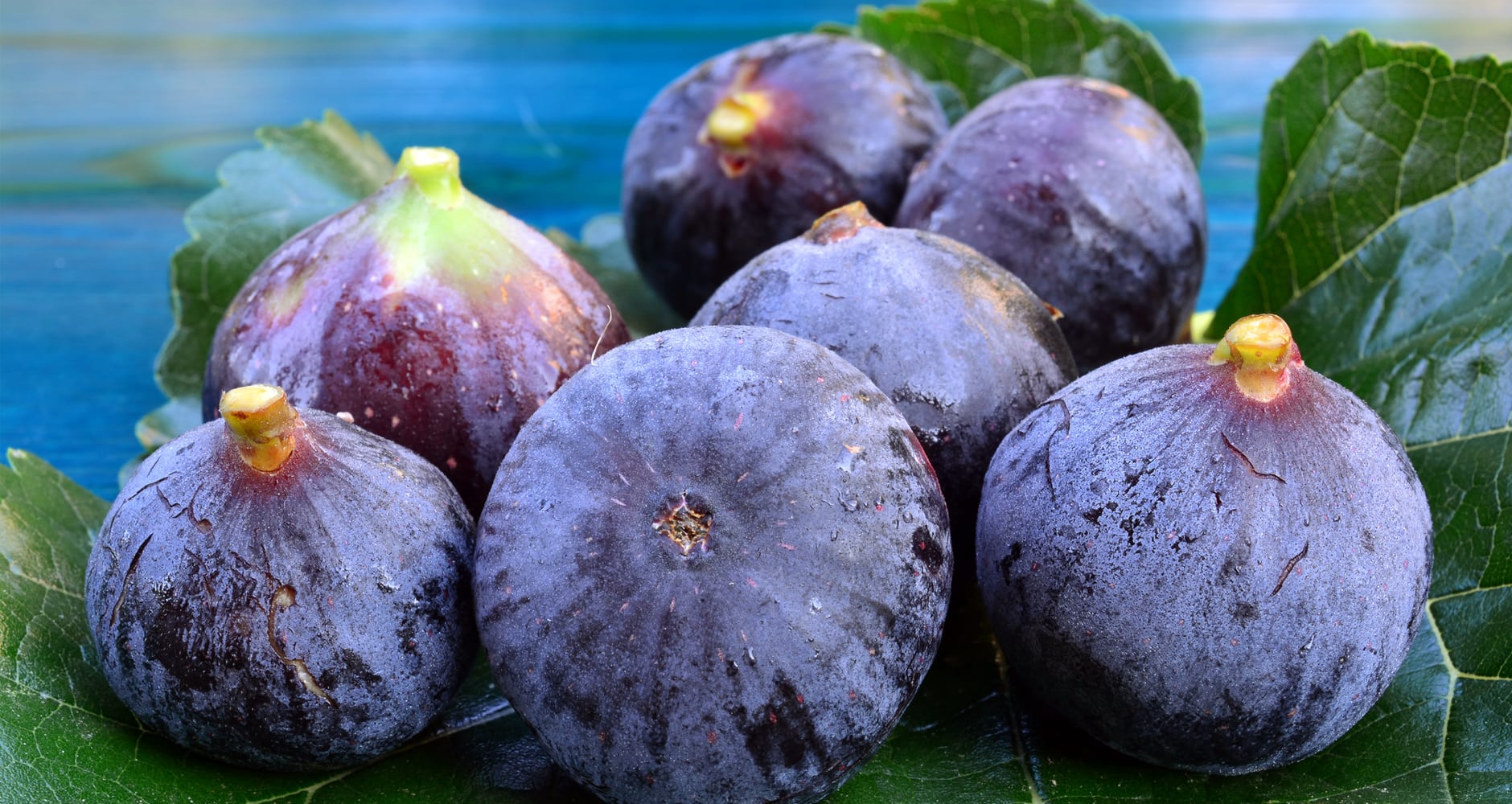
Perfectly ripe fresh figs are fine to eat right from the carton, and because they’re small enough to eat in two bites, they make a great snack. The seeds, while abundant, are not quite as off-putting to some as they are in the dried variety, and add to the fruit’s fiber content. The skin is also edible, no need to peel, and is full of antioxidants. But the flesh of the fresh fig is its true delight: sweet, light, and melts in your mouth. The stem is a little tough, so you can discard, but virtually all of the fruit is edible.
How to Store Fresh Figs
Best practices suggest you store your fresh figs in the refrigerator. The cold temperatures help them last longer. You can also freeze them whole or peeled and sliced. Place in an airtight container for up to a year.
Not Just For Dessert
Because figs are a sweet fruit, they are usually associated with dessert, but they are also wonderful paired with savory flavors, like cured meats, assorted nuts, and sharp cheeses like Stilton. They are also visually appealing, so they look great on any appetizer or cheese platter. Simply quarter or halve and serve alongside any accompaniment (see list below).
Health Benefits of Fresh Figs
Fresh figs are a good source of potassium, manganese, and fiber. About 90 calories a piece, they contain no fat and 1 gram of protein. Figs also contain a proteolytic enzyme, known as ficin, which is known to aid in digestion and is used in many pharmaceuticals.
Pair Fresh Figs With:
- Sharp soft cheeses like Blue or Stilton
- Mild, rich dairy like mascarpone, creme fraiche, or heavy cream
- Olives, capers, and garlic
- Citrus fruits, especially oranges
- Cured meats, like bacon, pancetta, or prosciutto
- Dessert wines like port
- Nuts of any variety
Where To Buy
If you don’t see fresh figs at your local supermarket, it’s most likely because the delicate fruit doesn’t travel well and shipping them is difficult, which tends to drive up the cost. They have to be handled very carefully (if they split, they spoil), which is why some grocers shy away from carrying them. But that’s not to say they don’t travel at all. Put in a request with the produce manager at your favorite market, or scour your local farmers’ markets. Once you try the fresh fig, you’ll soon be adding this delicate gem to your weekly shopping lists.
You can also buy fresh figs online, but because they are highly perishable, they usually require overnight shipping, which ups the cost.

Related Articles
Fresh Figs with Goat Cheese and Honey Appetizer Recipe
Ingredients:
- 6 ripe fresh figs
- Goat cheese (not crumbles) at room temperature
- Honey
Instructions:
- Halve the figs and place on a decorative platter or plate.
- Spoon a small amount of the goat cheese onto each fig half, and drizzle with honey. Serve.
Frequently Asked Questions About Fresh Figs
When are fresh figs in season?
Two seasons: a small early “breba” crop in late May to June from last year’s wood, and a larger main crop from August into October. In southern climates (zones 8-10), trees often produce both; cooler-climate growers usually catch only one of the two.
What do fresh figs taste like compared to dried?
Lighter, juicier, less concentrated. Fresh figs have a delicate honey-strawberry sweetness with a creamy texture, while dried figs are denser, chewier, and more intensely sweet. They are essentially the same fruit at two different stages.
Do you eat the skin of a fresh fig?
Yes. The skin is thin, edible, and full of antioxidants. Just trim off the tough stem before eating. Wash gently under cool running water and dry before slicing.
How do you tell if a fresh fig is ripe?
Gentle softness like a ripe peach, no surface cracks, and often a tiny clear drop of sap at the stem. Hard figs are under-ripe and will not ripen further off the tree. Shriveled or leaky figs are past their window.
How long do fresh figs last?
Two to three days at room temperature; up to a week in a single layer in the fridge. For longer storage, freeze them whole on a sheet pan, then transfer to a sealed bag, they keep up to a year and work great for jams, smoothies, and baking.
What’s the best variety of fresh fig?
Black Mission is the most common in U.S. markets and the easiest to find ripe. Brown Turkey is mild and very accessible. Kadota suits cheese plates because of its lighter color. The “best” comes down to what is freshest at your market on the day.
Are fresh figs actually healthy?
Yes, in moderation. About 37 calories each (medium fig), no fat, 1 g protein, plus fiber, potassium, manganese, and the digestive enzyme ficin. Figs are higher in natural sugar than many fruits, so people managing blood sugar should watch portion size.
For more fresh-produce reading, see getting ready for garlic, edible flowers, and smart uses for fruit peelings.



This article was published by the Staff at FarmersAlmanac.com. Any questions? Contact us at [email protected].
- Farmers' Almanac Staff

- Farmers' Almanac Staff

- Farmers' Almanac Staff

- Farmers' Almanac Staff



My grandmother had a huge fig tree in her back yard when I was a youngster. I remember eating figs off her tree by the handful. My grandfather liked fig ice cream which, I have to say, wasn’t the best. But it could be made much more palatable with enough chocolate syrup. Those are some wonderful childhood memories for this 63-year-old.
I live in SW Virginia and planted a fig tree about 8 years ago. It took a couple of years to get a small harvest of figs. Then a couple of years ago it went berserk and gave me gallons and gallons of fruit. Last year during the cold snap, it killed every branch on the tree and I had to cut it to the ground. (I prayed it wasn’t dead) Surprisingly, it has come back full strength and is even bigger than it was before and has fruit on it again. Not sure they will have time to ripen before cold weather arrives. I’m just happy the cold didn’t kill it. I bought if from Lowe’s and it was supposed to be 4’x8”. My guess is it is at least 12’x12′ this year.
We are happy to hear that it survived – and that is a BIG fig tree!!!
We planted 2 fig bushes next to our deck that sits 5ft off the ground, gives lots of height growth before reaching the top railing. We also are planting a fig tree in the yard soon unless we bring in in for this winter. It’s currently on our deck in a container. There’s only 6 figs growing between the 2 fig bushes but we just planted them a few months ago. Praying wildlife doesn’t get them before they’re fully ripened.
Where can I buy a fig tree or the seed
We bought all ours at a Lowe’s home improvement store on clearance so they were 50% off.
I have eaten those fig cookies all my life but when I moved south and discovered the sweet delight called “fig” I am hooked on them. They are hard to get, even here, where they grow well. We planted a tree but it is not doing what it should yet. Can’t wait to have all I want in the fresh season. Thank you for the information.
We eat a lot of figs when they are in season.We have a fig tree and we can fig preserves.We really enjoy them.We also read in the Bible where Jesus ate figs from the tree.
I live in one of the “fig capitals” of the world, yet I NEVER see them for sale in the grocery stores. I wonder why.
Perhaps you could call your Fig Growing cooperative and ask them why they’re not available locally? If you need help identifying them let us know!
When is the best time to plant my own fig tree?
Hi Ella, take a look at this post from HGTV and see if it is helpful. http://www.hgtvgardens.com/trees/twig-newton-how-to-grow-a-fig-tree, and this video was very interesting! Take a look here: https://www.youtube.com/watch?v=RukSORxDafY
I bought a jar of locally preserved fig jam with seasame seeds. ummm-m so delish. Found a recipe, but never made it.
May try it this year.