

Fall Bulb Planting: 6 Timing, Soil, and Storage Rules for a Big Spring Bloom
Planting bulbs now is a great idea for spring flowers later. But check out our valuable tips before you start digging.
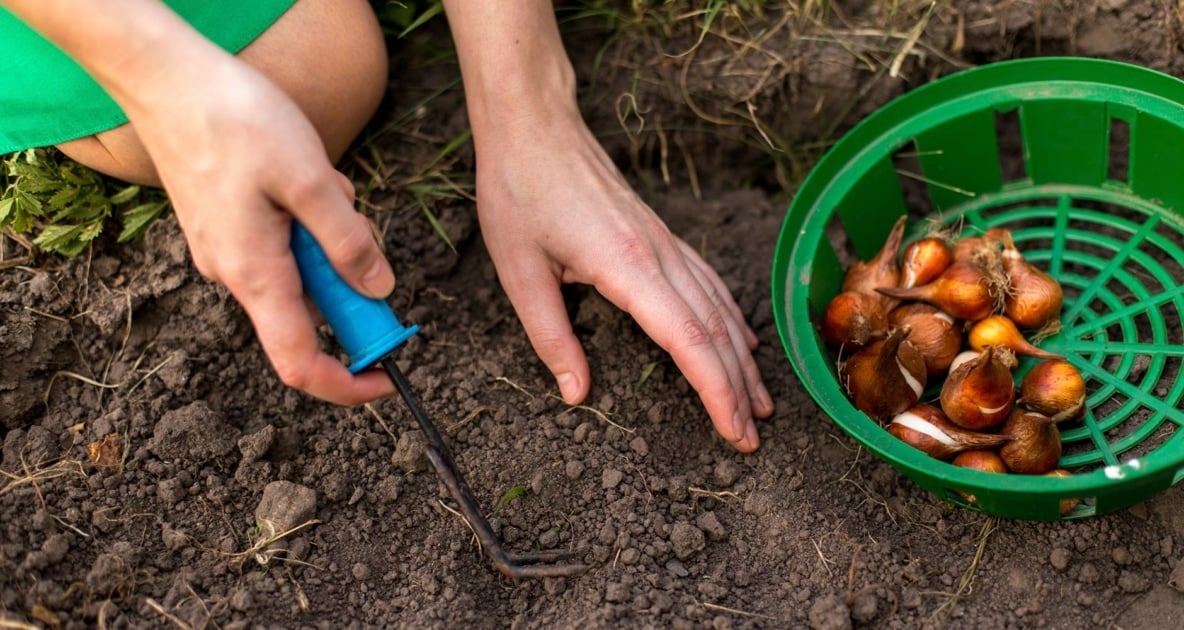
Quick Reference: Fall Bulb Planting
- Best planting window: six weeks before your first hard freeze, when nightly lows sit around 40°F to 50°F. In USDA zones 3 to 5, plant in September. In zones 6 to 7, October. In zone 8, late November to early December.
- Planting depth: roughly three times the bulb’s height, pointy end up.
- Sun: at least 6 hours daily. For early bloomers like daffodils, a spot that gets sun before deciduous trees leaf out works.
- Soil: rich in organic matter, well-drained. Soggy soil rots bulbs.
- Chill hours: tulips need 12 to 16 weeks below 45°F; daffodils 12 to 14 weeks; hyacinths 12 to 15 weeks. In zones 8 to 11 you must pre-chill in a refrigerator.
- Bulbs for fall planting: daffodils, tulips, hyacinths, crocus, alliums, snowdrops. Not fall: dahlias, gladiolus, cannas (those go in spring).
Spring-blooming bulbs do their real work in autumn. Between roughly Labor Day and the first hard freeze, gardeners across USDA zones 3 through 7 have a narrow window to get daffodils, tulips, crocus, hyacinths, and alliums into the ground so their roots can settle before winter dormancy. Miss the window and the display suffers; nail it and the border is ahead of every neighbor’s come March. Here are six timing, soil, and storage rules the Almanac has published on fall bulb planting, expanded with USDA zone data, cold-chill hour requirements, and a species-by-species schedule.
Fall Bulb Planting Timing by USDA Zone
The single most important variable is soil temperature. Per the USDA Hardiness Zone Map and the Missouri Botanical Garden’s bulb research, you want the soil around 50°F to 55°F when the bulbs go in, cool enough to trigger root growth but not so cold that the ground has frozen. Six weeks before your first hard freeze is the general rule. Here is what that looks like by zone.
- Zones 3 to 4 (upper Midwest, northern New England): plant early to mid September.
- Zone 5 (Chicago, Boston, Denver): plant late September to mid October.
- Zone 6 (Cincinnati, Nashville, Kansas City): plant October.
- Zone 7 (Washington DC, mid-Atlantic, north Texas): plant late October to mid November.
- Zone 8 (Atlanta, Dallas, coastal Pacific Northwest): plant late November to early December.
- Zones 9 to 11 (Florida, southern California, Gulf Coast): pre-chill bulbs in the refrigerator for 12 to 16 weeks, then plant in December or January. Tulips and hyacinths in warm zones behave as annuals.
Use the Almanac’s planting calendar to cross-check the moon-based best days inside that window.
1. The Right Way to Plant Fall Bulbs
As you plant, a few rules matter. Choose a spot with at least 6 hours of sunlight. For early bloomers like daffodils, a spot that gets sun before deciduous trees leaf out in the spring works well. By the time trees start shading your bulb bed, early-blooming bulbs will be almost finished for the year. Bulbs also want soil that is rich in organic matter or compost, and they love well-drained soil. Soggy soil or overwatering will rot them. When you plant, the general rule of thumb is to sink each bulb three times as deep as it is tall, pointy end facing up.
2. Prepare the Bulb Bed Well
Do not simply dig a hole and drop the bulb in. For best growth, prepare a bed ahead of planting. Remove weeds and loosen the soil. Add compost for nutrients or sand for drainage before you plant. The Royal Horticultural Society’s bulb guidance also recommends bone meal worked into the planting hole, which supplies phosphorus for root development.

3. Buy at the Right Time
This is a tough one, because many stores put out fall bulbs in July or August in order to clear gardening supplies in time for holiday displays. You will either need to store your bulbs carefully for a month or two, or order online at planting time so the bulbs arrive fresh. If you buy early, check that the bulbs are firm and plump, with no mold or rot. Leave them in the mesh bag you purchased them in, place that bag inside a paper lunch bag, and store them in the refrigerator vegetable crisper without making a mess. Keep them away from ripening fruit; ethylene gas from apples and pears can kill the flower embryo inside the bulb.
4. Plant at the Right Time
The exact date shifts from one climate zone to the next, but the rules are consistent. In general, plant when nightly temperatures sit around 40°F to 50°F, or about six weeks before you expect the ground to freeze. Most spring bulbs need a chilly dormant period to bloom, so if you live in an area where the ground does not freeze (USDA zones 8 to 11), you must chill them first. Leave them in the bag, place them in your refrigerator for 6 to 10 weeks, and plant afterward. Do not store bulbs with fruit; ethylene gas released by ripening fruit will spoil them.
5. Plant the Right Bulbs
Not every bulb belongs in autumn soil. Dahlias, gladiolus, cannas, and tuberous begonias should be planted in the spring after the last frost. Daffodils, tulips, hyacinths, crocus, alliums, snowdrops, and grape hyacinths do well planted in late summer or early autumn. The rule of thumb: if a bulb blooms in spring, plant it in fall. If it blooms in early summer or later, plant it in spring.
6. Wait for Spring to Fertilize
Once the bulbs are in the ground, they stay dormant through the rest of the fall and winter, so no fertilizing is needed. Wait until you see the first green shoots of spring, which signal that the roots are active and ready for nutrients. Also, do not fertilize after the bulbs start to flower, because that inhibits bulb growth for next year. If you have never grown bulbs before, give them a try. With daffodils, hyacinths, tulips, and other early spring bloomers, a bulb bed will give you beautiful color long before the rest of your garden starts to grow.
Bulb-by-Bulb Fall Planting Schedule
- Daffodils (Narcissus): plant 6 inches deep, 6 inches apart, September to November depending on zone. Chill hours needed: 12 to 14 weeks below 45°F. Deer-resistant.
- Tulips: 6 to 8 inches deep, 4 to 6 inches apart, plant after soil cools below 55°F. Chill hours: 12 to 16 weeks. In zones 8 and warmer, treat as annuals or pre-chill each fall.
- Crocus: 3 to 4 inches deep, 2 to 3 inches apart, September to November. Chill hours: 8 to 15 weeks. First bulb up in most gardens.
- Hyacinths: 6 to 8 inches deep, 4 to 6 inches apart. Chill hours: 12 to 15 weeks. Use gloves to plant; the bulbs can irritate skin.
- Alliums (ornamental onion): 4 to 8 inches deep depending on bulb size, September to November. Deer- and rodent-resistant, late spring bloom.
- Snowdrops (Galanthus): 3 inches deep, 3 inches apart, plant as early in fall as possible. First bulb to break dormancy each spring, often through snow.

Fall Bulb Planting FAQ
When is the best time to plant fall bulbs?
Six weeks before your first hard freeze, when nightly temperatures sit around 40°F to 50°F. That is September in USDA zones 3 to 5, October in zones 6 to 7, and late November to early December in zone 8. In zones 9 to 11 you must pre-chill bulbs in the refrigerator for 12 to 16 weeks first.
How deep should I plant bulbs?
The general rule is three times the bulb’s height. A 2-inch tall tulip bulb goes 6 inches deep. Always point the tapered end (where the shoot will emerge) upward and the flat base plate downward.
Which bulbs are planted in fall versus spring?
Fall: daffodils, tulips, hyacinths, crocus, alliums, snowdrops, grape hyacinths. Spring: dahlias, gladiolus, cannas, tuberous begonias. The rule of thumb is that spring-blooming bulbs go in the ground in fall, summer-blooming ones go in the ground in spring.
Do I need to fertilize bulbs at planting time?
You do not have to. Bulbs contain the food and flower embryo for their first bloom. However, mixing bone meal or a slow-release bulb food into the planting hole gives phosphorus for root development. Skip further fertilizing until you see green shoots in spring, and never fertilize after flowering.
Can I plant fall bulbs after the ground has frozen?
It is very hard to. If you missed the window and the ground is workable but cold, you can still plant, but bloom size may be smaller the first year. If the ground is fully frozen, plant the bulbs in pots kept in an unheated garage or shed and move them outside once the ground thaws.
How do I stop squirrels from digging up my bulbs?
Plant deep (at least 6 inches), lay hardware cloth over the bed until spring, or plant squirrel-resistant species like daffodils, alliums, hyacinths, and snowdrops. Squirrels almost never touch daffodils; they are toxic to rodents.
Why did my tulips fail to bloom the second year?
Most modern hybrid tulips are bred as one-season showpieces and lose vigor after their first bloom. Species tulips, botanical tulips, and Darwin hybrid tulips perennialize better in USDA zones 3 to 7. In warm zones (8 and up) treat tulips as annuals; the winter is not cold enough to reset them.


Amber Kanuckel
Amber Kanuckel is a freelance writer from rural Ohio who loves all things outdoors. She specializes in home, garden, environmental, and green living topics.
- Amber Kanuckel

- Amber Kanuckel

- Amber Kanuckel
- Amber Kanuckel





Hello. I live in zone 5a (central NY) and was wondering if it’s possible to plant tulip and hyacinth bulbs in heavy duty window boxes or will the bulbs freeze? Also, could I pull out the bulbs to plant summer flowers in boxes?
Hello there! Thank you for your assistance with those of us who are transplanted city folk?.
I have just received delivery of various onion type bulbs, ie alliums, with instructions to plant when weather is 5-10c(40-50f).
I live in zone 4/5 area and it’s far too warm to plant anytime in the near future with upcoming forecasts in the 20-25c range.
From my research I have found that I can leave them in the fridge until temps are cooler, which is what I am doing. When ready to plant, can I take them right out of the fridge and plant into the ground, or do they need a warming up period before planting?
Thanks in advance!
Mimi
Hi Mimi, they go right in the ground!
If I get my online ordered bulbs, just 2 weeks or even little later prior to freeze dates, is it still good to plant them, or store and wait for next year?
I just got my spring bulbs and I live in Zone 8b can I refrigerate them know and plant them in early Jan?
Hi Celia, yes, but you want to let your bulbs dry out for a day or two, then store in the fridge for at least 6 weeks before planting. This will help with flower development.
Easter sunday is april 4 2021 when should I plant easterlilly bulbs ?
Will Squirrels dig up daffodils or Tulips Bulbs ? How to prevent this.
Hi Katharine, yes, they will. We found a good article that will help you keep them out here.
Wonderful planting information so much good in your writing and SOME folks wrongly FOCUS on “rule of thumb” as being misogynistic ? Crazy and sad .. Don’t let the Neanderthals stop your writing and sharing of useful gardening tips .. Kudos
Really appreciate everyone’s positive comments here.
I have always used the rule of thumb for inches in crafting. I used to see my grampa twist his thumb back and forth when whittling and he showed me why.
In #5 you start a sentence with: “Here is the rule of thumb”. Many years ago an English king ruled that a man could only beat his wife with a stick no bigger in diameter than his thumb. This is the only rule of thumb that I have ever heard of so please, stop using this wording and find something more fitting. Thank you
Hi S. Flatt. There are many words and phrases that have made it into our lexicon from olden times. But, in this case, you’re mistaken. Linguist William Safire tells us, “the idea that ‘rule of thumb’ is derived from an early form of spousal abuse is in error.” Instead, the phrase probably came from carpenters who used their thumbs as a quick, handy measuring tool. WordOrigins also reports, “The phrase is almost certainly an allusion to the fact that the first joint an adult thumb measures roughly one inch, literally a rule (or ruler) of thumb.”
S. Flatt – what country are you from? This is a very common term in the US that absolutely does not pertain to wife beating!
Rule of thumb was a rule in England that a husband could beat his wife with a stick no thicker than his thumb. Informing yourself goes a long way in understanding why this could be seen as a misogynistic reference.