

How to Get Rid of Poison Ivy: Identify and Remove It Safely
Editor Peter Geiger shares some natural solutions to send poison ivy packing.
Quick Reference
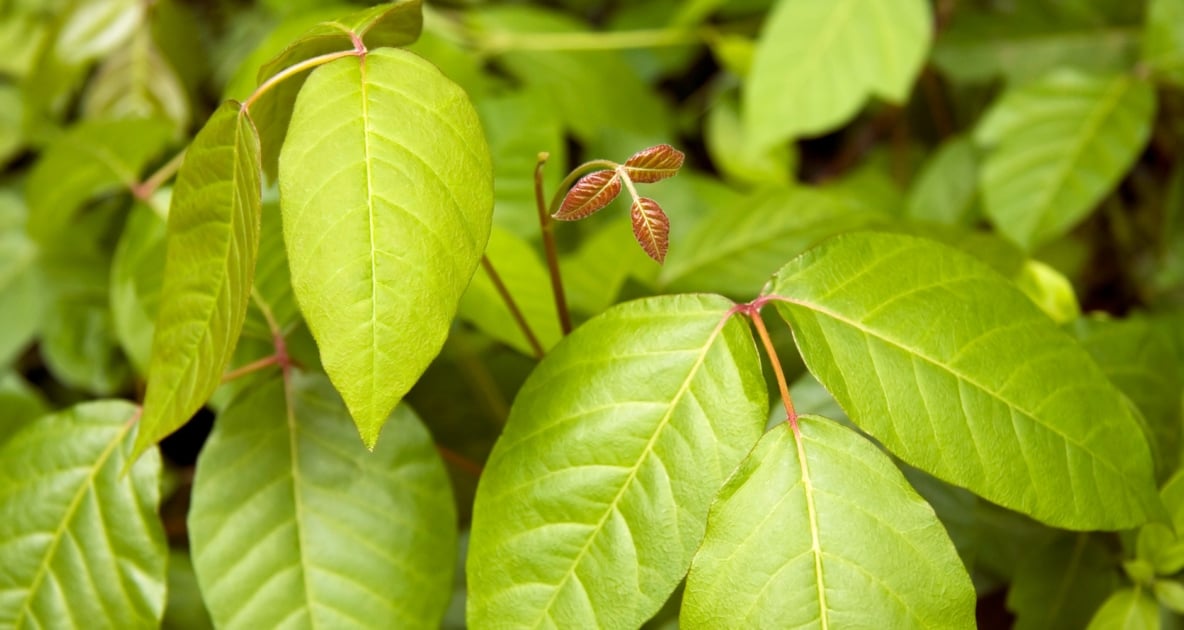
- Identify it: Leaves of three, almond-shaped, smooth and shiny. Red in spring, green in summer, red or orange in fall. No thorns. Fine reddish root hairs on the vine.
- How to get rid of poison ivy (no chemicals): Dig out the entire plant (leaves, stems, roots), bag it in plastic, and dispose of it. Wear long sleeves, long pants, and heavy gloves.
- Homemade spray: 1 cup salt + 1 gallon vinegar, heated to dissolve. Cool, add 8 drops dish soap, then spray the plant. Kills all vegetation it touches.
- If skin gets exposed: Wash with soap and hot water three times within the hour. Urushiol is a sticky oil and washes off slowly.
- Rash window: Appears 12 to 48 hours after contact. Lasts 2 to 3 weeks. About 50 million Americans react each year, according to the American Skin Association.
- For treatment options: See our companion piece, Natural Cures and Remedies for Poison Ivy.
Roughly 50 million Americans get a poison ivy rash every year, according to the American Skin Association. That makes it the most common allergic skin reaction in the country, and it is the reason almost every homeowner eventually asks the same question: how to get rid of poison ivy for good. The plant is stubborn, the oil that causes the rash is sticky, and the rash itself can keep showing up for two or three weeks after a single brush. This guide walks you through identifying the plant, removing it from your yard without synthetic herbicides, and washing the urushiol oil off your skin if you were not quick enough.
What Does Poison Ivy Look Like?
The old saying still holds: “Leaves of three, let them be.” Poison ivy has three almond-shaped leaflets and may carry small grayish-white berries. The leaves are smooth and shiny. They come up red in spring, turn green and then dark green as summer settles in, and shift back to bright red or orange in fall. That seasonal color swing is part of why the plant is so easy to walk past in May and stumble into in September.
Leaves run 1 to 5 inches long, and in rare cases they reach up to 10 inches. Poison ivy vines never carry thorns. Instead, they grip whatever they are climbing with fine reddish root hairs running along the stem. If you spot a hairy-looking vine on a tree trunk, treat it as poison ivy until you can prove it is not.
The plant thrives along the edges of wooded areas, which is why it shows up so often in suburban yards backed by trees. For most homeowners, finding it is enough to bump it to the top of the weekend to-do list. The twisting, clinging roots make it stubborn to remove, and any patch left behind will spread. The fastest honest option for getting rid of poison ivy on your property is manual removal. We do not recommend synthetic herbicides. The vinegar-and-salt spray below is the closest thing to a kitchen-cabinet alternative.
Poison Ivy Look-Alikes: How Not to Mix It Up
Three plants get mistaken for poison ivy on a regular basis. Two of them are harmless. One is a close cousin.
- Virginia creeper: Five leaflets, not three. Often grows next to poison ivy on the same fence line. Harmless.
- Box elder seedlings: Three leaflets when young, similar shape. Look for opposite leaves on a woody stem. Harmless.
- Poison oak: Three leaflets with rounded, lobed edges (like a small oak leaf). Same urushiol oil. Same precautions. More common in the West and South.
If you have other itchy garden suspects on the property, our roundup of itchy plants to watch out for covers stinging nettle, wild parsnip, and a handful of other usual offenders.

Non-Chemical Methods to Remove Poison Ivy from Your Property
These are the six methods we recommend. Use them in combination if a single pass does not finish the job. Most homeowners need two or three passes across a growing season, especially on older vines.
- Pull the whole plant. Remove the entire plant: leaves, stems, and root. You have to get it all. Wear long pants, a long-sleeved shirt, and thick gloves (plastic or heavy cotton). Wash every piece of clothing as soon as you come inside. The urushiol oil can stay active on fabric for years.
- Bag and bin it. Put the entire plant in a plastic bag and dispose of it with the trash. Never burn poison ivy. The smoke carries urushiol and can trigger a serious lung reaction.
- Make a poison ivy killer spray. Some readers have had luck with this recipe: combine 1 cup of salt and 1 gallon of vinegar in a pot and heat to dissolve the salt. Let it cool, then add 8 drops of liquid dish soap and pour into a spray bottle. Spray the plant, or pour it directly on the leaves and roots. This will kill any vegetation it touches, so apply it only to the poison ivy. Expect it to take a few applications.
- Bleach is not a non-chemical method. Some folks pour bleach on the plant and say it works. That counts as a chemical method, with the same runoff concerns as a synthetic herbicide. We list it here only so you know what other people are doing.
- Goats or cows. If you happen to have a goat or cow on hand, they will happily eat poison ivy with no side effects. This is one of the rare cases where a pasture animal is your best yard tool.
- Plant grass seed. Poison ivy will not grow where a lawn is already established. One of our editors cleared a patch at a cottage this way. It is slow, but once the grass is in, the ivy is out for good.
Regional Notes: When to Pull Poison Ivy
Poison ivy is easiest to pull when the soil is damp and the vine is young. The window varies across the US and southern Canada.
If you are not sure when your local frost and soil-warmth windows open, the Farmers’ Almanac regional planting calendar lines up neatly with the poison ivy pulling window. Wet soil after a rain is your friend. Dry, hard ground will leave roots behind every time.
Poison Ivy Treatment
If you believe you have come into contact with poison ivy, wash the area thoroughly with soap and hot water, using a washcloth. Rinse and repeat at least three times to make sure the oil is gone. Urushiol, the substance in poison ivy that triggers the itch, is a sticky oil that is hard to wash away. Wash every piece of clothing, every shoe, and every tool that touched the plant. The CDC notes that urushiol can stay active on unwashed surfaces for up to five years.
Signs and symptoms of poison ivy exposure include redness, itching, swelling, blisters, and difficulty breathing if you have inhaled smoke from burning poison ivy. The rash usually develops within 12 to 48 hours of exposure, and symptoms last for 2 to 3 weeks. The severity depends on how much urushiol got on your skin and how sensitive you are. The rash often shows up in a straight line, which traces the way the plant brushed against your skin.
Is Poison Ivy Contagious?
A poison ivy rash is not contagious. The oil that causes it, though, can be transferred from person to person, from pet fur, from clothes, and from any other surface that touched the plant. Anyone who comes in contact with the urushiol, not just the plant itself, can react. The oil can stay active on uncleaned surfaces for years, which is how people get re-exposed without ever going near the woods. To avoid recontamination, wash clothes, pets, and outdoor equipment thoroughly after any exposure.
That said, you cannot spread the rash on your own body by scratching, though it may look that way. Different patches of skin can react to the oil at different times, which makes the rash appear to be moving.
There is no magic overnight cure. Avoid scratching blisters. Let them heal on their own. Breaking them open raises the risk of infection and scarring.
Tips For Dealing With A Poison Ivy Rash
If the rash shows up anyway, here are natural remedies that readers have used to ease the itch, dry up oozing blisters, and get through the 2 to 3 weeks of healing more comfortably. For a deeper look at salves and herbal treatments, see our companion piece on natural cures and remedies for poison ivy.
- Apply witch hazel to the affected area to soothe itching.
- Cover the rash with a paste made from baking soda and a few drops of water. Leave it on for 10 minutes, then wash off. A paste of water and cornstarch can do the same job.
- Add oatmeal (1 cup) or Epsom salt (2 cups) to a warm bath. Grinding the oatmeal into a powder in a blender first helps it dissolve.
- Rub a banana peel or watermelon rind over the rash. Let it dry without rinsing.
- Mix equal parts turmeric and lemon or lime juice (about 1 tablespoon each) into a paste and apply.
- Whip a raw potato into a paste in your blender. Spread it on the rash and cover loosely with plastic wrap.
- Add a few tablespoons of apple cider vinegar to two glasses of water. Soak gauze pads in the mixture and lay them over the rash for 5 to 10 minutes, then wash off.
- Apply hydrogen peroxide with clean gauze or a spray bottle to clean off any remaining urushiol and help dry blisters.
- Aloe vera, the same plant most folks keep on hand for sunburn, relieves itching and inflammation.
- Apply a cold compress to soothe the skin and dial down the itch.
- Essential oils, diluted in a lotion or carrier oil, can cool or soothe the skin: peppermint, calendula, chamomile, and eucalyptus.
- If you have a jewelweed plant in the yard, crush the stems into a paste and apply it over the rash. Let it dry, then wash off. Jewelweed is a traditional New England remedy for poison ivy itch.
- Mix lemon juice and honey, dab onto blisters, and wash off once dry. The antibacterial properties of honey and the acidity of lemon help prevent infection and dry the blisters.
The American Academy of Dermatology recommends seeing a doctor if the rash covers a large area, gets near your eyes or mouth, or shows signs of infection. Their guidance pairs well with the home remedies above for milder cases.
Poison Ivy Soap
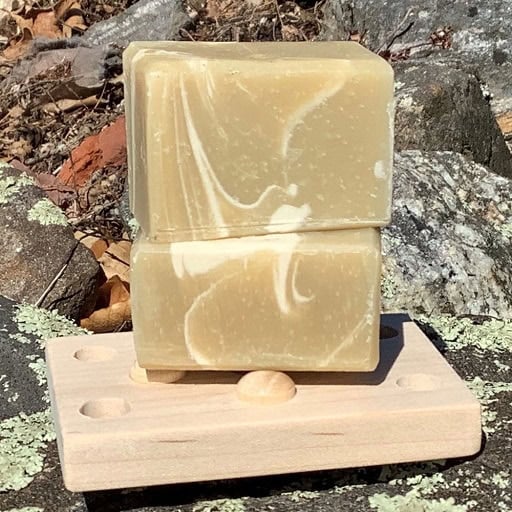
If you happen to stumble into poison ivy, do not fret.
Our soap carries a Native American remedy to stop the itch: jewelweed, plantain, and sweet fern. It is worth having a bar on hand.
Note: If you are having difficulty breathing, develop a fever, or the rash is severe, swollen, near your eyes, or worsens over a few weeks, see your doctor.
A Reader-Tested Plan for Getting Rid of Poison Ivy
Pick a damp morning. Dress in long sleeves and heavy gloves. Pull the entire vine, root and all, on the smallest infestation first. Bag it. Wash everything you wore. If the patch comes back, hit the regrowth with the salt-vinegar-soap spray. Once it is gone, throw down grass seed in fall or spring so the ivy has nothing to come back to. Most yards are clear in a single growing season if you stick with it.
If treatment is more your concern than removal, our natural cures and remedies for poison ivy piece goes deeper on salves, baths, and folk remedies that have been passed down for generations. The two pages are meant to be read together.

Frequently Asked Questions
What is the fastest way to get rid of poison ivy without chemicals?
The fastest non-chemical method is to pull the entire plant, root and all, on a damp morning while wearing long sleeves, long pants, and heavy gloves. Bag the pulled plant in plastic and bin it. For regrowth, follow up with the salt-vinegar-dish-soap spray. Most yards clear in one growing season if you stay on top of it.
How do I identify poison ivy versus a look-alike?
Poison ivy has three almond-shaped, smooth, shiny leaflets on a vine with fine reddish root hairs and no thorns. Virginia creeper has five leaflets and is harmless. Box elder seedlings have three leaflets too, but with opposite leaves on a woody stem. Poison oak has three leaflets with rounded, lobed edges and carries the same urushiol oil.
Can I burn poison ivy to get rid of it?
No. Burning poison ivy releases urushiol oil into the smoke. Inhaling it can cause a severe lung reaction that needs emergency care. Always bag and bin the pulled plant.
How long does the poison ivy rash last after exposure?
The rash usually appears 12 to 48 hours after the urushiol oil touches your skin and lasts 2 to 3 weeks. Severity depends on the dose and your sensitivity. Wash with soap and hot water three times within the first hour if you suspect contact.
Is it worth paying for poison ivy soap or sprays when I have a vinegar mix at home?
The salt-vinegar-soap spray works for many readers, especially on younger vines, and costs almost nothing to make. Commercial poison ivy soaps (with jewelweed, plantain, and sweet fern) are more about preventing or easing a rash on skin after exposure, not killing the plant. The two are different jobs, and most households end up keeping a bar of the soap and a bottle of the spray.
What if the rash spreads or gets near my eyes?
A rash that covers a large area, gets near your eyes or mouth, or shows signs of infection (pus, fever, swelling) needs a doctor. The American Academy of Dermatology recommends prescription treatment for severe cases. For everything milder, the home remedies in the section above will get you through.
Do goats really eat poison ivy?
Yes. Goats and cows both eat poison ivy with no side effects, and the urushiol does not pass into their milk. If you have access to a small herd, fencing them onto an infested patch for a few days is one of the cleanest non-chemical removal methods there is.
Join The Discussion
Do you have a special technique to get rid of poison ivy?
Share your tips with your community here in the comments below.


Peter Geiger
Peter Geiger is the Editor Emeritus of the Farmers' Almanac. Read his full biography.
- Peter Geiger

- Peter Geiger
- Peter Geiger
- Peter Geiger


I have had great success using Fels-Naptha laundry soap for both avoiding a poison ivy reaction or treating the rash when a reaction occurs. I use the soap to clean up anytime I come in after working in the garden or while landscaping. I also use it to wash any areas of poison ivy rash should it occur. It works well to control the itching and it dries the rash quickly when an outbreak appears. I have used this for years now after having some very serious reactions as a child. Highly recommend.
How long is the limit for Having baking soda on poison Ivy?
We use Dawn dishwashing soap to wash up with after being near poison Ivy. Since it is a grease dissolver it removes any trace oils faster and better than regular soap.
forget natural methods. buy Zanfel at pharmacy and use per directions. itch gone immediately.
i LEARNED THIS FROM AN EMPLOYEE OF A HOSPITAL, SHE WAS AN OFFICE WORKER i BELIEVE SO NOT A MEDICAL PROFESSIONAL.
I GREW UP IN OHIO AND WAS VERY ALLERGIC TO POISON IVY. i LIVED IN CA FOR 35 YRS NEVER CAME IN CONTACT WITH IT. I MOVED TO OREGON AND LIVE IN THE COUNTRY – SO NOW I KNOW I AM EQUALLY ALLERGIC TO POISON OAK! BACK TO THE HOSPITAL EMPLOYEE, I WAS AT THE HOSPITAL FOR A MEETING AND WAS IN THE CAFETERIA AND THE SUBJECT CAME UP ABOUT POISON OAK SHE SAID YOU MAY NOT BELIEVE THIS BUT IT WORKS AS A PREVENTATIVE AND DURING A REACTION TO POISON OAK. BUY THE PRODUCT CERTO for canning, take two tablespoons before you go out, if you forget and start getting the rash take the same 2Tbs every day until the rash is gone, If you are an unbeliever I understand, but I was so desperate I went out and bought it again take the 2 tablespons before you go out into the woods, if you forget take it when you get home. If the next day you are itching and have the rash take the 2 tablespons then – it will deminish the itching and the rash will start drying up. I HAVE NO IDEA WHY THIS WORKS AND DON’T CARE IT WORKS. There are so many things you can buy but they don’t work like this, I CAN GO OUT AND I AM NOT AFRAID, IF i GET IT I KNOW WHAT TO DO . . A N D . . I T . . W I L L . . W O R K !
Do you mix this in something and drink it?
Yes 3% pure Rex or chlorine bleach dabbed on affected area and let dry will dry up and get rid of of in 3-4 days . Yes it’s stings but it works ! And before everyone jump on me about it being unsafe , me and my family and friends have been using it our entire life and some of us are almost 90 years old and hasn’t hurt any of us . Your chlorine pucks you use in your pool is 67% ??♂️. That it , it does work !!!!
I had a friend who was a science teacher give me a tip to help with poise Ivy rash that cost absolutely nothing! I am VERY allergic to PI, I get it every year!( My doctor has a standing order for steroid pack ready for me.) She(teacher)told me to use my hair dryer after I shower, (1) it keeps the towel from spreading it and (2) focus the heat on the rash as long as I could stand it! It makes it itch like crazy for a few minutes and- than, no itch at all!
Ooh we are going to try this… thanks for sharing.
Salt for putting on winter sidewalks kills everything , pile it at the roots of a vine , if you can cut it , then even better , I have cut down live trees , pored a bag of rock salt on the stump and it will never grow back .. Salt kills everything … and at about $5 for a 40 lb bag isn’t bad ! I’m going to pour a nice thick line of salt on my fence line in the spring and get a jump start on it ! I have huge vines I’m salting at the moment …
If I have a layer of leaves covering my poison ivy, will the salt still make its way through?
I have Poison Ivy along about 20’ of fence. It’s intermingled with honeysuckle, I don’t want to harm Bees or Birds in my yard, this sounds good how did it work for you Matt? Does it kill permanently?
I have used the rock salt method myself. It kills everything. Turns that area into a no-growth zone.
And excuse me for last question about small batch. I put my cooking brain on high and quartered the gallon size batch. Lol. Thanks.
How can I mix a small spray bottle amount for just a few random plants?