

Grow Beans: How to Plant and Harvest Pole Beans
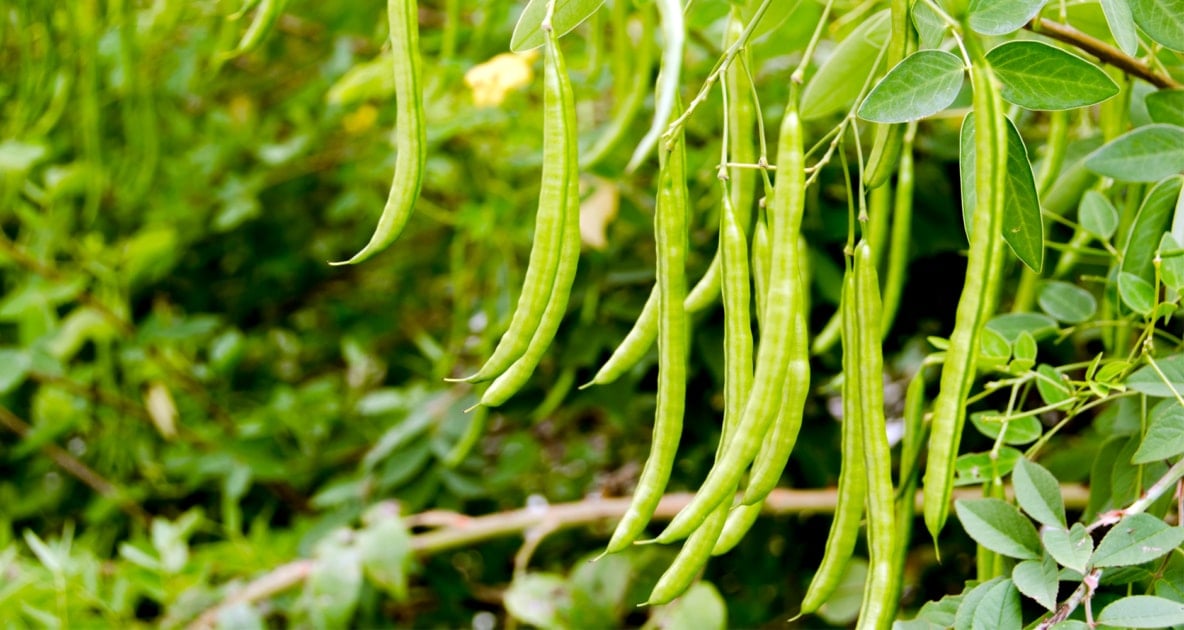
Quick Reference: Growing Pole Beans
- Plant when: two to four weeks after your last spring frost, once the soil has warmed and the sun is full.
- How to sow: seeds 3 inches apart in rows 24 inches apart along a trellis, or in hills of 4 to 6 seeds around a pole, covered with 1 inch of soil.
- Soil: well drained, average fertility, pH 6.0 to 6.5.
- Water: about 1 inch per week, kept steady, with the foliage left dry.
- Best Days by the Moon: pole beans bear above ground, so plant in the light, or waxing, of the Moon.
- Harvest: pick often for fresh pods, or let pods dry on the vine for dried beans.
Give a pole bean a string to climb and it will pay you back all summer. With nothing more than a trellis or a row of stakes, you turn a few square feet of garden into a vertical wall of beans that keeps producing for weeks, while adding a green, leafy dimension that a row of bush beans never will. This 2026 growing season is a fine time to put a few seeds in the ground. Here is how to grow pole beans from the day you sow them to the day you bring in the last dry pod.
When to Grow Beans: Timing the Planting
Beans are a warm-weather crop, and a chilled seed sulks in the ground. Sow pole beans directly outside two to four weeks after your last spring frost, once the soil has warmed and you have a sunny spot picked out. There is no need to start them indoors. Beans resent being transplanted, and they germinate fast in warm ground, with seedlings pushing up after 10 to 14 days. If you want to confirm the window for your own region, the University of Minnesota Extension keeps a plain-English guide to growing beans worth a look.
Frost dates run weeks apart from one part of the country to the next, so the calendar date shifts with your region. The trigger does not: warm soil and settled weather, two to four weeks past your last frost.
| Zone or region | Earliest safe sow date | Last sow date for harvest before frost | Notes |
|---|---|---|---|
| Zones 3-4 (northern MN, northern New England, mountain areas) | Late May to early June, after last frost; soil must reach 60 F at 4-inch depth (USU, UMN Extension) | Mid-July (allows 65-70 days before first fall frost) | Kentucky Wonder: 65 days; Rattlesnake: 70 days; short season limits succession planting; sow all at once for best use of the window |
| Zones 5-6 (Midwest, Mid-Atlantic, Pacific Northwest) | Mid-April to mid-May, once soil is consistently 60 F | Late July to early August | Blue Lake Pole: 60-65 days; Kentucky Wonder: 65 days; succession sow every 2-3 weeks for extended harvest; avoid planting during heat waves above 90 F (pod set declines) |
| Zones 7-8 (Southeast, lower Midwest, Pacific Coast valleys) | Early April once soil reaches 60 F; second crop possible starting late July | Early August (spring crop); early October (fall crop) | Two crops per season typical; fall crop often outperforms spring as beans prefer cooler nights for pod fill; water consistently during summer heat |
| Zones 9-10 (Deep South, Southern CA, low desert) | March to April; again August to mid-September for fall crop | May (spring crop); October to November (fall crop) | Avoid planting in June and July in hot desert zones; the fall crop is often the main event; soil needs to cool below 90 F for reliable germination |
In Canada, gardeners in British Columbia and southern Ontario often sow in late spring, while the Prairies, Quebec, and the Maritimes wait until the soil has thawed and warmed, usually late spring into early summer. The rule holds everywhere: warm soil and full sun, two to four weeks after your last frost.
Gardening by the Moon for Pole Beans
Pole beans bear their crop above ground, which puts them in the same family as lettuce, peas, and other aboveground growers. Traditional Gardening by the Moon wisdom says to plant aboveground crops during the light, or waxing, of the Moon, the stretch from the new Moon to the full Moon, when the old timers believed the rising sap favored leaf and pod. Root crops like potatoes go in during the dark, or waning, of the Moon.
- Pole beans bear above ground. Favor the light of the Moon for planting.
- The Gardening by the Moon Calendar lists this month’s Best Days to plant aboveground crops in your area.

How To Plant Pole Beans
Pole beans climb, so the support goes in first. A linear trellis, a teepee of poles, a length of fence, or a row of tall stakes all work, and a sturdy support is worth the small effort. It saves space and adds an interesting dimension to a home garden, since the crop grows up instead of out. Set the support before you sow so you do not disturb the roots later.
Sow the seeds directly outside, in a sunny location, after the soil has warmed. For a linear trellis, plant seeds 3 inches apart in rows 24 inches apart. For poles, plant in hills of 4 to 6 seeds grown up each pole. Cover the seeds with 1 inch of soil. Seedlings emerge after 10 to 14 days, and from there the vines do the climbing on their own.
Soil, Light, and Water
Pole beans are not fussy about ground, but they do ask for good drainage. Give them well-drained soil of average fertility, with a pH between 6.0 and 6.5. Heavy, soggy ground invites rot, so pick a spot that drains after a hard rain.
For light, the answer is simple: full sun. Beans want all the sun they can get, which is one more reason to plant them where they will not shade other crops.
Keep beans consistently moist, especially during dry spells. They need about 1 inch of rain per week, and when the sky does not deliver, you make up the difference. Water at the base of the plant and avoid wetting the foliage, since wet leaves can promote disease. Morning watering gives any stray splashes time to dry off before evening.
Feeding Pole Beans: Go Easy on the Nitrogen
Beans feed themselves better than most crops. They usually need only a small addition of compost to the soil to meet their nutrient needs. If you do reach for a fertilizer, choose one with low or no nitrogen. Beans and other legumes capture nitrogen from the air, so too much added nitrogen leads to rapid leaf growth and poor fruit set, which means a lush, green plant with very few beans on it.
You can give that natural nitrogen a head start. Bean seeds can be inoculated with a beneficial bacteria when sown, which increases the amount of nitrogen the plants can capture. A packet of inoculant from the garden center is inexpensive and easy to use at planting time.
Companion Plants for Pole Beans
Beans get along with plenty of neighbors. Corn, squash, cucumbers, and many leafy greens are traditional friends, and the old Three Sisters planting pairs beans with corn and squash on purpose, letting the corn stand in as a living pole. Keep beans away from onions, garlic, and other alliums, which tend to stunt them. One caution from the original planting notes carries real weight here: do not plant pole beans where their height will shade other plants that require full sun. For a fuller pairing chart, see our companion planting guide.
Harvesting Pole Beans
The secret to a long pole bean season is simple: keep them picked. The more you harvest, the more the plant sets, so picking often gives you a continuous harvest right up to frost. For fresh use, pick the pods when they are well filled out with beans but still tender and snappable.
For dry beans, change your timing. Allow the mature pods to partially dry on the vine, then pull them and finish them off in a dry, warm place with good air circulation until the beans inside are fully dry. Shell them out, and they will keep for months in a jar. If you garden a vegetable patch, our guide to growing your own potatoes is a natural next crop for the same beds.

Growing Pole Beans: Frequently Asked Questions
When should I plant pole beans?
Sow pole beans directly outside two to four weeks after your last spring frost, once the soil has warmed and you have a sunny spot. Beans are a warm-weather crop and germinate fast in warm ground, with seedlings emerging after 10 to 14 days. Soil warmth, not the calendar, is the real trigger, so a Southern garden may go in during early spring while a Northern one waits until late spring.
How deep and how far apart do I plant pole bean seeds?
Cover the seeds with 1 inch of soil. For a linear trellis, plant seeds 3 inches apart in rows 24 inches apart. For poles, sow in hills of 4 to 6 seeds around each pole. Set your trellis or poles before sowing so you do not disturb the roots later.
What kind of soil and how much water do pole beans need?
Pole beans want well-drained soil of average fertility with a pH between 6.0 and 6.5, and full sun. Keep them consistently moist, about 1 inch of water per week, especially during dry spells. Water at the base and avoid wetting the foliage, since wet leaves can promote disease.
Should I fertilize pole beans?
Usually only a small addition of compost is needed. If you use a fertilizer, choose one with low or no nitrogen. Beans and other legumes capture nitrogen from the air, so too much added nitrogen causes rapid leaf growth and poor fruit set. You can also inoculate the seeds with a beneficial bacteria at sowing to boost the nitrogen they capture.
How do I harvest pole beans for fresh and for dry use?
Keep beans picked for a continuous harvest. For fresh use, pick the pods when they are well filled out with beans but still tender. For dry beans, let the mature pods partially dry on the vine, then finish them in a dry, warm place with good air circulation until the beans inside are fully dry.
Does planting beans by the Moon really work?
Gardening by the Moon is a traditional planning method, not a guarantee. Pole beans bear above ground, so the old rule is to plant them during the light, or waxing, of the Moon. Direct scientific proof is limited, but generations of gardeners have used the calendar to time their work, and it costs nothing to try it alongside warm soil and proper timing.


This article was published by the Staff at FarmersAlmanac.com. Any questions? Contact us at [email protected].
- Farmers' Almanac Staff

- Farmers' Almanac Staff

- Farmers' Almanac Staff

- Farmers' Almanac Staff



My mother grew up in Mississippi , she taught us to grow our pole bean, (Kentucky Wonder always) right up with our corn. Saves garden space and work since you planted your support system in the ground with them 🙂 Sure makes like alot easier, just make sure to start the vines around the plants when they start to grow and vines develope.
That’s the Mississippi Band of Choctaw way. The three sisters, corn, beans, and squash. ❤️
My mother always grew pole beans w/ a string
or twine trellis, and harvested them to dry on tread. Our pantry was always full w/ beans until dried. Remember needle and thread and a lot of thimbles. lol