

Why Do Fainting Goats Faint? The Truth Explained
Learn about these funny and adorable barnyard creatures who are known to swoon!
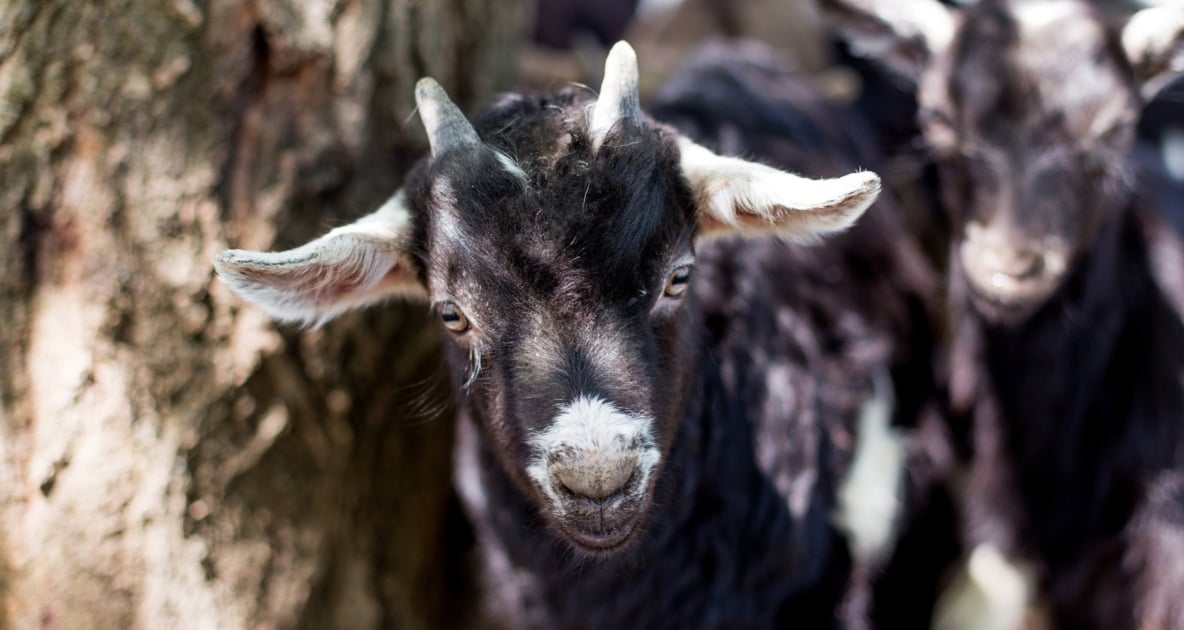
Quick Reference: Why Do Fainting Goats Faint?
- Do they really faint: No. They stay fully conscious. Their muscles stiffen for a few seconds and they topple over.
- The cause: a hereditary condition called myotonia congenita that locks the muscles when the goat is startled or excited.
- The name: myotonic goat, from the Greek myo (muscle) and the Latin tonus (tension).
- Where they started: Tennessee in the 1880s, after John Tinsley arrived with four stiff-legged goats from Nova Scotia.
- Is it harmful: Not by itself. It affects muscles only, not the heart or nervous system.
Walk up to the barnyard goats at a local farm, say hello, and watch one stiffen and topple over into the straw. Your first thought is that something has gone wrong. On a farm that keeps fainting goats, it is just Tuesday. These gentle animals drop, lie still for a few seconds, then scramble back up as if nothing happened. So why do fainting goats faint, and is the goat alright? We are not pulling your leg, and we have the answers.
Why Do Fainting Goats Faint?
Technically, they do not faint at all. A fainting goat does not lose consciousness. It stiffens up and falls over when startled, and it is awake the whole time. That stiffening is how the breed earned the name myotonic goat. The word comes from myo, Greek for muscle, and tonus, Latin for tension. Every one of these goats carries a hereditary genetic condition called myotonia congenita, which shows up across a range of animals and even sometimes in humans. The difference is that these goats have been selectively bred so that every animal in the breed has the condition.
When a fainting goat is startled or feels extreme fear, muscles throughout its body freeze for a few seconds. The legs lock, balance goes, and the goat tips over. Older goats often learn to ride out the spell and manage to stay on their feet even while their muscles have seized.
The condition affects the goats’ muscles only, and it is thought to happen at a molecular level. The theory is that the chemical rush most animals feel from fear or excitement is somehow blocked in these goats. Instead of the “fight or flight” chemicals triggering a normal response like jumping or bolting, the muscles lock up. In people, the same family of muscle disorders is documented by the U.S. National Library of Medicine, whose MedlinePlus overview of myotonia congenita describes the stiffness that eases once the muscles get moving again.
Fear is not the only trigger. Sometimes these goats stiffen up simply because they are excited. People who own fainting goats say playtime, or even dinnertime, is enough to set off the reaction.

Is “Fainting” Bad For The Goats?
The “fainting” is not necessarily harmful. It affects muscles only, not the nervous or cardiovascular systems. The real danger comes if a goat falls off a tall object during a spell. And as giggle-inducing as it may be to see these goats fall over, people should take care not to startle them just to watch the reaction. Nobody, people or goats, likes to be constantly startled.
Where And Why Were These Goats Bred?
Fainting goats go by many names depending on the region. They are often called myotonic goats, Tennessee fainting goats, stiff-leg goats, and scare goats. The breed is thought to have come about sometime in the 1880s, when a man named John Tinsley brought four strange goats with stiff legs to Tennessee from Nova Scotia.
People in Tennessee gradually warmed to these goats, not because they fainted but because they were calm compared to other breeds. Goats are notorious climbers and escape artists, and Tinsley’s goats seemed less likely to worry at holes in fences or find ways to climb out of their enclosures.
On top of that, the goats were valued as meat goats. Fainting goats reproduce well and carry a short, stocky build that is highly prized among meat goat breeders. By the 1950s, the breed had spread across the eastern portion of the United States, and breeders in Texas were working to produce larger, heavier fainting goats they called “wooden-leg” goats.
Fainting goats, long unheard of outside of farming communities, became such a curiosity that the population started growing rapidly. During that stretch, a few breed registries cropped up in an effort to preserve the purity of fainting goat bloodlines. Two of those registries are still around today: The International Fainting Goat Association and the Myotonic Goat Registry.
There are plenty of reasons to keep fainting goats. Some folks still enjoy raising meat goats, and others love them for their fun-loving, laid-back personalities. Breeders of registered fainting goats see their work as a conservation effort, keeping this unique, all-American breed around for future generations to enjoy. If you are curious about other barnyard companions, our roundup of farm animals covers what each one needs before you bring any home.
Fainting Goat Quick Facts
| Fact | Detail |
|---|---|
| Proper breed name | Myotonic Goat |
| Also known as | Tennessee Fainting Goat, Tennessee Wooden-Leg Goat, Stiff-Legged Goat, Nervous Goat |
| Weight | 50 to 175 lb (range reflects variation between pet and meat lines) |
| Height at withers | 17 to 25 in |
| Condition | Myotonia congenita (inherited; affects skeletal muscle sodium channels) |
| What happens in an episode | Muscles stiffen; the goat may topple but stays fully conscious throughout |
| Episode duration | A few seconds; muscles release and the goat walks away normally |
| Is it painful? | No; episodes are considered painless and the goat shows no distress |
| Primary uses | Meat breed (heavily muscled); also kept as pets and show animals |
| Coat types | Short and smooth to long and shaggy; both occur within the same breed |
| Horns | Both sexes can be horned; some individuals are naturally polled |
| Lifespan | 10 to 12 years on average; up to 15 years |
Goats have long earned a place in folklore and the zodiac, from the sure-footed climber of the Capricorn zodiac sign to the barnyard signs that old-timers watched for a change in the weather folklore passed down through generations.
See Fainting Goats In Action
See what it looks like when these goats “faint” in the video below.

Why Do Fainting Goats Faint: Frequently Asked Questions
Why do fainting goats faint?
They do not truly faint. A hereditary condition called myotonia congenita causes their muscles to stiffen for a few seconds when they are startled, frightened, or even excited. The goat stays fully conscious, but its locked legs make it topple over before it recovers and stands back up.
Do fainting goats actually lose consciousness?
No. Despite the name, fainting goats never black out. Their muscles seize for a few seconds while they are wide awake. The condition affects muscles only, not the nervous or cardiovascular systems, which is why the breed is more accurately called the myotonic goat.
Is fainting harmful to the goats?
Not by itself. The stiffening affects muscles only and does no harm on flat ground. The real risk is a fall from a tall object during a spell. Owners are also encouraged not to startle their goats on purpose, since no animal enjoys being frightened over and over.
Where did fainting goats come from?
The breed traces to Tennessee in the 1880s, when a man named John Tinsley arrived with four stiff-legged goats from Nova Scotia. Locals valued them for being calm and harder to escape than other breeds, and by the 1950s the goats had spread across the eastern United States.
What else are fainting goats called?
Depending on the region, they go by myotonic goats, Tennessee fainting goats, stiff-leg goats, and scare goats. Texas breeders once worked to produce larger animals they called “wooden-leg” goats. Two registries still preserve the bloodlines: the International Fainting Goat Association and the Myotonic Goat Registry.
Join The Discussion
Have you ever seen these goats in person?
Share with your community here in the comments below. While you are planning the season around the farm, our Gardening by the Moon Calendar can help you line up chores and planting with the right days.
Related


Amber Kanuckel
Amber Kanuckel is a freelance writer from rural Ohio who loves all things outdoors. She specializes in home, garden, environmental, and green living topics.
- Amber Kanuckel

- Amber Kanuckel
- Amber Kanuckel
- Amber Kanuckel




We have a goat farm. Myotonic goats Stephen up because of an adrenaline rush only. Our myotonic goes or dual registered meat goats but we do not sell them for eating. They are on the endangered species list as well.
Thank you for sharing! We didn’t know they were an endangered species!
A lot of people don’t know.
I think it’s mean to scare those babies just to get a laugh. They can be seriously injured just about anywhere they fall.
Wow! I love this
It’s interesting, isn’t it?