

Dazzling Sirius: The Brightest Star In The Night Sky
The brightest star visible from any part of Earth is within the constellation Canis Major the Greater Dog. Learn where and when to see it!
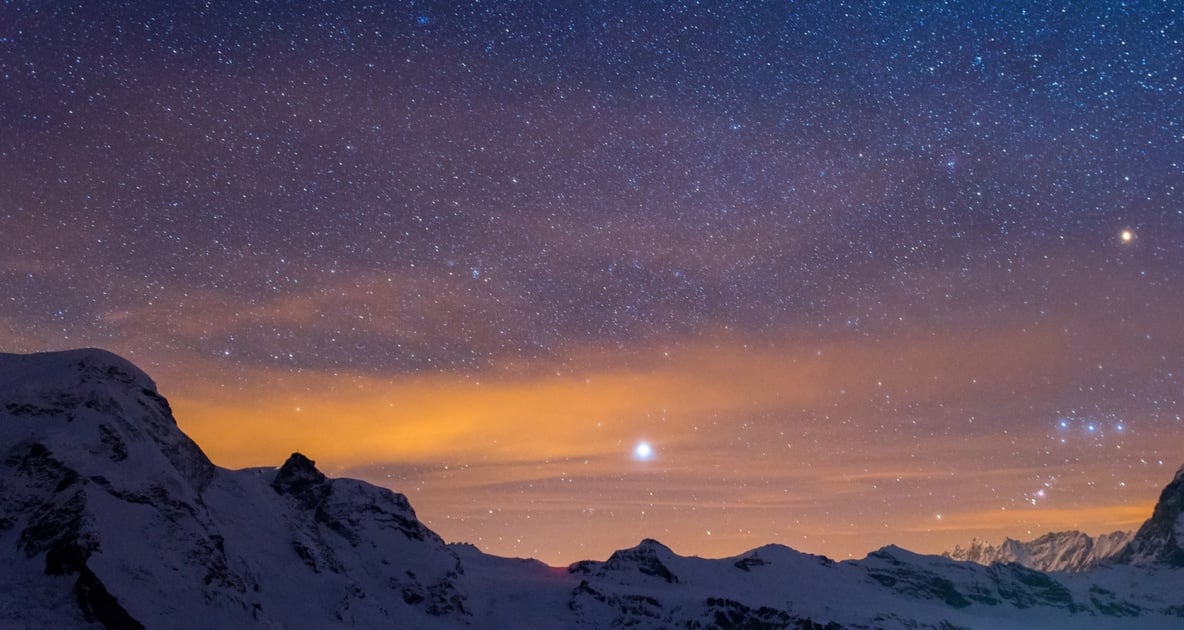
Quick Reference: Sirius, the Dog Star
- What it is: the brightest star in the night sky, in the constellation Canis Major, the Greater Dog.
- Magnitude: -1.46. About twice as bright as Canopus, the next brightest star.
- Distance: 8.7 light-years from Earth, the fifth nearest known star, second nearest visible to the naked eye after Alpha Centauri.
- Color: brilliant white with a blue tinge. When the air is unsteady it flashes red, green, and blue (atmospheric scintillation, not the star itself).
- Best season: winter evenings, around 10 p.m. local time, toward the south. Best from late December through March.
- How to find: Follow Orion’s Belt down and to the left. Sirius is the next bright thing.
The brightest of all the stars dazzling in the night sky is Sirius, the “Dog Star.” It is the brightest star in the constellation Canis Major, the Greater Dog, and shines prominently around 10 p.m. local time, seen toward the south on chilly winter evenings. The Britannica entry on Sirius walks through the stellar physics; we are here for the where-and-when.
Have you heard the term “the Dog Days of Summer”? It gets its name from Sirius, the Dog Star. Ancient stargazers blamed it for generating heat, along with the Sun, to create the sweltering weather period from July 3 to August 11 each year.
Sirius is also the unquestionable ruler in its own section of the sky, a truly dazzling object. In color, the star is a brilliant white with a definite tinge of blue, but when the air is unsteady, it then seems, in rapid scintillation, to flicker with all the colors of the rainbow. That flashing is atmospheric, not the star itself.
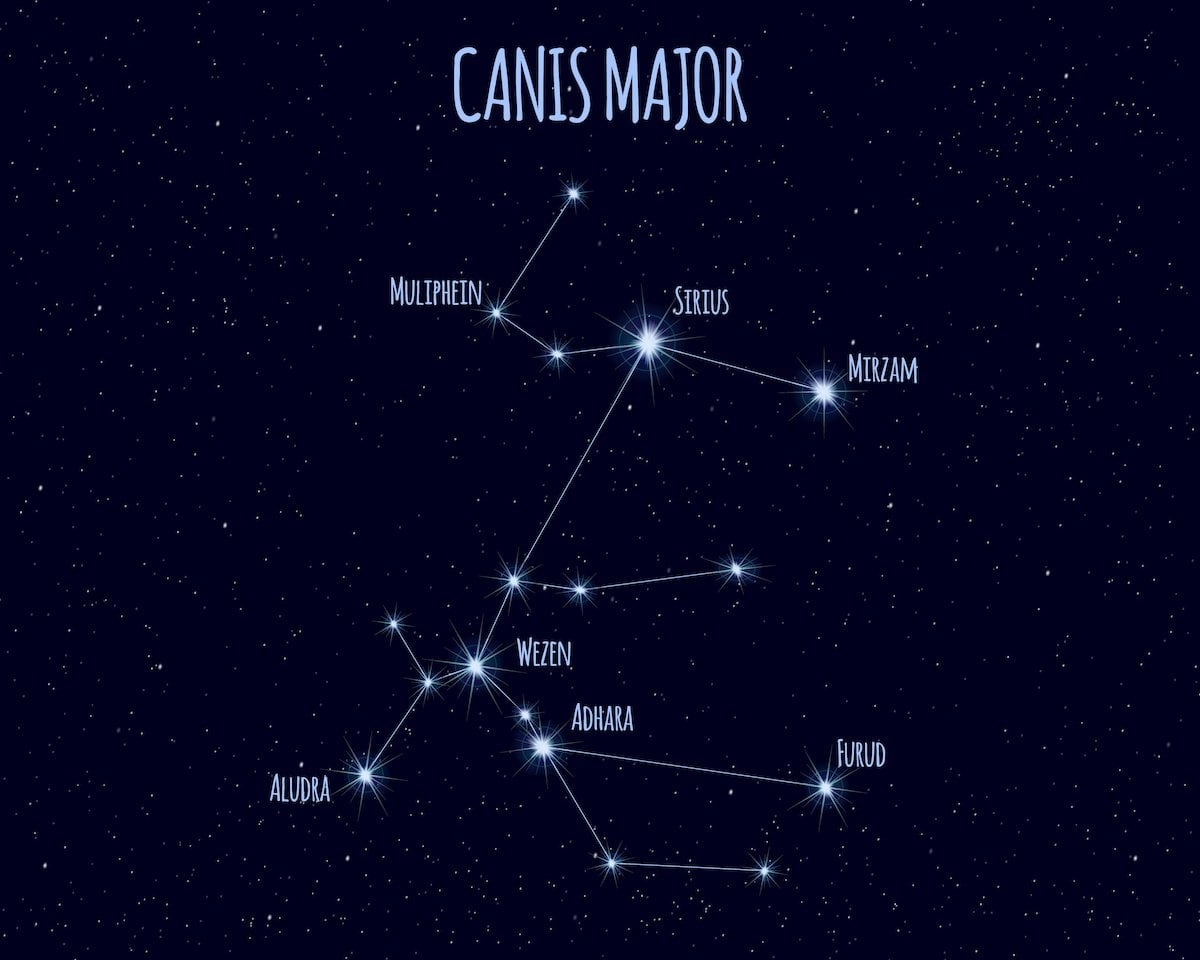
At a distance of 8.7 light-years, Sirius is the fifth nearest star known. Among the naked-eye stars, it is the nearest of all, with the exception of Alpha Centauri. Four thousand years ago, the ancient Egyptians noticed that Sirius would rise just before dawn at the time of the summer solstice, apparently heralding the coming rise of the Nile, on which Egyptian agriculture and all life in Egypt depended. Sirius became known as the “Nile Star” or “Star of Isis.” A little-known cousin to all this: Sirius is actually a binary star. A faint white-dwarf companion, Sirius B (nicknamed “the Pup”), orbits the bright Sirius A every 50 years. You will not see the Pup with the naked eye; you need a 6-inch telescope or larger and very steady air.
How to locate: Sirius is easy to locate on winter evenings. Use the constellation Orion and simply draw a line through Orion’s Belt, down to the left. This will point to Sirius.
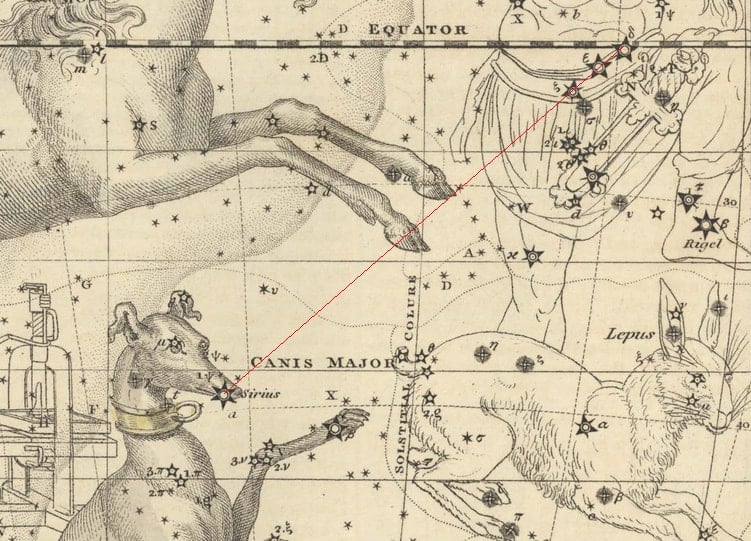
Where to view: Look for Sirius toward the south around 10 p.m. local time.
Sirius at a Glance
| Fact | Detail |
|---|---|
| Nickname | The Dog Star |
| Constellation | Canis Major (the Greater Dog) |
| Apparent magnitude | -1.46 (brightest star in the night sky) |
| Distance from Earth | 8.6 light-years |
| Spectral class | A1 main-sequence star (Sirius A) |
| Companion star | Sirius B, a white dwarf; roughly the Sun’s mass compressed to Earth’s volume |
| Best viewing months | Late December through March; highest in the sky around January and February |
| How to find it | Follow a line southeast through Orion’s Belt; Sirius is the first bright star you reach |
| Visible from both hemispheres | Yes; visible from virtually all inhabited latitudes on Earth |
| Dog Days connection | Ancient Greeks and Romans noted its heliacal rising during summer’s hottest stretch, roughly July 3 to August 11 |
| Name etymology | Ancient Greek Seirios, meaning glowing or scorcher |

Sirius FAQ
Why is Sirius called the Dog Star?
It sits at the eye of the constellation Canis Major, the Greater Dog, one of Orion’s two hunting dogs in classical sky lore. The Greek name Seirios means “scorching” or “glowing.”
How far away is Sirius?
About 8.6 light-years. That makes it the fifth nearest known star and the second nearest visible to the naked eye after the Alpha Centauri system.
When is the best time to see Sirius?
Winter evenings in the Northern Hemisphere, December through March, looking south at around 10 p.m. local time.
How do I find Sirius?
Use Orion. Find the three stars of Orion’s Belt and follow the line down and to the left. The next very bright twinkling star is Sirius.
Why does Sirius twinkle in different colors?
Atmospheric scintillation. Layers of air at different temperatures bend the starlight slightly differently in red, green, and blue. Sirius is bright and low in the sky, so the effect is dramatic.
Does Sirius really add heat in summer?
No. The Dog Days are named for Sirius rising with the Sun, but the heat comes entirely from the angle of the Sun on a tilted Earth. Sirius is 8.6 light-years away and contributes zero warmth to our planet.
Is Sirius a single star?
No. Sirius A is paired with Sirius B, a faint white dwarf nicknamed “the Pup,” in a 50-year orbit. You need at least a 6-inch telescope and steady air to split them.
For more sky reading, see our companion guides: why we call them the dog days of summer, why there are more stars in the winter sky, and how to see the Taurid meteor shower.



Joe Rao
Joe Rao is an esteemed astronomer who writes for Space.com, Sky & Telescope, and Natural History Magazine. Mr. Rao is a regular contributor to the Farmers' Almanacand serves as an associate lecturer for the Hayden Planetarium in New York City.
- Joe Rao

- Joe Rao
- Joe Rao
- Joe Rao


The sky at sunrise to sunset I have passion and till the day I depart from here I can’t get enough of learning from this site. The stars and moon to Sun raise and sunset will always be in my formal french gardens and I feel to eternal that’s where ill be with everything. This site is breath taking.