

1816: The Year Without a Summer, Mount Tambora, and How It Changed History
Read about this weather event so devastating, people are still talking about it over 200 years later.
Quick Reference: 1816, the Year Without a Summer
- What it was: a cold, ash-dimmed Northern Hemisphere summer in 1816 with killing frosts in June, July, and August.
- What caused it: the April 1815 eruption of Mount Tambora in Indonesia, the largest volcanic event in 1,800 years.
- Where it hit hardest: New England, Canadian Maritimes, Northern Europe, parts of China and India.
- Other names: “the Poverty Year,” “Eighteen Hundred and Froze to Death,” “Mille huit cent gelé à mort.”
- Cultural ripples: Mary Shelley’s Frankenstein, J. M. W. Turner’s lurid sunsets, the birth of the bicycle.
- Could it happen again: yes, if a similar Volcanic Explosivity Index 7 eruption hits the tropics during a year with low solar activity.
We recently released our summer forecast, and we are looking forward to a warm one. But what if a summer never showed up at all? Back in 1816, that is exactly what happened. The infamous “Year Without a Summer” was a weather event so devastating that people are still talking about it more than two hundred years later, and the chain of consequences shaped New England migration, agriculture, gothic literature, and the future history of climate science.
What Was The Year Without a Summer?
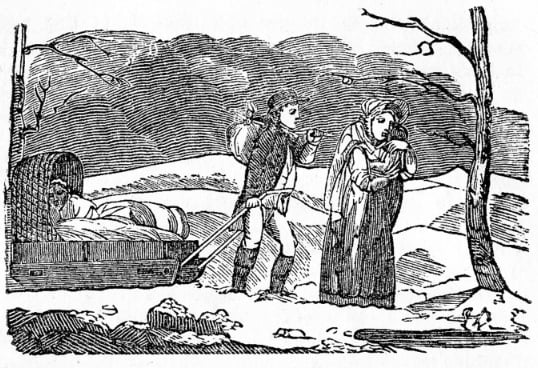
Referred to by many names, including “the poverty year” and “eighteen hundred and froze-to-death,” the year 1816 was literally a year without a summer across much of the Northern Hemisphere. Throughout not only North America but also Northern Europe and parts of Asia, an exceptionally cold summer, featuring killing frosts in July and August, crippled food production. Crop failures and food shortages were so widespread that rioting and looting became common in the United Kingdom and France, grain prices in Switzerland tripled, and authorities in several European countries declared the year a national famine.
On this side of the Atlantic, many residents of New England and the Canadian Maritimes froze to death, starved, or suffered from severe malnutrition as storms bringing a foot or more of snow hit hard during May and June. Many others from the region pulled up their stakes and moved to western New York, Ohio, and Indiana, where the cold was less severe. In fact, the Year Without a Summer is now believed to have been one of the major catalysts of the westward expansion of the United States.
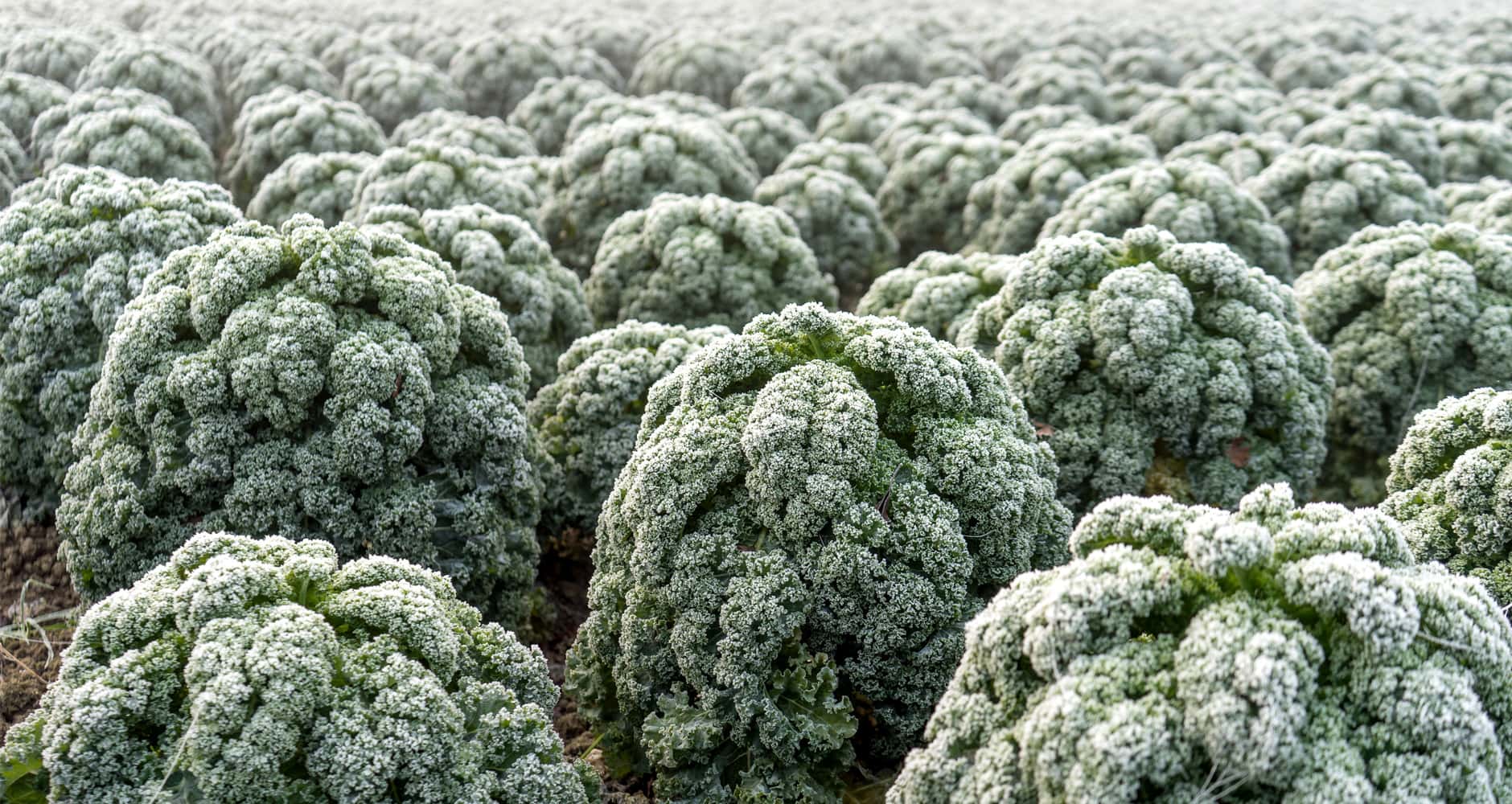
Though the northeastern section of the continent was hardest hit, southern states still experienced their share of the cold. On July 4th of that year, for instance, the high temperature in Savannah, Georgia, was a chilly 46°F. As far south as Pennsylvania, lakes and rivers were frozen over during July and August. The growing season collapsed: in central New Hampshire, the last spring frost did not lift until June 11, and the first fall frost arrived August 21, leaving farmers about ten weeks of frost-free weather to grow the entire year’s food.
What Caused It?
So, what caused this tragically cold summer? The likely suspect was a series of volcanic eruptions in 1812-1815, capped by the April 1815 eruption of Mount Tambora in Indonesia, believed to be the largest volcanic event of the past 1,800 years. Tambora ejected a tremendous cloud of fine ash and sulfur dioxide gas into the stratosphere, where it formed a layer of sulfate aerosol particles that drifted around the globe within a year. Those particles reflected sunlight back into space before it could warm the surface, dropping Northern Hemisphere average temperatures by roughly 1°F (about 0.5°C) for the next two years, with much sharper localized declines in continental interiors.
The aerosol layer also gave the sky a yellow-orange tinge in many places, which is exactly the palette J. M. W. Turner captured in the lurid sunsets he painted between 1816 and 1818. The same haze warped the weather across India and China, where the monsoon failed, contributing to a cholera epidemic in Bengal that historians now trace back to the disrupted hydrology of that summer.
How the Year Without a Summer Reshaped Culture
Three stuck-indoors months on the shore of Lake Geneva are the reason Mary Shelley wrote Frankenstein. The summer of 1816 was so wet and dark on the European continent that Lord Byron, Percy Shelley, and Mary Godwin (later Shelley) spent it trapped at the Villa Diodati telling ghost stories by candlelight. Byron proposed the contest; Mary’s nightmare became the novel. John Polidori, also in the room, started the manuscript that became The Vampyre, the direct ancestor of every modern vampire story.
Read how the Year Without A Summer inspired Mary Shelley to write Frankenstein.
The cold also killed enough horses, mostly for lack of oats, that German inventor Karl Drais built and demonstrated the first running machine (the Laufmaschine) the next year. That contraption is the direct ancestor of the modern bicycle. The Year Without a Summer is, in other words, the reason you can ride a bike to work.
Impact on Farming and Migration
Almost every staple crop of New England failed at least once that summer. Corn refused to ripen anywhere north of the Mason-Dixon line. Wheat froze in the field in upstate New York. Hay yields collapsed, which meant that even the farmers who managed to harvest something for themselves had nothing to keep their animals alive through the following winter. By the spring of 1817, “Ohio fever” had swept the Northeast, and thousands of New England families joined the wagon trains heading west to land that, mercifully, the volcano had spared.
The cold also resets the cultural memory of what a “normal” summer feels like. For decades afterward, almanacs published “frost dates” that were aggressively conservative, because the people compiling them had lived through 1816. If you would rather work with modern data, our long-range weather forecast and Best Days calendar draw on more than a century of weather records.
Could a Year Without a Summer Happen Again?
Probably, eventually. Volcanologists rate eruptions on the Volcanic Explosivity Index (VEI). Tambora was a VEI 7. The 1991 eruption of Mount Pinatubo in the Philippines was a VEI 6 and still dropped global temperatures by about 0.9°F for a year. Tropical volcanoes throw more aerosol into the stratosphere than mid-latitude ones, so the cooling is bigger; a VEI 7 in the tropics during a low-solar-activity year would replicate 1816 closely. The geological record shows roughly one VEI 7 event per millennium, so the odds are low in any given decade but very much not zero. The lesson historians draw is less about the volcano and more about the brittleness of food supply chains when the growing season suddenly contracts.
Fortunately, a summer like 1816 has yet to repeat itself, and the Farmers’ Almanac’s outlook for this summer is much more enjoyable.
Year Without a Summer FAQ
When was the Year Without a Summer?
1816. The cold persisted through June, July, and August across most of the Northern Hemisphere, with smaller effects continuing into 1817 and 1818.
What caused the Year Without a Summer?
The April 1815 eruption of Mount Tambora in Indonesia, the largest volcanic event of the past 1,800 years. Sulfur dioxide formed a sulfate aerosol layer in the stratosphere that reflected sunlight for the next two years.
How cold did it get in summer 1816?
Northern Hemisphere averages dropped roughly 1°F, with much sharper local effects. Snow fell in New England in June; Savannah, Georgia hit a high of 46°F on July 4; lakes froze in Pennsylvania in July.
Did the Year Without a Summer inspire Frankenstein?
Yes. Mary Shelley wrote the original draft during a wet, cold summer at the Villa Diodati on Lake Geneva, where she, Percy Shelley, Lord Byron, and John Polidori were stuck telling ghost stories by candlelight.
How did the Year Without a Summer change America?
It triggered a wave of westward migration as failed New England farmers moved to upstate New York, Ohio, and Indiana looking for warmer ground. Historians treat 1816 as a major accelerant of the western expansion of the United States.
Could a year without a summer happen again?
Yes, if a tropical volcano on the scale of Tambora (Volcanic Explosivity Index 7) erupts during a low-solar-activity year. The geological record suggests roughly one such event per millennium.


Jaime McLeod
Jaime McLeod is a longtime journalist who has written for a wide variety of newspapers, magazines, and websites, including MTV.com. She enjoys the outdoors, growing and eating organic food, and is interested in all aspects of natural wellness.
- Jaime McLeod

- Jaime McLeod
- Jaime McLeod
- Jaime McLeod


Just ran across this while searching for relatives. My great,great, great grand-dad was born June 29 1816. Very interesting. Thanks for posting this article.
You are welcome! Thank you for stopping by!
I love reading all the folklore articles in the Farmers’ Almanac. It makes me wonder if the planets weather has been crazy ever since man can remember. Hopefully will never have a volcano irruption like the one that occurred back in the 1800s
Hi Ronnie,
Glad you enjoy our articles. Thanks for visiting our site and commenting!
Very interesting article whenever it was written. Some of the comments are six years old! But it does make you want to go back and consider everything that was going on in the world at that time. Had this happened four years earlier the outcome of the War of 1812 might have been quite different. Had Henry James suffered through it he might never have thought that the two most beautiful words in English were: summer afternoon.
So here is some food for thought ! The main cause of the 1816 year without a summer was NOT just volcanic eruptions ! In fact it was the GSM ( Grand Solar Minimum ) 1790-1820 , the volcanic eruptions were and are merely symptoms of a GSM ! FYI ☹️ we recently entered into another ONE ! But they are not declared until decades later depending on how long they last ? get ready everyone as we were already expecting catastrophic climate changes just from global warming , I wish the best for you and yours .??
I like the winter and fall all right so I am now wondering what it would be like to be in that time and not have a summer, it actually could be kind of fun not to have a summer but I might miss it, it would be very weird not to have a summer.
Very interesting
This “summer,” if you can can it that, is more like fall. Cool and wet. Farmers can’t get fields planted, harvest likely to be 50-60% down. Almanac got it wrong.
Hopefully, when summer officially arrives on Friday, things will start to turn around!
I don’t want to starve, but I have learned to like the winter. I wouldn’t mind skipping summer this year.
Residents in Fundy New Brunswick 2018 said they had their latest known Spring frost coming in around June 20th. 70% strawberry and blueberry crops lost because of this. No major volcanic eruption but sunspots were near zero for past 2 years.
Some of the comments ~ Gary, you joking? Today we have food in cans that can last years. Frozen etc. We have plows that can get food in from very southern climes. Yeah there’d be problems, but we are much better set to deal with a ” year without summer ” today then in 1816!