

Itchy Plants: How to Identify Poison Ivy, Oak, Sumac
Poison ivy, poison oak, poison sumac, learn to identify and avoid these common itch-causing plants for a healthier, happier summer.
Quick Reference: Identifying Itchy Plants
- The rule: “Leaves of three, let it be.” Poison ivy and both poison oaks carry their leaves in clusters of three.
- Poison ivy: three smooth, shiny, almond-shaped leaflets on vines with fine reddish root hairs. Found in all U.S. states except Alaska, Hawaii, and California.
- Poison oak: three leaflets shaped like small oak leaves. Atlantic poison oak in the Southeast, Western poison oak along the Pacific coast.
- Poison sumac: seven to 13 leaflets on red stems, the most potent of the bunch, found in swamps and bogs of the eastern U.S. and Canada.
- What causes the itch: an oily resin called urushiol, found in all four plants.
Remember the old saying, “Leaves of three, let it be”? Well, it’s good advice. Come summer, when the woods and fence lines fill in, a brush against the wrong plant can leave you scratching for days. Here are tips on how to identify poison ivy, poison oak, and poison sumac so you can give them a wide berth and keep your summer comfortable.
What Makes These Plants Itch
All four of these plants share one troublemaker: an oily resin called urushiol. It sits in the leaves, stems, roots, and berries, and it does not take much to cause a reaction. A reddish, itchy rash with blisters usually shows up within a day or two of contact and can last two to three weeks. You can pick it up by touching the plant directly, by handling tools, clothing, or a pet that brushed against it, or by breathing in smoke if the plants are burned. The U.S. Centers for Disease Control and Prevention notes in its guidance on poisonous plants that washing the skin with soap and water within an hour of contact can keep the rash from spreading. Knowing what each plant looks like is your first and best defense.
Poison Ivy (Toxicodendron radicans)
What Does it Look Like?
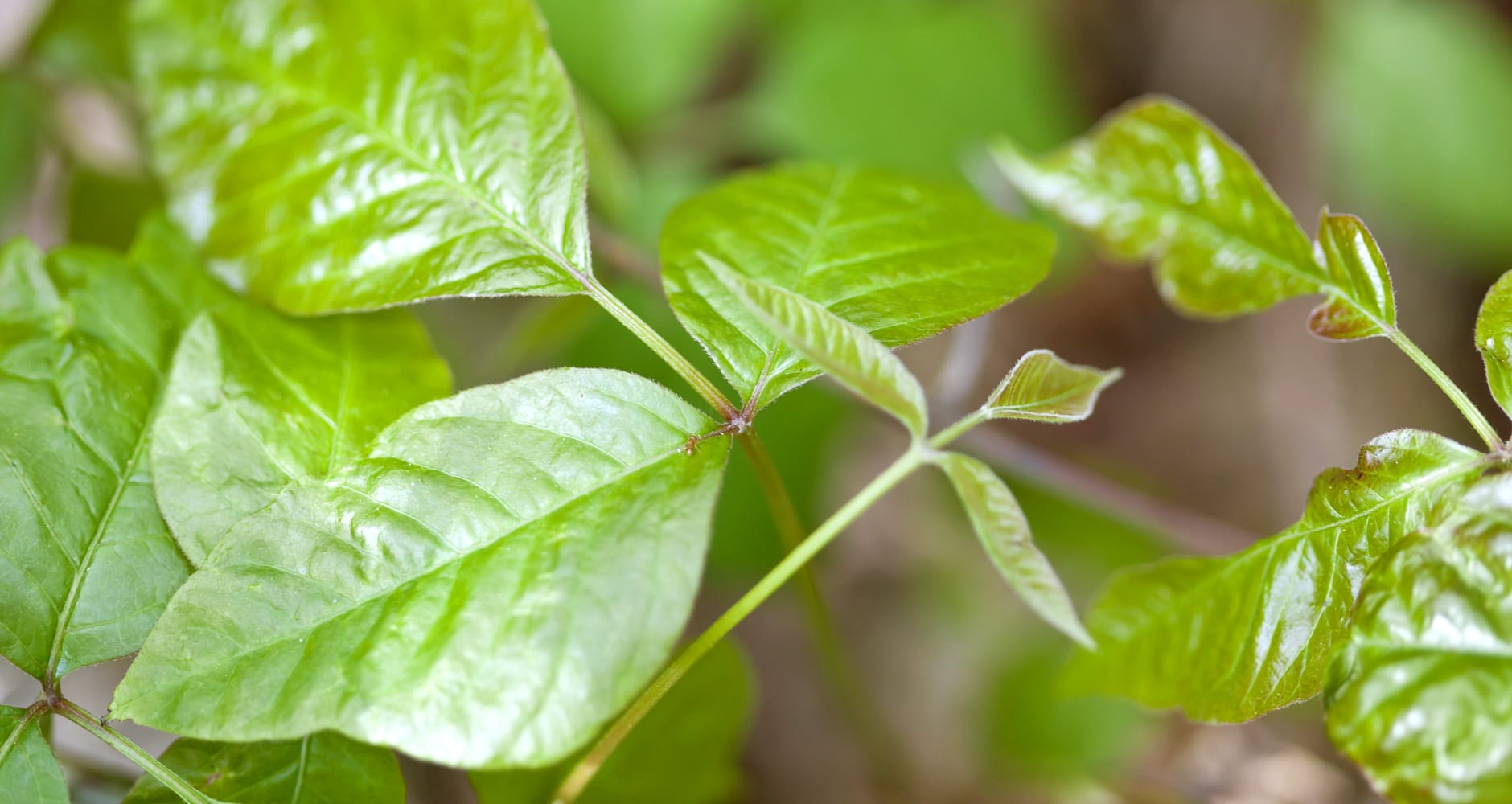
Clusters of three smooth, shiny, almond-shaped leaflets. Leaves are generally anywhere from one to five inches long but can grow to be up to 10 inches long. Usually red in spring, light green to dark green as summer progresses, and bright red or orange in the fall. May have grayish-white berries. Grows on vines with fine reddish root hairs along the stem.
Where Does It Grow?
Throughout most of North America, including most Canadian provinces and all U.S. states except Alaska, Hawaii, and California. It thrives along the edges of wooded areas, which makes it especially prominent in suburban communities.
When Does it Grow?
Early spring through late autumn.

Atlantic Poison Oak (Toxicodendron pubescens)
What Does It Look Like?
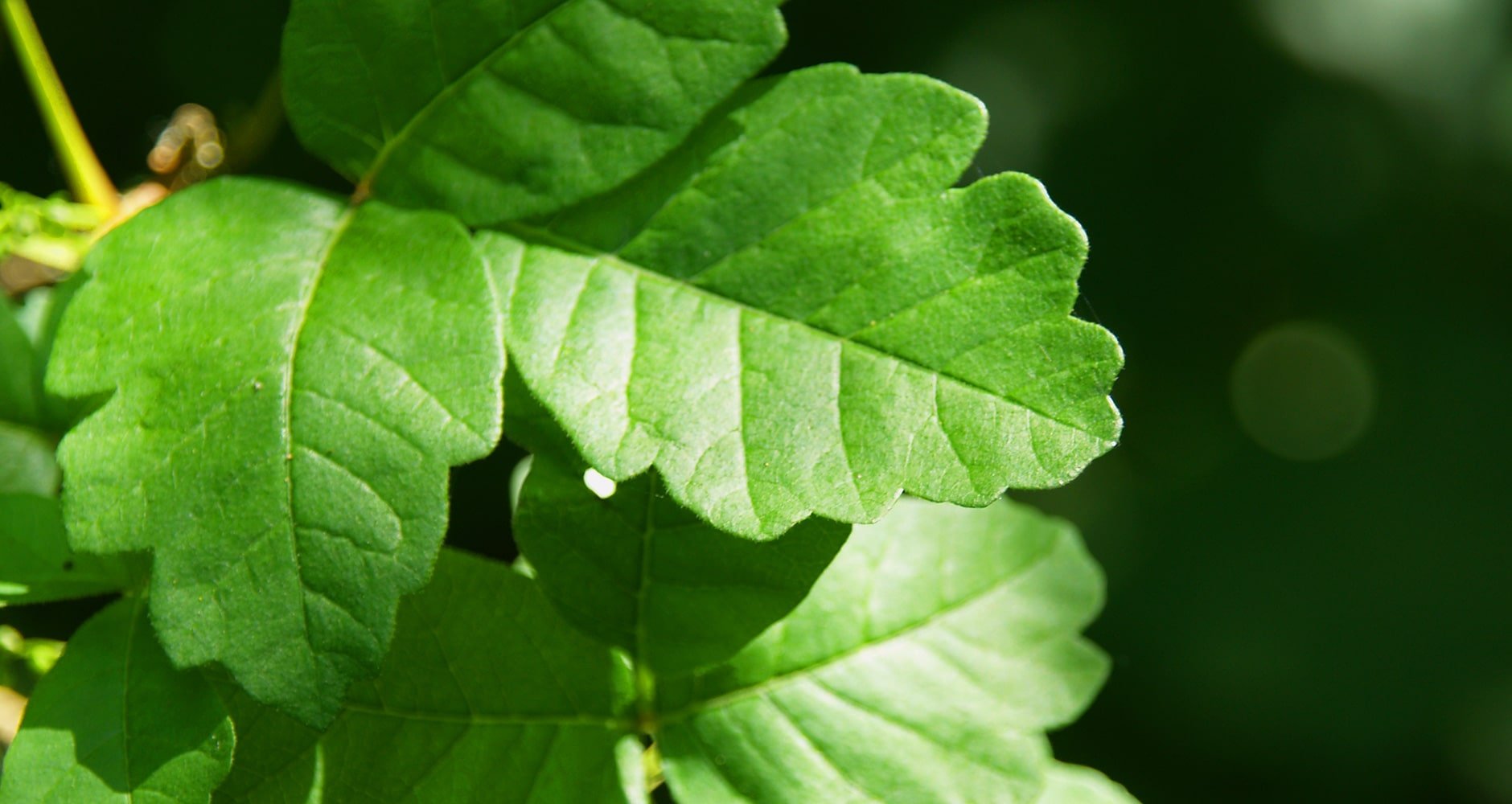
This upright shrub grows to be about three feet tall. The leaf stems are about six inches long, with three usually hairy leaflets on each. The leaflets vary in shape and size but often resemble small oak leaves. They are green during the spring and summer and turn yellow or orange in autumn. May feature small, round yellow or green fruit.
Where Does It Grow?
Grows in the Southeastern United States, from the Atlantic coast westward to Texas and Oklahoma. Thrives in forests, thickets, and dry, sandy fields.
When Does It Grow?
Early spring through late autumn.
Western Poison Oak (Toxicodendron diversilobum)
What Does It Look Like?
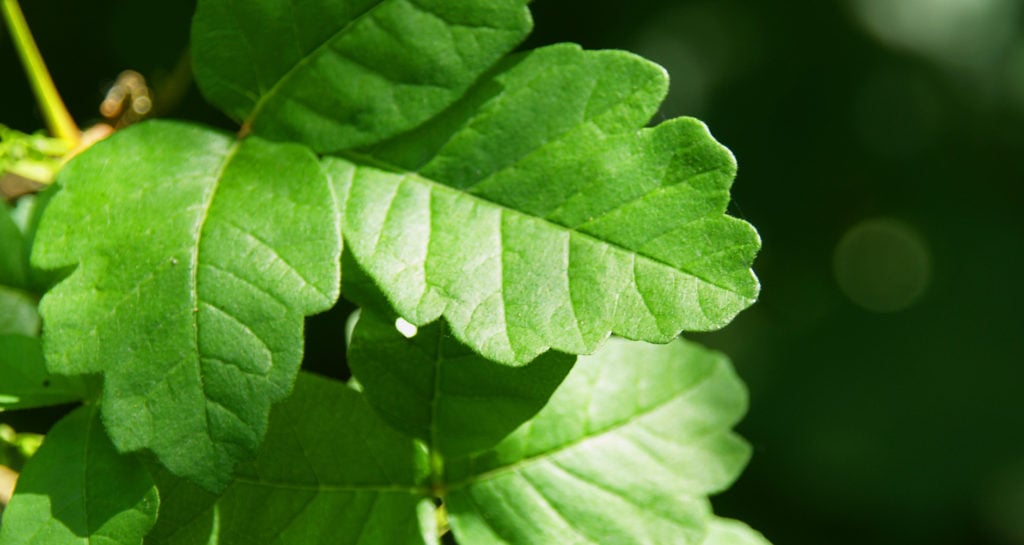
Can grow as either a low, dense shrub in sunlight or, in shaded woods, as a climbing vine. Like Atlantic poison oak, leaf stems are divided into three leaflets, each up to about four inches long, that often resemble glossy oak leaves. Leaves are bright green in the spring, turning yellow to red in the summer, and bright red in the fall. May include white flowers or greenish-white berries.
Where Does It Grow?
Found only along the Pacific coast, from southern Canada to the Mexican Baja peninsula. The shrub form thrives in grasslands or at the edges of forests, while the vine form grows in thick woods, usually climbing the trunks of large trees.
When Does It Grow?
Early spring through late autumn.

Poison Sumac (Toxicodendron vernix)
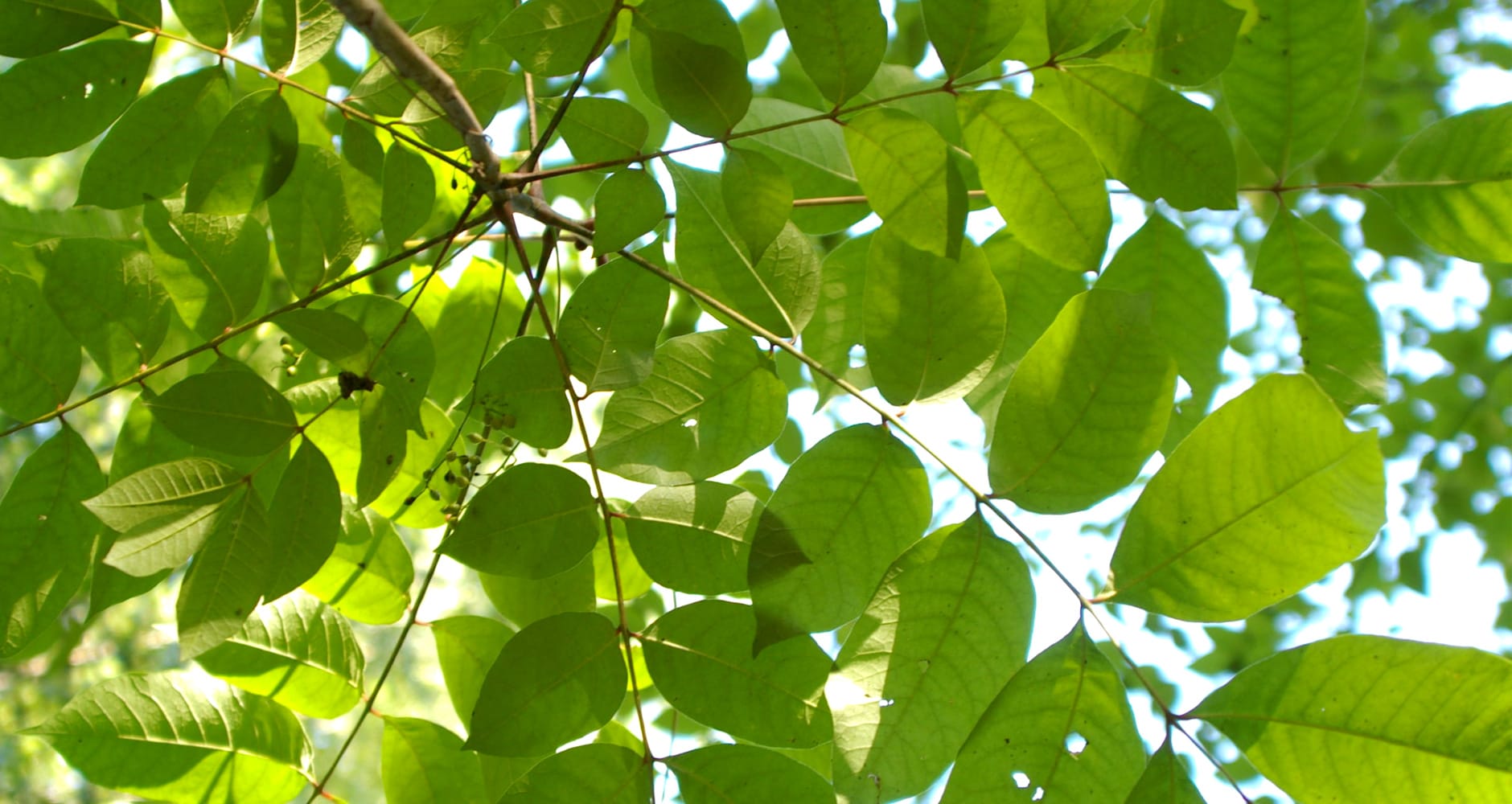
What Does It Look Like?
Poison sumac is the most potent itch-causing plant in North America. It is a large shrub or small tree, which can grow to be up to 20 feet tall. Leaf stems include anywhere from seven to 13 oblong or oval leaflets, each about two to four inches long. It may include greenish flowers or tiny gray/white fruit (berries). The stems along the leaflets are red.
Where Does It Grow?
Poison sumac grows only in very wet soil, especially in swamps or peat bogs, throughout the eastern United States and Canada.
When Does It Grow?
Early spring through late autumn.
NOTE: Poison sumac is not Staghorn sumac, which carries velvety red “staghorn” shaped berries.
Other Itchy Plants to Know
The “leaves of three” crowd are the famous offenders, but they are not the only plants that can leave you smarting. Stinging nettle (Urtica dioica) is covered in tiny hollow hairs that act like little needles, delivering a sharp sting and a temporary rash when you brush against it. It grows in moist, rich soil along trails, streams, and the edges of fields across much of North America. Wild parsnip is another one to watch, since its sap can react with sunlight to cause a burning rash on exposed skin. None of these share the urushiol of the poison plants, but the same habit protects you: learn the leaf, and give it room. For more on foraging the safe kind of sumac, see our guide to wild edible sumac berries.
What to Do If You Touch One
If you think you have brushed against poison ivy, oak, or sumac, wash the skin with soap and cool water as soon as you can, ideally within an hour, to remove the urushiol before it sets in. Wash any clothing, shoes, tools, or pet fur that may have touched the plant, since the resin can linger on surfaces and cause a fresh rash later. For the itch itself, cool compresses, calamine lotion, and an oatmeal bath can ease the worst of it. See a doctor if the rash covers a large area, reaches the eyes or face, or shows signs of infection. A bar of jewelweed soap is a country standby worth keeping by the back-door sink, and our jewelweed poison ivy soap is made for exactly this. If the plants have taken over your yard, our guide on getting rid of poison ivy walks through the safest ways to clear them out, and the long-range forecast can help you pick a dry, calm day for the job.
Have poison ivy on your property and you need to get rid of it? Try these expert tips!

Itchy Plants: Frequently Asked Questions
What does “leaves of three, let it be” mean?
It is an old rule of thumb for spotting poison ivy and poison oak, which both carry their leaves in clusters of three leaflets. If a plant has three-leaflet groups, treat it as suspect and do not touch it. Poison sumac is the exception, since it carries seven to 13 leaflets, so the rule does not cover everything.
What causes the rash from poison ivy, oak, and sumac?
All three contain an oily resin called urushiol in their leaves, stems, roots, and berries. When it touches skin, it triggers an itchy, blistering rash that usually appears within a day or two and can last two to three weeks. Washing with soap and water within about an hour of contact helps keep it from spreading.
How do I tell poison ivy from poison oak?
Both grow in clusters of three leaflets. Poison ivy leaflets are smooth, shiny, and almond-shaped, often on vines with fine reddish root hairs. Poison oak leaflets are shaped more like small oak leaves and are often hairy. Atlantic poison oak grows in the Southeast, while Western poison oak is found along the Pacific coast.
Is poison sumac the same as the sumac with red berries?
No. Poison sumac (Toxicodendron vernix) grows in wet swamps and bogs and carries gray or white berries. It is not the same as Staghorn sumac, which has velvety red “staghorn” shaped berries and is not poisonous. Poison sumac is the most potent itch-causing plant in North America, so learn the difference before foraging.
What should I do right after touching an itchy plant?
Wash the skin with soap and cool water as soon as possible, ideally within an hour, and wash any clothing, tools, or pet fur that touched the plant. Cool compresses, calamine lotion, and an oatmeal bath ease the itch. See a doctor if the rash is widespread, reaches your eyes or face, or looks infected.
Which states do not have poison ivy?
Poison ivy grows throughout most of North America, including most Canadian provinces and all U.S. states except Alaska, Hawaii, and California. Even so, California and the Pacific coast have plenty of Western poison oak to watch for, so few regions are truly free of itchy plants.


Jaime McLeod
Jaime McLeod is a longtime journalist who has written for a wide variety of newspapers, magazines, and websites, including MTV.com. She enjoys the outdoors, growing and eating organic food, and is interested in all aspects of natural wellness.
- Jaime McLeod

- Jaime McLeod
- Jaime McLeod
- Jaime McLeod




It would also be nice to see a picture further back
Years ago in NC I weed wacked my way through some poison something, in shorts. My new neighbor came running towards me yelling for me to stop. I was in agony for a week!
My lovely wife got Poison Ivy very bad. I tried Jewel Weed, I even juiced it, but it did not help. My brother said try Oak and Ivy TechNu. The person taking the order said power line workers have terrible exposure to Poison Ivy and they swear by TechNu. It is not cheap but it really helped my wife through a very rough time.
For anybody who suffers from poison ivy like my son used to, we found something called Outdoor Joe’s (formerly RhusTox). This stuff is miraculous! It treats current AND prevents future outbreaks! My son hasn’t had more than a couple bubbles here and there since we started using it, he used to have to go to the doctor for shots, pills, and creams. It was really awful. Not any more! It has really been a life changer for him. Our family swears by it. Good luck!
Years ago, my dad and uncle cut down a huge oak tree. They stacked the branches and gave the wood away. I was over at my uncle’s house daily so that stack of branches looked quite inviting. The next day, my cousin and I played in those branches and had a “big time” doing so, too. However, symptoms of poison ivy started showing its nasty self soon after. I was covered from head to toe. My body was pink from the Calamine lotion that didn’t stop ANY of the itching, either! That is when I was first informed about the weed Plantain. A neighbor came over to see my Aunt. When she saw me all pink and in misery, she went outside and started picking leaves from the Plantain growing in the yard. She showed my Aunt and I what to do before rubbing it on my body and the rest was history. The Calamine lotion gave me little relief from the itching, maybe 45 minutes. The Plantain gave me nearly 4 hours of relief and the cost was -0- $$$. I use Plantain, to this day, whenever I get a bug bite, poison ivy or skin inflammation.
Any insight for us about how to prepare and use the Plantain? I have not heard of this treatment before.
More information on how that is grown and the actual usage of it? thanks!
How do you use the plantain to get rid of poison I’ve itch?