

The Rain Dragon: A Weather Folklore
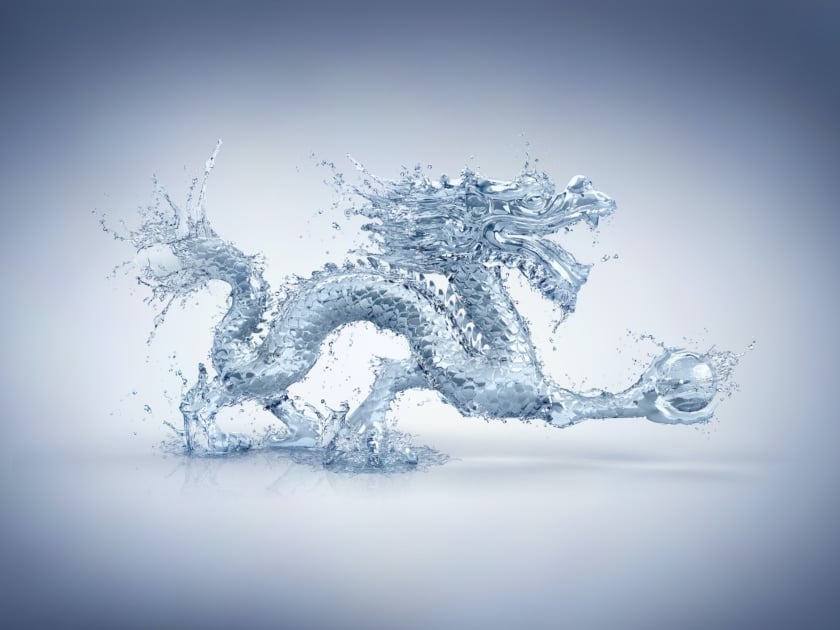
In ancient China, it was once believed that a dragon controlled the rain.
Quick Reference
- Who: Yinglong, the Responding Dragon. The Chinese rain dragon who gives just enough rain when properly honored, floods or drought when not.
- Trace mark: The riverbeds of China, said to be carved by his tail to hold rainwater between showers.
- Living legacy: The dragon dance at Chinese New Year is a survival of the rain ceremony.
- The science: Rain is the water cycle. Surface water evaporates, condenses in cooler air, and falls as precipitation. The same molecule rides the loop again.
- Companion read: Our types of rainbows and Anemoi entries.
Long before modern science began to understand the processes that create our weather, people made up their own explanations. Many of these accounts were fantastic in nature, with evil or benevolent gods, monsters, and spirits controlling the elements. In this series, we explore some of these ancient myths and share the science behind them. Weather + mythology = weather-ology!
Rain. No matter how technologically advanced we become, we still rely on this most basic of weather functions for our survival. If there is too little rain, it is hard to grow things. Too much, and our homes and cities can be washed away by raging floodwaters. It is no wonder, then, that appeasing various rain deities was a major preoccupation for many ancient cultures.

Yinglong, the Responding Dragon
In China, there was once a widespread belief that dragons controlled the weather, and rain especially. One dragon in particular, named Yinglong, or Responding Dragon, was associated with water and rain. Usually, Yinglong gave just enough rain to nourish the earth, but he could send floods or withhold rain on a whim if people did not honor him properly. His name, Responding Dragon, refers to the notion that, if the people cried out to him for more or less rain, he would have mercy and respond to their pleas. Yinglong was also said to have carved out riverbeds with his tail as a gift to humankind, to hold rainwater in between showers.
Rain ceremonies in China usually involved making a dragon out of clay, in homage to Yinglong, and dragons remain an important part of Chinese culture. The dragon dance, which is always a highlight of Chinese New Year celebrations, is a holdover from the rain ceremony and other rituals created to appease the dragons once believed to control much of the natural world.
The Four Dragon Kings
Yinglong is part of a wider Chinese cosmology of weather dragons. Later folklore organized the rain spirits into four Dragon Kings, one for each cardinal direction and one for each of the four major seas around China.
| King | Direction | Sea |
|---|---|---|
| Ao Guang | East | East China Sea |
| Ao Qin | South | South China Sea |
| Ao Run | West | Lake Qinghai (then expanded westward) |
| Ao Shun | North | Lake Baikal |
Each king ruled one quadrant of the sky and one body of water. Together they were the engine of every Chinese rainstorm, and praying or making offerings to the right king was believed to call rain to a specific region.
The Real Cause of Rain: The Water Cycle
Today, of course, anyone who has been through the third grade knows that rain is a product of the water cycle. Water on the Earth’s surface, in the form of oceans, rivers, lakes, and so on, as well as from living things, which are mostly made of water, evaporates into the air. Rising air currents carry these billions of tiny water vapor molecules up into the atmosphere, where cold temperatures cause them to condense into clouds. As the clouds grow, the water molecules bump into one another, combine, grow heavier, and eventually fall back to the Earth in the form of rain (or sometimes snow or hail). The precipitation then soaks into the ground to nourish trees and grass, or runs off into small streams. These streams feed into rivers, lakes, and eventually the ocean, where they evaporate and begin the whole process over again.
Before evaporation and condensation were fully understood, the processes that dictated when rain would fall from the sky, or when it would not, were a mystery. And, like many other mysteries in the universe, ancient people explained it with a myth.
The Water Cycle, Step by Step
- Evaporation. Solar energy turns surface water into water vapor.
- Transpiration. Plants release water vapor through their leaves, adding to the atmosphere.
- Condensation. The vapor rises, cools, and clusters around microscopic dust particles to form cloud droplets.
- Precipitation. Droplets merge until they are heavy enough to fall as rain, snow, sleet, or hail.
- Collection and runoff. Precipitation pools in rivers, lakes, and oceans, or soaks into the ground to recharge groundwater.
- And around again. The same molecule may repeat the loop hundreds of times in a year.
The U.S. Geological Survey publishes a free interactive water-cycle diagram that walks through every stage in plain language.
Rain Deities Around the World
- Tlaloc (Aztec): God of rain, fertility, and water. Ruled the Tlaloque, his rain-making subordinates.
- Indra (Hindu): King of the gods and bringer of rain, wielder of the thunderbolt.
- Chaac (Maya): The hooked-nose rain god who struck the clouds with a stone axe to make thunder and rain.
- Set (Egyptian): God of storms, deserts, and dry chaos, the inverse of the Nile flood-rain.
- Tefnut (Egyptian): Goddess of moisture, rain, and dew.
- Ame-no-Mihashira (Japanese): Pillar of the rain in Shinto belief.

Frequently Asked Questions
Who is Yinglong?
Yinglong is the Chinese Responding Dragon, the rain dragon of ancient Chinese folklore. He gives rain when properly honored and sends floods or drought when not. He is also credited with carving out the riverbeds of China with his tail.
Why is Yinglong called the Responding Dragon?
Because, in the legend, he listens. When people cry out for more rain or relief from too much rain, Yinglong responds to their pleas. The name reflects the older belief that the proper relationship between the people and the rain-bringer is one of dialogue, not just obedience.
Is the dragon dance really a rain ceremony?
In origin, yes. The dragon dance descends from rain ceremonies that involved making a clay dragon in homage to Yinglong and parading it through the village. The performance survived the religion that produced it and now appears at Chinese New Year, weddings, and other festivals.
Who are the Four Dragon Kings?
The Four Dragon Kings are Ao Guang (East Sea), Ao Qin (South Sea), Ao Run (West), and Ao Shun (North). Each rules one quadrant of the sky and one body of water in Chinese folklore.
What is the water cycle?
The water cycle is the loop water travels through Earth’s surface and atmosphere. Solar heat evaporates surface water, the vapor condenses into clouds, the clouds release rain or snow, and the water either runs off into rivers or soaks into the ground before evaporating again.
How long does a water molecule spend in each stage?
It varies by reservoir. A molecule in the atmosphere spends about 9 days as vapor before falling. A molecule in a river or stream takes weeks to reach the sea. A molecule in deep ocean water can sit for thousands of years before its next evaporation.
Who is Tlaloc and how does he compare to Yinglong?
Tlaloc is the Aztec god of rain, fertility, and water. Like Yinglong, he is both giver and withholder, ruling a host of rain spirits called the Tlaloque. The two figures show how widely separated cultures arrive at the same image: a powerful, willful sky deity who must be kept on good terms.
Tell Us
Has it been a wet spring or a dry one where you live? Tell us in the comments. For more rain-and-wind folklore, see our Anemoi and types of rainbows entries.


Jaime McLeod
Jaime McLeod is a longtime journalist who has written for a wide variety of newspapers, magazines, and websites, including MTV.com. She enjoys the outdoors, growing and eating organic food, and is interested in all aspects of natural wellness.
- Jaime McLeod

- Jaime McLeod

- Jaime McLeod

- Jaime McLeod


I ran my dragon over
I need a dragon…
yes it was rather intresting keep up the good work 🙂
Great artical and I look forward to reading the next. I agree that ancient folk-lore and the Holy Bible are very interesting and entertaining to read, but the scientific explanation of it all makes a lot more sense of it all to me.
Very interesting, everything has a cycle like life and death.
Excellent reading!
Ancient folk-lore is very interesting, but have you read the account of the first rain in the Holy Bible? It is the account of Noah and the flood and it is very interesting. Check it out.
Thanks. Wish I had copies of those pictures. Where do you find them?
Love this artical. It was very interesting. Amazing how people all over the world thank their Gods for the rain.
Love this article ~ thanks, namaste, Carol ^_^