

What Is Heat Lightning? Is It Real, What Causes It, and How to Spot It
Heat lightning is common during the summer months. Learn what causes it and why you can see it.
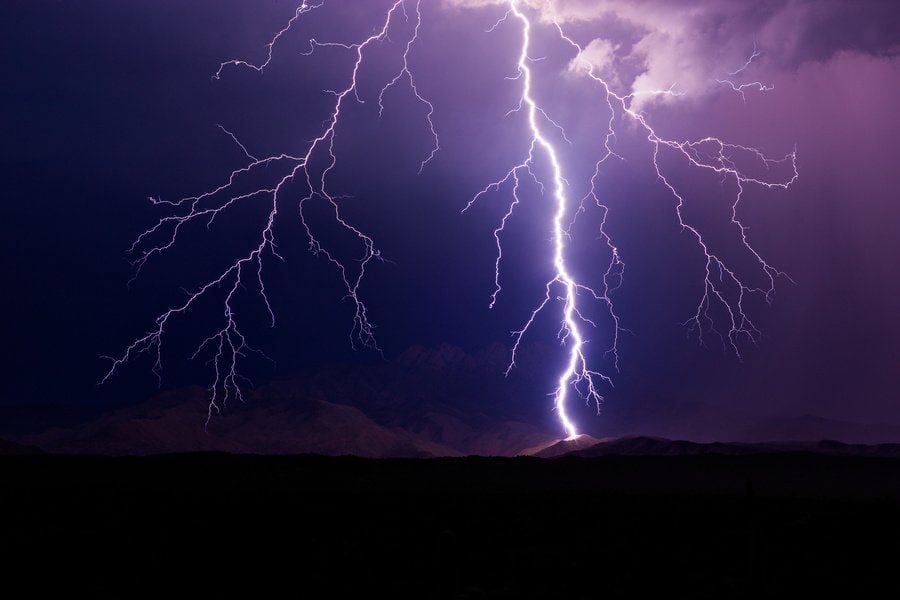
Quick Reference
- What it is: light from a distant thunderstorm whose thunder is too far away for you to hear. Not a separate kind of lightning.
- Why no thunder: sound from a lightning strike rarely travels more than 10 miles. The light from the same flash can be visible 50 to 100+ miles away when conditions are right.
- Why “heat” lightning: the silent flashes are most visible on warm, humid summer nights when distant thunderstorms are common. The “heat” name is a folk association, not a separate weather mechanism.
- How to confirm: tune an AM radio to a quiet frequency. You will hear a crackle of static at the same instant you see each flash, the same signature any lightning produces on AM.
- Safety note: if you can hear thunder, you are within striking distance. If the flashes are silent, the storm is far enough away to not be an immediate threat (but check the forecast in case it is moving toward you).
On a warm summer night, you stand on the porch and the sky lights up. A flash, then darkness. A few seconds later, another flash. No thunder. No rain. The stars are still out overhead. The flashes seem to come from somewhere on the horizon, low in the sky, and they keep going, irregularly, for half an hour or longer. The folk name for this is “heat lightning,” and it is one of the most reliably misunderstood phrases in American weather. Heat lightning is not a special kind of lightning. It is the same lightning that produces ordinary cloud-to-ground bolts; it just happens to be too far away for you to hear the thunder. Here is what is actually happening, why the silent flashes are so vivid, and the small but useful tricks to confirm what you are seeing.
The Plain Answer: It Is Distant Lightning
Heat lightning is the light from a thunderstorm that is far enough away that the thunder does not reach you. The storm is real. The lightning is real. The thunder is also real, but it is happening 30, 50, sometimes 100+ miles away, and sound at sea-level air pressure does not travel anywhere near that far. By the time the thunder gets to your ear, it has dissipated into background noise that your brain edits out, or it has been refracted upward by a layer of warm air and never reaches you at all.
The light is a different story. Lightning is one of the brightest natural events on Earth. A single bolt produces an instantaneous flash equivalent to several million light bulbs. That flash, propagated through the upper atmosphere and reflected off humid air and high cirrus clouds, can be visible from much farther than the thunder is audible. The combination (a visible distant storm with no thunder) is what we call heat lightning. Same storm, same lightning. Different distance, different physics for sound versus light.
Is Heat Lightning Real?
Yes. Heat lightning is real, in the sense that you are seeing actual lightning. What is not real is the idea that it is a separate weather phenomenon caused by heat itself. The flashes are ordinary cloud-to-ground or cloud-to-cloud lightning from a thunderstorm that is far enough away that the thunder cannot reach your ear. The storm exists. The bolts exist. The thunder exists. Only the distance is unusual.
The folk name persists because the silent flashes are most reliably seen on warm humid summer evenings, when distant thunderstorms are common and the haze and water vapor in the upper atmosphere scatter and reflect the lightning’s light efficiently. Sometimes the term is spelled “heat lightening.” Same phenomenon, different spelling. Both refer to distant lightning, not to a lightning type caused by heat.
Why Sound Stops at 10 Miles
Sound waves traveling through the atmosphere lose energy quickly through several effects. The waves spread spherically from their source, which means the energy per unit area drops as the square of the distance. Every doubling of distance reduces the energy reaching your ear by a factor of four. Atmospheric absorption (especially of higher frequencies) further reduces the signal. By the time a thunderclap has traveled 10 miles, the loud, sharp crack at the source has become a low rumble that is hard to distinguish from background noise.
Refraction adds another layer. The atmosphere is rarely uniform. Layers of warm air over cooler air (or vice versa) bend sound waves the way a glass of water bends light. On a warm summer night, the surface air is often cooler than the air a few hundred feet up, which causes upward-traveling sound to bend back down toward the ground. Sound from a distant storm, however, often travels along a path that bends upward into warmer air aloft and away from any ground-level observer. The thunder is happening; it just is not landing on your ear because the atmosphere has steered it elsewhere.
The 10-mile rule is a rough average. On unusually still nights with even temperature distribution, thunder can carry farther (occasionally 15 or 20 miles for an especially strong bolt). On nights with lots of refraction, thunder may not be audible past 5 miles. Either way, the upper limit on routinely audible thunder is well below the distance at which the lightning flash itself can be seen.

Why You Can See It from So Far Away
The light from a lightning bolt can travel essentially as far as the visible horizon, which on a warm humid summer night is much farther than people often realize. Several effects amplify the visibility:
- Atmospheric scattering: the high cirrus clouds and humid air at the top of the troposphere scatter the lightning’s light, illuminating an area much larger than the bolt itself. A bolt that lasts a thousandth of a second can light up a cloud bank 60 miles wide for that instant.
- Reflection off haze: warm summer nights typically have hazy air, with fine particulates and water vapor that reflect light back to ground observers. A storm beyond the visible horizon can still light up the haze layer above and produce a glow at ground level even when the bolt itself is not directly visible.
- Reflection off cloud tops: tall thunderstorms (40,000 to 60,000 feet) reach into the stratosphere. Even a storm beyond the horizon at ground level can have cloud tops still visible from your position. Light reflected off those tops travels straight to your eye.
- Earth’s curvature: at sea level, the visible horizon is about 3 miles away for an average-height observer. Higher up (a hilltop, a tall building), the horizon extends to 10, 20, even 50 miles. From an aircraft at 30,000 feet, the horizon is over 200 miles away. A storm well below the horizon at ground level may still have lightning visible from elevation.
The combination of these effects is why distant heat lightning can light up the sky for an hour from a storm you would otherwise have no idea was there. The lightning is real. The storm is real. The thunder is happening. You just are not in the audible range.
Why It Is Called “Heat” Lightning
The “heat” in heat lightning is a folk association, not a meteorological mechanism. The name comes from the fact that silent distant lightning is most often visible on warm, humid summer nights, when thunderstorms are common and the haze and humidity that scatter the light are at their peak. Centuries of summer-evening porch sitters watched the silent flashes, noticed they happened in hot weather, and concluded that the heat was somehow producing them. The actual mechanism (distant ordinary lightning, atmospheric scattering, summer convection) was not figured out until late in the 19th century.
The folk usage stuck because the alternative (“distant lightning from a thunderstorm with thunder you cannot hear”) is much less catchy. The name persists in regional weather vocabulary, particularly across the South and the Midwest, where summer evening heat lightning is a near-nightly feature of August.
The AM Radio Trick
One of the simplest ways to confirm that what you are seeing is distant lightning rather than some other phenomenon (an aircraft beacon, a lighting fixture, fireflies above the treeline) is to use an AM radio. Lightning produces a wide spectrum of electromagnetic radiation, including radio waves in the AM band. When a bolt strikes anywhere within several hundred miles, the AM radio picks up the burst as a sharp crackle of static. If you tune an AM radio to a quiet frequency (one without a station broadcasting) and listen during the silent flashes, you will hear a static crack at the same instant you see each flash. That synchrony confirms the source is lightning.
The AM radio trick works at much greater distances than visible flashes can be seen. Even when no light is visible, the radio static can give you a sense that lightning is occurring somewhere within range, often hundreds of miles away. Operational meteorologists use much more sensitive lightning-detection networks (the National Lightning Detection Network covers the entire U.S. with electromagnetic sensors), but for an at-home observer, the AM radio is a perfectly serviceable cross-check.
Where Heat Lightning Is Most Common
Heat lightning visibility varies by region. The clearest signal comes from areas where multiple summer thunderstorm complexes are common but rarely directly overhead, so distant storms light up the horizon while the local sky remains clear.
- Central and Southern Plains (Texas, Oklahoma, Kansas, Nebraska): heat lightning is a near-nightly feature in July and August. Mesoscale convective complexes form over the Plains in late afternoon and persist into the night, producing storms that are often visible 100+ miles away across flat terrain.
- Southeast (Florida, Georgia, the Carolinas): daily summer thunderstorm activity makes heat lightning common, especially along coastal areas where storms over the ocean can be visible from inland.
- Midwest: common across Iowa, Illinois, Missouri, and Indiana during peak storm season (June through August).
- Mountain West: high terrain produces afternoon thunderstorms that often dissipate at night, leaving distant storms visible across long mountain valleys.
- Pacific Coast: rarely seen. The Pacific Coast does not produce many summer thunderstorms, and the marine layer often blocks the long-distance views that produce heat lightning elsewhere.
For coastal observers across the Gulf and the Southeast, summer thunderstorms over the open ocean are a common heat-lightning source. From a beach, the visible horizon is about 3 miles at sea level, but the cloud tops of a strong storm 50 miles offshore are easily visible because they reach 40,000+ feet into the air. The combination produces the most reliable summer-evening light show in the country, especially during the active phase of the Atlantic hurricane season.
Heat Lightning vs. Sheet Lightning vs. Other Cloud Lightning
For the broader picture of summer-sky optical events that often occur alongside distant lightning, see our types of rainbows piece. Confusingly, the term “heat lightning” gets mixed up in casual usage with “sheet lightning” and “cloud-to-cloud lightning.” The distinctions matter because each refers to something specific.
- Heat lightning: distant lightning whose thunder is inaudible. Not a separate type of lightning, just lightning at distance.
- Sheet lightning: any lightning bolt that occurs entirely inside or behind a cloud, illuminating the cloud as a sheet of light without a visible bolt. The bolt is real but obscured by the cloud water and ice. Sheet lightning can occur near or far. If you cannot hear thunder, the sheet lightning is also heat lightning.
- Cloud-to-cloud lightning: a bolt that travels between two clouds rather than to the ground. Sometimes visible as a horizontal flash. The thunder is the same as for cloud-to-ground bolts.
- Intra-cloud lightning: a bolt that stays inside a single cloud. Usually visible as a sheet flash. The most common form of lightning, accounting for more than half of all bolts.
The label “heat lightning” describes a viewing condition, not the type of bolt. A given heat-lightning flash you see could be a cloud-to-ground bolt, a sheet flash, an intra-cloud flash, or a cloud-to-cloud bolt. From a distance, you cannot tell. The atmospheric scattering smears them all into a generic flash on the horizon.
Does Heat Lightning Hit the Ground?
Heat lightning is just distant lightning, so the same answer applies to it as to any lightning: yes, some bolts hit the ground. Roughly a quarter of natural lightning is cloud-to-ground, while the rest stays inside or between clouds. When you see “heat lightning” from 50 or 80 miles away, you are seeing a mix of all of these, lighting up the cloud bank around the storm. Any of those bolts that strike the ground are hitting somewhere over the horizon, far from you. The risk to you is zero only as long as you cannot hear thunder. The moment you hear the first rumble, the storm is within striking range and you should take shelter.
Is Heat Lightning Dangerous?
The lightning itself is real and does whatever damage lightning does at its source point. The question for a distant observer is whether the storm could move toward you. The folk practice of “watching the heat lightning” is generally safe because the storms are far away. Two cautions worth knowing:
- The storm could be moving toward you. A storm visible 30 miles away could be 10 miles away in 30 to 60 minutes if it is moving in your direction. Check the radar or local forecast if the flashes seem to be getting brighter or closer.
- The 30/30 rule: the National Weather Service safety rule for lightning. If the time between a flash and the thunder is less than 30 seconds (about 6 miles), seek shelter. Stay sheltered for 30 minutes after the last clap of thunder. Heat lightning by definition is too far for thunder, so the immediate strike risk is low. But once thunder becomes audible, the rule kicks in.
For more on lightning safety in general, the National Weather Service lightning safety reference covers indoor and outdoor protection, the truth about myths (rubber-soled shoes do not protect you), and what to do if someone is struck. For more on the bigger summer storm picture, see our pieces on how Doppler radar tracks storms and what microbursts are.
If the flashes are silent, the storm is far. Watch it. Read the radar. Check the forecast. If the thunder starts, get inside. The light show is one of summer’s reliable pleasures. The storm itself, much closer to home, is what to take seriously when it actually arrives.

If you enjoy the science of summer weather, see also thunder, lightning, and the rare event of thundersnow, what a microburst is and how it differs from a tornado, and the different types of rainbows.
Frequently Asked Questions
Is heat lightning real?
Yes. The flashes are real lightning from a distant thunderstorm. The thunder is also real but it is happening too far away (typically 30-100 miles) for you to hear. Only the ‘heat causes it’ folk idea is incorrect.
What is heat lightning?
Light from a thunderstorm that is far enough away that the thunder does not reach you. The storm is real, the lightning is real, and the thunder is real, but sound rarely carries more than 10 miles while light can be seen 50 miles or more.
What causes heat lightning?
Ordinary lightning at long distance. The flashes are visible because lightning is extremely bright and the haze, humidity, and high cloud tops common on warm summer nights scatter and reflect the light. The thunder cannot reach you because sound dissipates with distance.
Does heat lightning hit the ground?
Some bolts do. Heat lightning is the same as any lightning, just seen from far away. Cloud-to-ground strikes are happening somewhere over the horizon. As long as you cannot hear thunder, the strikes are far from your location.
How does heat lightning work?
A distant thunderstorm produces normal lightning bolts. The light from each bolt scatters through humid air and reflects off cloud tops, illuminating the sky over a wide area. The sound dissipates and refracts away before reaching you.
Why is it called heat lightning?
A folk name. Silent distant lightning is most visible on warm humid summer nights, so observers historically associated it with the heat. The heat does not produce the lightning; the summer atmosphere just makes distant lightning more visible.
Is there such a thing as heat lightning?
There is no separate kind of lightning called heat lightning. The term refers to ordinary lightning seen from too far away to hear the thunder. The phenomenon is real; the ‘separate type’ label is folklore.
Is it heat lightning or heat lightening?
Both spellings refer to the same phenomenon: distant lightning from a thunderstorm whose thunder you cannot hear. ‘Heat lightning’ is the standard spelling. ‘Heat lightening’ is a common variant.
How can I confirm I am seeing lightning?
Tune an AM radio to a quiet frequency. Lightning produces a static crackle at the same instant as each flash. The synchrony confirms it is lightning rather than another light source.
Can heat lightning happen in winter?
Rarely. Distant winter lightning exists (especially during thundersnow events), but the typical ‘heat lightning’ is a summer phenomenon because that is when distant thunderstorms and the air conditions that scatter their light are common.
Is heat lightning a different kind of lightning?
No. Heat lightning is the same lightning produced by any thunderstorm. The label refers to a viewing condition: the storm is far enough away that the thunder cannot be heard, but the light from the bolts is still visible.
Why is it called heat lightning?
A folk association, not a scientific one. Distant silent lightning is most visible on warm humid summer nights when thunderstorms are common, so people associated it with heat. The “heat” name stuck.
How far away is heat lightning?
Typically 30 to 100 miles away. Thunder rarely travels more than 10 miles, so any lightning whose thunder is inaudible is at least that far. Atmospheric scattering and reflection can make the light visible from even greater distances on the right kind of summer night.
Can heat lightning hurt me?
Not at the distance you can see it from, no. The strike risk is at the storm itself, far away from you. The caution is that the storm could be moving toward you. If the flashes are getting closer or you start to hear thunder, get inside and stay there for 30 minutes after the last clap.
Can heat lightning happen in winter?
Theoretically yes, but very rarely in practice. Winter thunderstorms are uncommon in most of the U.S., and the conditions that scatter and reflect distant lightning (warm humid air, high haze) are most prevalent in summer. The same physical phenomenon (distant lightning whose thunder is inaudible) occasionally occurs in winter, but it is so unusual that no one calls it heat lightning then.
How can I confirm I’m seeing lightning?
Tune an AM radio to a quiet frequency. Lightning produces electromagnetic radiation in the AM band, so each flash you see should produce a sharp burst of static at the same instant. The synchrony confirms the source is lightning.
Why does thunder not travel farther than 10 miles?
Sound waves spread spherically, losing energy with the square of distance, and the atmosphere absorbs higher frequencies as the sound travels. By 10 miles, even a sharp thunderclap has decayed into a low rumble that is hard to distinguish from background noise. Refraction off temperature layers in the air can further bend sound away from ground-level observers.


Jaime McLeod
Jaime McLeod is a longtime journalist who has written for a wide variety of newspapers, magazines, and websites, including MTV.com. She enjoys the outdoors, growing and eating organic food, and is interested in all aspects of natural wellness.
- Jaime McLeod

- Jaime McLeod
- Jaime McLeod
- Jaime McLeod





I’d just like to reiterate that heat lightening isn’t a separate event from regular lightening. Lightening is lightening and it’s the result of a thunderstorm. Sometimes you see lightning and hear thunder, sometimes you see lightening and don’t hear thunder. Same weather event though.
So is this why the otherwise clear night sky, on a windless but hot and humid last ditch effort from the summer season, is flashing like there is a glitch in the matrix? Mildly terrifying at first, but this really is a neat phenomenon. This is along the coast in Downeast Maine, btw.
When I lived in Southern ontario I used to see on very very hot clear days a stray lone red thunderbolt across the clear blue sky in mid day..it was freaky to see infact.. found this site just now btw about the different types of ,ightening. What I saw is what NOAA calls ‘bolt from the blue’…
https://www.seeker.com/when-lightning-strikes-out-of-a-blue-sky-1765344362.html
I’ve noticed lightning has been more quiet recently. Large bolts strking 1-2 miles away are completely silent. What is the cause?? WHO DO YOU WORK FOR JAIME?
Heat lightening isn’t real. Perhaps that should have been more clear in article.
It IS real. It’s just the definition that gets confused. People who see the lightning outside of the storm area call it “heat lightning” because it often happens on warm humid nights, and they are not experiencing any other parts of the storm, due to being outside the storms path. But the lightning IS real, and it is referred to as “heat lightning”.