

Where Do Peppercorns Come From? Black, White, Green, Red & Pink Explained
We know what they taste like and look like, but where do they come from? The answer may just surprise you. Wait until you see the crazy way they grow!
Quick Reference: Peppercorns
- What they are: the dried drupe (single-seed fruit) of Piper nigrum, a tropical flowering vine native to South India and Southeast Asia.
- Color = stage + processing: green (unripe), black (unripe, sun-dried, fermented), red (fully ripe), white (ripe seed with skin removed).
- Pink peppercorns: not real pepper. They are the dried berries of the South American Peruvian Pepper Tree (Schinus molle).
- Where the best comes from: the Malabar Coast in Kerala, India. Tellicherry and Malabar grades sit at the top.
- How to use: toast whole peppercorns in a dry pan 30 to 60 seconds, cool, then crack or grind. The heat activates volatile oils.
- Best stored: whole, in a sealed jar, away from light. Ground pepper loses flavor in weeks.
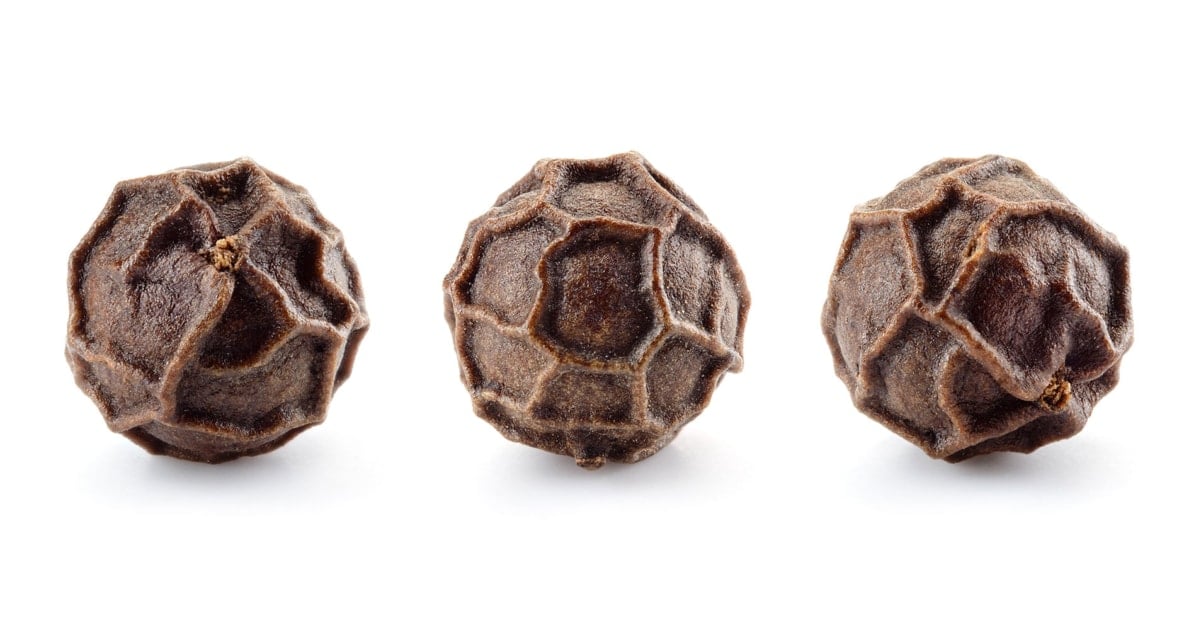
Peppercorns, those fragrant little black BB-sized spheres with rough, wrinkled skin. We have all spilled them, cooked with them, and watched in anticipation as a waiter approached the table with a large wooden contraption to ceremoniously grind them over our salads and pasta. We know what they look like and what they taste like, but where do they come from? The short answer: a vine in the tropics that has shaped trade routes for two thousand years (the Britannica entry on black pepper traces the route from Kerala to Rome).
Peppercorns: The Tiny Fruit
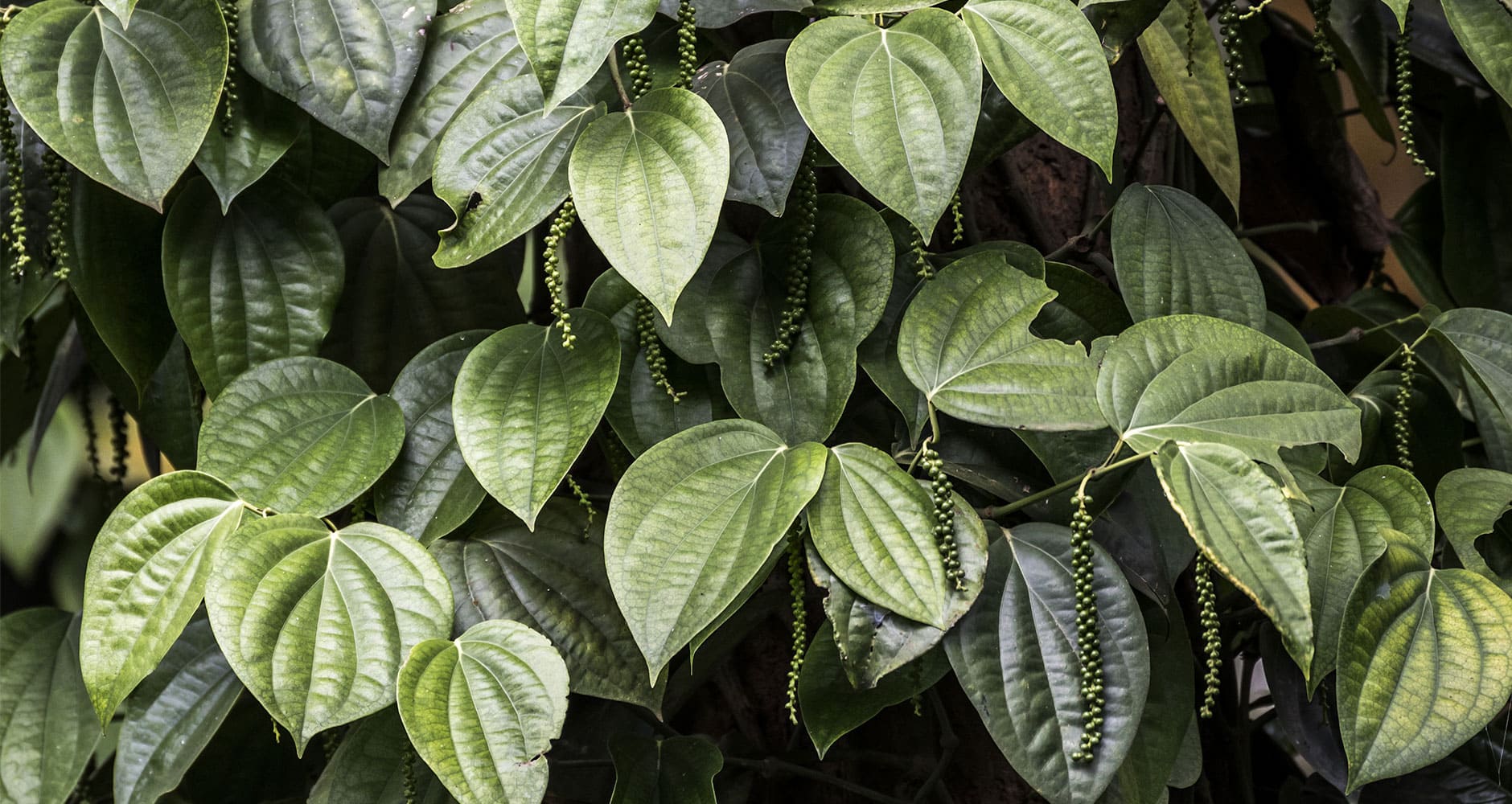
Peppercorns are actually a tiny fruit, the drupe (a fruit with a single seed in the middle) of a flowering vine known as Piper nigrum, grown in tropical regions, native to the Indian subcontinent and Southeast Asia. Some of the best peppercorns in the world come from the Malabar Coast in the Indian state of Kerala. Vietnam now grows the largest volume by far (over a third of global supply), but Kerala still defines what high-grade pepper smells like in a cook’s mind.
Once a luxury item only available to the wealthy, peppercorns and the resulting ground pepper, particularly black pepper, are now one of the most common culinary spices, added with salt to almost every dish we eat. In medieval Europe, rent and dowries were sometimes paid in pepper by weight. Pliny the Elder complained in the first century that Rome was bleeding silver to India for it. Today, a jar costs three dollars.
Colors And Degrees of Ripeness
The color of the various peppercorns you see in the store is a result of either when the tiny fruits are harvested, or the type of processing they undergo after picking.
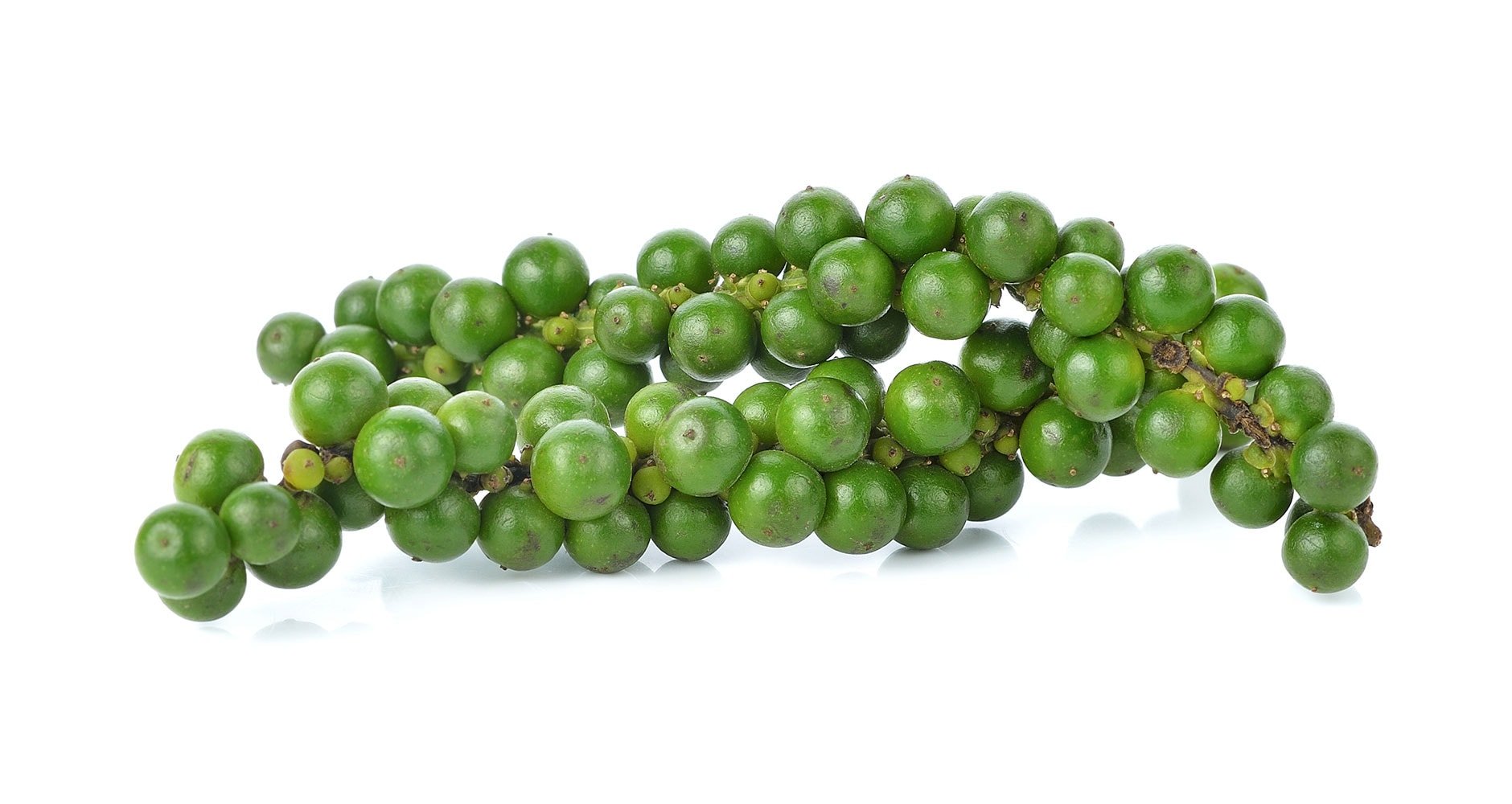
Black pepper and black peppercorns start as green peppercorns, the unripe fruit of the Piper nigrum plant. The fruits grow in long, thin bunches on the vine, clustered somewhat like grapes. These bright green fruits are first briefly cooked, then sun-dried. During the drying process, enzymes turn the skin a dark brown, almost black, and cause the outer skin of the fruit to contract and wrinkle.
Black peppercorns have been traded across the world since ancient times. They have even shown up in the nostrils of the mummy of Rameses II in ancient Egypt, presumably used along with other fragrant spices as part of the mummification process.
Green peppercorns are the same species and harvested at the same stage. Instead of cooking and sun-drying, the unripe drupes are treated with preservatives, including sulfur dioxide, to retard the enzymes that normally darken the skins. Sometimes green peppercorns are brined like pickles. They are slightly more perishable than black, and they taste fresher and grassier.
White peppercorns are made from the same fruit as the black and green varieties, but the fruit is allowed to fully ripen, when it turns red. The fruits are then soaked to soften the flesh, which is eventually removed, leaving just the whitish seed, which is dried. White pepper is popular in Thai cuisine and is frequently used in light-colored sauces or dishes where the dark specks of black pepper would be considered unattractive. It has a softer, earthier heat that lingers at the back of the palate.
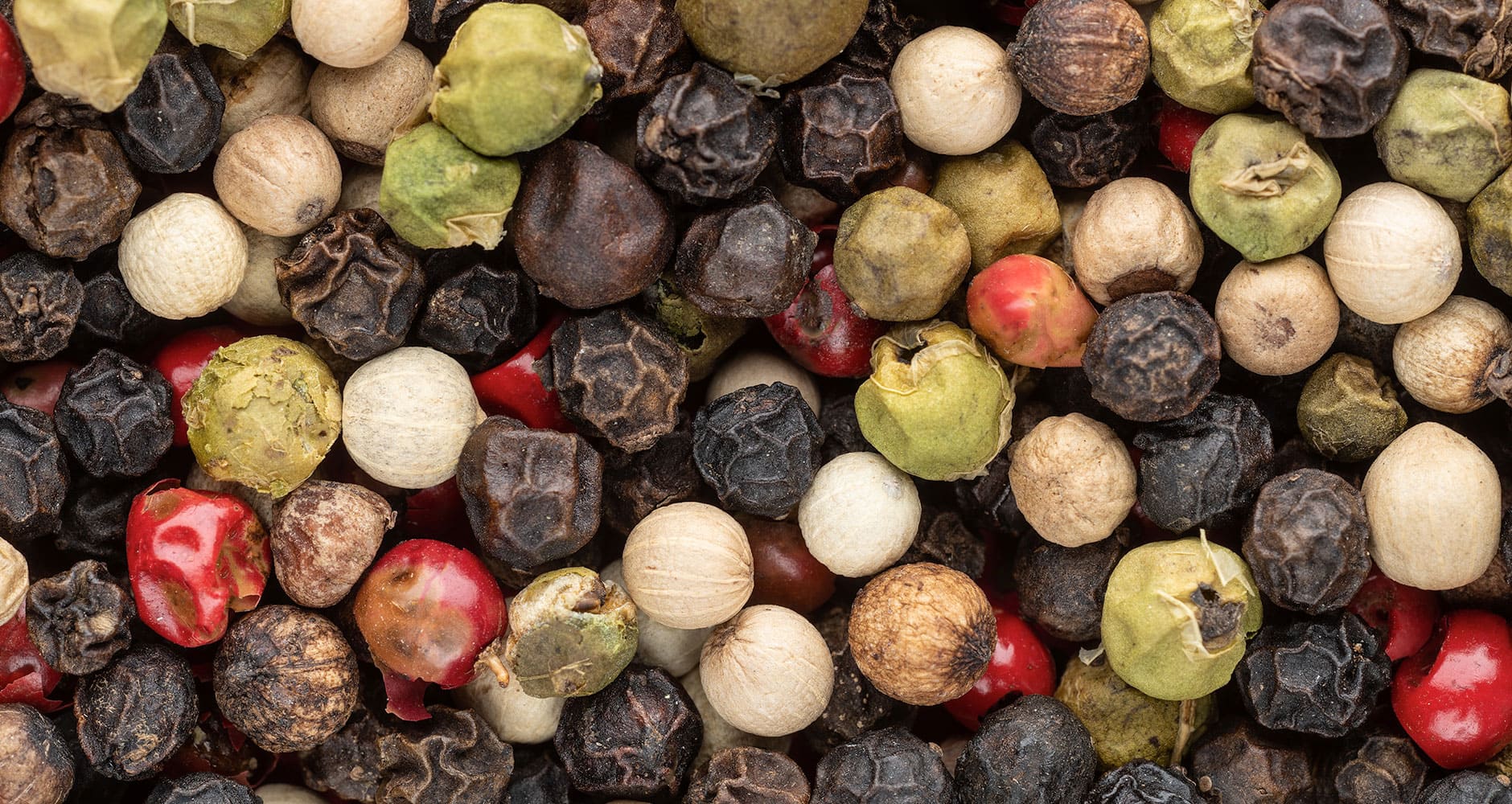
Red peppercorns are produced much like green peppercorns, only using the fully ripe red fruit, treated to preserve the color. These may also be pickled or dried before use. In gourmet markets you will see a mixture of dried black, red, green, and white peppercorns together in a transparent grinder. This is as much for show as for flavor, but it represents all the stages of the Piper nigrum plant. Chefs generally agree that black pepper’s pungent flavor tends to overpower the more subtle green, white, or red. Keep the varieties separate first and taste them individually before deciding how to blend them in your grinder.
Pink peppercorns are another variety not related to Piper nigrum. They are the dried berries of a South American shrub, Schinus molle and Schinus terebinthifolius, also known as the Peruvian Pepper Tree. You may also see these colorful peppercorns sold as Brazilian Pepper. They are used in a variety of traditional medicinal preparations as well as in culinary applications. Pink peppercorns taste sweeter and almost fruity; a few people with cashew or pistachio allergies react to them (they share a plant family), so flag the bowl if you are serving guests with nut allergies.
Peppercorn Colors at a Glance
| Colour | Plant | How it is made | Taste |
|---|---|---|---|
| Black | Piper nigrum | Picked unripe, then dried until the skin darkens and wrinkles | The most pungent. Tends to overpower the others |
| Green | Piper nigrum | Picked unripe and brined like pickles | Fresher and grassier. Slightly more perishable than black |
| White | Piper nigrum | Left to ripen red, soaked to soften, flesh removed, seed dried | Softer, earthier heat that lingers at the back of the palate |
| Red | Piper nigrum | Fully ripe red fruit, treated to keep the colour, then pickled or dried | The ripe end of the same plant |
| Pink | Schinus molle and S. terebinthifolius, not a true pepper | Dried berries of a South American shrub, the Peruvian Pepper Tree | Sweeter and almost fruity |
Health Benefits of Black Pepper
In addition to the zesty flavor pepper adds to dishes, black pepper carries real health perks. It is an antioxidant and antibacterial. One of the more useful effects: pepper stimulates the release of stomach acid, improving the digestion of proteins. Related to that is pepper’s ability to act as a carminative, a fancy way of saying it helps prevent the formation of intestinal gas. Piperine, the active compound in pepper, has also been shown to boost the absorption of curcumin (the active in turmeric) by as much as 2,000 percent, which is why most turmeric supplements pair the two.
Whichever peppercorns you choose, try toasting them slightly in a dry frying pan to activate the volatile compounds in the essential oils. Allow to cool, then grind. Most whole spices benefit from this practice, which intensifies their flavor.
Delicious Peppercorn Sauce Recipe
Ingredients:
- 2 teaspoons peppercorns, briefly toasted in a dry skillet, allowed to cool, then cracked lightly using a flat-bottomed heavy pan.
- 2 tablespoons butter
- 2 teaspoons minced shallots
- 1 cup beef stock, splash of brandy
- 1 tablespoon tapioca starch or cornstarch, mixed with 1 tablespoon water to form a slurry; sea salt to taste
- 1/3 cup heavy cream
Instructions:
- Sauté shallots in butter until translucent.
- Add peppercorns and fry for 30 seconds or so.
- Add brandy, allow alcohol to cook off, then add beef stock.
- Bring to a boil and allow to reduce a bit.
- Add tapioca starch slurry.
- Simmer for a minute, then reduce heat and stir in heavy cream.
- Serve over grilled ribeye steak, or breaded and fried veal, pork, or chicken cutlets.

Peppercorn FAQ
Where do peppercorns come from?
They are the dried fruit (drupe) of Piper nigrum, a tropical vine native to South India and Southeast Asia. Vietnam grows the most by volume today, but Kerala’s Malabar Coast still produces the top-grade pepper.
What is the difference between black, green, red, and white peppercorns?
Black, green, and red are all the same species, harvested or processed at different stages. White is the ripe seed with its red skin soaked off. The flavors run from grassy (green) to pungent (black) to softer and earthier (white).
Are pink peppercorns real pepper?
No. Pink peppercorns are the dried berries of the South American Peruvian Pepper Tree (Schinus molle), a relative of cashews and pistachios. They are mild and sweet, and a small number of people with cashew or pistachio allergies react to them.
Should I buy pre-ground pepper or whole peppercorns?
Whole. Ground pepper loses its volatile oils within weeks. Whole peppercorns hold their flavor for a year or more in a sealed jar. A mid-priced pepper mill pays for itself in a season.
What is the strongest type of peppercorn?
Black peppercorns from Tellicherry, India, sit at the top for pungency. They are larger and more aromatic than standard Malabar pepper. Vietnamese black pepper is sharper but less complex.
Are there health benefits to black pepper?
Yes. Black pepper acts as an antioxidant and antibacterial, stimulates gastric acid production for better protein digestion, and contains piperine, which boosts absorption of compounds like curcumin in turmeric.
How should I store peppercorns?
Whole peppercorns, in a tightly sealed jar, away from light and heat. They will hold flavor for at least a year. Ground pepper drops off within a month or two.
For more on the spice rack, read our companion pieces: what the heck are garlic scapes, our guide to planting fall garlic, and the cilantro-versus-coriander piece, the great cilantro debate.



Edward Higgins
Edward Higgins is a freelance writer, artist, home chef, and avid fly fisherman who lives outside of Portland, Maine. He studied at Skidmore College and Harvard University. His article 10 Best Edible Insects appears in the 2020 Farmers' Almanac.
- Edward Higgins

- Edward Higgins
- Edward Higgins
- Edward Higgins





Turmeric is not very digestible without peppercorns being eaten at the same time. “Bio-available” turmeric supplements consist of turmeric + black pepper extracts.
I can’t believe I didn’t know this. Great article, thank you.
Glad you enjoyed it!
My name is TOAD also. I am a Cornish Rex cat and I really enjoyed my goose and peppercorn sauce
on Christmas day.
Can peppercorns be grown in the lowlands of Clawson in the summer months?
I used pepper corn on my stewing, Pork or beef.. and when I cooked braised beef.” The smell are awesome!! I don’t usually add ground pepper.. the pepper corn can do the job..
I have been cooking with these peppercorns for many years in the Italy. I have had lots of interesting stories some not appropriate for this site. I am truly in love with the peppercorns hence why I am now married to some
Hi Mario, thank you! Now you’ve got us curious…. 🙂
I mix coriander seeds with the pepper corns in my pepper mill. Yum!
Thanks this is very interest can all of the pepper grow in Peru.
Fascinating article! Also, great classic sauce recipie. Thank you!
Loved this article ! I have always wanted to grow peppercorns and heard it was very difficult. Now I am even more interested in trying. Now to find a source. Thank you !
If you find a source, please message me. FB pic holding a cat. Thanks.