

5 Best Places to Watch a Thunderstorm in the US 2026
Five US destinations made for storm watchers: Florida, Colorado, the Texas Panhandle, Arizona's Huachuca Mountains, and Tornado Alley Kansas. NOAA data.
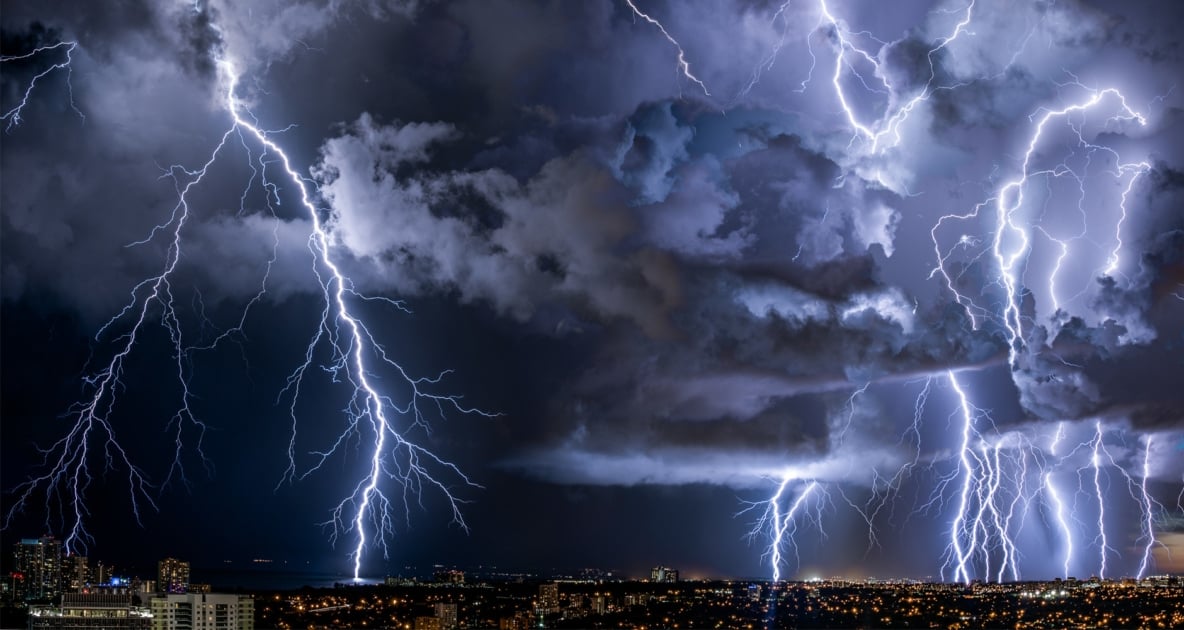
Quick Reference
- #1 storm-watching destination: Florida. Lakeland averages 100 stormy days a year.
- Most reliable single window: Huachuca Mountains, Arizona. A thunderstorm every day in July, sometimes twice a day.
- Tornado Alley pick: Kansas. Roughly 50 thunderstorms a year per NOAA, peak in June and July.
- Best mountain backdrop: The Colorado Rockies in August.
- Sources: National Oceanic and Atmospheric Administration counts and NWS climate data.
Lakeland, Florida sees 100 stormy days a year on average, which makes it the single best place in the country to watch a thunderstorm if your goal is to maximize the show. Below are the five US destinations that storm watchers consistently rank highest. The list is built from NOAA thunderstorm counts and seasoned regional knowledge, and we mark the peak month for each one so you can plan a trip with reasonable odds.
A Quick Word on Safety Before You Go
Many of us love to watch a good thunderstorm. We hear from readers whose fondest summer memories are of watching a storm from the porch on a hot July afternoon at grandma’s. Mother Nature can elicit nostalgia even from her most ferocious events. But thunderstorms can be scary and dangerous, so play it safe. If you are caught in the open, head for shelter or a vehicle as soon as possible. Check out these lightning safety tips before you go. Better yet, book lodging with a wide window facing the sky so you can watch the show without putting yourself in the path of it.
The 5 Best Places to Watch a Thunderstorm in the US
5. Kansas
Sitting in the heart of Tornado Alley, Kansas offers some of the best storm-watching opportunities in the United States. According to the National Oceanic and Atmospheric Administration, Kansas experiences approximately 50 thunderstorms per year, with most arriving in June and July. The wide-open spaces are the practical advantage: you can watch a storm develop miles away and roll across an open horizon, which means more time to enjoy the show and more notice if you need to head indoors.
4. Arizona
People who do not live in Arizona often assume the weather is dry and relatively calm. In some regions that is true. But Arizona also hosts a handful of thunderstorm hotspots. Chief among them are the Huachuca Mountains in southeast Arizona. Throughout the month of July, these mountains experience a thunderstorm every day, sometimes twice per day.
Fifty miles to the north, the city of Tucson averages 20 thunderstorms in July alone. Book a room in a high-rise hotel with plenty of windows so you can watch the storms roll across the desert. Nearby Mt. Lemmon offers a wonderful, if unsheltered, view of Tucson’s storms once the day cools.
3. Texas Panhandle and Western Oklahoma
Everything is bigger in Texas, and that includes the thunderstorms, particularly in the Panhandle region and Western Oklahoma. As a Texan might put it, when it rains it ain’t kiddin’ around. The sky turns pitch black as rain pounds the ground. Thunderstorms in this region are often accompanied by extreme high winds, large hail, and tornadoes.
In the eastern half of the Panhandle, your best chances of catching a storm are in June. If you are visiting the northwestern corner of the Panhandle or western Oklahoma, you are more likely to see a good storm in July.
2. Colorado
Colorado runs on extremely volatile weather patterns, which makes for some of the best storm watching in the world. On a clear day, a furious storm can develop in minutes. Book a lodge in the Rockies during August for an excellent view of lightning striking the mountains.
For even better storm-watching, visit eastern Colorado. The region is relatively flat, but the mountains to the west have a strong influence over the weather across the eastern half of the state. Cold air masses from the north sometimes clash with tropical air from the south, which results in spectacular storms. Sudden high-wind events and flash flooding tag along, so plan accordingly. Eastern Colorado’s storm season peaks in July; pair a late-July trip in the east with the first week of August in the Rockies and you can watch storms in both halves of the state on the same trip.

1. Florida
You would think the number-one storm-watching destination in the US would be somewhere in Tornado Alley. It is not. Florida, the state known for balmy weather and sun-kissed beaches, takes the top spot. Some areas in Florida see as many as 100 thunderstorms per year, which means on any given day you have a one-in-four chance of catching a good storm. Depending where you stay, there is also a great chance you can watch storms move in from the ocean, with ample opportunities to catch a glimpse of lightning striking the water.
The absolute best spot in Florida is Lakeland, which sees 100 stormy days each year on average. Tallahassee, Tampa, Orlando, and Fort Meyers follow Lakeland with between 80 and 90 stormy days a year. For most of Florida the best time to visit is July. If you are visiting the southern tip of the Florida Panhandle, go in August.
The Rankings at a Glance
| Rank | Region | Headline location | Peak month |
|---|---|---|---|
| 1 | Florida | Lakeland (100 stormy days/yr); Tallahassee, Tampa, Orlando, Fort Meyers (80-90) | July (Aug for southern Panhandle tip) |
| 2 | Colorado | Eastern plains + Rockies | Late July through early August |
| 3 | Texas Panhandle & Western Oklahoma | Eastern Panhandle / NW Panhandle / W Oklahoma | June (east), July (NW & OK) |
| 4 | Arizona | Huachuca Mountains; Tucson (20 storms/July); Mt. Lemmon | July |
| 5 | Kansas | Statewide (Tornado Alley) | June, July |
Why These Five Regions Stand Out
Two ingredients separate a great storm-watching destination from a merely stormy one: storm frequency and a clean line of sight. Florida wins on both. Storm frequency is set by the sea-breeze convergence over the peninsula (the same physics that puts Florida cities at the top of our stormiest cities ranking), and the flat geography plus elevated lodging gives you the view. Kansas trades raw frequency for the wide-open Tornado Alley horizon. The Texas Panhandle and Western Oklahoma deliver the largest, most violent storms when they arrive. Colorado pairs altitude with volatility. Arizona’s Huachuca Mountains compress the season into one month so reliable that locals plan around it.
If your goal is the opposite (avoiding thunderstorms), consult our 10 best weather cities list, where the desert Southwest dominates the dry-and-sunny end of the scale.
Practical Tips for the Trip
Three small habits separate good storm trips from rained-out ones. First, build flexibility into the schedule; storms cluster around late afternoon, so plan mornings for outdoor sightseeing and afternoons for the show. Second, follow the local National Weather Service office on social media for same-day advisories. Third, scout your viewing spot before the storm arrives. A high-floor balcony, a cabin porch above a treeline, or a rest area on a long open highway shoulder all work well; an open field next to a metal pole does not.
For long-range planning, our long-range forecast publishes the seasonal outlook for each US region, so you can see whether a given July is likely to run wetter or drier than the long-run average.

Frequently Asked Questions
What is the best US destination to watch thunderstorms?
Florida, by storm frequency. Lakeland averages 100 stormy days per year, the highest of any city on this list. Tallahassee, Tampa, Orlando, and Fort Meyers each record between 80 and 90 stormy days annually.
When is the best time of year to watch storms?
July for most of the list. Kansas and the eastern Texas Panhandle peak in June. Colorado’s Rockies and the southern tip of the Florida Panhandle are best in August. The Arizona Huachuca Mountains run a daily storm pattern through the entire month of July.
How many thunderstorms does Kansas get per year?
Approximately 50 per year, according to the National Oceanic and Atmospheric Administration. Most arrive in June and July, when Tornado Alley dynamics are at their peak.
Where in Arizona should I go for storms?
The Huachuca Mountains in southeast Arizona log a thunderstorm every day in July, sometimes twice per day. Fifty miles to the north, Tucson averages 20 thunderstorms in July alone. Mt. Lemmon offers an open-air vantage of Tucson’s storms.
Is the Texas Panhandle safe for storm watching?
Storms in the Panhandle and western Oklahoma are often accompanied by extreme high winds, large hail, and tornadoes. Watch from indoors with a wide window or from a vehicle off the highway shoulder. Never watch from an open field next to a metal pole, and follow the local NWS office for same-day warnings.
What about lightning safety?
If you are caught in the open during a thunderstorm, head for shelter or a vehicle as soon as possible. Avoid tall isolated trees, open water, and metal structures. The safest viewing is from inside a building with windows or from a parked vehicle. See our lightning safety tips before a trip.


Amber Kanuckel
Amber Kanuckel is a freelance writer from rural Ohio who loves all things outdoors. She specializes in home, garden, environmental, and green living topics.
- Amber Kanuckel

- Amber Kanuckel

- Amber Kanuckel
- Amber Kanuckel





You misspelled Fort Myers
Best storm was actually an electrical storm outside of Douglas Wyoming . It built up just comming off the east side of the Big Horns. Lasted for hours…..spectacular!
I live in Miami, and I’m actually western Arkansas so believe me when I say I know and love a good storm. Yet the most beautiful storms are hands down the ones over the ocean. I agree completely with your article and thank you for your insight.
Hi Rex,
Thanks for your reply and for reading our article! Enjoy your summer storm watching.
When I was a little kid I was terrified of thunderstorms and would always run to my dad to hold me until it was over. I don’t know how or when the transformation took place, but I actually look forward to thunderstorms now and I actually despise sunny weather. Inclement weather, for some reason, has a very calming effect on me.
I read on the internet that thunderstorms ? have soothing and calming affects to our brains. So it calms us down and relaxes us. The natural sounds like rain and thunder are what do it.
We had a big thunder day today.It started somewhere around 5am and has been going most the day and still hasn’t stopped.
If you ever want to see something totally wicked. Take a trip up to Northeast Wyoming. It was in Sheridan-in the Bighorn Mountain Range. There is a visitor’s parking area off Interstate 90, 5th Street exit. It sits above the City. Be there in June or July if you want to see a spectacular show. First, you get watch lightning bolts as they march in across the mountains from North to the South. Then if look real close, you will see the rain approaching as a Wall of Water. If that isn’t enough, there is the Wind. And everything is coming toward you and everyone else parked up there on its way to South Dakota. Make sure you are in a vehicle with your windows up, unless you enjoy getting drenched to look like a drowning Water Rat. Ah, the memories. They will be with you forever.
Wonderful!
I love to watch the lightning, one evening a few years ago I took a bike ride when there lightning way off in the distance, but the farther from home I got it more active so I turned around about 2 1/2 miles and headed back and just minutes after I got home it really let loose, after that if there was even a flash of lightning I stayed home where I could be safe and dry.
My first real experience of a good thunderstorm was on a family vacation, we were driving around 1p.m. it turn black as night we were in Iowa. My dad was from tbere, so he knew of a high hilly spot in the road. We stopped and told a few people to follow us to the hill I remember. That started my love for thunderstorms, Las Vegas, Phoenix, Twentynine Plams, CA, Mid-Michigan has some beautiful thunderstorms also. I must admit alsowith a nice roof the rain hitting it I can go to sleep evsry time. If not I can sit up and take pictures all night long.
Loved your article!
Once, in May 2008, my husband and I saw the most awe-inspiring lightning storm of our lives in St. Louis. We were adjacent to the Cardinals Stadium in a hotel with floor to ceiling glass windows. We were on a high floor in our room, having come back from dinner late at night. It was magnificent. The lightning was near constant, sometimes pink, and thunder and rain were plentiful. What a great memory.
Rhianonm: Wonderful! Thank you for sharing!
I love living in Florida! Sumner T-storms are the best! Check out my instagram @cloudstalker
I live in 2 places. I grew up in rural Pennsylvania so I like watching thunderstorms in the mountains in Pa. I also live in Ft Myers, Florida, well 3 miles from Sanibel Island. I love watching thunderstorms off the Gulf of Mexico. Growing up in Pa. My mother and I would sit on the front porch and watch thunderstorms while swinging on the porch swing. Then again watching a thunderstorm on any of the Navy ships I served on.