

Why Are There More Stars in Winter? (3 Reasons + Best Constellations)
It's a cruel reality that, just when the night air turns coldest, the night sky is at its brightest. But why? We have the answer!
More Stars in Winter at a Glance
- Why winter skies look starrier: three reasons stacked together, cold air holds less water vapor (clearer), nights are longer, and the Northern Hemisphere faces the dark outer rim of the Milky Way instead of its glaring core.
- What you see in winter that you don’t in summer: Orion, Taurus and the Pleiades, Gemini, Canis Major (Sirius), and the brilliant Winter Hexagon asterism.
- Best viewing window: 9 p.m. to midnight in December, January, and February, away from city light, no Moon.
- What gear: bare eyes first, 7×50 binoculars second, telescope optional. Dress warmer than you think; the air kills viewing for cold fingers fast.
More stars in winter is one of those quiet truths of backyard astronomy. Stargazing in the winter can be the best time of the year to spot stars. It is perhaps a cruel twist of fate that, just when the night air turns coldest and the wind bites most sharply, the night sky is at its brightest, clearest, and most beautiful. For those who enjoy stargazing, the cold winter months will bring peak viewing conditions, a great reason to look forward to the winter months.
There are a few reasons why the winter sky is regarded as a special treat for backyard astronomers, and according to the Encyclopaedia Britannica they boil down to atmospheric physics and where Earth is sitting in its orbit. The result is a sky that simply shows more of itself between November and March.
Cold Air Is Ideal
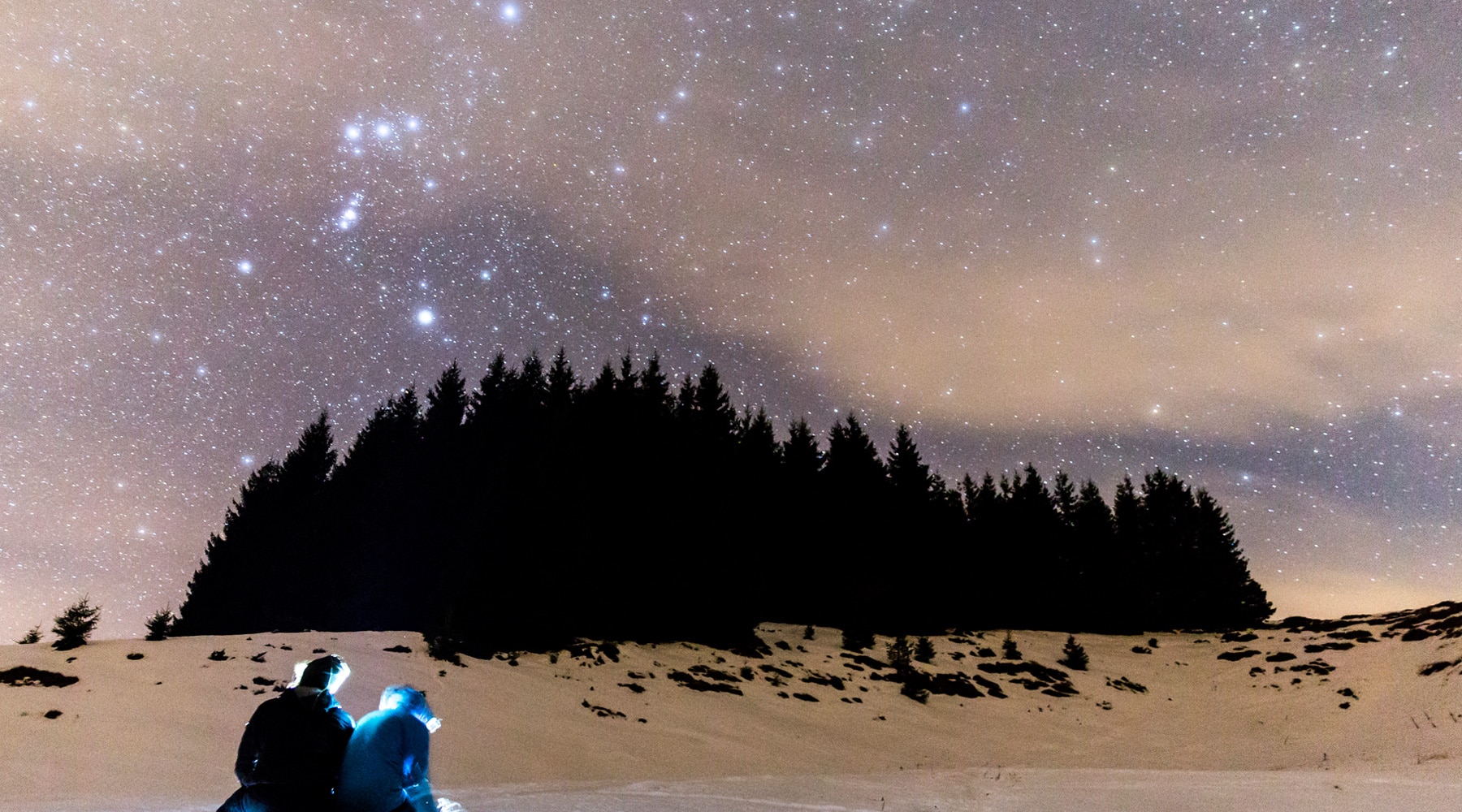
The winter sky doesn’t hold as much moisture as warm air can. Summer skies often appear hazier because, actually, they are. The warm, moisture-laden atmosphere of summer is thicker and less transparent than the crisp, cold winter dome, making it harder to see what lies beyond.
Nights are also longer in the winter, giving us a greater window in which to enjoy the wonders of the universe. In the contiguous U.S., true astronomical darkness lasts roughly 10 to 12 hours per night in midwinter, against about 5 to 7 in midsummer.
A Time For Dramatic Constellations
Winter is also the time of year when some of the largest and most dramatic constellations, including Gemini, Monoceros, and Orion the Hunter, come out, as well as breathtaking deep-sky formations like the Pleiades. Unlike many other constellations, which can be dim and difficult to identify, several winter constellations are bright enough for even the greenest skywatchers to pick out.
The Winter Sky’s Bright Headliners
| Star / Asterism | Constellation | Brightness Rank | What to Look For |
|---|---|---|---|
| Sirius | Canis Major (Big Dog) | Brightest star in the night sky (-1.46) | Brilliant blue-white; rises in the southeast; follow Orion’s Belt stars left and down. Twinkles intensely near the horizon |
| Canopus | Carina | Second-brightest (-0.74) | Only visible from roughly 37 degrees S latitude and lower in North America; best seen from southern US states and Mexico |
| Rigel | Orion (lower right) | Sixth-brightest (0.13) | Blue supergiant at Orion’s foot; among the most luminous stars visible to the naked eye at roughly 120,000 times the Sun’s output |
| Betelgeuse | Orion (upper left) | Variable; normally ~0.4-0.5, brighter in 2019-2020 dimming event | Distinctly red-orange shoulder star of Orion; a red supergiant nearing the end of its life |
| Capella | Auriga | Fifth-brightest (0.08) | Yellow-white; nearly overhead in winter for mid-northern latitudes; actually a pair of giant stars orbiting each other |
| Aldebaran | Taurus | 14th-brightest (0.87) | Red giant; the “eye” of the Bull; follow Orion’s Belt stars right to find it. The Hyades star cluster surrounds it (V-shaped) |
| Winter Hexagon (asterism) | Spans six constellations | Connects Sirius, Rigel, Aldebaran, Capella, Pollux/Castor, Procyon | Not an official constellation but a useful guide: the six brightest stars of the winter sky form a rough hexagon around Betelgeuse. Find Sirius and work clockwise |
Enjoy The Dark!
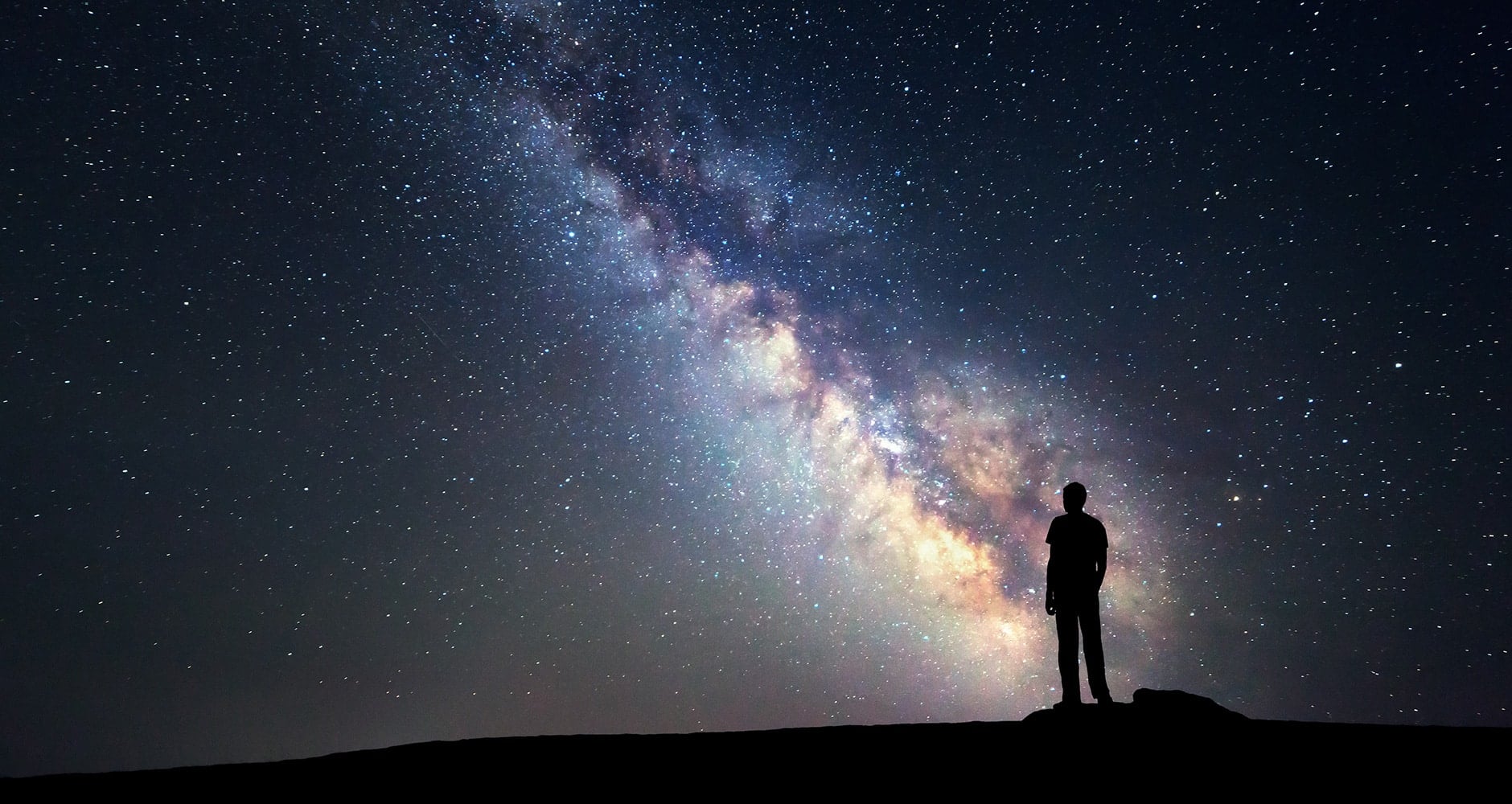
The primary reason the winter sky appears so breathtaking is due to our position in relation to the surrounding celestial neighborhood during this season. In summer, Earth faces the luminous center of the Milky Way, whereas in December, January, and February, the Northern Hemisphere gazes towards the edge of our galaxy. Astronomers estimate that the Milky Way houses approximately 300 billion stars, and during summer we observe a larger portion of them. However, just as light pollution hinders stargazing within a city, the brilliance of the inner galaxy makes it challenging to distinguish individual stars in the summer sky.
In winter, we are looking the opposite way, toward the dark outer arm of the galaxy, where individual nearby stars stand out crisp and uncrowded. That is why a midwinter Orion looks like a textbook illustration, and a July glance toward Sagittarius looks like a milky smear.
So while it may sound more pleasant to lie out in the fields and gaze up at the stars in the comfort of a breezy summer evening, remember that the winter sky has a magic about it that is worth the extra trouble.
Three Quick Tips for a Winter Viewing Night
- Pick a Moonless night. A bright Moon washes out the dimmer stars. Use a Moon-phase calendar and aim for new-Moon week.
- Drive 20 minutes out of town. Light pollution kills more stars than weather does. Even a short drive into the country triples the visible count.
- Dress like you’re going skiing, not stargazing. Hands first. The first thing to fail is fingers on cold metal binoculars. Insulated gloves, warm boots, hand warmers in pockets.

Frequently Asked Questions About Winter Stars
Why are there more stars visible in winter than summer?
Three reasons together: cold winter air holds less water vapor, so the sky is clearer; nights are longer in midwinter; and from the Northern Hemisphere, winter nights face the dark, sparsely populated outer rim of the Milky Way rather than the glare-rich center we face in summer.
Aren’t the same stars up in summer, just behind the Sun?
Exactly. The same number of stars exist overhead in both seasons; only different parts of the sky are available at night. Winter constellations like Orion are blotted out by daylight in July; summer constellations like Sagittarius are below the horizon at midnight in January.
What’s the easiest winter constellation to find first?
Orion. The three bright stars in a row (Orion’s Belt) are the most recognizable star pattern in the sky after the Big Dipper, and Orion is high in the southern sky on any clear evening from late November through March.
What is the Winter Hexagon?
An asterism (a pattern, not an official constellation) formed by six bright stars: Sirius, Procyon, Pollux, Capella, Aldebaran, and Rigel. Once you can trace it, you have hit six of the brightest stars in the entire winter sky in one figure.
Do I need a telescope to see winter stars?
No. Bare eyes are enough for Orion, the Pleiades, Sirius, and the Winter Hexagon. Binoculars (7×50 or 10×50) bring up the Orion Nebula and individual Pleiades stars. A telescope only matters if you want to chase planets and deep-sky objects.
Why does Sirius twinkle so much in winter?
Sirius sits low in the southern sky for Northern Hemisphere viewers, so its light passes through a lot of atmosphere. Slight temperature variations in that atmosphere bend the light and make it flash through several colors, the technical term is stellar scintillation.
What’s the best winter time of night to stargaze?
Around 9 p.m. to midnight local time. The brightest winter constellations are well up in the south by then, and Earth’s atmosphere is usually most stable a few hours after sunset.
Related
Cool Facts About the Milky Way
Stars Legends and Lore and Native American Names
For more stargazing reading, see how to celebrate Astronomy Day, moon phases, and the Taurid meteor shower.



Jaime McLeod
Jaime McLeod is a longtime journalist who has written for a wide variety of newspapers, magazines, and websites, including MTV.com. She enjoys the outdoors, growing and eating organic food, and is interested in all aspects of natural wellness.
- Jaime McLeod

- Jaime McLeod
- Jaime McLeod
- Jaime McLeod





I wait with my grandchildren at the bus stop in the early mornings. We get to enjoy the stars,planets and moon. My grandson received his first telescope for Christmas and I put an app on my tablet so we could better identify what we are seeing. I’ll share this info with them. Thanks.
I always appreciate the information you provide. I LOVE the night sky.I spend more time outside stargazing in the winter dthan summer . Although it does get cold in the Panhandle of Fl.I still go outside. Tonight it is supposed to be 27degrees I will still go out to watch.
And no Mosquitos! Thanks for another enjoyable article by Jaime McLeod.
Excellent astronomy article! I will be outside in these upcoming winter evenings to view all of the absolute beauty of the winter constellations. Happy stargazing.
It colder and clearer so you can see more at night ,when snowing its doesn’t show as much stars and other planets just only on freezing clear skies are when you see all these beautiful Stars in open country field just saying 🙂
I love looking at the stars at night, and I did wonder about how much more beautiful the sky is at night in the winter. Thank you for the info. I love winter and winter nights.