When Cows Lie Down, Is Rain Coming? The Folklore, Fact-Checked

Quick Reference
- The saying: When cows are lying down, rain is coming
- Best used: When a whole herd suddenly settles after a day of grazing
- What drives it: Cattle sensitivity to falling barometric pressure and rising humidity ahead of a low-pressure system
- Daily lie-down baseline: 10 to 14 hours per day for a healthy adult cow, so a single lying cow means little
- Companion signs: Swallows low, frogs loud, ants building tall, bees near the hive
For generations, farmers have watched their livestock for clues about the weather. One of the most enduring pieces of weather folklore is the saying:
“When cows are lying down, rain is coming.”
While it may sound like an old wives’ tale, there is actually more truth to this barnyard prediction than most people realise. Cows are not miniature meteorologists, but their behavior can reflect subtle environmental changes that often show up before a storm arrives.
Related: Natural Weather Signs People Have Used to Predict the Weather for Centuries
What the Research Actually Shows
A widely cited 2013 field study by University of Arizona researchers, published in the International Journal of Biometeorology, tracked dairy cattle lying-down time against local weather and found that cows spent more time lying down as temperatures cooled, humidity rose, and barometric pressure fell, the same conditions that often show up before a storm. NOAA meteorologists (see the NWS explainer on falling barometric pressure) note that a drop of two to four millibars in a few hours is a strong signal a low-pressure system is on the way, which lines up with the same window in which the farm folklore says the herd goes down.
Why Do Cows Lie Down Before Rain?
The connection starts with atmospheric pressure.
As a low-pressure weather system approaches, the barometric pressure drops. These pressure changes are the same signal weather forecasters watch for incoming rain, thunderstorms, or unsettled weather. Many animals, including cattle, are highly sensitive to shifts in their environment.
Researchers have found that cattle can alter their behavior before weather changes occur. As conditions grow more humid and pressure decreases, cows tend to spend more time resting, chewing cud, and conserving energy.
In other words, they are responding to the same atmospheric signals that meteorologists use to predict rain.

Keeping a Dry Spot
Another popular theory is surprisingly practical.
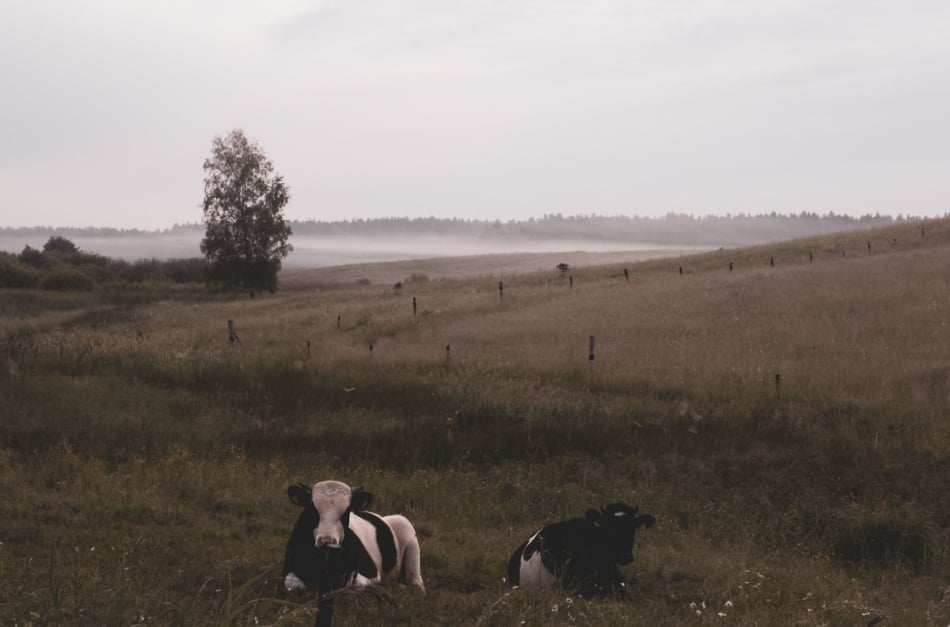
When a cow lies down, she flattens the grass beneath her body, creating a relatively dry patch. If rain is on the way, lying down first can help her preserve a dry resting area through wet conditions.
Scientists still debate whether cows do this on purpose, but many farmers have watched a herd settle into a field before a storm and stay there through the rain.
Science Supports the Folklore
Several studies of cattle behavior have found that cows do change their activity patterns before weather events.
Researchers have observed that cattle may:
- Spend more time lying down before storms
- Reduce grazing activity
- Gather together more often
- Grow less active as a pressure system moves in
These behavioral shifts are not caused by the rain itself. They track the environmental conditions that usually come first.
That is why the old saying works: cows are responding to the same weather signals that eventually bring the rain.
Why the Saying Isn’t Always Right
Of course, not every cow stretched out in a pasture is calling for a downpour.
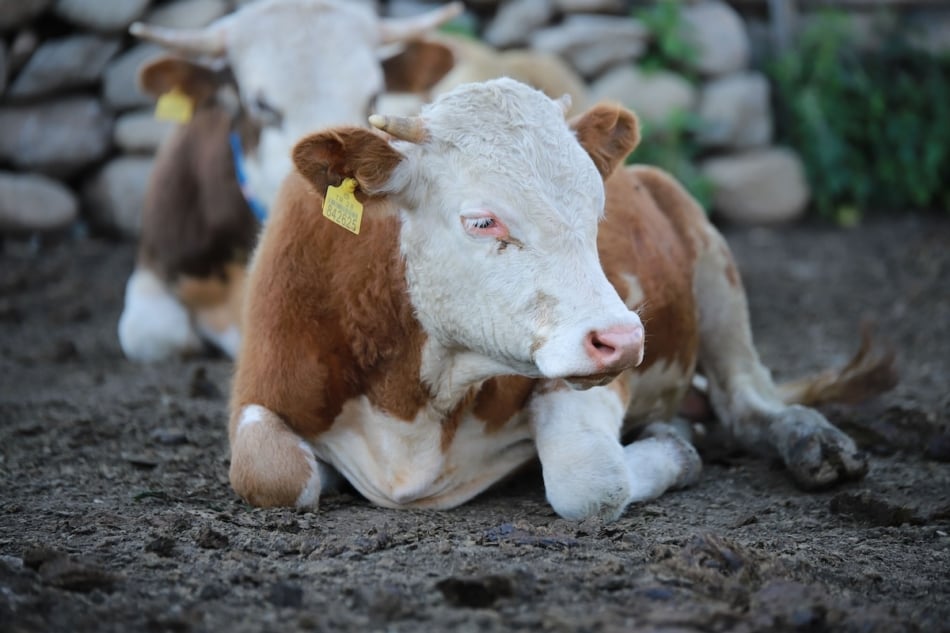
Healthy dairy and beef cattle usually spend ten to fourteen hours a day lying down. Resting is essential to digestion and rumination. Sometimes a cow is simply comfortable, well fed, and enjoying a break.
For that reason, a single cow lying in a field does not tell you much. The saying tends to be more accurate when a whole herd suddenly settles down after spending much of the day grazing.
Like most weather folklore, treat this one as one clue among many, not a forecast on its own.
Where the Saying Holds Up Best
Because the saying relies on falling barometric pressure and rising humidity, it works best in regions where thunderstorms and frontal systems arrive quickly.
| Claim or observation | Evidence or explanation | Confidence level |
|---|---|---|
| Cows lying down before rain is a reliable weather signal | No peer-reviewed study confirms this as a dependable forecast method; BBC Science Focus and Live Science both conclude there is no scientific evidence for the folk belief as a predictive rule | Low; not supported by controlled research |
| Cows spend roughly half their time lying down regardless of weather | Dairy cattle lie down 10 to 14 hours per day to rest and chew cud; at any random moment the odds of seeing cows recumbent are close to 50 percent, making apparent predictions likely coincidence (Journal of Dairy Science, Jensen et al.) | High; well established in animal welfare literature |
| Cattle behavior does change with weather conditions | A 2019 peer-reviewed study (Tullo et al., Animals, PMC6912646) found that temperature-humidity index, solar radiation, wind speed, and rainfall all influenced lying time; however, warmer, sunny days tended to reduce lying time, not increase it | Moderate; real weather effects confirmed, but they do not map neatly onto the folk prediction |
| Cows stand in hot weather and lie down in cool, overcast weather | Supported by thermoregulation research; cows stand to expose more surface area and cool off in heat; pre-rain conditions (dropping temperatures, overcast skies) may prompt cows to recline; this is the most physiologically plausible mechanism behind the saying | Moderate; mechanism is plausible but not confirmed as a predictive signal in controlled trials |
| Where the tradition is strongest | The saying is widely reported across the UK and the US Great Plains; a UK survey found more than 60 percent of respondents believed the claim; no region-specific field study has validated it in any particular location | Low as a predictive tool; high as a persistent piece of folk wisdom across agricultural communities worldwide |
Other Animal Weather Predictors
Cows are not the only creatures tied to weather folklore. Farmers and gardeners have long watched other animals for signs of a change:
- Swallows flying low can indicate falling air pressure.
- Frogs grow more vocal before wet weather.
- Ants often build taller mounds ahead of heavy rain.
- Bees tend to stay closer to the hive when storms are near.
Animals may not understand meteorology, but they are often tuned to environmental changes that humans barely notice.
The Bottom Line
The saying “When cows are lying down, rain is coming” has stuck around for centuries because it holds a kernel of truth.
Cows are sensitive to changes in barometric pressure, humidity, and temperature that often show up before rain. Lying cows do not guarantee a storm, but a herd that suddenly settles down can be a surprisingly useful hint that wetter weather is on the way.
So next time you pass a pasture and see a field of reclining cows, do not dismiss the old farmers’ wisdom too quickly. Those cows may be telling you something about tomorrow’s forecast.

Frequently Asked Questions
Is it true that cows lie down before it rains?
Often, yes. Cows are sensitive to falling barometric pressure and rising humidity, both of which usually show up before a low-pressure system arrives. When a whole herd suddenly settles down after a day of grazing, the saying tends to hold up.
How accurate is the saying “When cows are lying down, rain is coming”?
Reasonably accurate as an early hint, not a hard forecast. Peer-reviewed cattle behavior studies show cows spend more time lying down as pressure falls and humidity rises. Treat it as one clue alongside sky, wind, and a local forecast.
Do cows always lie down before it rains?
No. Healthy cattle already spend ten to fourteen hours a day lying down for rumination and rest, so a single lying cow means very little. The signal is meaningful when a whole herd changes behavior at once.
Why are cows sensitive to weather changes?
Cattle can detect small shifts in barometric pressure, temperature, and humidity in their inner ear and skin. Those same shifts are the ones meteorologists watch for approaching low-pressure systems.
What other animals predict rain?
Swallows fly lower as pressure drops, frogs grow more vocal before wet weather, ants often build taller mounds ahead of heavy rain, and bees tend to stay closer to the hive when storms are near.
Where does the saying come from?
It comes from generations of farmers and shepherds who watched their livestock across multiple seasons. Similar sayings show up in British, Irish, German, and North American farming folklore.
Should I use cows to plan my day instead of a forecast?
No. Use it as a supporting sign, not the main tool. Pair the herd behavior with a modern short-range forecast and the Farmers’ Almanac long-range outlook for the best read.

- Tim Konrad

- Tim Konrad
- Tim Konrad
- Tim Konrad