

10 Great Places for Camping Under the Stars in 2026
Quick Reference
- Best dark-sky camping months (northern US): late April to early October, around the new moon window.
- Best dark-sky camping months (southern US): September to May, avoiding peak humidity haze.
- Cities covered here: Chicago, Dallas, Los Angeles, New York City, Atlanta, Ashburn (VA), Boston, Seattle.
- Big 2026 dates for stargazing: August 12 to 13 Perseid peak (waning crescent moon), December 13 to 14 Geminid peak (last quarter moon).
- Reality check: 80 percent of the US population cannot see the Milky Way from their backyard, per NOAA National Centers for Environmental Information.
- Best planning tool: Farmers’ Almanac Best Days for Stargazing plus a Bortle Class 1 to 3 site.
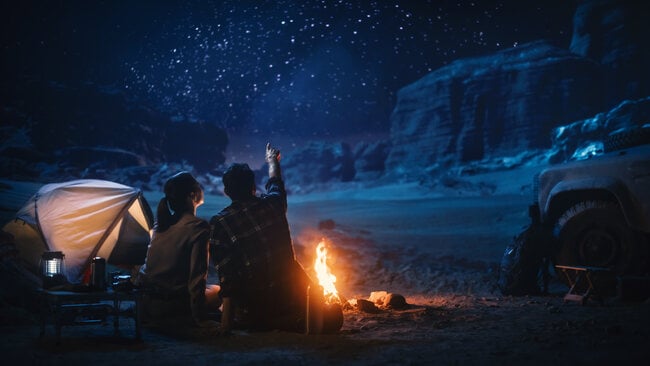
Sleeping in a tent with the Milky Way stretched across the night sky is one of the great American camping trips, and 2026 is a strong year for it. Two meteor showers peak with the moon out of the way, and the dark-sky movement has added new parks and certified towns since we last published this list. The bad news: it is harder every year to find a dark enough stretch of sky, especially near cities. The good news is that there are still a surprising number of parks and public lands within a short drive of most major metros where camping under the stars is genuinely possible. Here are 10 places where you can trade sky glow for the Milky Way this year.
Note: For best results, plan your camping trip during these dates: Best Days for Stargazing.

What Makes a Camping Spot Good for the Stars
Three things separate a decent stargazing camp from a great one: sky darkness, elevation, and the moon phase you show up on. The DarkSky International Bortle Class scale rates sky brightness from 1 (pure dark) to 9 (inner city). Anything Class 3 or better will show the Milky Way. Aim for a new moon weekend, a spot at least a mile off the main road, and a clear horizon to the south. That is the whole formula.
Chicago
Less than an hour southeast of Chicago on the south shore of Lake Michigan, Indiana Dunes National Park holds onto dark skies just past the city lights. Kemil Beach is one of the most popular spots for star watching there, and Beverly Shores, a town surrounded by the national park, is recognized as a Dark Sky Community by DarkSky International (formerly the International Dark Sky Association) for protecting the night sky.
If you want to put more distance between yourself and the metro, drive roughly two hours west to the Green River State Wildlife Area near Harmon, IL. The 2,500 acre park is a mix of mature woods, restored prairie, and open wetlands, all of which give you a wide-open view of the night sky.
Dallas
Roughly an hour north of Dallas, the 29,000 acre Lewisville Lake is a strong pick for tent camping and stargazing in the same weekend. The distance from the city and the buffer of the LLELA Nature Preserve keep sky glow at bay. Hidden Cove Park, which has a marina and lakeside campsites, is a good tent-front seat. For a night hike under the stars, the three mile trail from Wynnwood Park to the shoreline is a straightforward walk into darker skies.
Los Angeles
A couple of hours north of Los Angeles, Red Rock Canyon State Park offers primitive campsites and a wide-open night sky in the direction away from the city. It is a geologic wonder, popular for hiking (especially during the early-year wildflower bloom) and a go-to spot for astrophotography.
New York City
New York City might be the city that never sleeps, but you can still get dark skies at Harriman State Park, roughly 50 miles north. The transit route works too. Take the train from Penn Station to Secaucus Junction, transfer to the Port Jervis line, and once you reach the west side of the park, a shuttle carries you the rest of the way.
You can pitch a tent in many areas of the park, but there are also historic stone lean-tos and newly built shelters where you can spread a sleeping bag under a roof and still see the stars.
To step a little farther out, drive less than two hours north to Big Buck Mountain Multiple Use Area near Kent. There are no designated campsites, so you hike in and pick your spot for peace, quiet, and a wide view of the night sky.
Atlanta
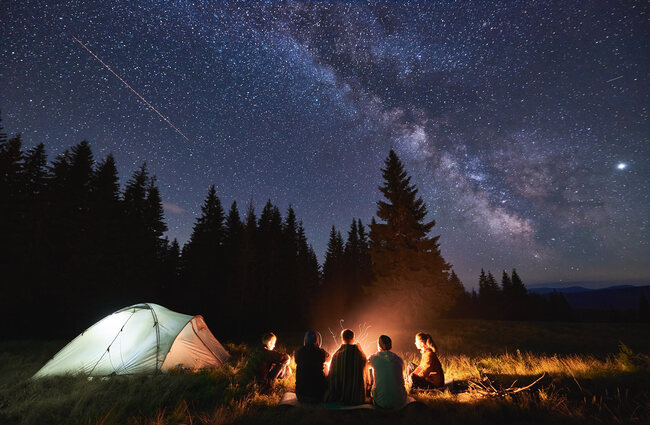
Georgia carries a strong dark-sky record, and there are a few observatories including Fernbank Science Center and the Georgia Tech Observatory close to Atlanta. Only 33 miles north of the city, Acworth’s Red Top Mountain State Park is a workable stargazing base. Interpretive rangers host star programs on summer weekends and walk you through the visible constellations.
Ashburn, Virginia
Certified as an International Dark Sky Park in 2021, Sky Meadows State Park in Delaplane is only 50 minutes west of Ashburn. It runs Astronomy for Everyone events including the Junior Astronomer’s program throughout the year, and the sky is surprisingly clean given how close it is to the DC metro. For overnight stays, campers hike a mile along the Hadow Trail into the camping area, where they will share the ridge with Appalachian Trail hikers who know the sky better than most.
Boston
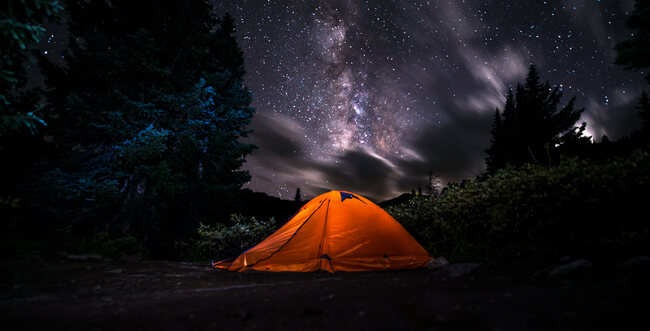
With 34 islands and peninsulas to explore, Boston Harbor Islands National and State Park is the best place to see the stars close to Boston. It is only accessible by ferry or private boat, which keeps the visitors thin and the sky quiet. There is primitive camping on several islands, indigenous and early American history on almost all of them, and a live oceanside ecosystem right against your tent flap.
Seattle
With tide pools, old growth forests, and plenty of shoreline to spend a day on, Deception Pass State Park north of Seattle is even more impressive after dark. The shoreline opens up a wide view of the sky. Camping is open year-round, and the Deception Pass Foundation hosts star parties in late summer.
2026 Meteor Shower and Moon Calendar for Campers
The moon phase decides whether the Milky Way shows up or not. A full moon washes out everything but the brightest planets, and a new moon lets the sky open up. Two of the year’s biggest showers peak with the moon out of the way in 2026, which is a good year for a stargazing camp trip.
The Perseid and Geminid peaks are the two you actually want to book a campsite for. Both fall on moon-friendly nights this year. NASA’s Perseid overview notes the shower is at its strongest between midnight and dawn, which lines up nicely with a summer campsite that goes quiet after 10 p.m.
US Dark-Sky Regions: Where the Milky Way Still Wins
Some parts of the country make it easy. Others take work. This is a rough regional map based on the DarkSky International certified site index:
The Great Plains and the interior West are the country’s dark-sky bank. If you can get to Kansas or western Nebraska in July or August, you will see stars you never see from the coast.
Gear Checklist for a Stargazing Camp Trip
Camping under the stars needs less gear than a hardcore backcountry trip, but a few items pay for themselves the first night:
- Red-filtered headlamp. Preserves your night vision so your eyes stay dark-adapted.
- Binoculars in the 7×50 or 10×50 range. Cheaper and easier than a telescope, and they show Jupiter’s moons.
- Sleeping pad rated one warmth class above the forecast low. Cold desert nights are the classic beginner mistake.
- Star chart app that offers a red night mode (Stellarium, SkyView, Star Walk 2).
- Wide-brim hat and long sleeves for evening bug pressure at eastern parks.
- Refillable water. Dark-sky parks are usually far from a store.
- A camp chair and a wool blanket. You will spend more time on your back than in your tent.
A Final Thought
Even though 80 percent of the United States population cannot see the Milky Way from their backyard, by driving a short distance outside the city you can set up a tent under a canopy of stars. The country still has plenty of them if you know where to look.

Camping Under the Stars FAQ
When is the best time of year for camping under the stars?
Late spring through early fall, on a weekend within a few days of the new moon. Summer offers the warmest tent nights and the Perseid meteor shower peak (August 12 to 13 in 2026). December’s Geminid peak (December 13 to 14 in 2026) is arguably better for meteors but colder for tent camping.
How dark does the sky need to be to see the Milky Way?
Bortle Class 3 or darker on the DarkSky International scale. That usually means a certified International Dark Sky Park or a spot at least an hour’s drive from any city of 500,000 people. Suburban skies (Bortle 5 to 6) will show maybe 200 stars total. A Class 3 sky shows several thousand.
What is the closest place to camp under the stars near a major US city?
It depends on the city. Beverly Shores (near Chicago), Sky Meadows State Park (near Washington and Ashburn), Red Rock Canyon (near Los Angeles), Harriman State Park (near New York), and Deception Pass (near Seattle) all sit within a two-hour drive of a major metro and hold onto respectable dark skies.
Do I need a telescope for stargazing camping?
No, in fact a good pair of 7×50 or 10×50 binoculars is a better starter kit than a telescope. Binoculars show Jupiter’s moons, the craters on our Moon, and the star clusters that most beginners look for. A telescope only pays off once you know which piece of sky you want to zoom into.
How does the moon phase affect stargazing camping?
Sharply. A full moon washes out everything but the brightest planets. A new moon and a couple of days on either side lets faint objects such as the Milky Way and dim meteors show through. Check the Farmers’ Almanac Best Days for Stargazing and match the trip to a moonless window.
What is a Dark Sky Community and does it help?
DarkSky International certifies communities that pass lighting ordinances designed to keep sky glow down. Beverly Shores, Indiana is one example on the Chicago list. A certified community is not itself a campground, but its ordinances make the parks and beaches next to it noticeably darker than a comparable town without the certification.
What if it is cloudy the night I planned?
Move the trip or stay another night. Most dark-sky campers plan a two or three night window so a single cloudy night does not blow the trip. Check the long-range forecast before you book and the seven-day forecast the week you leave.
Join The Discussion
Have you been to any of the locations listed above?
We hope this list inspires you to get outside and stargaze!
Related Articles
10 Tips For Camping On A Budget
Important Tips For Camping And Hiking Safety


Amy Grisak
Amy Grisak is a freelance writer, blogger, and photographer specializing in gardening, local food, and stories about her home state of Montana. She enjoys sharing her experiences with self-reliant living and outdoor recreation. Her article on the "hugelkultur" gardening technique appears in the 2021 Farmers' Almanac. You can follow her topics on her site, AmyGrisak.com.
- Amy Grisak

- Amy Grisak
- Amy Grisak
- Amy Grisak


Of all the places in Texas you pick Lake Lewisville…in the middle of the Metroplex?
So many places out of city Mineral Wells lake, The Hill Country, Palo Duro Canyon, Big Bend, Pendernelles Falls.
Another spectacular place to camp with incredible night sky is Sleeping Bear Dunes National Park. Campgrounds available!