

How to Grow Cucumbers: From Planting to Harvest
Whether slicing up for fresh eating or jarring as pickles, cucumbers' cool, crisp taste, and ease of growing make them one of the most popular vegetables each summer.
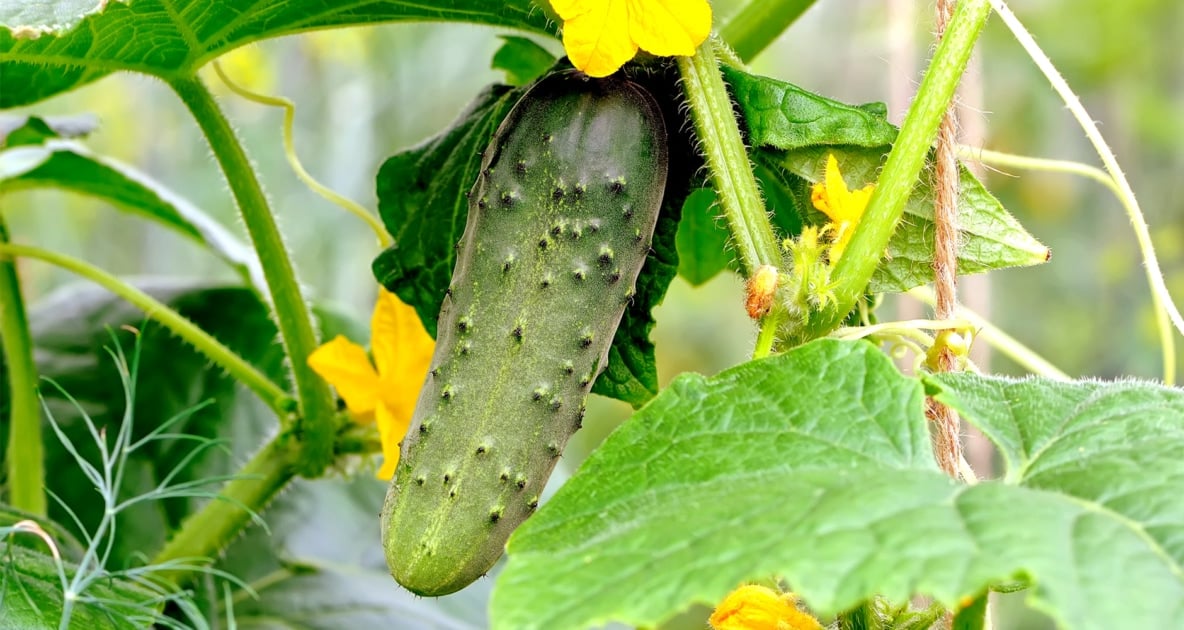
Quick Reference: How to Grow Cucumbers
- Plant when: soil temperature reaches 60 to 65 degrees, after all danger of frost has passed.
- How to sow: plant 4 to 6 seeds in groups 24 inches apart, cover with 1 inch of soil, keep evenly moist.
- Thin to: the 3 to 4 strongest seedlings once they reach 1 to 2 inches high.
- Water: 1 to 2 inches per week, more during dry spells, to keep cucumbers from turning bitter.
- Soil and light: full sun, rich soil at pH 6.0 to 7.0, fed with compost or aged manure.
- Harvest: 50 to 60 days after seeding, at 6 to 8 inches for slicers and 3 to 5 inches for picklers.
A classic choice for any home garden. Whether you are slicing them up for fresh eating or jarring them as pickles, cucumbers have a cool, crisp taste and an easygoing nature that makes them one of the most popular vegetables in the summer garden. They are forgiving for first-timers, they climb a trellis like they were born to it, and a single healthy vine can keep a kitchen in cucumbers for weeks. This 2026 growing season is a fine time to put a few in the ground, whether you have a full garden bed or a sunny corner with a fence to climb. Here is everything you need to grow a crisp, productive crop from seed to harvest.
RELATED: How to Make Your Own Pickles – It’s Easy!
When to Plant Cucumbers
Cucumbers are a warm-season crop with no tolerance for frost, so timing comes down to soil temperature rather than the calendar. Wait until the soil warms to between 60 and 65 degrees and all danger of frost has passed. In a cool spring, that may mean holding off a couple of weeks past your last frost date so the seeds do not sit and sulk in cold ground. The University of Minnesota Extension keeps a plain-English guide to growing cucumbers if you want to confirm the timing and spacing for your own ground.
Frost dates run weeks apart across the country, so the date on the calendar shifts with your region. The soil-temperature trigger does not.
| Zone or region | Direct sow outdoors | Days to maturity (common varieties) | Notes |
|---|---|---|---|
| Zones 3-4 (northern MN, northern New England, Rocky Mountain highlands) | Late May to early June, after last frost; soil must reach at least 60 F at 2-inch depth (USU Extension) | 55-60 days; choose short-season varieties for reliability | Start transplants indoors 2-3 weeks early to extend the season; one planting per season in most locations |
| Zones 5-6 (Midwest, Mid-Atlantic, Pacific Northwest) | After last frost, typically mid-April to late May; soil optimum is 65 F (60 F absolute minimum per NC State) | Marketmore 76: 65-70 days; Straight Eight: 65 days; Bush Pickle: 55 days | Direct sow once soil is warm; transplants give a 2-3 week head start; succession sow every 2-3 weeks for extended harvest |
| Zones 7-8 (Southeast, lower Midwest, Pacific Coast valleys) | March to mid-April; second crop possible if started late July for fall harvest | 60-70 days | Keep soil consistently moist during summer heat; use shade cloth if temperatures exceed 95 F regularly; fall crop often outperforms spring in zones 7-8 |
| Zones 9-10 (Deep South, Southern CA, low desert Southwest) | February to April (spring crop); August to September (fall crop) | 55-65 days | Skip July and August planting in extreme heat zones; fall crop is usually most productive; cucumbers prefer air temps of 65-90 F for best fruit set |
How To Plant Cucumbers
Start: Seeds are best started directly in the garden after soil temperatures reach 60 to 65 degrees and the danger of frost has passed. Plant 4 to 6 seeds in groups 24 inches apart. Cover them with 1 inch of soil and keep the ground evenly moist. Seedlings emerge in 7 to 14 days. Thin to the 3 to 4 strongest seedlings when they are 1 to 2 inches high.
Water: Keep plants well watered, especially during dry spells. This helps keep cucumbers from becoming bitter. Cucumbers have shallow root systems, so mulching helps retain soil moisture, keep soil temperatures even, and hold down weeds. Cucumbers need 1 to 2 inches of rain per week.
Light: Full sun.
Soil: Cucumbers prefer fertile, rich soil, so work some organic material like compost or manure into the bed before planting. Aim for a pH of 6.0 to 7.0.
Fertilize: Use a fertilizer high in potassium and phosphorus and low in nitrogen. Cucumbers have low nitrogen needs, and too much nitrogen pushes the plant’s energy into more leaves and vines and less fruit. Follow the manufacturer’s recommendations for how often to feed.
Harvest: Harvest cucumbers when fully grown yet still young and tender, generally about 6 to 8 inches for slicing cucumbers or 3 to 5 inches for pickling cucumbers. Harvest about 50 to 60 days after seeding. Cut cucumbers from the vine rather than pulling them, which can damage the vine.
Notes: Growing cucumbers up a trellis saves space and leads to straighter, more uniform fruit.
Bush vs. Vining Cucumbers
Cucumbers come in two growth habits, and picking the right one for your space saves a lot of trouble later. Vining types are the traditional garden cucumber. They send out long, sprawling stems that ramble across the ground or, better still, climb a trellis. Vining plants tend to yield more fruit over a longer season, and training them upward keeps the cucumbers off the soil, straighter, and easier to spot at picking time.
Bush cucumbers stay compact, with shorter vines that hold close to the crown of the plant. They are the better fit for containers, raised beds, and small-space gardens where a sprawling vine would crowd everything out. Bush types often come in earlier and finish sooner, so many gardeners plant a second round a few weeks later to stretch the harvest. Whichever you grow, the soil temperature, spacing, watering, and harvest windows above stay the same.
- Cucumbers grow above ground, so the old rule is to plant them during the light, or waxing, of the Moon.
- The Gardening by the Moon Calendar lists this month’s Best Days to plant in your area.

Common Cucumber Pests and Problems
A few familiar troublemakers go after cucumbers. Cucumber beetles, both the striped and spotted kinds, chew the leaves and can spread bacterial wilt, which collapses an otherwise healthy vine. Squash bugs and aphids show up too, and powdery mildew can dust the leaves white in humid weather. Floating row covers early in the season keep beetles off young plants, and good spacing with airflow keeps mildew down. Watering at the base rather than over the top keeps the leaves dry and the diseases at bay. The Clemson Cooperative Extension has a detailed cucumber pest and disease fact sheet if you need to identify a specific problem.
Bitter cucumbers usually trace back to stress, most often uneven watering or a long hot dry spell, which is why the steady 1 to 2 inches of water per week matters so much. Keep the moisture even and the fruit stays sweet.
Companion Plants for Cucumbers
Cucumbers keep good company in the garden. Beans and peas feed the soil they share, corn offers a natural trellis and a little shade, and radishes are a traditional partner said to help discourage cucumber beetles. Many gardeners tuck in dill, nasturtiums, and marigolds nearby to draw beneficial insects and confuse the pests. Keep cucumbers away from potatoes and strong aromatic herbs like sage, which can stunt them. For a fuller pairing chart, see our companion planting guide, and if you are planning a whole bed, our guide to growing your own potatoes rounds out the summer plot.
Helpful Cucumber Links
Farmers’ Almanac Gardening By the Moon Calendar
Cucumber Facts You May Not Know

How to Grow Cucumbers: Frequently Asked Questions
When should I plant cucumbers?
Plant cucumber seeds directly in the garden once the soil warms to between 60 and 65 degrees and all danger of frost has passed. Soil temperature, not the calendar, is the real trigger, so a Southern garden may go in during early spring while a Northern one waits until late spring or early summer.
How far apart do you plant cucumbers?
Plant 4 to 6 seeds in groups spaced 24 inches apart, cover them with 1 inch of soil, and keep the ground evenly moist. Once the seedlings reach 1 to 2 inches high, thin each group to the 3 to 4 strongest plants.
How long does it take to grow cucumbers?
Cucumber seedlings emerge in 7 to 14 days, and the fruit is ready to harvest about 50 to 60 days after seeding. Pick slicing cucumbers at 6 to 8 inches and pickling cucumbers at 3 to 5 inches, while they are still young and tender.
Why are my cucumbers bitter?
Bitterness usually comes from stress, most often uneven watering or a long hot dry spell. Keep plants well watered with 1 to 2 inches of water per week, and mulch the shallow roots to hold moisture and keep soil temperatures even. Steady moisture keeps the fruit sweet.
Should I grow cucumbers on a trellis?
Growing cucumbers up a trellis saves space and leads to straighter, more uniform fruit. It also keeps the cucumbers off the soil and makes them easier to spot at picking time. Vining types take to a trellis naturally, while compact bush types do well in containers and small beds.
What kind of fertilizer do cucumbers need?
Use a fertilizer high in potassium and phosphorus and low in nitrogen. Cucumbers have low nitrogen needs, and too much nitrogen pushes the plant’s energy into leaves and vines instead of fruit. Work compost or aged manure into rich soil at a pH of 6.0 to 7.0 before planting, and follow the manufacturer’s feeding schedule.


This article was published by the Staff at FarmersAlmanac.com. Any questions? Contact us at [email protected].
- Farmers' Almanac Staff
- Farmers' Almanac Staff

- Farmers' Almanac Staff
- Farmers' Almanac Staff

i eat grass
i dont think thats normal
Want to know when to prune trees can somebody help
Hi Mariana, pruning depends a lot of the type of tree and the climate you live in. We recommend you contact your local agricultural extension to get the best information for your growing zone.