

The Myth of the Anemoi: The Four Greek Wind Gods Explained
The ancient Greeks believed there were four wind gods, one representing each cardinal direction, each with a personality of his own. Learn more.
Quick Reference
- Who they are: The Anemoi, the four Greek wind gods, one for each cardinal direction.
- Boreas: God of the north wind. Brings biting cold winter winds.
- Notus: God of the south wind. Brings the raging storms of late summer and autumn.
- Zephyrus: God of the west wind. Brings the light breezes of spring and early summer.
- Eurus: God of the east wind. Associated with bad luck and warm rain.
- Modern science: Wind is air moving from high pressure to low pressure, bent by the Coriolis effect.
- Fastest wind on record: 253 mph on Barrow Island, Australia, on April 10, 1996.
Long before modern science began to understand the processes that create our weather, people made up their own explanations. Many of these accounts were fantastic in nature, with evil or benevolent gods, monsters, and spirits controlling the elements. In this series, we explore some of these ancient myths and share the science behind them. Weather + mythology = weather-ology.

The Myth of the Anemoi
To our early ancestors, the wind must have been a real mystery. One moment, the air would be still and stifling, and in the next, a refreshing breeze could move through. Later, a gale might blow in, destroying massive trees or even buildings. The wind came in from different directions and had different temperaments. Sometimes it was helpful, and other times it seemed almost vengeful in its fury. What was going on?
To the ancient Greeks, this split personality was easily explained. They believed there were four wind gods, one representing each cardinal direction, each with a personality of his own. Like the other gods of Olympus, the wind gods, known collectively as the Anemoi, came complete with very human flaws and could be benevolent or cruel, as the mood struck them.
The Four Winds, One by One
These gods were Boreas, god of the north wind, Notus, god of the south wind, Zephyrus, god of the west wind, and Eurus, god of the east wind. In addition to each representing his own direction, each of the Anemoi was associated with a specific type of wind.
| God | Direction | Season + character | Modern equivalent |
|---|---|---|---|
| Boreas | North | Biting cold winter winds, blunt and angry | Polar vortex outbreaks, arctic intrusions |
| Notus | South | Raging storms of late summer and autumn | Tropical systems, southern frontal storms |
| Zephyrus | West | Light breezes of spring and early summer | Westerlies, mid-latitude prevailing wind |
| Eurus | East | Bad luck, warm rain, unpredictable | Easterlies, tropical maritime air masses |
Boreas brought biting cold winter winds. Notus was in charge of the raging storms of late summer and autumn. Zephyrus brought light breezes during the spring and early summer. Eurus was associated with bad luck. His wind was often accompanied by warm rain.
How the Anemoi Were Pictured
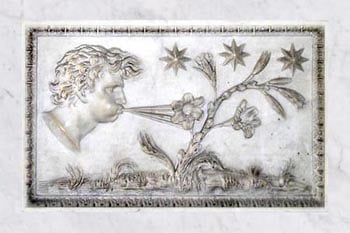
The Anemoi were most often depicted as winged men. As men, they often got up to mischief, including abducting women for their own pleasure, a common pastime among the gods. They could also become invisible, taking the form of gusts of wind, or become horses. Greek vase painters and later Roman mosaicists rendered each one with distinctive attributes: Boreas with a thick beard and shaggy cloak, Zephyrus draped in flowers, Notus pouring rain from a tipped jar, Eurus often shown stormy and unkempt.
When a storm or other wind-related occurrence worked to the benefit of a person or people, as when the Persian army was prevented from attacking Athens due to a powerful storm at sea, it was said to be a sign of the gods’ favor.
The Lesser-Known Wind Spirits
Beyond the four Anemoi, the Greeks named eight more wind spirits, one for each of the intermediate compass points. The Tower of the Winds in Athens, built around 50 BC and still standing, has a frieze of all eight: Boreas (north), Kaikias (northeast), Eurus (east), Apeliotes (southeast), Notus (south), Lips (southwest), Zephyrus (west), and Skiron (northwest). Eight winds, one tower, eight personalities. For other entries in our weather-folklore series, see The Rain Dragon and Daughter of the Wind.
The Science: What Actually Makes Wind
Today, we know that the wind is simply a part of nature, with no will of its own. Though it can be beneficial or devastating, it blows without regard for its effect on humans.
Wind occurs when there is a difference in air pressure between one area of the Earth’s surface and another. Air naturally moves from areas of higher pressure into areas of lower pressure. Sometimes the difference in pressure is minor, resulting in a gentle breeze. At other times, the difference is greater, resulting in violent winds that move faster than 250 miles per hour. The fastest wind ever recorded was clocked at 253 miles per hour on April 10, 1996, on Barrow Island, Australia. The National Weather Service JetStream guide walks through the same physics in plain language.
Because of the Earth’s rotation, the air does not move in a straight line from the point of highest pressure to the point of lowest pressure. The Earth’s rotation pushes the air to the right. This phenomenon, called the Coriolis Effect, causes air to flow clockwise around high-pressure areas in the Northern Hemisphere and counter-clockwise around low-pressure areas. The reverse happens in the Southern Hemisphere.
Before we knew about air pressure, the ancient Greeks had no explanation for wind other than the whims of a capricious group of supernatural beings. So the four winds were born.
What the Anemoi Got Right
- The directions are real. Cold from the north, warmth from the south, prevailing flow from the west, and humid systems from the east are still how a meteorologist describes North American weather.
- The seasons are real. Boreas in winter, Notus in late summer, Zephyrus in spring, all line up with the dominant air masses for those seasons in the Mediterranean basin.
- The personalities track the data. Wind from each compass point really does carry different temperature, humidity, and storm signatures. The Greeks were not wrong about the patterns. They were wrong about the cause.

Frequently Asked Questions
Who are the Anemoi in Greek mythology?
The Anemoi are the four Greek wind gods, one for each cardinal direction. Boreas governs the north wind, Notus the south, Zephyrus the west, and Eurus the east. Each has a season and a temperament.
What does each Anemoi represent?
Boreas brings biting cold winter wind. Notus brings the raging storms of late summer and autumn. Zephyrus brings the light breezes of spring and early summer. Eurus brings warm rain and is associated with bad luck.
What actually causes wind?
Wind is the movement of air from areas of higher pressure to areas of lower pressure. The size of the pressure gradient determines wind speed. The Coriolis effect, caused by Earth’s rotation, deflects the flow so that air circles clockwise around high-pressure systems in the Northern Hemisphere and counter-clockwise around low-pressure systems.
What is the fastest wind ever recorded?
253 miles per hour, recorded on April 10, 1996, on Barrow Island, Australia, during Tropical Cyclone Olivia. That is faster than the strongest tornadoes ever measured by mobile Doppler.
Were there only four wind gods?
Four major wind gods are best known, but the Greeks also named eight wind spirits, one for each cardinal and intermediate compass direction. The Tower of the Winds in Athens, built around 50 BC, depicts all eight on its frieze.
Did the Greeks ever credit the Anemoi with saving Athens?
Yes. When a powerful storm at sea prevented the Persian army from attacking Athens, the storm was credited to the favor of the wind gods. Real storm tracks aside, the cultural memory of “the wind that saved us” persisted in Greek and later Roman accounts.
Did the Greeks get anything right about the wind?
More than they get credit for. Each cardinal direction does carry a different air mass, and the seasonal personalities of the four Anemoi closely match modern Mediterranean climatology. They had the patterns right. They just gave the credit to gods instead of pressure gradients.
Tell Us
Which of the four Anemoi rules where you live? In our reader survey, the Northeast votes Boreas, the Gulf Coast votes Notus, and the Pacific Northwest votes Zephyrus. Drop your vote and your zip code in the comments.


Jaime McLeod
Jaime McLeod is a longtime journalist who has written for a wide variety of newspapers, magazines, and websites, including MTV.com. She enjoys the outdoors, growing and eating organic food, and is interested in all aspects of natural wellness.
- Jaime McLeod

- Jaime McLeod
- Jaime McLeod
- Jaime McLeod





This is so true